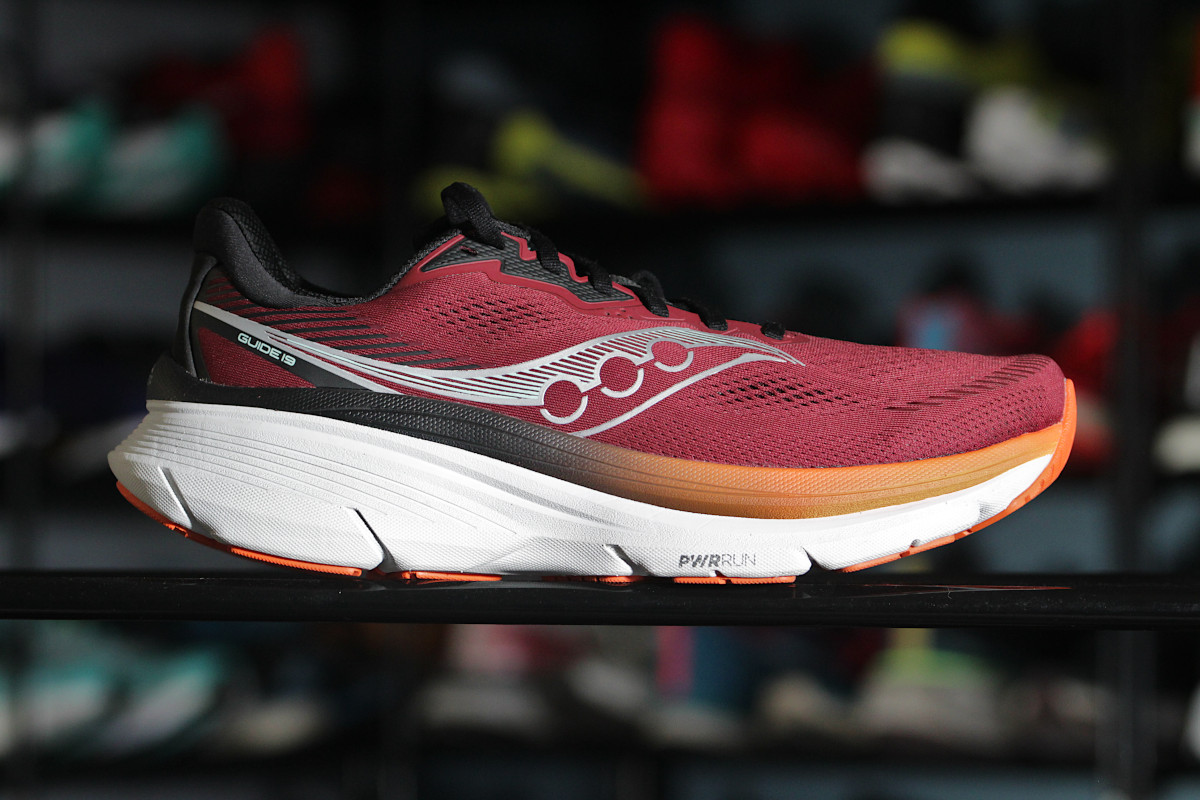
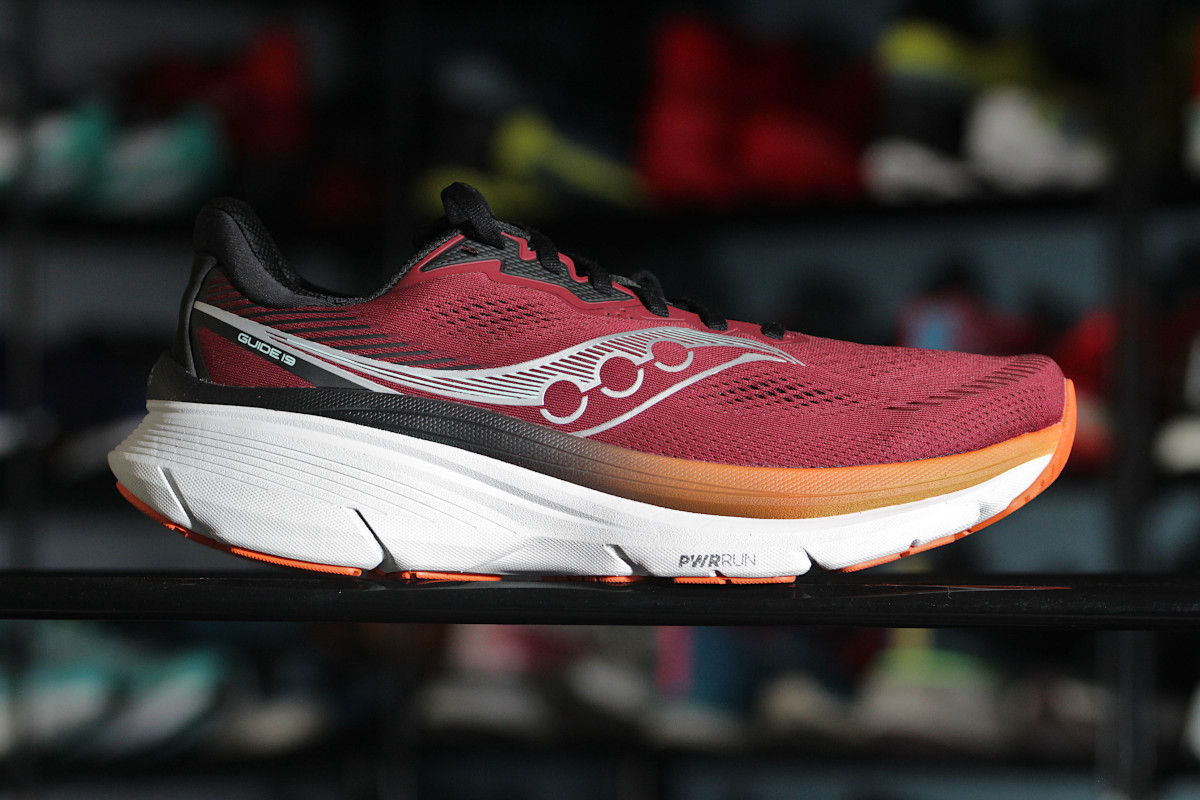
The Saucony Guide 19 is a shoe that doesn’t try to do everything at once. It’s a smooth, well-crafted shoe for everyday running that prioritizes comfort and predictability. It provides good cushioning, gives you a sense of control, and lets you focus on your run rather than your gear. It’s perfect for daily workouts, longer runs, and anywhere where stability and consistency matter. This is the shoe for runners who are looking for stability without unnecessary interference and just want to get the job done – mile after mile.
Basic Info
Tech Specs
Best For
The Saucony Guide 19 is a stable training shoe designed for daily running, aimed at runners who need light support – especially those prone to overpronation. It’s best suited for runners weighing up to about 90 kg who prioritize comfort and consistency in their training. Its versatile nature means it performs well on both asphalt and harder gravel roads. This is a model for those who want to head out for a run and simply get it done – smoothly, stably, and without any unnecessary surprises.
Pros
- soft, comfortable cushioning
- stability without stiffness
- very lightweight for a stabilizing shoe (among the top 7% lightest stabilizing shoes)
- plenty of room for the toes
Cons
- slightly stiffer than competing models
- limited ventilation on very hot days
- “lacks character” for advanced riders
Key Features – What’s New in the Latest Edition
| GUIDE 19 | GUIDE 18 | |
|---|---|---|
| Stack height | 35/29mm | 35/29mm |
| Drop | 6mm | 6mm |
| Weight men’s | 275g | 272g |
| Weight women’s | 252g | 245g |
| Upper | Engineered mesh | Engineered mesh |
| Midsole | PWRRUN + Center Path | PWRRUN + Center Path |
| Outsole | XT-900 | XT-900 |
Saucony Running Shoes – Lineup
For years, the Saucony Guide 19 has served as the stability counterpart to one of the brand’s most versatile models – the Ride. Both shoes are designed for similar purposes: daily training, comfort, and versatility. The difference lies in their approach to support. The Guide 19 offers gentle foot guidance that helps maintain stability while running, while the Ride remains the go-to choice for runners with a neutral foot strike.
Want to explore more models? Check out the Saucony running shoe roundup.
| NEUTRAL SHOES | STABILITY SHOES | HIGH STABILITY SHOES | |
|---|---|---|---|
| maximum cushioning | 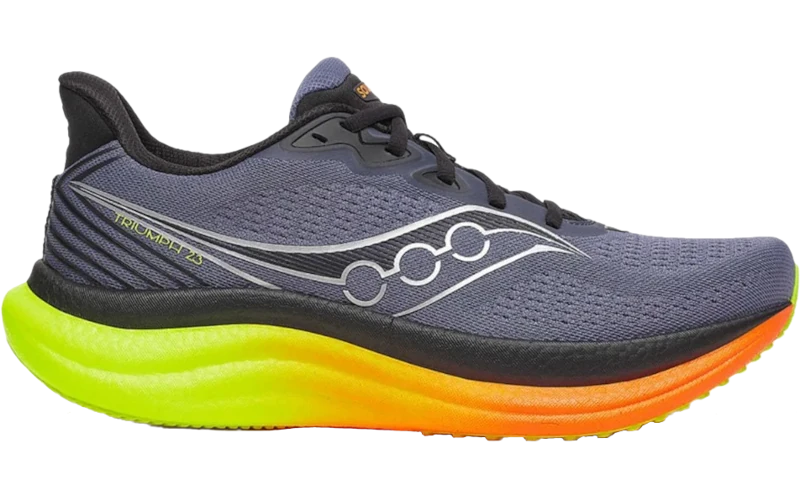 Triumph 23 | 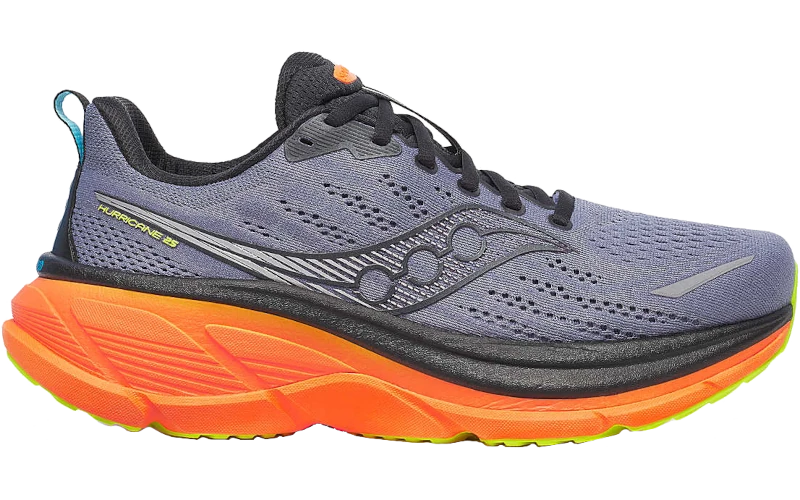 Hurricane 25 | |
| very high cushioning |  Ride 19 | 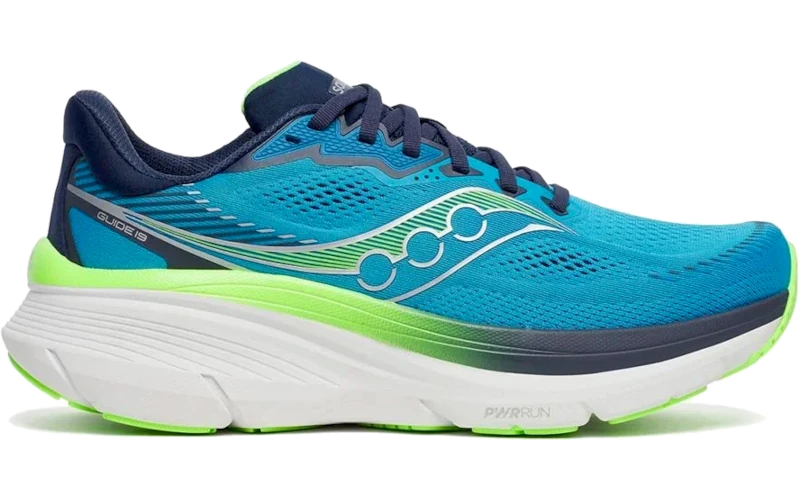 Guide 19 | 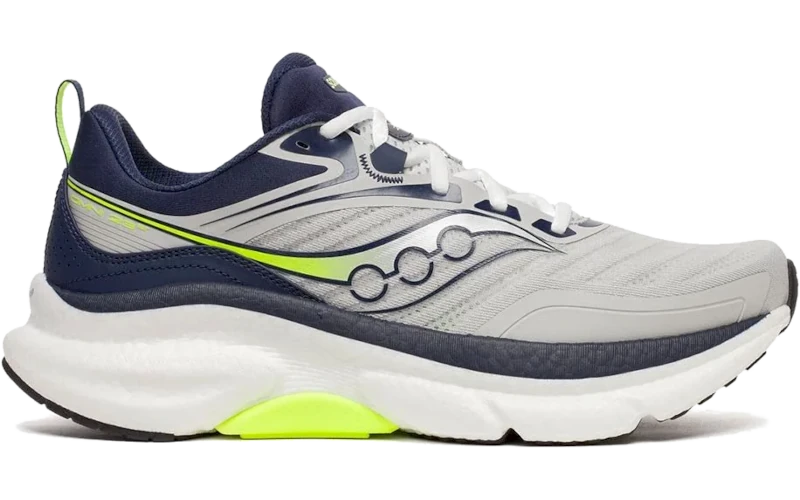 Omni 23 ST |
| high cushioning | 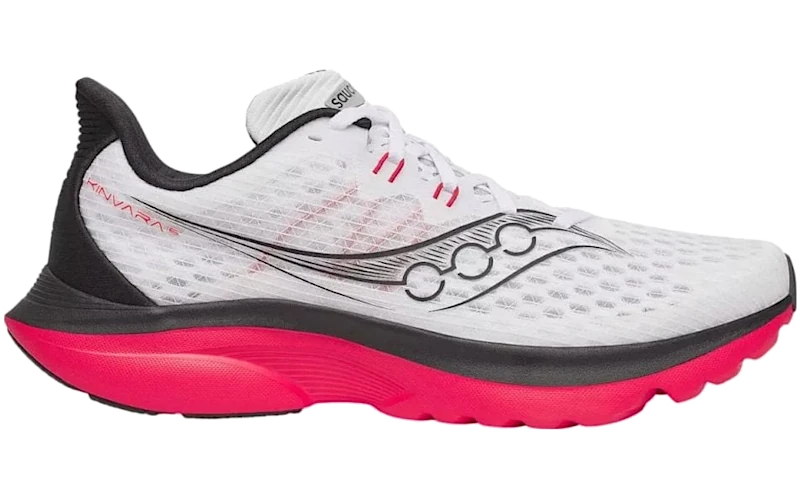 Kinvara 16 | 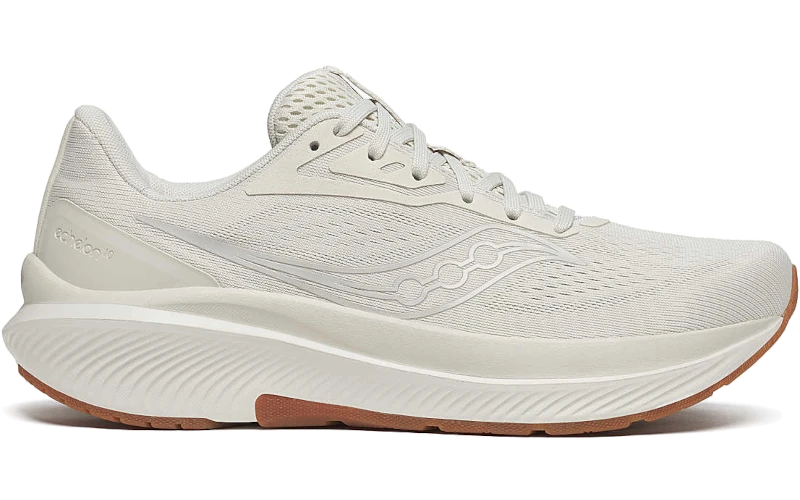 Echelon 10 |
Role in the Running Shoe Rotation
In your running shoe rotation, the Guide 19 is the one you run in most often. It’s the go-to shoe for daily runs in urban and suburban settings. A great complement to it is the Endorphin Speed 4, which boosts your speed and running efficiency during races. On rough terrain, however, you’ll need something more aggressive, like the Peregrine 15 with its Vibram Megagrip outsole. These models complement each other, covering the full spectrum of running – from stable training on asphalt, through dynamic tempo sessions and races, to trail runs.
| GUIDE 19 | ENDORPHIN SPEED 5 | PEREGRINE 16 |
|---|---|---|
|  |  |
| easy run, recovery | tempo run | trail running |
Similar to Saucony Guide 18
There’s no shortage of alternatives to the Guide 19, though the selection of stability shoes is more limited than that of neutral models. Still, you’ll find tried-and-true designs here that have maintained their quality for years – such as the ASICS GT-2000 and the Brooks Adrenaline GTS. They’re in a similar category: daily training, comfort, and support without going overboard.
You can find more about these and other models for runners who need stability in our list of running shoes in this category.
| MODEL | STACK HEIGHT (mm) | DROP (mm) | WEIGHT MEN'S (grams) | WEIGHT WOMEN'S (grams) | REGULAR PRICE (€) |
|---|---|---|---|---|---|
| adidas Supernova Solution 3 | 37/29 | 10 | 295 | 237 | 150 |
| Asics GT-2000 14 | 36,5/28,5 | 8 | 273 | 239 | 160 |
| Asics Gel-Kayano 32 | 40/30 | 10 | 305 | 266 | 200 |
| Brooks Adrenaline GTS 25 | 35.5/23.5 | 12 | 283 | 249 | 150 |
| Brooks Glycerin GTS 22 | 38/28 | 10 | 289 | 252 | 180 |
| Hoka Arahi 8 | 42/34 | 8 | 276 | 228 | 150 |
| Hoka Gaviota 6 | 36/30 | 6 | 310 | 257 | 170 |
| Mizuno Wave Inspire 21 | 36/24 | 12 | 305 | 245 | 160 |
| New Balance 860 v14 | n/a | 10 | 309 | 243 | 160 |
| New Balance Vongo v6 | n/a | 6 | 303 | 243 | 180 |
| Nike Zoom Structure 26 | n/a | 8 | 322 | 243 | 130 |
| On Cloudflyer 5 | 31/21 | 10 | 300 | 257 | 180 |
| On Cloudrunner 2 | 31/21 | 10 | 290 | 230 | 160 |
| Saucony Guide 19 | 35/27 | 8 | 275 | 252 | 150 |
Smooth Cushioning and Stable Construction
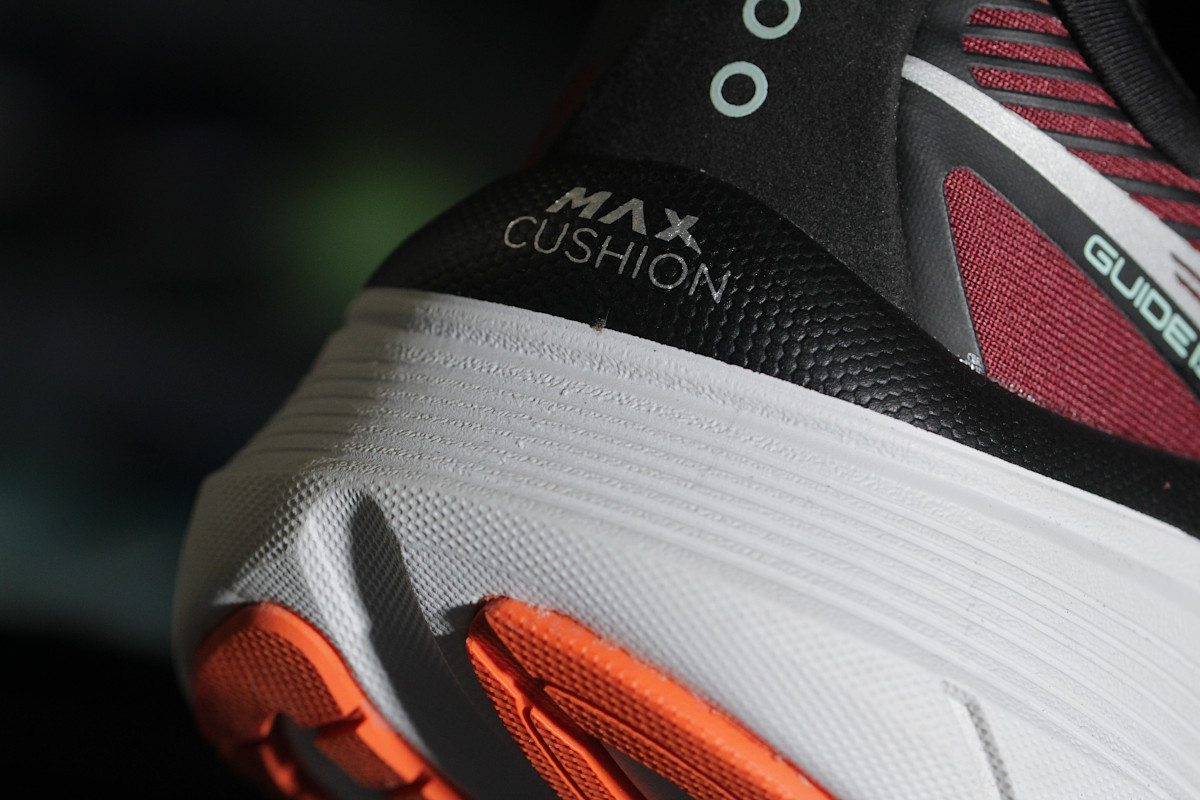
The Saucony Guide 19’s sole still features PWRRUN foam, which makes up the entire midsole. It’s a proven material – moderately soft, durable, and predictable. The whole shoe is designed with comfort in mind, making it feel comfortable right from the first time you put it on. You can feel the softness underfoot, but without the sole collapsing. It will work well for runners up to about 90 kg, as well as for those who don’t like excessively soft, collapsing soles. It’s also a good option for people who value a slightly noticeable roll and stability.
The drop remains at 6 mm, which is slightly lower than the standard for this class of shoes. In practice, this doesn’t change the character of the model – it’s still a comfortable training shoe – but it allows for a more natural roll and slight engagement of the forefoot, especially during longer runs.
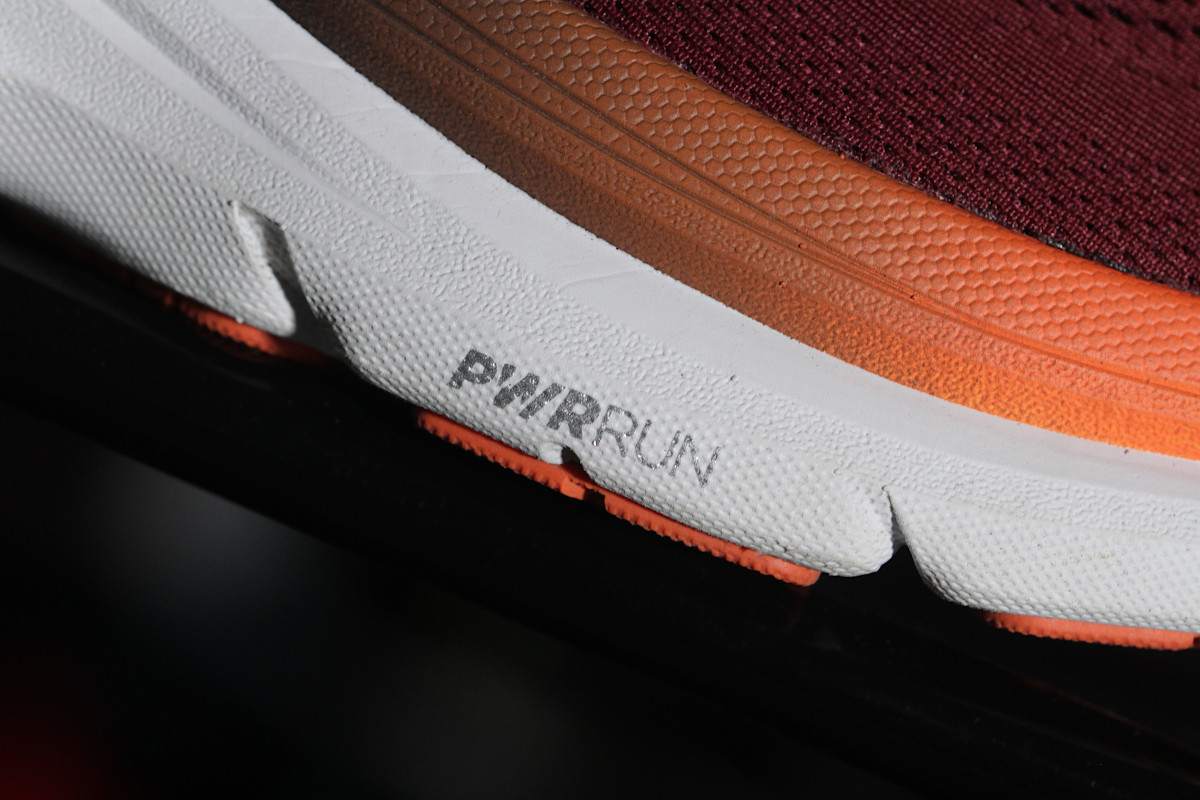
In the Saucony Guide 19, stability continues to rely on the shoe’s construction rather than on traditional, rigid elements on the inside of the sole. The wide platform and raised sidewalls of the sole play a key role here, keeping the foot on the right path. The shoe doesn’t “drift” sideways and feels very secure. The sole is also noticeably wider – both under the heel and at the forefoot – which increases stability from the moment it makes contact with the ground. Added to this is a subtle contouring that promotes a natural roll. The result is simple: the shoe guides the foot while running, rather than locking it in place.
The stabilization is gentle and unobtrusive. For neutral runners, it may be practically imperceptible, but it provides support for those with mild or moderate pronation. The Guide 19 doesn’t aggressively interfere with movement; it simply guides it. It’s worth noting, however, that this isn’t a model designed for severe biomechanical issues – for those with severe flat feet, its support may prove insufficient.
A Simple Design That Holds Up Well to Daily Running
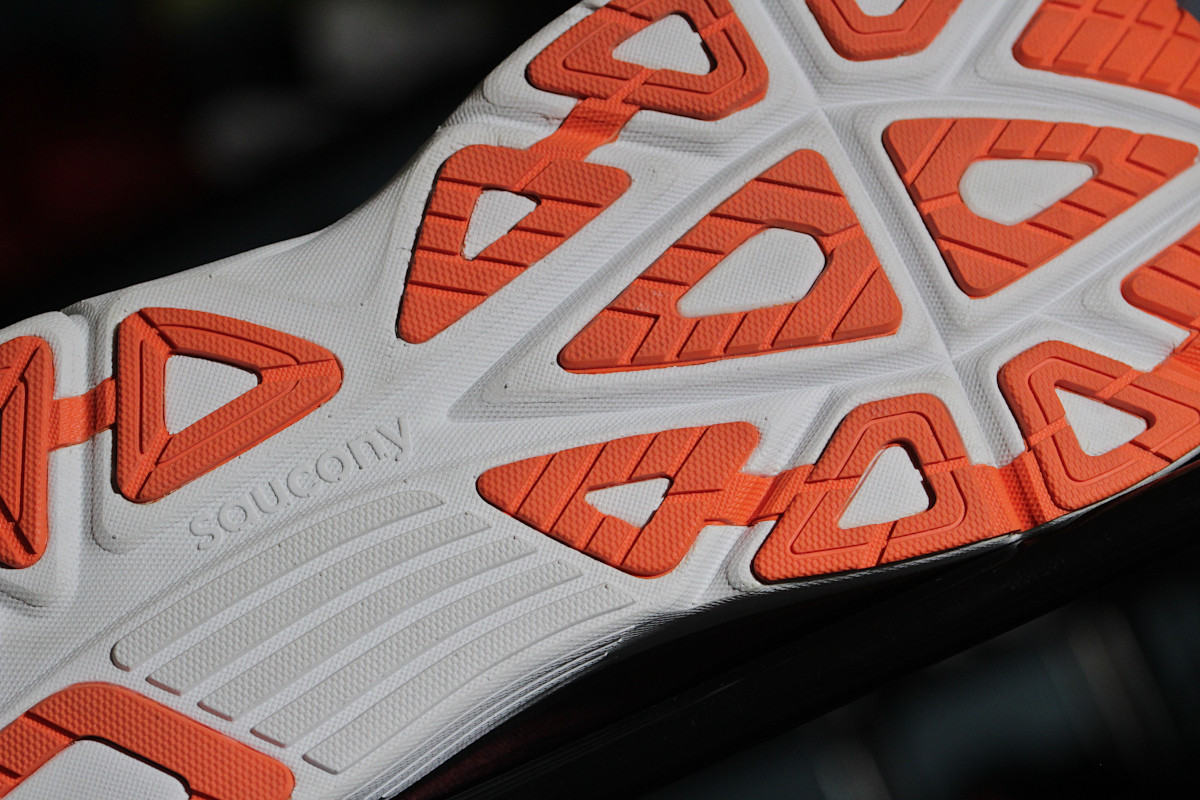
On the Saucony Guide 19, the outsole retains its familiar, fairly minimalist design. Rubber elements still mainly cover key contact zones with the ground, so it’s not a full “armor” covering the entire length of the shoe. Thanks to this, the construction remains relatively lightweight, but at the same time, the rubber compound has been slightly modified to be more abrasion-resistant than in previous editions.
The tread pattern is no surprise – the grooves are rather shallow, with a maximum 1 millimeter depth, and their primary purpose is to support a smooth roll rather than aggressive traction. This clearly demonstrates the model’s intended use. The Guide 19 performs best on asphalt and hard surfaces. It will also handle gravel without any issues, but it’s better suited as a supplement to your training rather than your primary riding environment.
Freedom for Your Toes, Support for Your Whole Foot
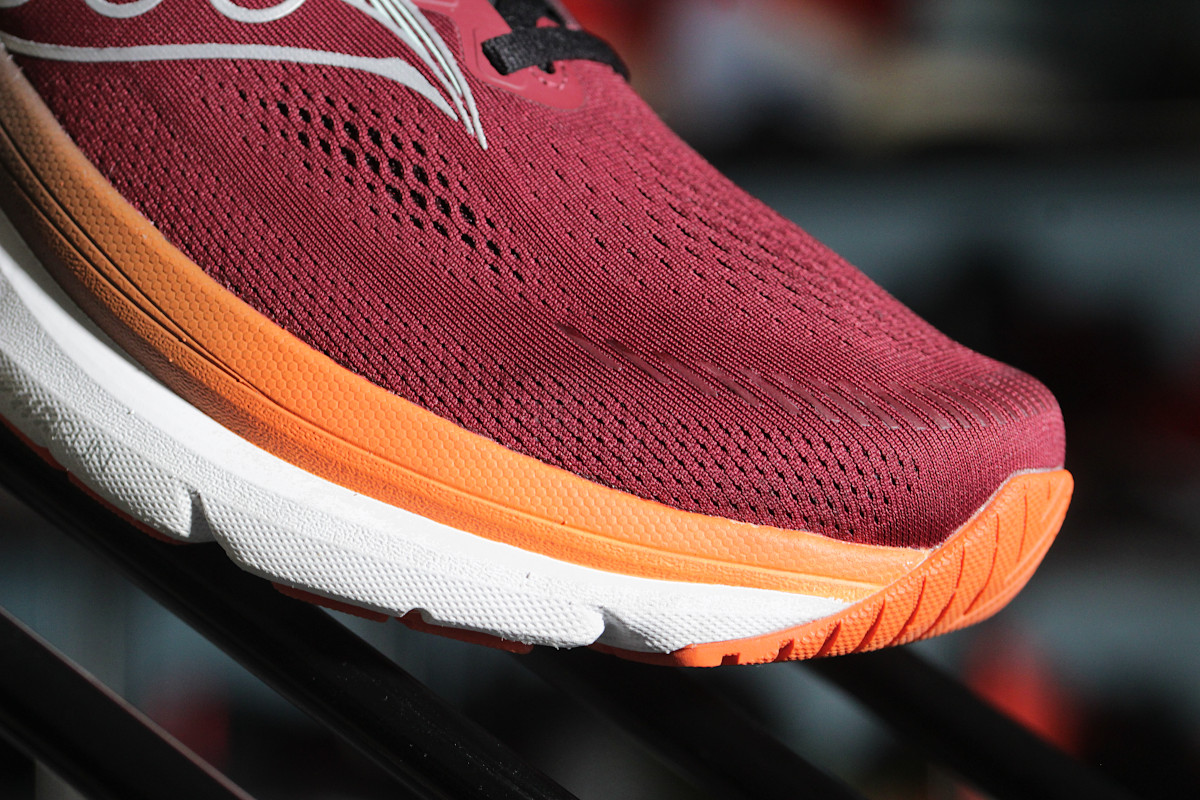
In the Saucony Guide 19, the upper stays true to tried-and-true designs. It’s made of lightweight mesh with fairly standard ventilation, which works well in a range of temperatures, though it might feel a bit too warm on very hot days. Small reinforcements have been added to areas of the upper prone to wear, improving durability and subtly stabilizing the foot, especially on the medial side.
The spaciousness of the forefoot remains impressive – even though we’re talking about a standard-width model – the toes have plenty of room, which will be appreciated by those with wider feet or who prefer a loose fit. The flexibility of the material also contributes to the feeling of width and space, as it adapts to the foot when the width is “on the borderline.”
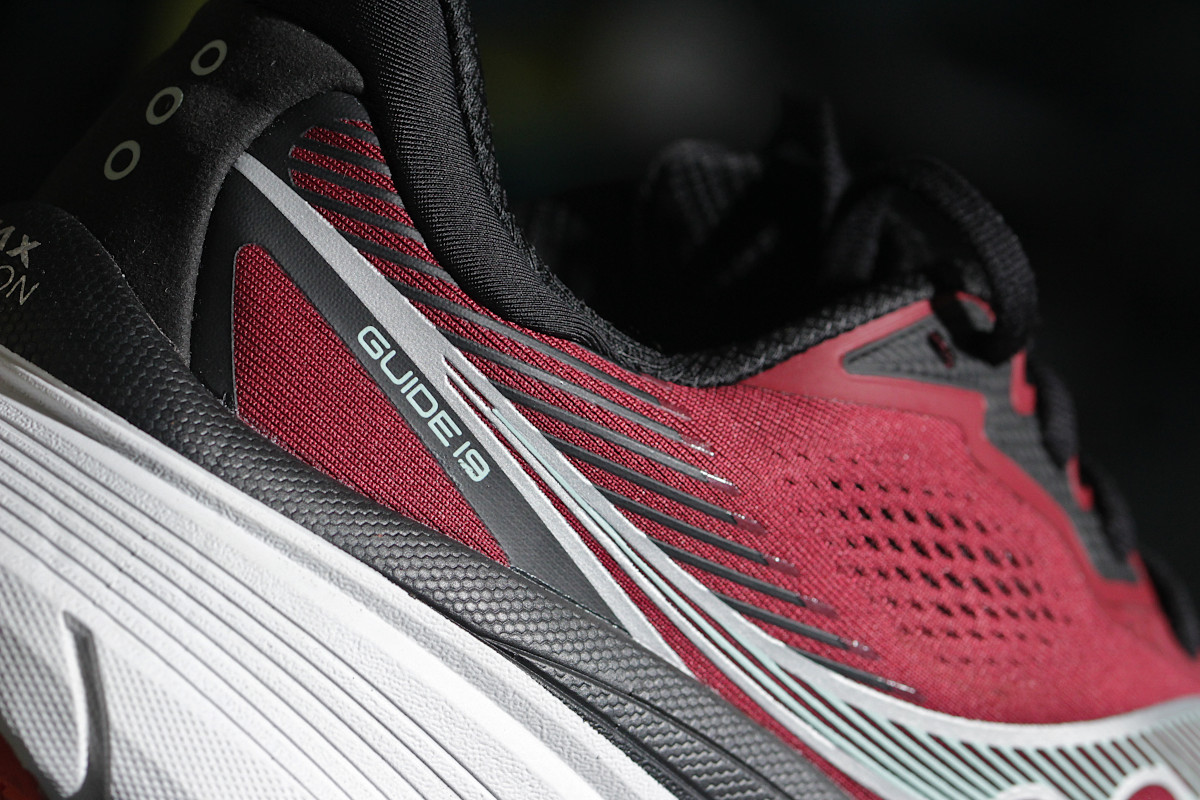
The heel counter provides classic, reliable support: it is stiffened on the inside, but it is not the stiffest construction on the market. It therefore retains some flexibility and a comfortable feel. Additionally, at the base of the heel counter, you’ll find raised edges of the sole that act as an extra stabilizing “collar.” This design extends the wide and stable base under the heel. The whole thing provides noticeable yet gentle stability – the foot is guided naturally, without feeling restricted.
Lightweight for Everyday Workouts
According to Saucony’s data, the men’s Guide 19 weighs approximately 275 grams, while the women’s version weighs 258 grams. In practice, this is still a very respectable weight for a stability shoe designed for daily training – in my size 12 US, the shoe weighed 304 grams, which is well below the average for this category of running shoes. More specifically, it ranks among the top 7% of the lightest stability shoes for daily running.
This lightness translates to comfort while running. The Guide 19 doesn’t feel heavy, doesn’t slow you down, and doesn’t interfere with the natural roll of the foot. This is a significant advantage for runners who value lightness during daily training.
Final Thoughts
The Saucony Guide 19 is a shoe designed for comfort and predictability. It provides a secure fit and a sense of stability, yet it’s lightweight and doesn’t restrict natural movement. It’s ideal for daily workouts and longer runs, especially for runners looking for a smooth, confident stride. This model lets you focus on your run rather than your gear.