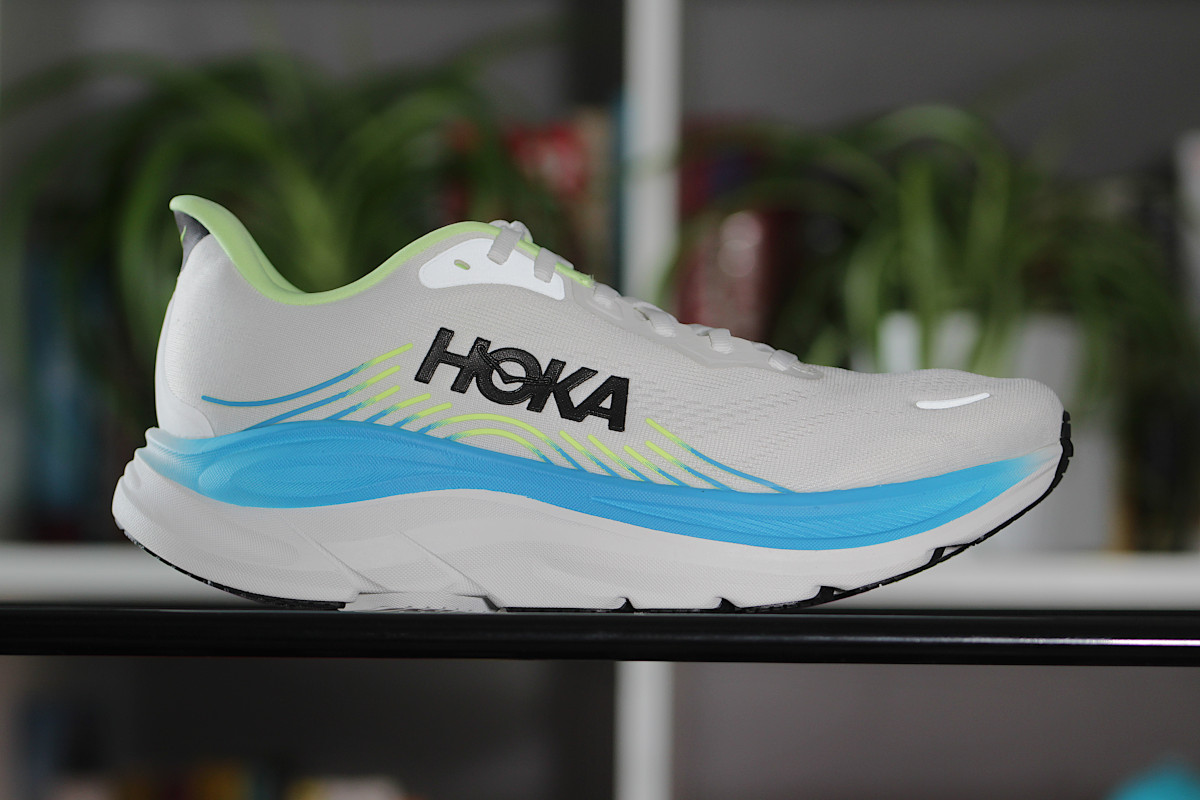
The Clifton has remained one of the cornerstones of Hoki’s lineup for years and is one of the most popular shoes for daily training. The eleventh iteration doesn’t bring any revolutionary changes. The producer has opted to refine the proven construction, focusing primarily on subtle changes to the comfort of the upper. Let’s see what has actually changed compared to the Clifton 10 and whether the new version is worth checking out.
Basic Info
Tech Specs
Best For
The Hoka Clifton 11 is a highly cushioned model designed for everyday running on hard surfaces. Like its predecessor, it offers a high level of comfort, which is especially appreciated by runners looking for a comfortable shoe for regular training. It performs well on roads, such as asphalt, cobblestones, and compacted gravel roads. It works best during easy and moderate runs, where comfort and a smooth foot roll are the top priorities. It is a neutral shoe, designed for runners with a neutral foot strike.
Pros
- very high cushioning
- a gentle roll that helps with the heel-to-toe transition
- also suitable for people looking for shoes for long-distance walking
Cons
- no significant changes compared to its predecessor
Key Features – What’s New in the Latest Edition
| CLIFTON 11 | CLIFTON 10 | |
|---|---|---|
| Stack height | 41/33 mm | 42/34 mm men’s 38/30 mm women’s |
| Drop | 8 mm | 8 mm |
| Weight men’s | 283 g | 278 g |
| Weight women’s | 236 g | 227 g |
| Upper | Engineered mesh | Woven mesh |
| Midsole | Compression Molded EVA | Compression Molded EVA |
| Outsole | Durable, abrasion-resistant rubber | Durable, abrasion-resistant rubber |
Hoka Running Shoes – Lineup
In the Hoki lineup, the Clifton 11 falls between the highly cushioned Bondi and more dynamic models such as the Mach and Skyflow. It’s the brand’s most versatile training shoe, which performs well during daily runs on the road. It combines a high level of comfort with moderate weight and a smooth roll, which is why it remains the go-to choice for many runners for most of their workouts.
Want to check out the other models? Take a look at the Hoka running shoe guide.
| NEUTRAL SHOES | STABILITY SHOES | |
|---|---|---|
| maximum cushioning | 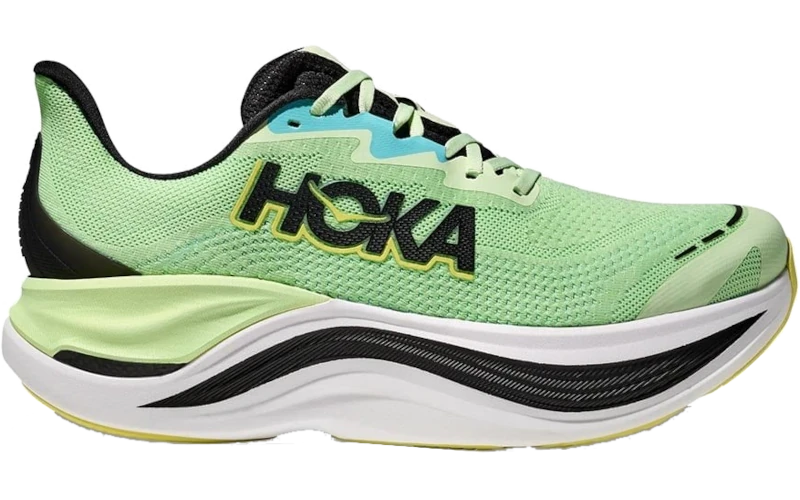 Skyward X  Bondi 9 | 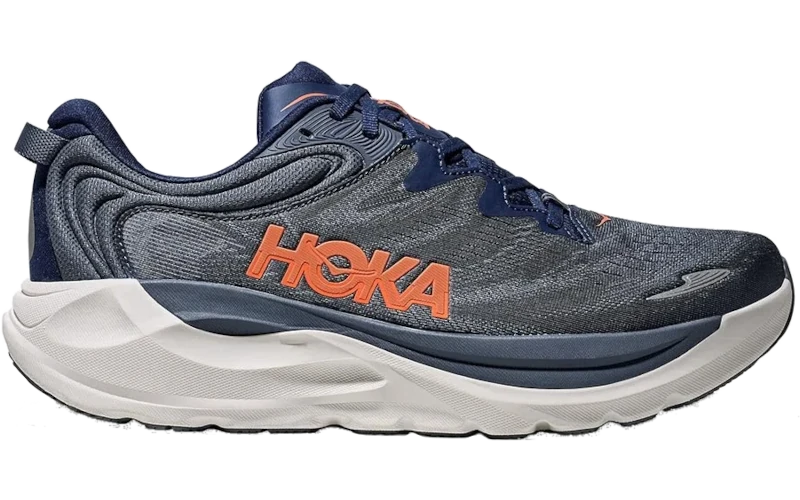 Gaviota 6 |
| very high cushioning | 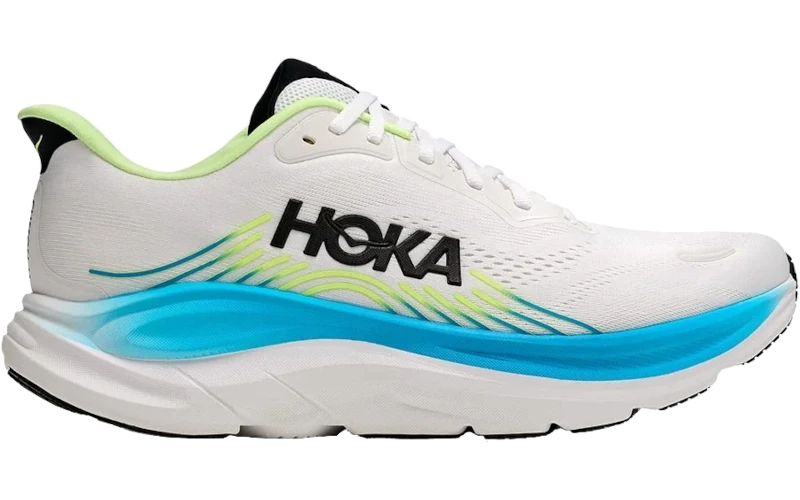 Clifton 11  Skyflow | 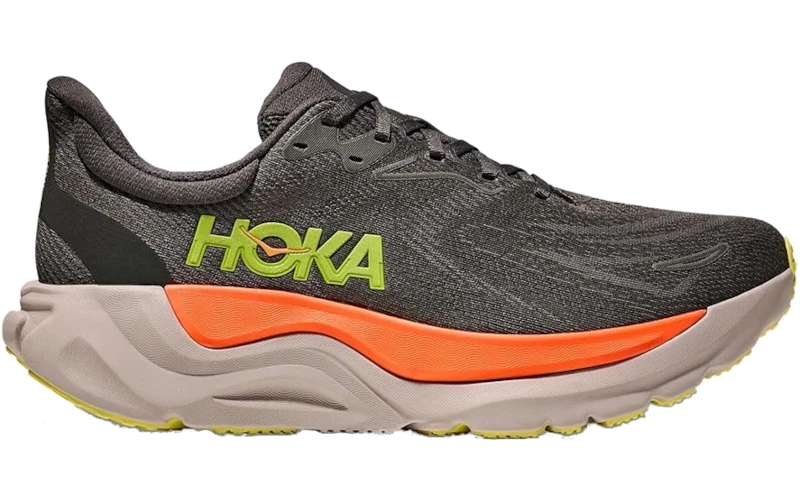 Arahi 8 |
| high cushioning |  Rincon 4 |
Role in the Running Shoe Rotation
Hoka divides its lineup into three categories: everyday running, speed training, and recovery/maximum cushioning. And that’s exactly how you can build your Hoka shoe rotation: the Clifton 11 as your go-to shoe for easy runs and higher mileage, the Mach X3 for faster sessions, and the Bondi 9 for recovery and very easy runs. This way, you have three specific tools at your disposal for three different types of training.
| BONDI 9 | CLIFTON 11 | MACH X3 |
|---|---|---|
| |  |
| easy, long runs, recovery | daily running | speed training sessions, race day |
Similar to Hoka Clifton 11
Although the Clifton 11 isn’t a revolutionary upgrade over its predecessor, it remains one of the most versatile models for everyday running on hard surfaces. It’s designed for runners who prefer comfort, a smooth roll, and predictable performance above all else during easy and moderate workouts. In its class, it’s a strong alternative to models such as the Asics Gel-Cumulus, Brooks Ghost, and Saucony Ride.
Looking for more shoes with good cushioning? Check out this shoe guide.
| MODEL | STACK HEIGHT (mm) | DROP (mm) | WEIGHT MEN'S (grams) | WEIGHT WOMEN'S (grams) | REGULAR PRICE (€) |
|---|---|---|---|---|---|
| adidas Supernova Rise 3 | 35/28 | 7 | 272 | 230 | 150 |
| Asics Gel-Cumulus 28 | 37/30 | 8 | 259 | 223 | 160 |
| Brooks Ghost 18 | 36/26 | 10 | 289 | 260 | 150 |
| Brooks Ghost Max 3 | 39/33 | 6 | 317 | 283 | 160 |
| Diadora Equipe Nucleo 2 | 38/32 | 6 | 280 | 210 | 150 |
| Hoka Clifton 11 | 41/33 | 8 | 283 | 236 | 150 |
| Mizuno Wave Rider 29 | 38/30 | 8 | 265 | 225 | 160 |
| New Balance 880 v15 | 38/32 | 6 | 304 | 238 | 160 |
| Nike Pegasus 42 | n/a | 10 | 300 | 243 | 140 |
| Nike Vomero 18 | n/a | 10 | 325 | 263 | 150 |
| On Cloudsurfer 7 | 32/22 | 10 | 245 | 205 | 170 |
| Puma Magnify Nitro 2 | 40/30 | 10 | 275 | 245 | 150 |
| Saucony Ride 19 | 36/30 | 8 | 270 | 220 | 150 |
A Trusted Midsole
In the Clifton 11, Hoka kept the midsole – familiar from the previous generation – unchanged. It’s still made of Compression Molded EVA (CMEVA) foam, which makes it possible to achieve a high level of cushioning and a fairly soft landing. This construction has been battle-tested by thousands of runners and is focused primarily on comfort during daily training rather than maximum performance.
The Hoka Clifton 11 features 41 mm of foam under the heel and 33 mm under the forefoot, resulting in an 8-millimeter drop. These are the specifications that Hoka introduced in the Clifton 10 and has kept unchanged in the latest version. It’s worth noting that it was the previous generation that brought one of the biggest changes in the model’s history – an increase in the heel-to-toe drop from 5 to 8 mm. The Clifton 11 retains the same geometry. For those switching from the Clifton 10, the running experience will therefore be nearly identical.
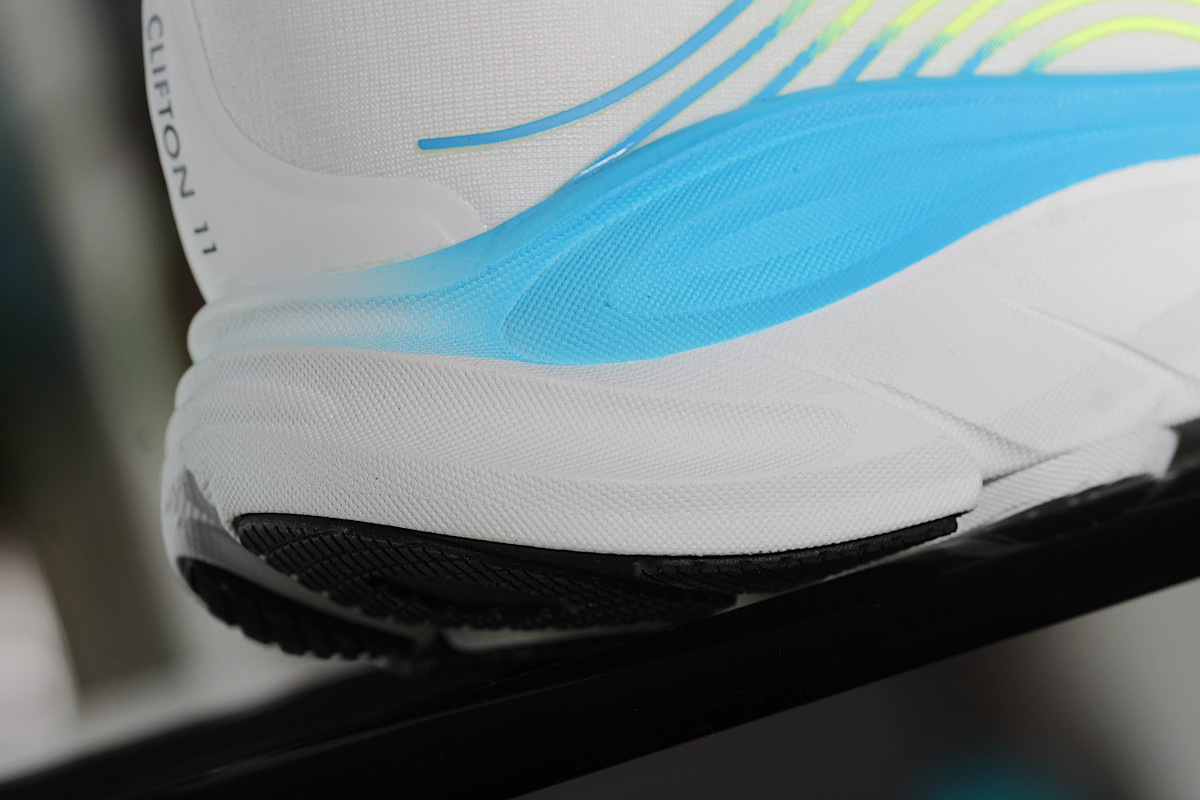
The distinctive heel contour and the MetaRocker rocker sole profile – which facilitates the foot’s roll and makes running smoother – have also remained unchanged. This design isn’t very aggressive, and if you’ve run in other shoes with much more “aggressive” profiles, you might not even notice it. It works particularly well during easy and moderately intense workouts, when running economy and consistency are key.
As you’d expect from Hoka, the Clifton 11 also features Active Foot Frame technology. The raised edges of the sole position the foot deeper inside the shoe, which improves stability despite the thick foam layer. As a result, the Clifton remains quite secure and stable while running, even though at first glance its chunky sole might suggest otherwise.
An Outsole with No Surprises
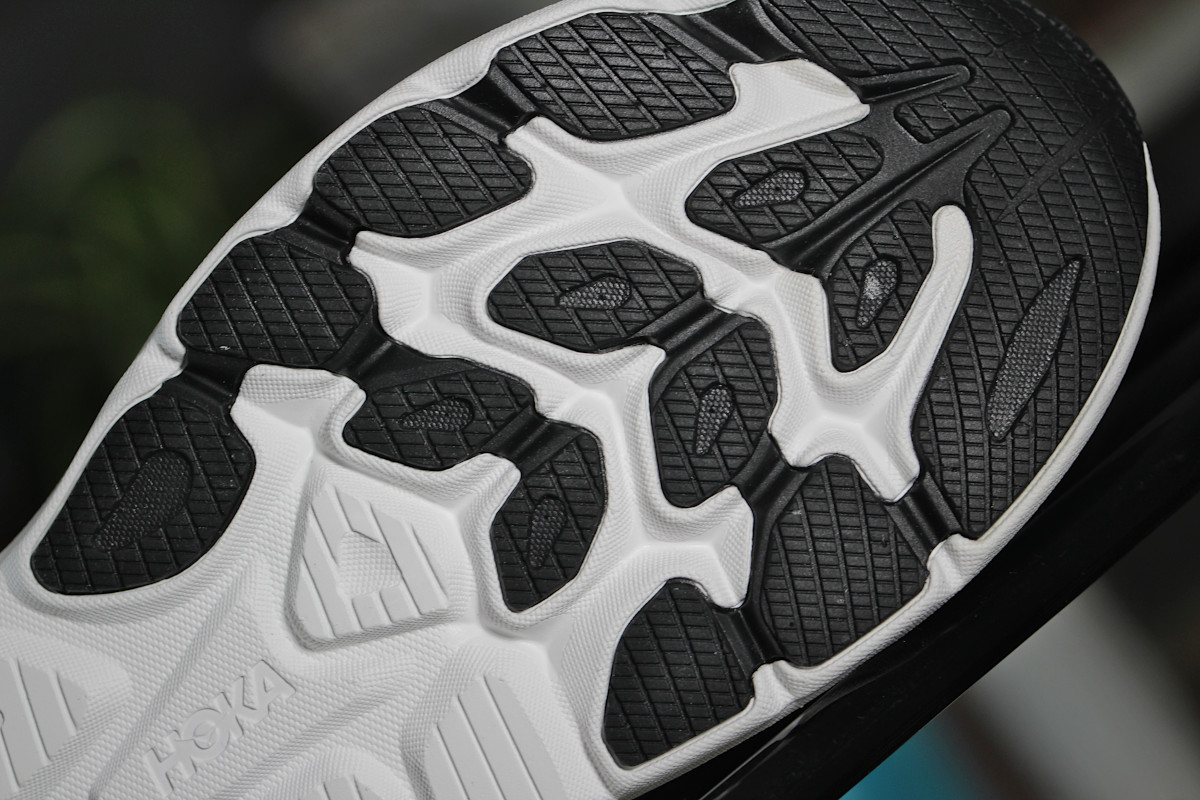
The Clifton 11’s outsole construction has remained virtually unchanged from the previous generation. It’s a classic Hoka construction with a flat, not-too-aggressive pattern. The low lugs aren’t designed for trail use, but off the road they make more reliable traction possible even on uneven gravel surfaces. The rubber covers about half the sole’s surface, striking a balance between durability, traction, and a lightweight shoe.
New, Redesigned Upper
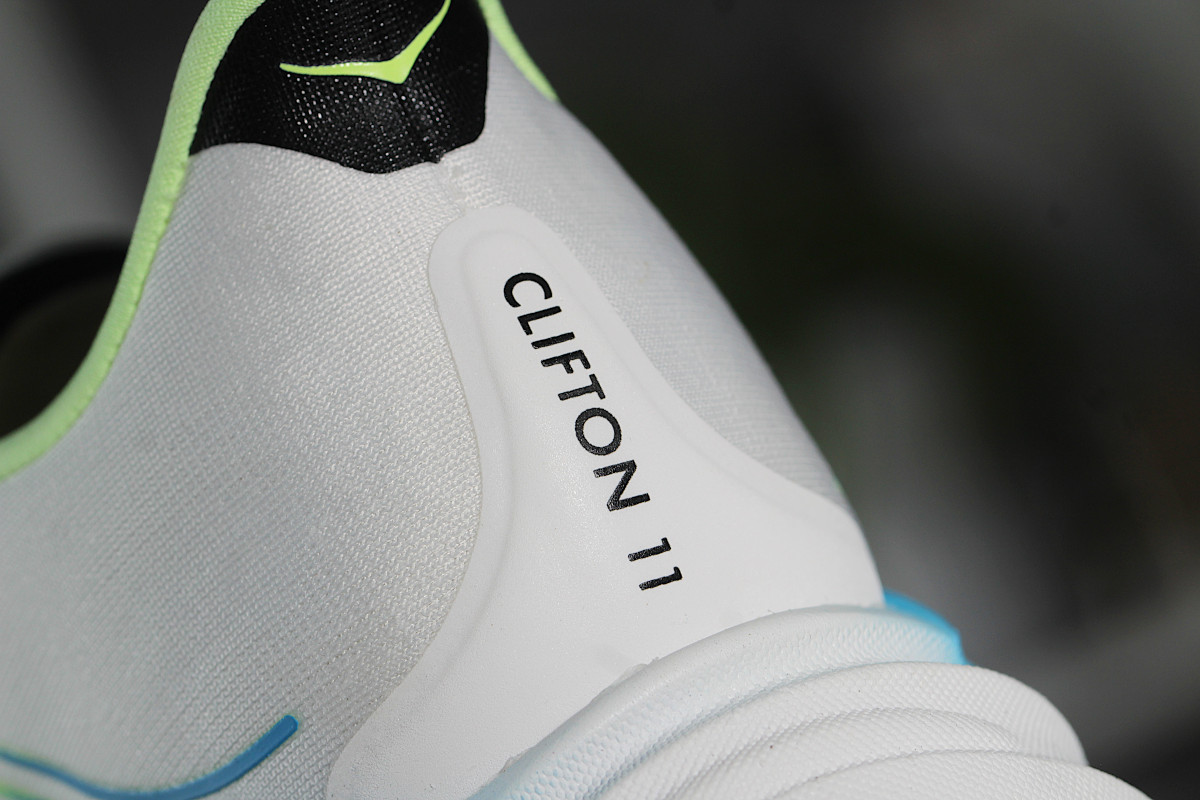
The only changes to the Clifton 11 are to the upper. Hoka has used a new, softer Engineered Mesh that conforms differently to the foot. Is it better? Or worse? It’s hard to say, because it’s a very individual matter, and if you find that you don’t feel any difference compared to the Clifton 10, I won’t be surprised. Just like in its predecessor, the material remains lightweight and makes moderate ventilation possible, making the shoe suitable for both cooler and warmer days.
In terms of foot space, the Clifton 11 retains the rather narrow fit known from its predecessor. The width of the upper at its widest point is also nearly identical to that of the previous model – 104 millimeters. This is a standard width that should suit most runners with neutral or narrower feet. For runners with wider feet, there may once again be too little room here. This is especially true since the new material is designed to hug the midfoot more snugly, which may make the interior feel even tighter.
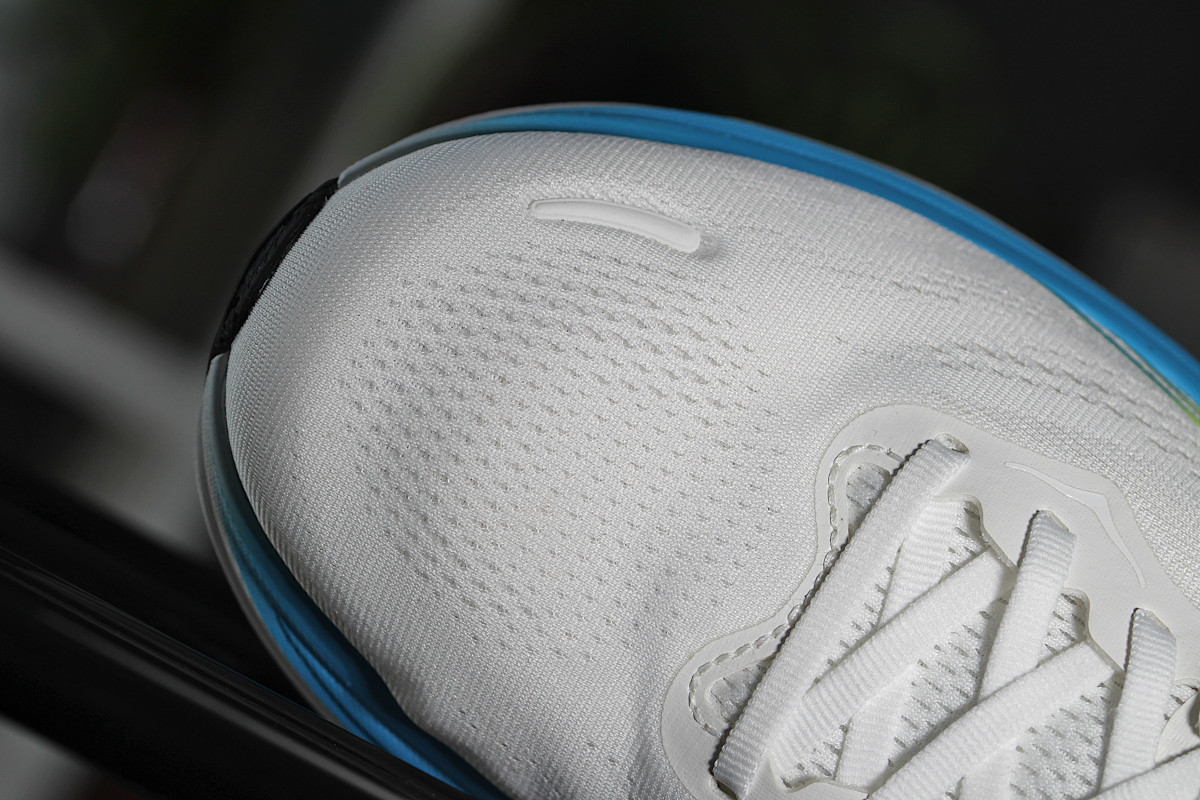
The tongue also features the Double Lace Lock system. Two of these are placed on the tongue – closer to the edges – which more effectively stabilizes the tongue and limits its sideways movement while running. This change could be a “game changer” if you struggle with the tongue in your running shoes shifting annoyingly far from side to side.
Not much has changed in the heel counter. It’s still a fairly rigid construction that provides good heel stability, but thanks to softer materials and more generous padding, it feels more comfortable than in the previous generation. It’s worth noting that the outsole profile also contributes to stability in the rear. Overall, it feels solid and stable.
Slightly Heavier, but Still Comfortable
For years, the Clifton has been one of the lighter training shoes with a high level of cushioning, although each new generation has gradually gained weight. According to Hoki’s data, the men’s Clifton 11 weighs 283 grams, and the women’s 236 grams – only slightly more than the previous version.
In my size (US 12), the Clifton 11 weighs 336 grams. That’s 9 grams more than the Clifton 10, which I weighed earlier. The difference, however, is so small that it’s practically imperceptible while running. Despite its slightly higher weight, the Clifton 11 still masks its weight well thanks to a smooth foot roll and a high level of cushioning. It’s no longer one of the lightest models in its segment, but it still strikes a very good balance between comfort, protection, and weight.
Summary
The Clifton 11 is an example of evolution rather than revolution. Hoka has kept exactly what worked in the previous generation – the same midsole, geometry, and the shoe’s focus on comfort and daily training. There are minor changes to the upper, which is slightly more comfortable and better refined, but it’s hard to say that running in them offers a completely new experience. It’s still the same Clifton 10, just slightly improved.