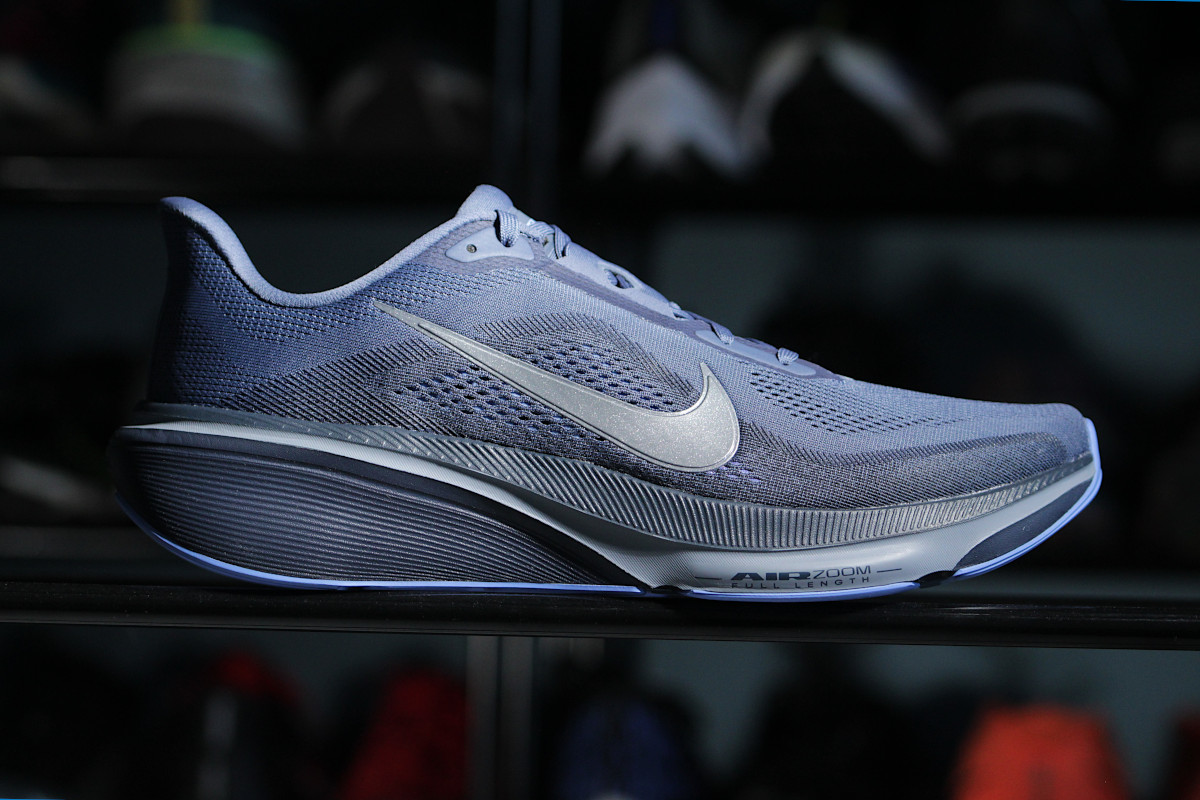
The Pegasus is back in a new version, but it doesn’t surprise us. It’s a model that doesn’t need major changes. Major changes could even cause it to lose its versatile DNA. From the very beginning, the Pegasus was designed to be the most versatile and well-balanced shoe possible. In terms of cushioning, weight, intended use, and price. It’s a shoe that aims to be a one-size-fits-all solution. This remains true in the latest edition.
Basic Info
Tech Specs
Best For
The Nike Pegasus 42 is a classic shoe for everyday running on the road. Thanks to its balanced specs, it works well for a wide range of workouts. It performs best during easy runs, relaxed long runs, and at a comfortable pace. It offers stability and predictability. Cushioning is moderate but springy. It’s a good choice if you want one shoe for everything and aren’t chasing maximum performance.
Pros
- good, balanced cushioning
- pretty good performance
- good fit
- good value for money
Cons
- not impressive in any area
Key Features – What’s New in the Latest Edition
| PEGASUS 42 | PEGASUS 41 | |
|---|---|---|
| Stack height | 37/27mm | 37/27mm |
| Drop | 10mm | 10mm |
| Weight men’s | 300g | 297g |
| Weight women’s | 243g | 251g |
| Upper | technical mesh | technical mesh |
| Midsole | ReactX foam + full-length Air Zoom | ReactX foam + Air Zoom cushions (forefoot and heel) |
| Outsole | waffle rubber | waffle rubber |
Nike Running Shoes – Lineup
The Pegasus is a mid-range shoe, offering substantial but by no means the highest level of cushioning. It is one of the three pillars of everyday running shoes, alongside the Vomero and Structure lines. The Pegasus is the most versatile option. The Vomero line is synonymous with maximum cushioning. The Structure line, on the other hand, provides additional support, for example for overpronation.
It’s also worth remembering that there are other “Pegasus” models on the market. The Pegasus Trail is a versatile trail shoe, while the Pegasus Plus is a lightweight training shoe that works well not only for running but also for other activities. Finally, the Pegasus Premium is the most technologically advanced model, straddling the line between running shoes and lifestyle shoes.
If you want to find out what they have to offer and see the full lineup, check out the Nike running shoe shoe guide.
| NEUTRAL SHOES | STABILITY SHOES | |
|---|---|---|
| maximum cushioning |  Vomero Premium | |
| very high cushioning |  Vomero Plus  Vomero 18  Pegasus Premium | 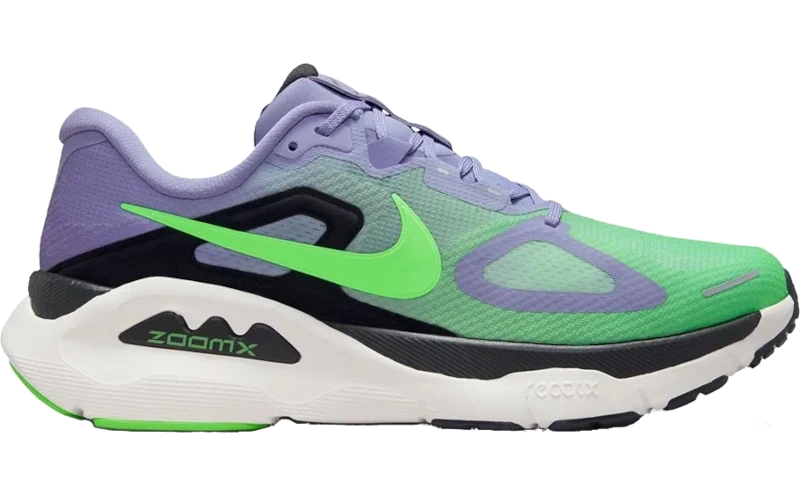 Structure Plus |
| high cushioning | 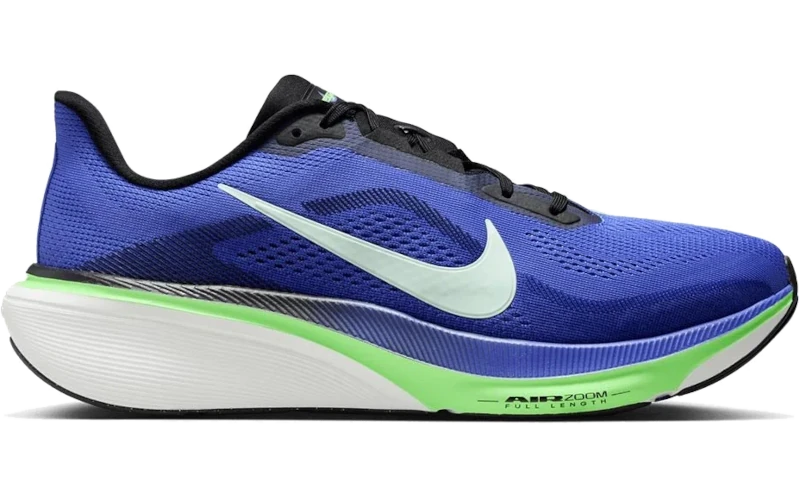 Pegasus 42 | 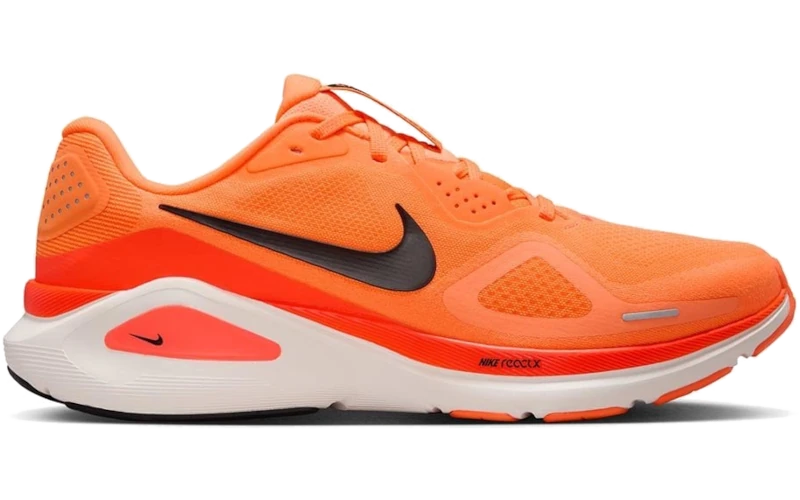 Structure 26 |
| mid cushioning |  Winflo 11 |
Role in the Running Shoe Rotation
The Pegasus is a versatile shoe in many ways, so its place in your rotation is always in the middle. No matter how you compose your rotation, the Pegasus 42 will serve as a reliable “workhorse” for most of your daily workouts. The Vomero Plus will complement it on your longest runs, protecting your joints with maximum cushioning and softness. The Vaporfly 4, on the other hand, will provide a level of performance that the Pegasus line has never even dreamed of.
| VOMERO PLUS | PEGASUS 42 | VAPORFLY 4 |
|---|---|---|
| |  |
| easy, long runs | everyday running, daily | tempo run, raceday |
Similar to Nike Pegasus 42
Pegasus has had many competitors for years, which is because a versatile construction like this is a must-have for nearly every producer looking to capture the running market. Everyone needs shoes for their daily workouts.
If you’d like to learn more about them, check out our shoe guide for hard surfaces.
| MODEL | STACK HEIGHT (mm) | DROP (mm) | WEIGHT MEN'S (grams) | WEIGHT WOMEN'S (grams) | REGULAR PRICE (€) |
|---|---|---|---|---|---|
| adidas Supernova Rise 3 | 35/28 | 7 | 272 | 230 | 150 |
| Asics Gel-Cumulus 28 | 37/30 | 8 | 259 | 223 | 160 |
| Brooks Ghost 17 | 37/27 | 10 | 286 | 254 | 150 |
| Brooks Ghost Max 3 | 39/33 | 6 | 317 | 283 | 160 |
| Diadora Equipe Nucleo 2 | 38/32 | 6 | 280 | 210 | 150 |
| Hoka Clifton 10 | 42/34 | 8 | 278 | 228 | 150 |
| Mizuno Wave Rider 29 | 38/30 | 8 | 265 | 225 | 160 |
| New Balance 880 v15 | 38/32 | 6 | 304 | 238 | 160 |
| Nike Pegasus 42 | n/a | 10 | 300 | 243 | 140 |
| Nike Vomero 18 | n/a | 10 | 325 | 263 | 150 |
| On Cloudsurfer 7 | 32/22 | 10 | 245 | 205 | 170 |
| Puma Magnify Nitro 2 | 40/30 | 10 | 275 | 245 | 150 |
| Saucony Ride 19 | 36/30 | 8 | 270 | 220 | 150 |
Full-Length Air Zoom
In recent years, changes to the Pegasus have centered on the Zoom air units. This year is no different. The Nike Pegasus 42 continues to feature an air unit. This time, it’s a full-length Air Zoom unit. It replaces the two separate units found in the previous model. This comes as no surprise. We also had these single full-length gas cushions in the Pegasus 35 and 36 models available in 2018 and 2019. Nike is returning (not for the first time) to what has already been done.
| MODEL | YEAR | CUSHIONING |
|---|---|---|
| Pegasus 32 | 2015 | one air cushion under the heel |
| Pegasus 33 | 2016 | two air cushions – one under the heel, one under the midfoot |
| Pegasus 34 | 2017 | two air cushions – one under the heel, one under the midfoot |
| Pegasus 35 | 2018 | one large “figure-eight” shaped cushion along the entire length of the shoe |
| Pegasus 36 | 2019 | one large “figure-eight” shaped cushion along the entire length of the shoe |
| Pegasus 37 | 2020 | one air cushion (split) under the midfoot |
| Pegasus 38 | 2021 | one air cushion (split) under the midfoot |
| Pegasus 39 | 2022 | two air cushions – one under the heel, one under the midfoot |
| Pegasus 40 | 2023 | two air cushions – one under the heel, one under the midfoot |
| Pegasus 41 | 2024 | two air cushions – one under the heel, one under the midfoot |
| Pegasus 42 | 2026 | one air cushion |
Like in the previous model, this cushion is filled with ReactX foam – a soft yet resilient foam. The geometry hasn’t changed drastically. We still have a heel height of around 37mm and a forefoot height of 27mm, with a 10mm drop. These values are slightly below average for current hard-surface running shoes.
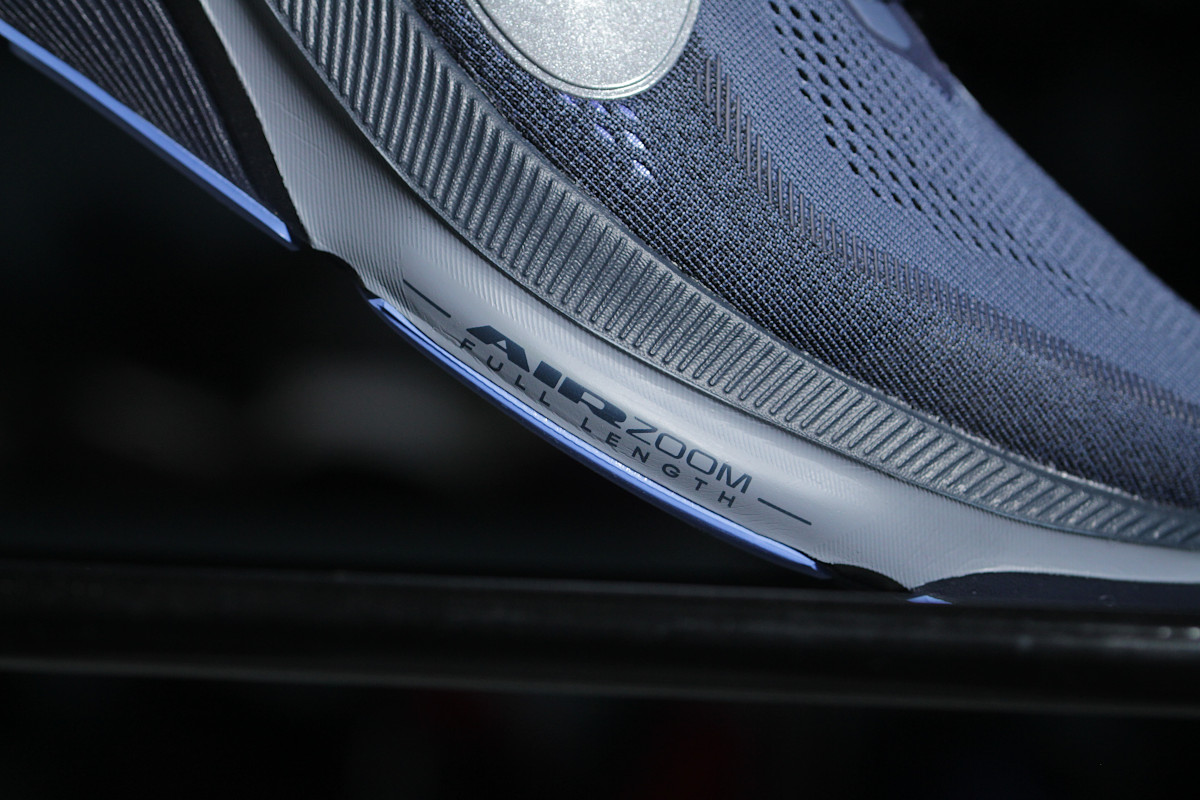
In motion, the sole works a bit more smoothly and uniformly than before. This is thanks to a single gas cushion and, consequently, a more uniform sole. The foam compresses more easily upon contact with the ground and then returns some of the energy during the push-off. The effect is quite predictable, and its performance doesn’t resemble that of aggressive racing shoes with super foams and carbon plates. The Pegasus 42 is more about a smooth running rhythm and a slightly springy feel than about high performance.
The level of cushioning can be described as moderately high. The Pegasus 42 isn’t as soft as models with maximum cushioning, but you can’t deny that it offers quite a bit of comfort. It effectively absorbs impact during easy workouts and longer runs, while still providing some ground feel. This cushioning is geared more toward versatility than an extremely soft landing. It works best for runners with a lower body weight – it will be ideal for runners weighing up to 80 kilograms.
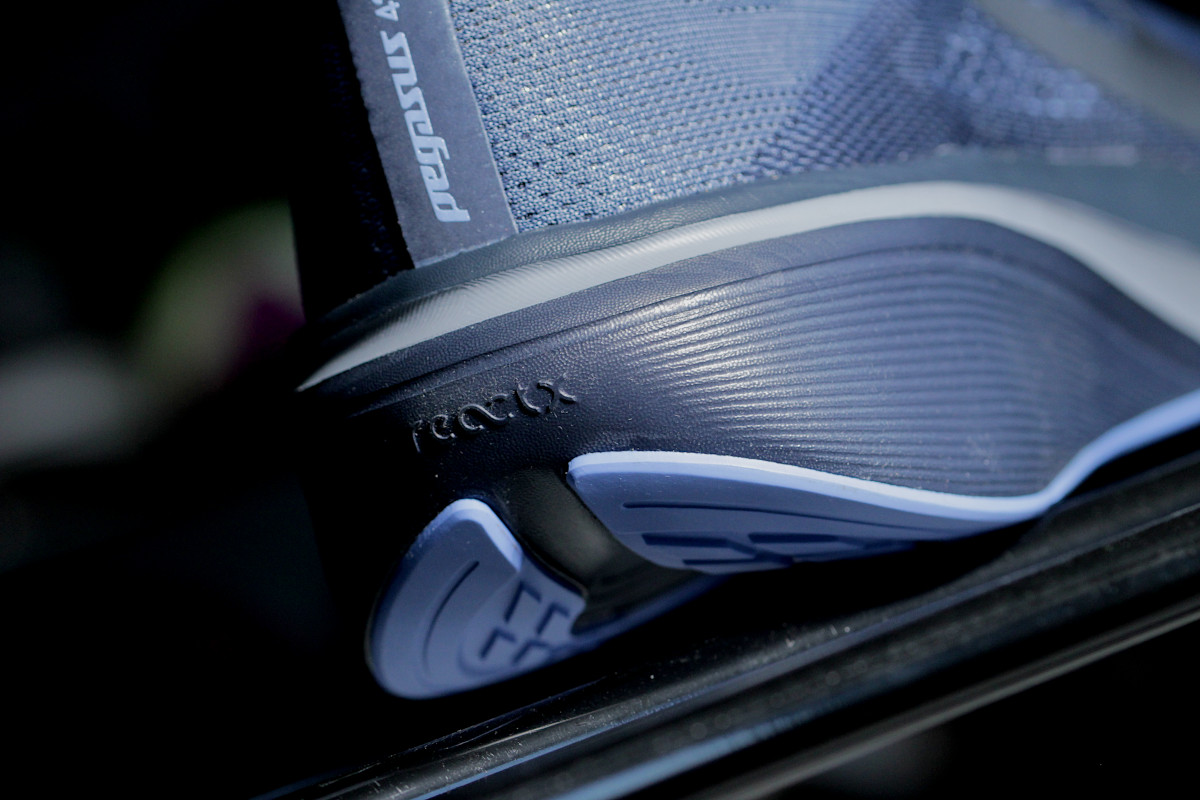
It’s also worth noting the width of the sole in the rear section. For many years, the Pegasus got us used to a fairly narrow “heel” under the heel. It looked lighter, reduced the shoe’s weight, but also caused some instability. It couldn’t be any other way if the shoe’s base was narrower than the upper resting on it. The latest edition is different. The part of the sole under the heel is wider, slightly “bulbous,” but more stable as a result. Now the Pegasus offers the stability you’d expect from this class of running shoes.
Roads Are Its Natural Habitat
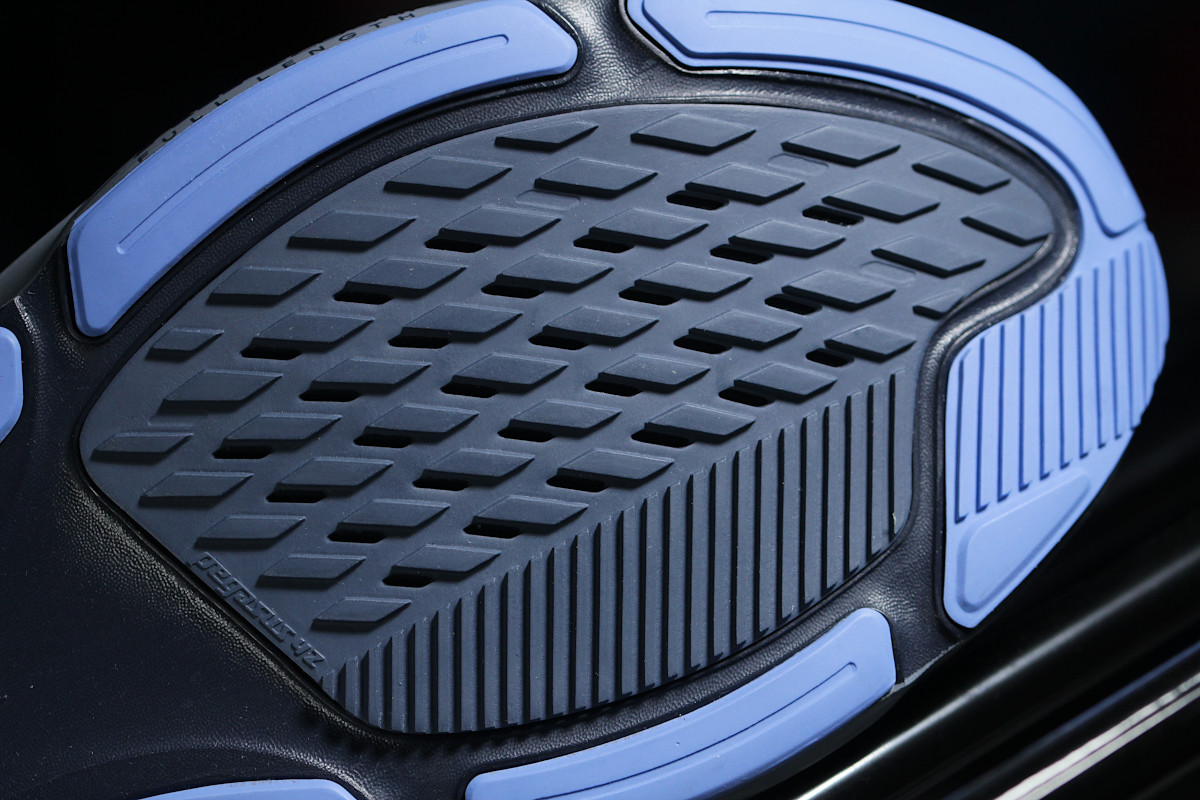
The outsole of the Nike Pegasus 42 hasn’t undergone a revolution. It’s still an outsole designed for asphalt roads and hard surfaces. Rubber is present under both the forefoot and heel. There’s quite a lot of it, so durability should be high. The outsole elements themselves are slightly lower than in the previous edition – they are about 1.4 mm high at most. Although the outsole is slightly flatter than in the previous edition, this is still a standard depth for road running shoes.
In practice, its intended use is still quite broad. It’s primarily a shoe for roads, sidewalks, and other hard surfaces. It also performs very well on a treadmill. Light terrain? Yes, but more like a park than a dense forest. Loose gravel or mud isn’t really its environment. If you’re aiming for more challenging terrain, models like the Nike Pegasus Trail, Nike Zegama, or Nike Wildhorse will be a better choice.
Upper Is Sufficiently Soft and Snug
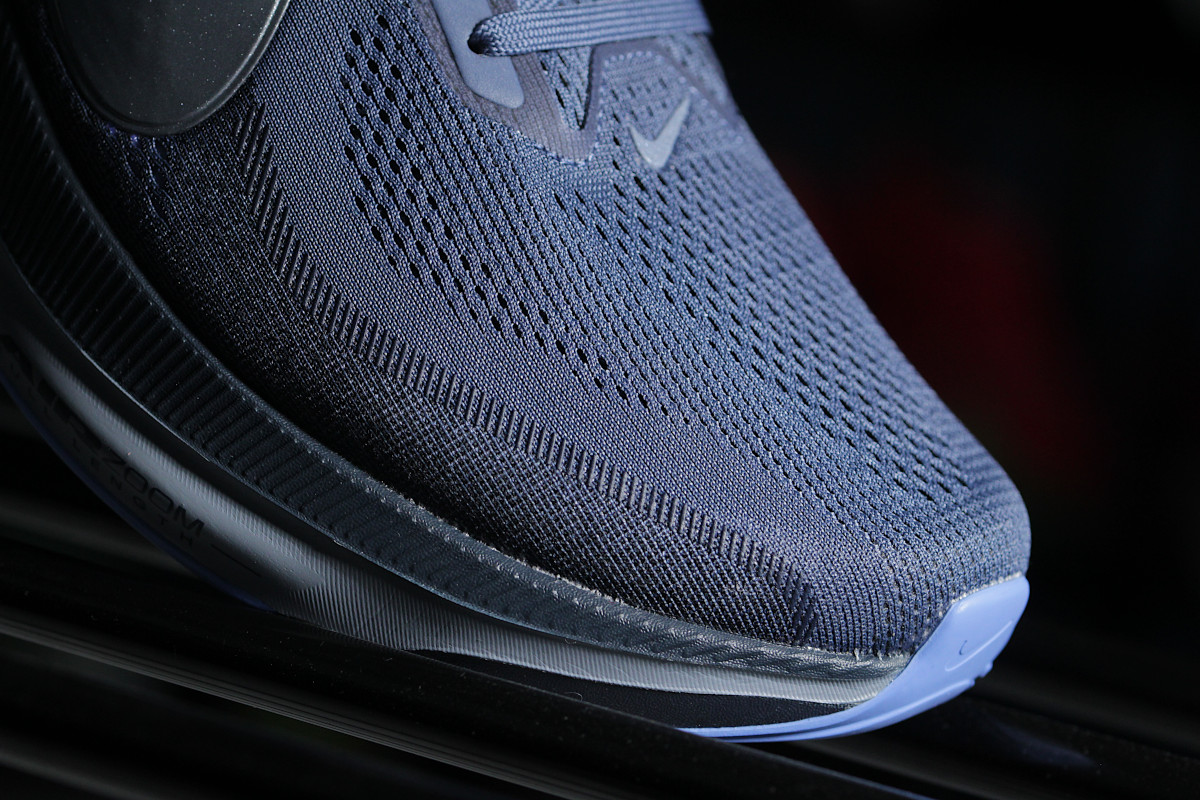
The upper on the Nike Pegasus 42 is classic technical mesh. Nothing surprising there. The material works comfortably with the foot while running and “wraps” it quite well. It’s neither too warm nor too cold. The perceived comfort is also top-notch.
The amount of space is typical for the Pegasus, meaning slightly below average. The forefoot isn’t particularly roomy, which is why for years I’ve been choosing a size half a centimeter larger in Pegasus models than in most other shoes. Although the shoe is slightly larger, thanks to its good fit, the foot is held securely and the amount of space in the forefoot isn’t excessive. On longer runs, there might even be too little space. Some say the shoe’s shape in the forefoot is less tapered “to a point.”
I don’t notice this, and my smaller toes are quite close to the upper material. So this is still not a shoe for people with a wide forefoot. It’s also not a good model for those with Roman or Greek feet – that is, feet where the second toe is the same length as or even longer than the big toe.
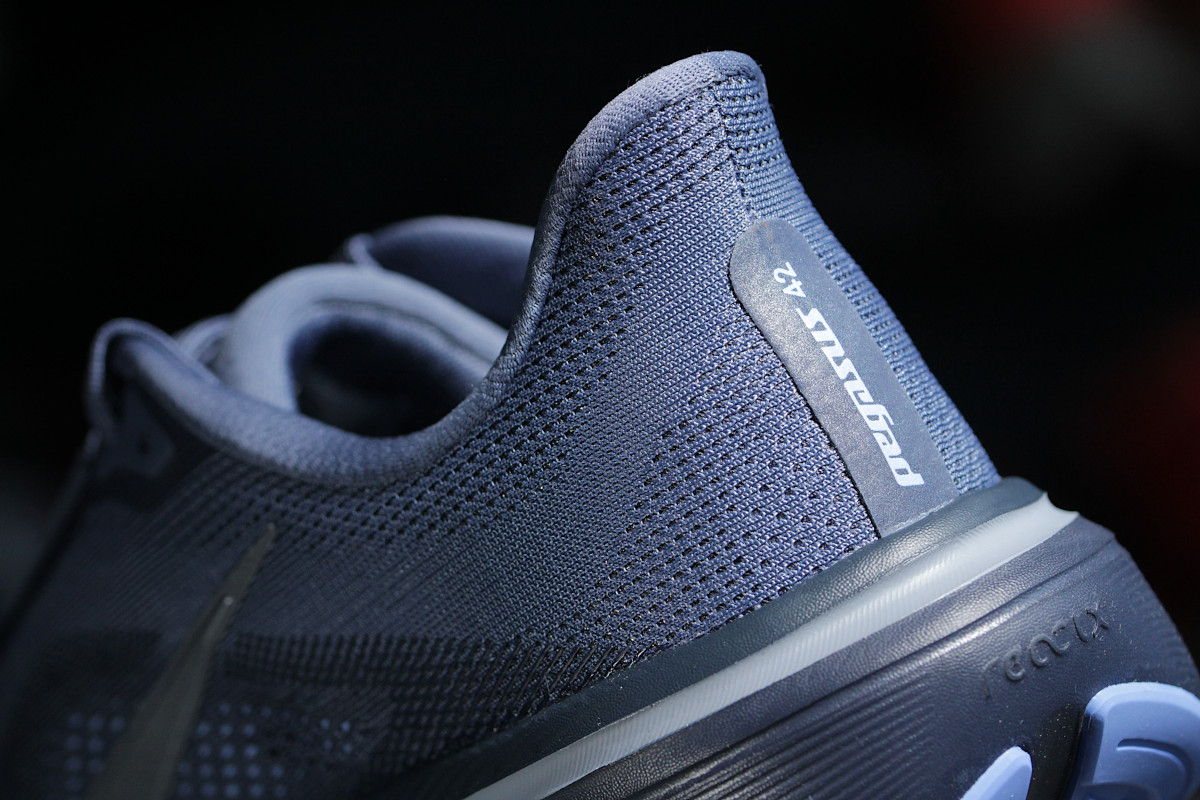
The heel construction remains classic. There is a stiffener that stabilizes the foot upon landing. It is quite rigid, but fortunately, it is not a “concrete” heel counter. It has some flexibility, is filled with foam on the inside, and works well with the entire upper. Additionally, as I mentioned, the wider and more stable sole under the heel provides a more secure feel at the back of the shoe. The heel counter is also still slightly angled backward, which improves comfort around the Achilles tendon.
It’s a Bit Heavy, but That’s Not a Problem
According to the producer, Nike, the Pegasus 42 weighs 300 grams in the men’s version and 243 grams in the women’s version. These aren’t particularly impressive figures. In practice, the Pegasus makes an even less impressive impression because the shoe in my standard size 12US weighs 355 grams. That’s quite a lot. It’s the heaviest Pegasus since I started measuring them, i.e., since the Pegasus 31 from 2014. Among shoes for everyday running on the road, it ranks in the top 28% of the heaviest models.
Fortunately, it’s “no big deal” on the foot, and the shoe doesn’t feel that cumbersome. It’s light enough for what it was designed to do. Weight isn’t the key factor here, and the extra grams don’t make a negative difference in daily running.
Summary
The Nike Pegasus 42 doesn’t try to be revolutionary, but it is a successful update to the series. Nike has retained the Pegasus’s versatile character while improving one thing its predecessors lacked – stability under the heel. The combination of ReactX and a full-length Air Zoom cushion makes the shoe feel smoother, yet it remains a safe choice for daily workouts. It’s still a classic daily trainer, just a bit more mature.