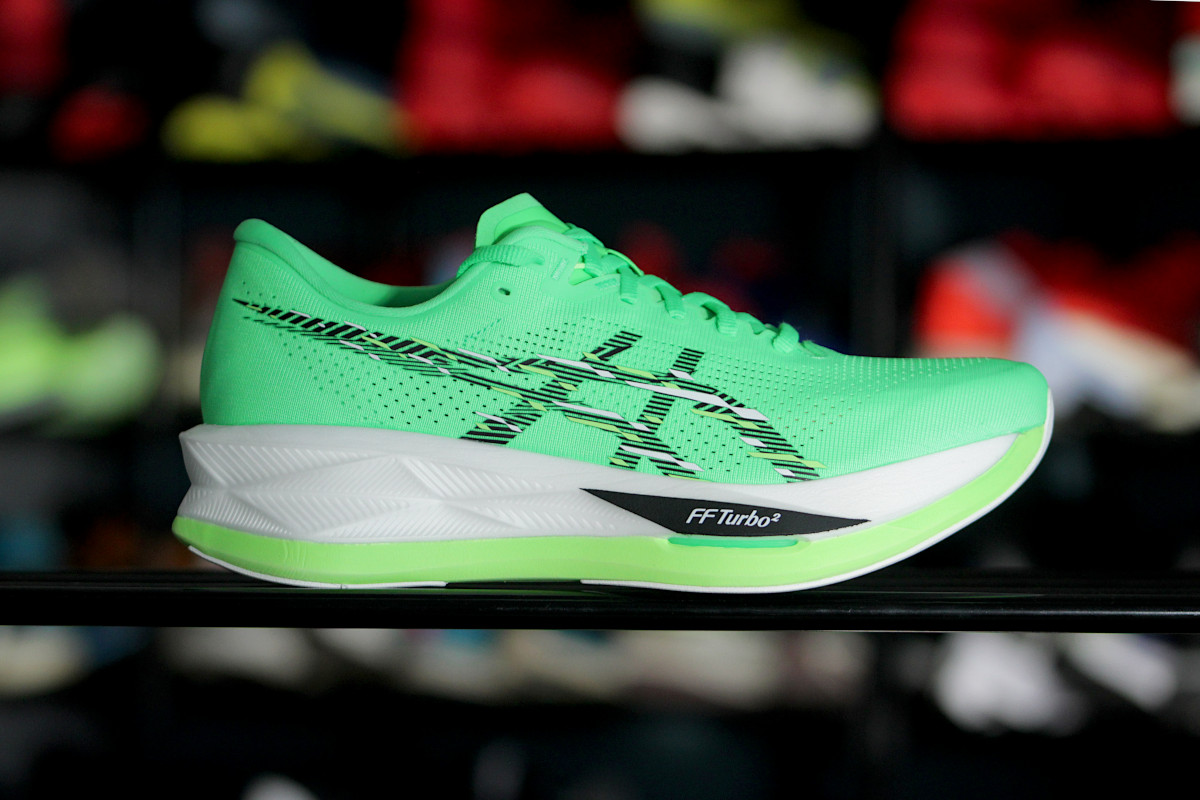
Asics likes to keep its lineup organized, but the Sonicblast clearly breaks the mold. It’s a shoe that combines soft, high cushioning with a plate, yet doesn’t try to be either a typical training shoe or an aggressive racing shoe. In practice, it allows for a springy, fast run that doesn’t require perfect technique or getting used to it, as with carbon-soled shoes. It’s currently the only model in the “blast” series with a plate, though super-training shoes without a plate, like the Superblast 3, offer even better performance. It’s hard to categorize it and find a place for it in the table.
Basic Info
Tech Specs
Best For
The Asics Sonicblast is a speed training shoe with heavy cushioning, designed primarily for hard surfaces such as road or sidewalks. It performs best during speed training, intervals, tempo runs, and threshold training. That’s where it can make the most of its springiness and dynamic character. It can also handle longer distances, but its potential clearly increases with running pace. This is not a shoe for casual runs, long runs, or trail running – it’s too stiff and aggressive for that.

Pros
- high responsiveness and aggressive rocker
- smooth transition from heel to toe
- thin, breathable yet supportive upper
- lightweight
Cons
- limited versatility: only for quick sessions
- the sole is very stiff, which takes some getting used to.
- not much room for the toes
Asics Running Shoes – Lineup
The Sonicblast is one of the more unique models in the “Blast” family. It falls somewhere between training models, such as the Asics Novablast or Dynablast, and faster constructions like the Superblast or Megablast. In this regard, it most closely fits the definition of a speed training shoe.
At the same time, it stands out from the rest of the series due to the presence of a plate. In the Sonicblast, this is a nylon Astro Plate, which significantly stiffens the construction and affects performance. Cushioning remains at a high level, but has a more springy and dynamic character. Although it ranks below models such as the Superblast or Megablast, each offers a completely different feel underfoot. A shared name does not imply similar characteristics while running.
However, if you’re looking for maximum performance, simply go for shoes with carbon fiber plates – namely the Metaspeed Sky or Edge models. You can read about all these models in the Asics running shoe guide.
| RACING | SPEED TRAINING | |
|---|---|---|
| maximum performance |  Metaspeed Ray 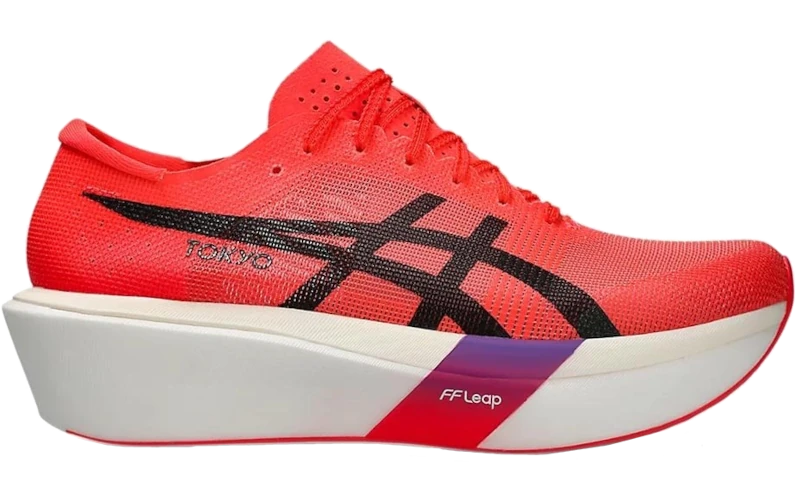 Metaspeed Sky/Edge Tokyo | |
| very high performance | 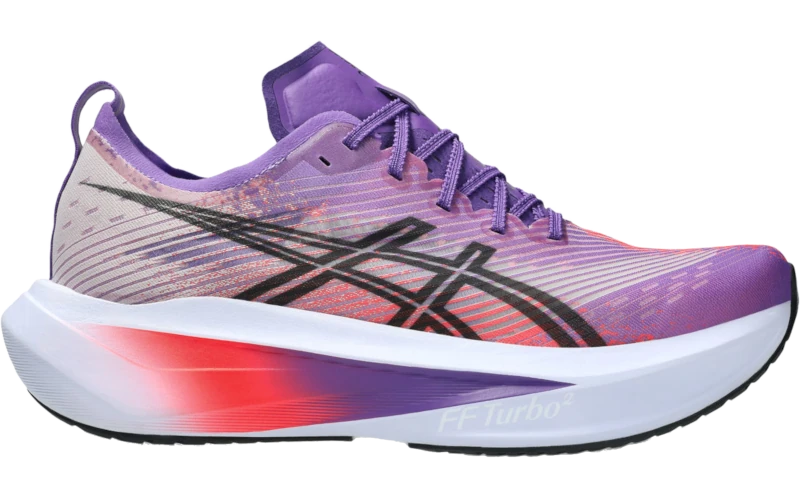 Megablast  Superblast 3 | |
| high performance | 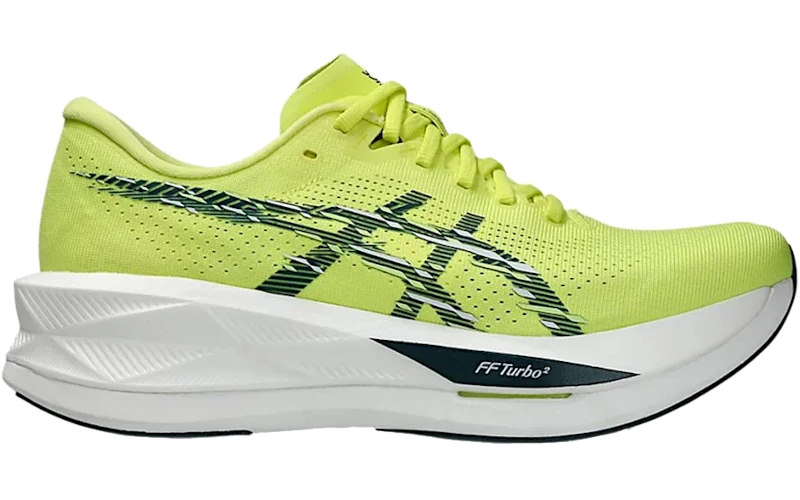 Sonicblast 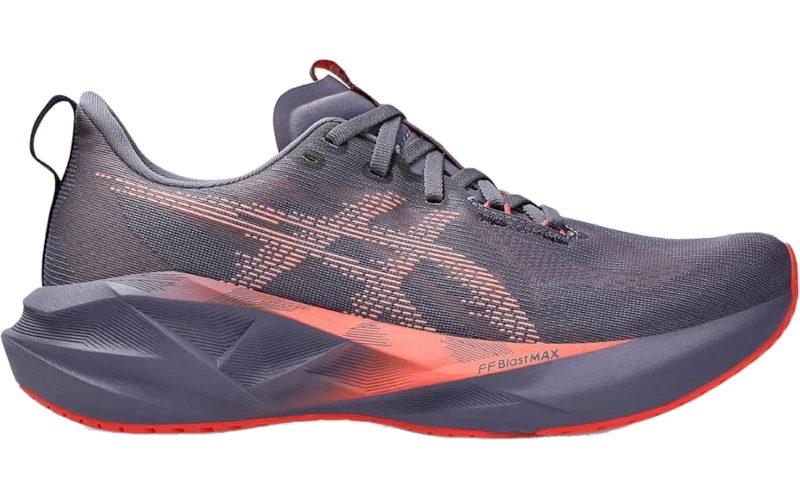 Novablast 5 | |
| mid performance | 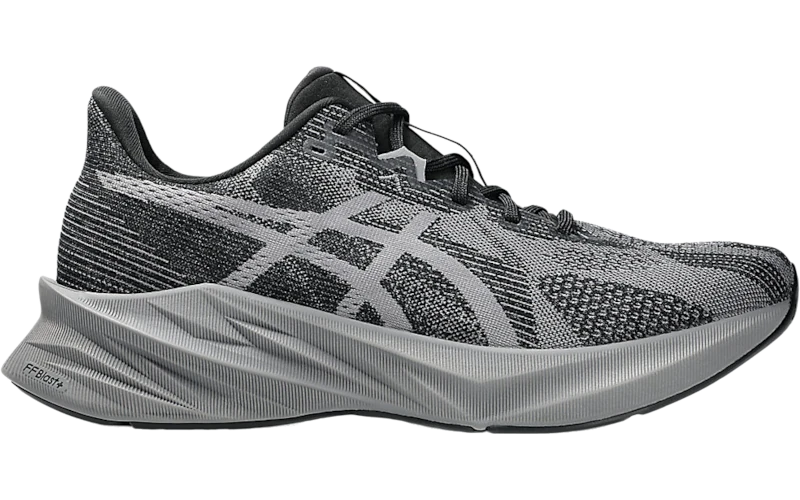 Dynablast 5 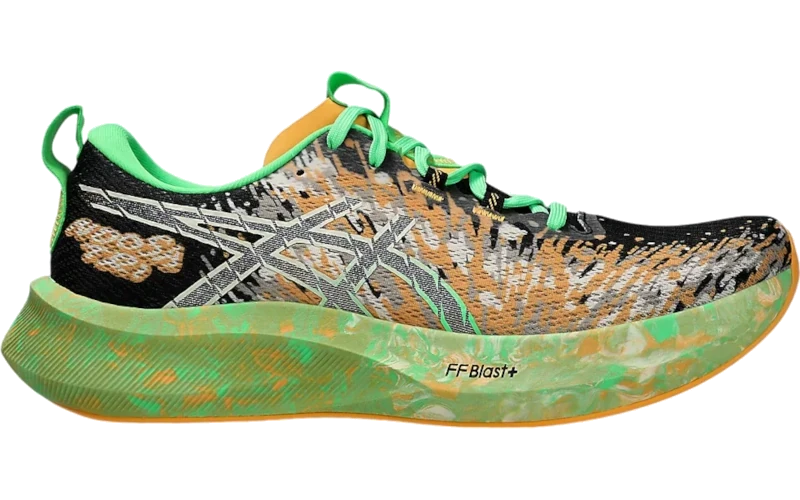 Noosa Tri 16 |
Similar to Asics Sonicblast
Although unconventional, the Sonicblast fits the definition and design principles of speed training shoes. It combines a thick sole with pronounced performance, but does so in a more “sporty” way. It focuses less on maximum comfort and more on running efficiency. As a result, it becomes something between a training shoe and a tempo shoe, which works better for high-intensity speed training than for leisurely running.
Want to learn more about speed training shoes? Check out this speed training shoe guide.
| MODEL | STACK HEIGHT (mm) | DROP (mm) | WEIGHT MEN'S (grams) | WEIGHT WOMEN'S (grams) | REGULAR PRICE (€) |
|---|---|---|---|---|---|
| adidas Adizero Boston 13 | 36/30 | 6 | 260 | 219 | 160 |
| adidas Adizero Evo SL | 39/33 | 6 | 224 | 188 | 150 |
| Asics Sonicblast | 46/38 | 8 | 245 | 221 | 190 |
| Asics Noosa Tri 16 | 34.5/29.5 | 5 | 215 | 185 | 150 |
| Brooks Hyperion 3 | 36/28 | 8 | 241 | 210 | 150 |
| Brooks Hyperion Max 3 | 36/30 | 6 | 255 | 193 | 150 |
| Hoka Mach X 3 | 46/41 | 5 | 289 | 243 | 195 |
| New Balance Rebel v4 | 30/22 | 8 | 211 | 177 | 175 |
| Nike Zoom Fly 6 | 42/34 | 8 | 265 | 214 | 180 |
| Saucony Endorphin Speed 5 | 36/28 | 8 | 237 | 204 | 170 |
| Puma Deviate Nitro 4 | 39/29 | 10 | 280 | 236 | 170 |
Cushioning: Responsiveness Instead of Soft Padding
The stack of the Asics Sonicblast is impressive, though it’s not just about the numbers. The stack height under the heel is approximately 46 mm, and under the forefoot – 38 mm. That’s a lot of foam underfoot, significantly more than in standard training shoes. The drop is standard – 8 mm – so the transition from heel to midfoot is natural and predictable.
The sole has a two-layer construction. The upper layer features FF Turbo2, a material designed for energy return. The lower layer, meanwhile, features the more stabilizing FF Blast Max. This combination produces an interesting effect – the shoe doesn’t collapse excessively, but it returns a lot of energy upon push-off.
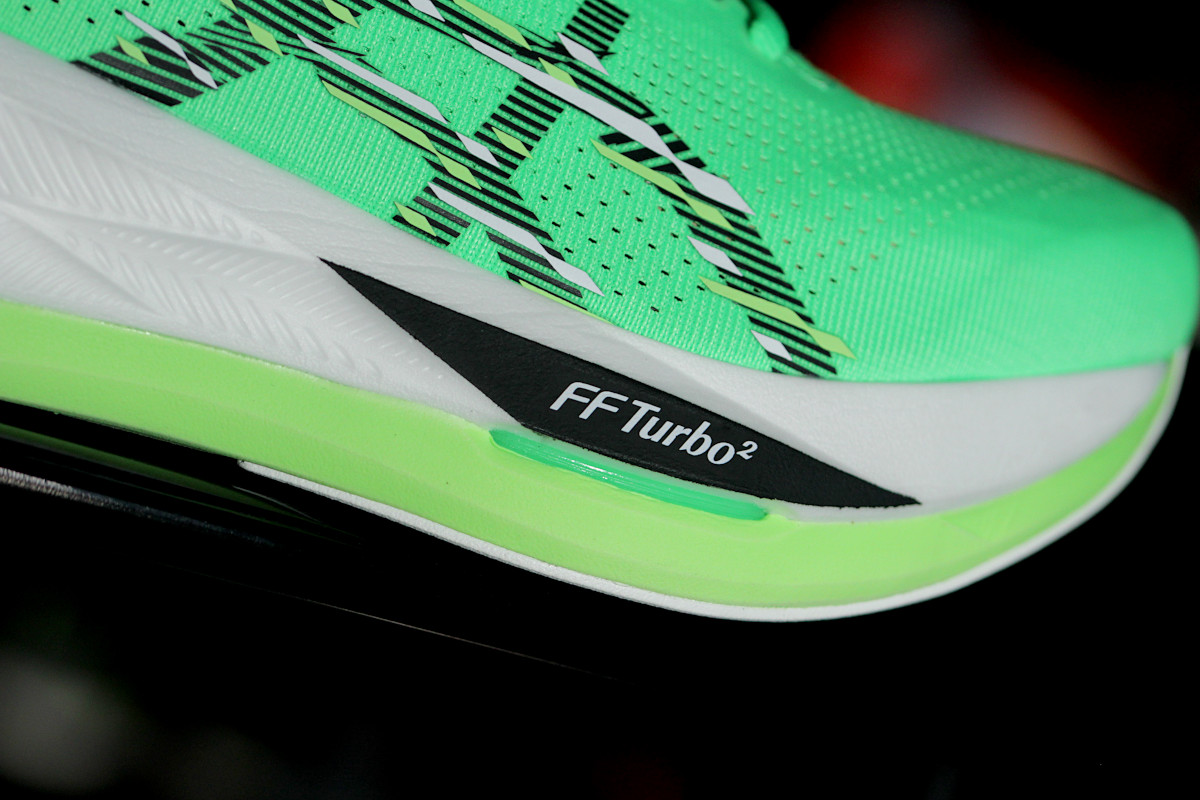
One of the key elements of the Asics Sonicblast’s construction is the Astro Plate, which is located between the foam layers. Unlike carbon fiber, it isn’t extremely stiff. Instead of an aggressive “kick,” you get a smoother, more natural roll and support during the push-off. This makes the shoe much easier to handle and doesn’t require as much technical skill as typical racing shoes, while still significantly improving stride performance.
In practice, the cushioning in the Sonicblast is high, but it’s hard to call this model very soft. It offers a fairly balanced level of cushioning that suggests greater performance. This is especially true because, although nylon is more flexible than carbon, the shoe is still very stiff and strongly contoured. You feel strong resistance when flexing, which then transfers energy forward. The stiffness also keeps the sole geometry in check, which clearly supports a quick roll. The result is closer to a tempo shoe than a typical everyday training shoe.
As a result, the Sonicblast performs significantly better during faster runs than during easy jogs. Its potential only becomes apparent at higher speeds, and during slower jogs, its stiffness and geometry can be a hindrance. If you’re looking for maximum softness and comfort, classic training shoes are a better choice. However, if you want to combine cushioning with distinct performance, the Sonicblast makes much more sense.
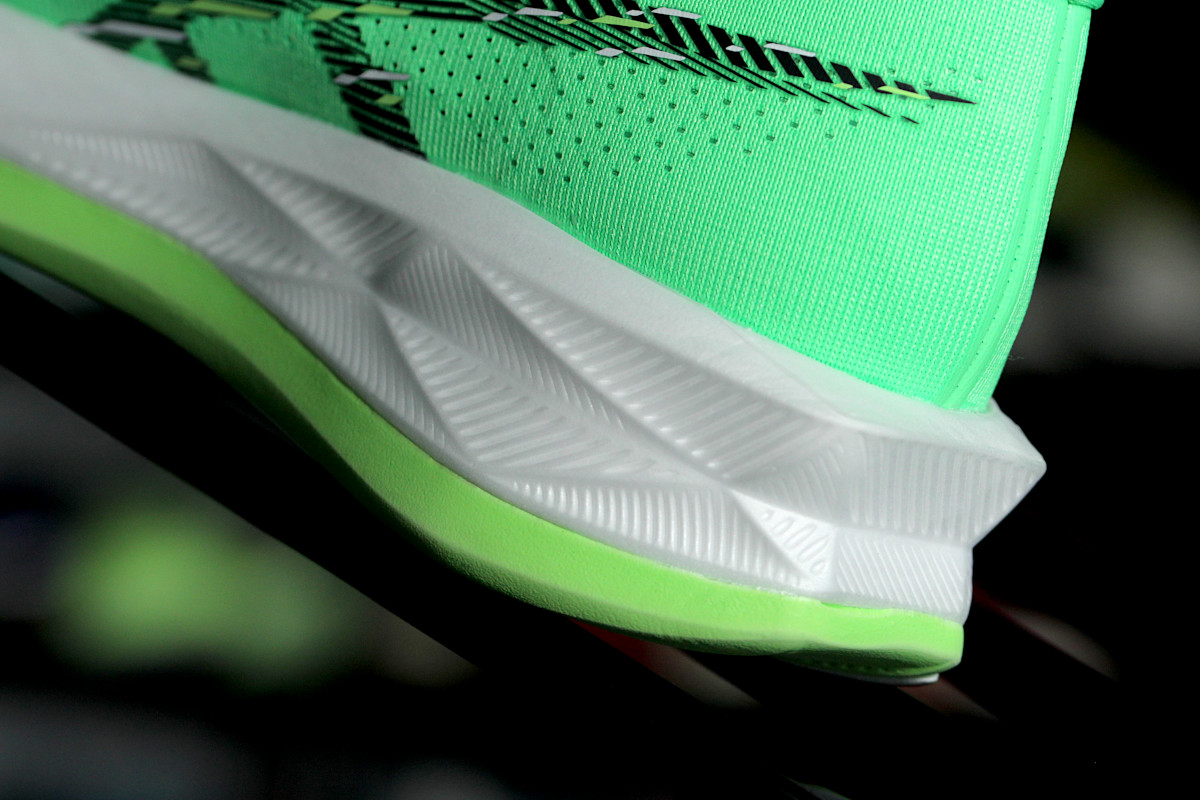
Outsole: An Asphalt Specialist
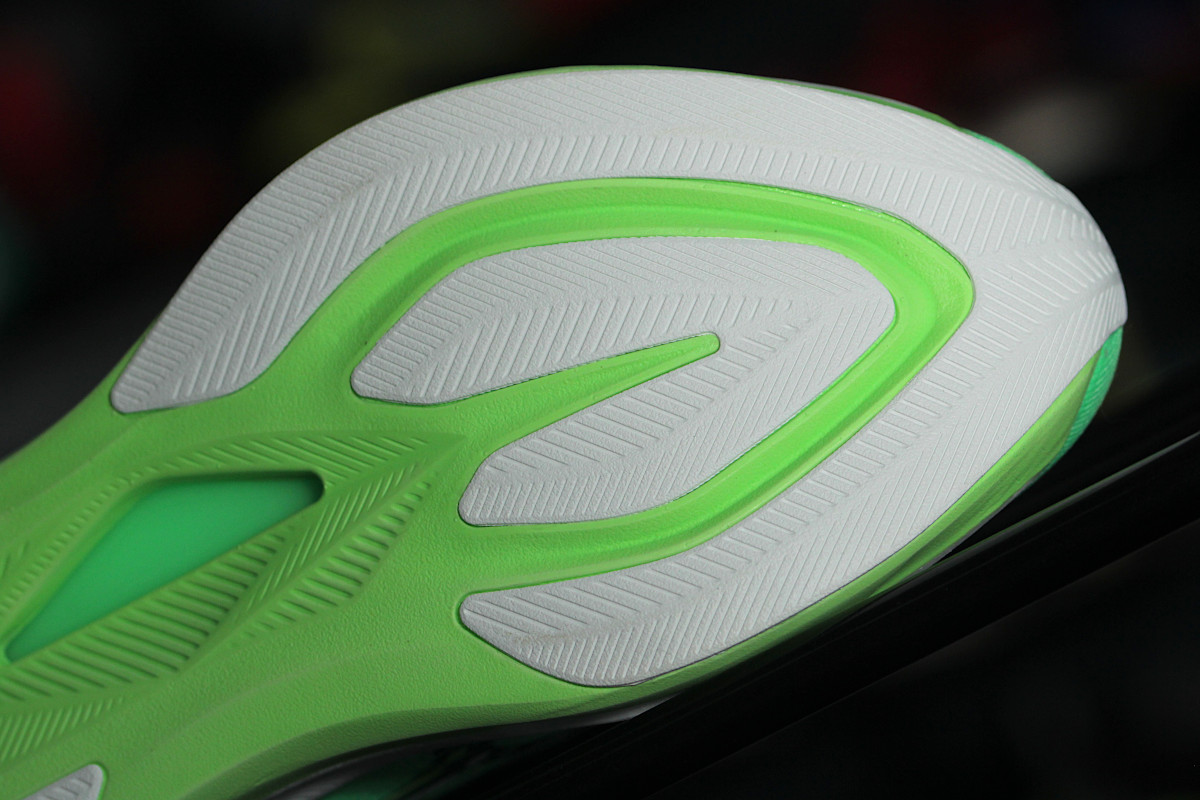
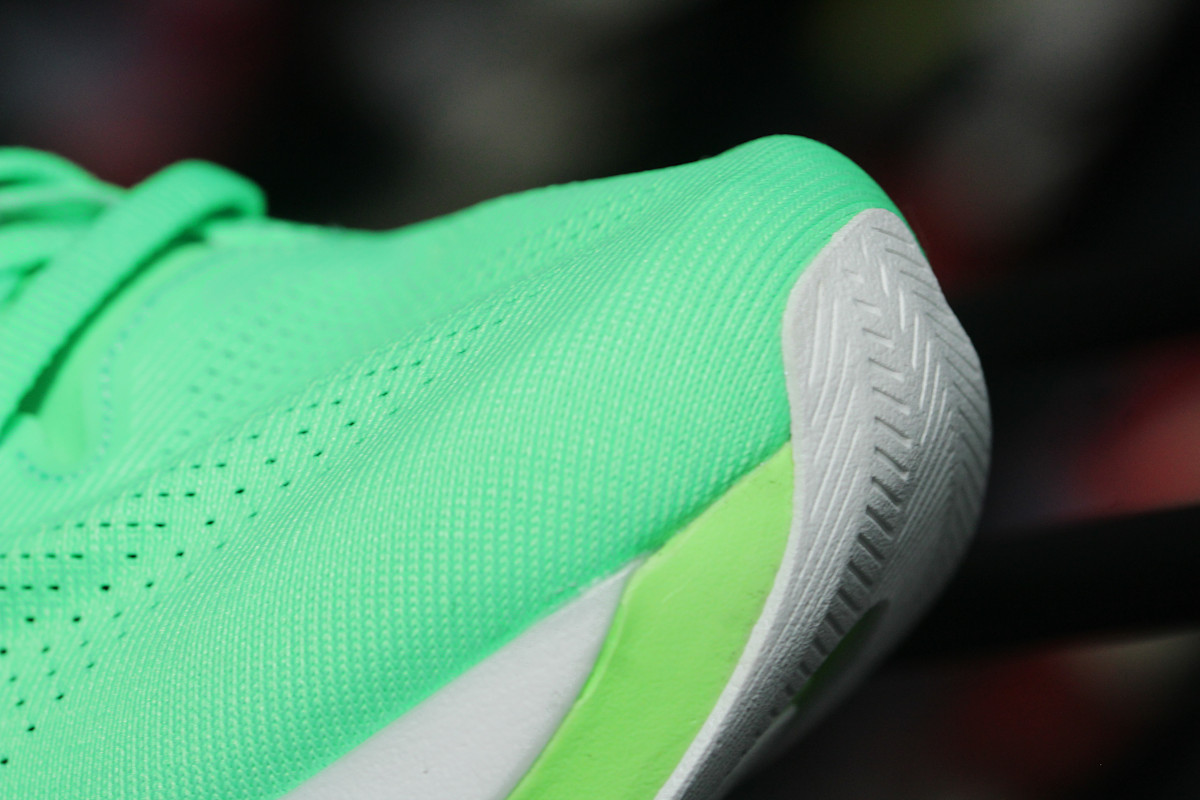
The outsole of the Asics Sonicblast aligns with the philosophy of a lightweight, fast shoe. The AsicsGrip rubber is quite flat – the tread pattern is no more than 0.8 millimeters deep. This depth is typical for speed shoes, where efficiency is the top priority, not all-terrain versatility. The rubber is mainly located in strategic areas – on the edges of the rear section and in the front part of the sole. A large portion of the midfoot section remains exposed, which is also typical for models focused on performance.
This construction has a clear goal – less rubber means lower weight and a smoother foot roll. It’s also a sign that the Sonicblast is most at home on roads and hard surfaces, where it can fully utilize its characteristics. Gravel or forest trails are possible, but this isn’t the environment for which this model was designed.
Upper: Minimalist Design That Keeps the Foot Secure
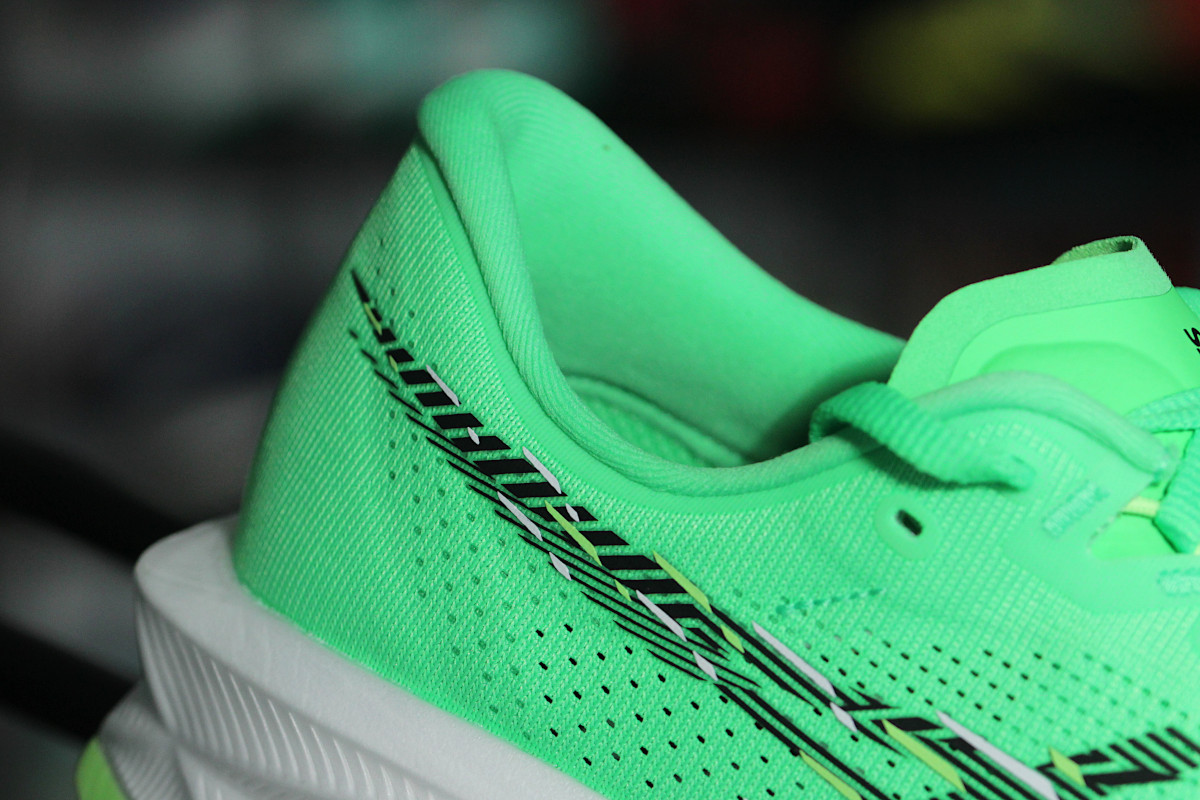
The upper of the ASICS Sonicblast immediately shows that this is no classic training shoe. It’s made of thin, highly breathable material that’s closer to racing shoes than training models like the Gel-Nimbus 28. It’s lightweight, flexible, and breathable, which translates to high comfort. The overall fit feels snug. This is likely not the shoe for runners with wide feet.
The forefoot offers moderate space. In this regard, it also resembles the snug fit of racing shoes rather than the spaciousness of training shoes. A plus is that the flexible material allows the foot to move freely inside. The upper also holds the foot better than its lightness would suggest, especially in the midfoot. Additional support comes, of course, from the lacing system and the side panels that stabilize the foot.
The heel counter is moderately stiff. It is stiffened enough to make it stable, but it also retains a lot of comfortable softness. For fast shoes and fast running, this solution should work flawlessly. However, for slower runs, where the pressure on the heel is significantly longer and stronger, this solution may prove insufficient.
An additional plus is the geometry and stiffness of the sole. The wider base with slightly raised edges “hugs” the foot from below. The stiffer base, thanks to the AstroPlate nylon plate, ensures that the shoe does not “float” under the heel. Compared to the popular Novablast, this is a shoe with greater overall stability, which is particularly noticeable during faster runs.
Weight: More Performance Than the Numbers Suggest
According to the specs, the men’s Asics Sonicblast weighs about 245 grams and the women’s 221 grams. For a shoe with such a high sole and a stiff plate, it performs very well. This is comparable to other speed training shoes, even though it’s one of the taller shoes in this category. Additionally, its “fast” characteristics make it feel lighter on the foot than the scale indicates.
In size 12US, which is my size, the shoe weighs 279 grams. When compared to its competitors – other running shoes that perform best during fast training sessions – it turns out to fall right in the middle. The current average for this segment of running shoes on the blog is 277 grams. So the Sonicblast hits the sweet spot. It isn’t ultralight, but it also doesn’t stand out from the segment. The difference is that it offers more comfort and is more forgiving of technical mistakes. This makes it a viable alternative for people who want to run fast but without the full “regime” of racing shoes.
Summary
The Asics Sonicblast is a shoe that’s not easy to categorize, but that might be its strength. It combines high cushioning with distinct performance and midfoot support, offering a more accessible and controlled feel than typical racing models. It excels in speed training, where it can showcase its responsiveness and efficiency, though its stiffness may not be to everyone’s liking.