Not all sizes are equal. This is something every runner quickly learns. You wear a size 43 in these brands. With another brand, you suddenly need a size 44. A model that fits comfortably in one brand may be too short in another. What works for everyday shoes can cause problems with running shoes. Here, precision and adequate space in front of the toes are important. The EU size system can be inconsistent in this regard. So why does the European size system so often fail when it comes to running shoes?
Why EU Sizing Can Be Confusing for Runners
In Europe, almost everyone naturally uses European sizes. Stores display them most prominently. In theory, everything is simple. Women’s sizes typically range from 36 to 42 EU. Men’s sizes range from 42 to 48 EU. However, this system is not as precise as it seems. The same number does not always correspond to the same shoe length. In everyday footwear, this often does not make much difference. However, in running shoes, where every millimeter of space in front of the toes counts, this becomes a real problem.
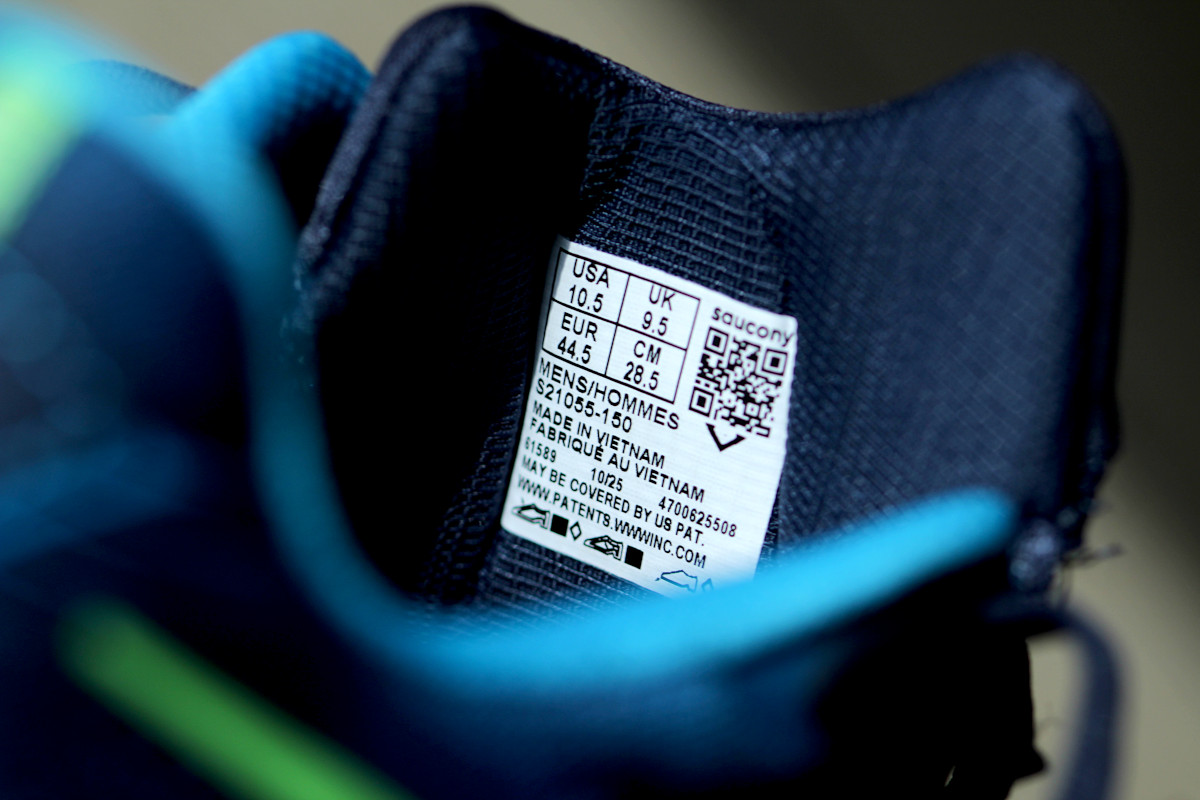
Consider the popular men’s size 44 EU. For many manufacturers, it corresponds to an insole length of about 28 cm. This is the case with Adidas, Asics, Brooks, Hoka, New Balance, Nike, and Saucony, among others. While this sounds consistent, one exception is enough to cause confusion. At Mizuno, the same size is around 28.5 cm. It’s only half a centimeter. In practice, this difference is very noticeable in running shoes.
Even greater chaos arises with extreme sizes. For example, an EU size 46 can correspond to shoes with completely different insole lengths depending on the brand. In some shoes, EU size 46 is 29 cm; in others, it’s 29.5 cm; and in still others, it’s a full 30 cm. Sometimes a given size does not exist at all. This is the case with New Balance, for example, where instead of size 46, they offer size 45.5 or 46.5. This is why European sizes are not useful for running. A much more reliable reference point is the insole length, given in centimeters.
The Same EU Size, Different Length
That is why the most reliable system, though not 100% accurate, is the one based on centimeters. This is especially true for running shoes, where it is absolutely necessary to have shoes that are half or one centimeter larger. A lack of space for your toes is unforgiving and can damage your toenails. It’s better to have these sizes than not. I recommend not worrying about European sizes. No one will check your shoe size while you’re running. The main thing is that you feel safe and comfortable.
The same applies if you already know your size in one brand and want to buy shoes from a different brand. In that case, check the length of the insole in your current running shoes and order shoes with the same insole length from a different brand. This will minimize the risk of getting the wrong size. Never go by European sizes. Why?
Because the length of the insole in centimeters translates very differently to European sizes.
Centimeters and European size in women’s shoes
| ADIDAS | ASICS | BROOKS | HOKA | MIZUNO | NB | NIKE | SAUCONY | |
|---|---|---|---|---|---|---|---|---|
| 22 cm | 36 | 35,5 | 35,5 | 36 | 35 | 35,5 | 36 | |
| 22,5 cm | 36 2/3 | 36 | 36 | 36 2/3 | 36 | 36 | 36 | 37 |
| 23 cm | 37 1/3 | 37 | 36,5 | 37 1/3 | 36,5 | 36,5 | 36,5 | 37,5 |
| 23,5 cm | 38 | 37,5 | 37,5 | 38 | 37 | 37 | 37,5 | 38 |
| 24 cm | 38 2/3 | 38 | 38 | 38 2/3 | 38 | 37,5 | 38 | 38,5 |
| 24,5 cm | 39 1/3 | 39 | 38,5 | 39 1/3 | 38,5 | 38 | 38,5 | 39 |
| 25 cm | 40 | 39,5 | 39 | 40 | 39 | 39 | 39 | 40 |
| 25,5 cm | 40 2/3 | 40 | 40 | 40 2/3 | 40 | 40 | 40 | 40,5 |
| 26 cm | 41 1/3 | 41,5 | 40,5 | 41 1/3 | 40,5 | 40,5 | 40,5 | 41 |
| 26,5 cm | 42 | 42 | 41 | 42 | 41 | 41 | 41 | 42 |
| 27 cm | 42 2/3 | 42,5 | 42 | 42 2/3 | 42 | 41,5 | 42 | 42,5 |
Centimetres and European size in men’s shoes
| ADIDAS | ASICS | BROOKS | HOKA | MIZUNO | NB | NIKE | SAUCONY | |
|---|---|---|---|---|---|---|---|---|
| 26 cm | 41 1/3 | 41,5 | 41 | 41 1/3 | 40,5 | 41,5 | 41 | 41 |
| 26,5 cm | 42 | 42 | 42 | 42 | 41 | 42 | 42 | 42 |
| 27 cm | 42 2/3 | 42,5 | 42,5 | 42 2/3 | 42 | 42,5 | 42,5 | 42,5 |
| 27,5 cm | 43 1/3 | 43,5 | 43 | 43 1/3 | 42,5 | 43 | 43 | 43 |
| 28 cm | 44 | 44 | 44 | 44 | 43 | 44 | 44 | 44 |
| 28,5 cm | 44 2/3 | 45 | 44,5 | 44 2/3 | 44 | 44,5 | 44,5 | 44,5 |
| 29 cm | 45 1/3 | 46 | 45 | 45 1/3 | 44,5 | 45 | 45 | 45 |
| 29,5 cm | 46 | 46,5 | 45,5 | 46 | 45 | 45,5 | 45,5 | 46 |
| 30 cm | 46 2/3 | 47 | 46 | 46 2/3 | 46 | 46,5 | 46 | 46,5 |
| 30,5 cm | 47 1/3 | 48 | 46,5 | 47 1/3 | 46,5 | 47 | 47 | 47 |
| 31 cm | 48 | 49 | 47,5 | 48 | 47 | 47,5 | 47,5 | 48 |
Final Thoughts
European running shoe sizes are only approximate. They are not directly related to the insole length in centimeters, and the differences can become greater as the size increases. For large men’s sizes, such as 47.5–49 EU, differences can reach up to about one and a half sizes between brands. There is another problem. Women’s and men’s sizes are separate, so the same shoe length may correspond to different EU sizes in the women’s and men’s versions.
Therefore, when it comes to running shoes, the European size should only be treated as a starting point. In everyday footwear, small differences are often irrelevant. However, in running shoes, it is important to have enough space in front of the toes; the space cannot be too small or too large. The most reliable reference is the insole length given in centimeters.
It’s best to try the shoes on anyway.