How much weight do your feet really bear when you run? Every run involves thousands of repetitive movements that accumulate load. In this article, I perform some simple calculations using three hypothetical runners of different weights. I examine how many kilograms pass through their feet at various distances. From short runs to long runs. No complicated formulas necessary. The numbers are truly impressive.
We will approach this in a simplified way. We will use shortcuts and averages. Despite this, the results will be meaningful. For simplicity, we will consider three amateur runners. Alex weighs 60kg. Ben weighs 80kg. Chris weighs 100kg.
Force Acting on the Foot at Landing
Without delving into the biomechanical nuances, the force of pressure exerted while running depends on a variety of factors. Individual characteristics matter. Running technique also matters. How you land and your pace are important. At the moment of peak contact with the ground, the foot is subjected to a load equal to approximately 2.5–3.0times body weight. This lasts only a fraction of a second. However, this occurs thousands of times. A lot? Definitely.
At the moment of maximum pressure, each of our runners’ feet presses down on the ground with a force of several hundred kilograms.
- Alex: 150-180kg
- Ben: 200-240kg
- Chris: 250-300kg
The foot copes with this efficiently. These values do not have a significant impact on it individually, but… After all, it’s just one step!
Thousands of Steps, Tons of Pressure
We run with our three scouts. Let’s assume an ideal scenario: The cadence is 180steps/minute. That’s 90steps/foot. This value is often considered optimal.
Does everyone run like this? Not necessarily. A higher cadence usually goes hand in hand with a faster pace. Slower amateur runners often run with a lower cadence; that is, they take fewer steps per minute. Such runners often run at a cadence of 170 or 160steps/minute. For the purposes of this calculation, however, let’s assume that all three run “by the book.”
We cover five kilometers. When we add up all the loads that our runners’ feet take on and carry during this time, we quickly stop talking about kilograms. We start counting in tons.
- Alex: 358-442tons
- Ben: 491-589tons
- Chris: 614-737tons
Is that not enough? Let’s continue. After ten kilometers, the values are as follows:
- Alex: 742-891tons
- Ben: 990-1,188tons
- Chris: 1,237-1,485tons
Next we ran a half marathon, and our runners’ spirits lifted.
- Alex: 1,566-1,879tons
- Ben: 2,088-2,505tons
- Chris: 2,610-3,132tons
Finally, after running the entire marathon, the feet of each of our brave runners had to cope with overload and strain.
- Alex: 3,132-3,758tons
- Ben: 4,176-5,011tons
- Chris: 5,222-6,264tons
That’s quite a lot…
Insights from Simple Math
As I mentioned, this is a generalization and an average. Many factors come into play, such as running technique, the runner’s weight, foot strike and cadence. Logically, the heavier the runner, the greater the load on the feet. In marathons, we’re talking about tons rather than kilograms. Of course, it’s not the same as lifting these tons at once, but it illustrates that during long runs, your entire body has to cope with heavy loads, not just your ankles and knees.
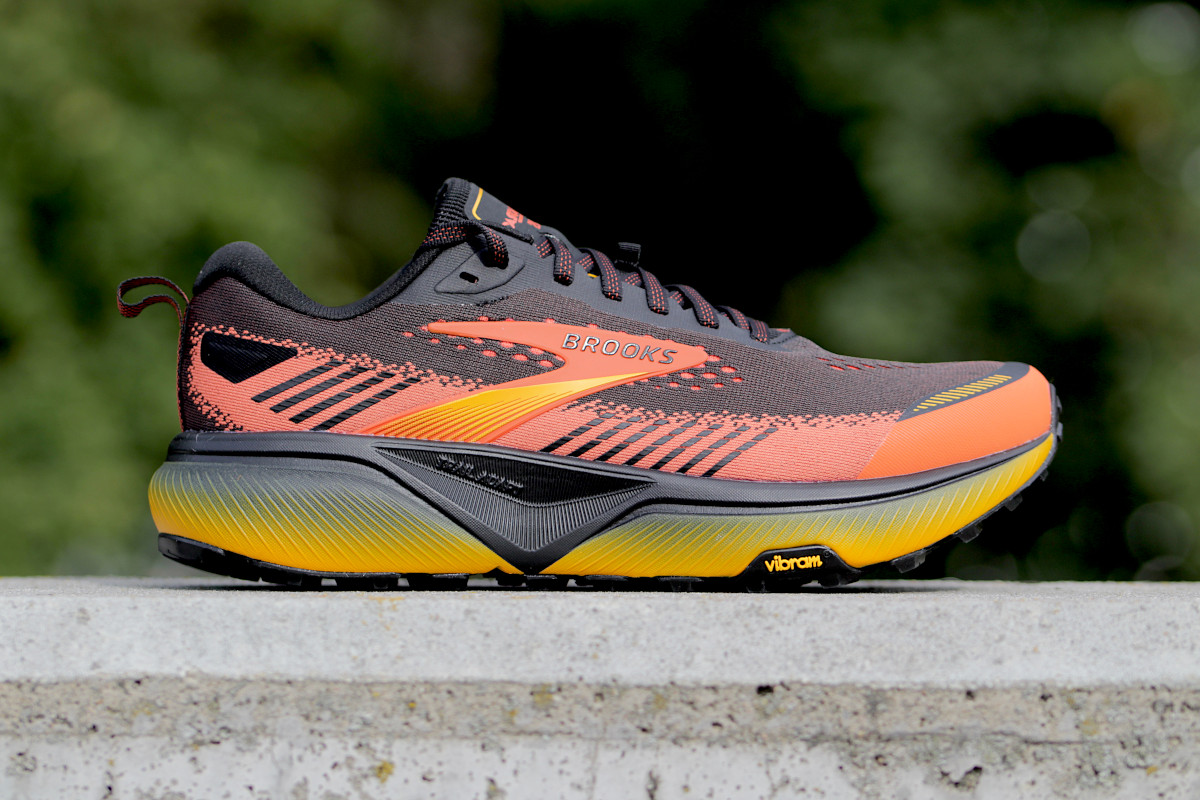
Therefore, there are two options, and it would be best to consider both. One option is to work on your technique, cadence and overall economy of movement. This takes time and requires running exercises, but it allows your running stride to cause less overload. The second option is to have adequate protection in the form of cushioning in your running shoes. It does not have to be the highest level of cushioning possible. It’s important to choose a level that suits your needs and preferences. Cushioning in running shoes can absorb some of the strain we calculated. With adequate cushioning, carrying more weight becomes more enjoyable and safer.