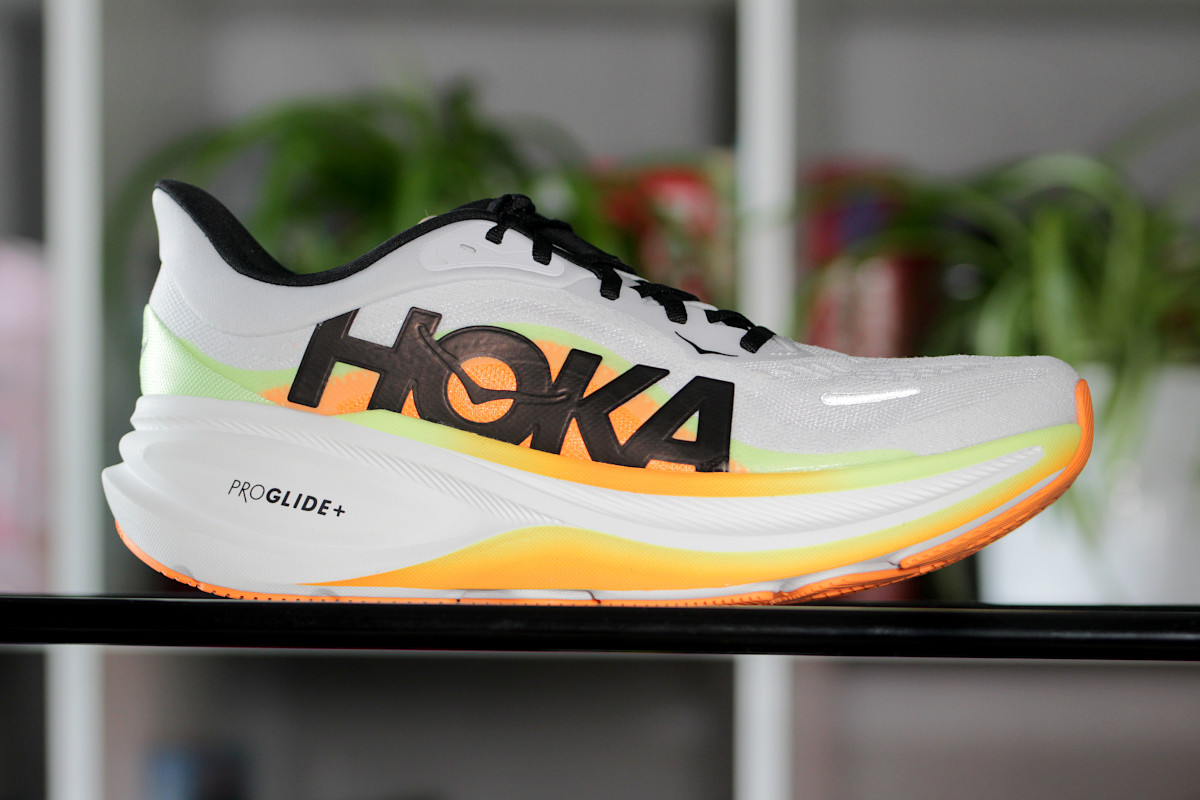
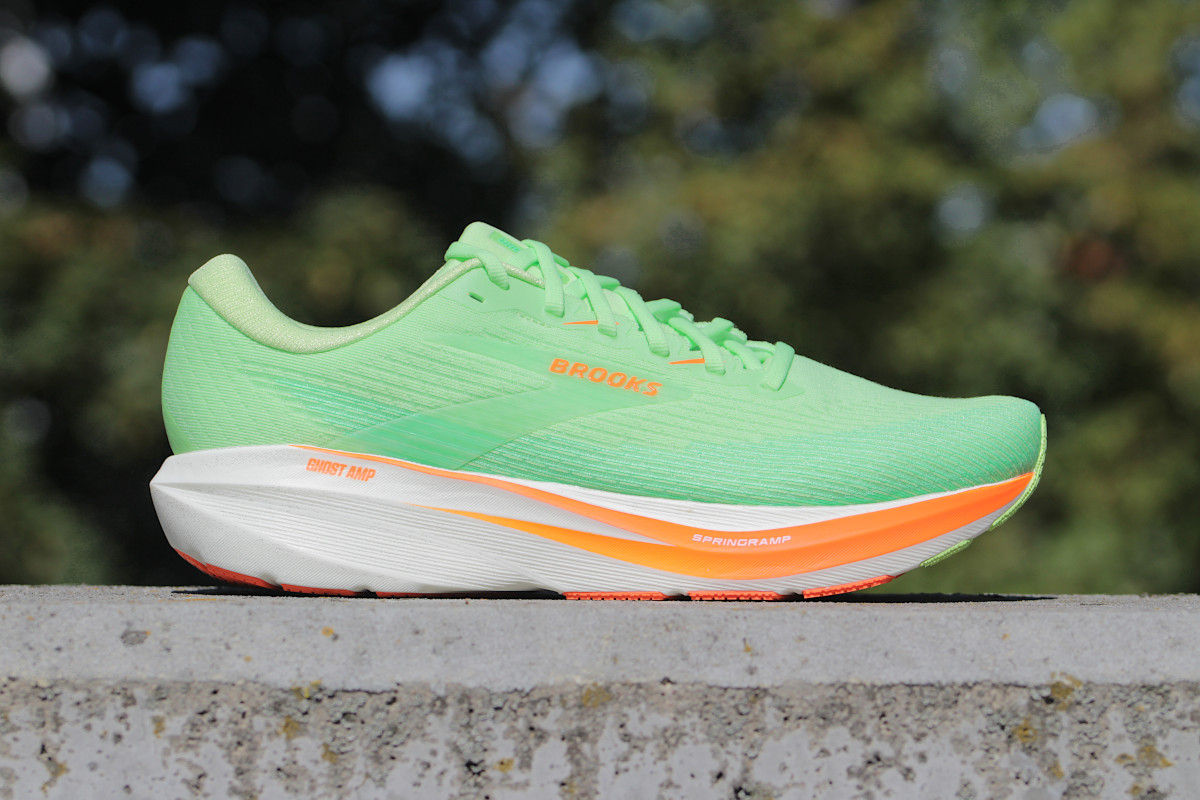
The outsole of running shoes plays a key role in providing traction. For urban shoes, this means providing traction on flat streets. In contrast, the outsole on trail shoes must effectively ‘bite’ into difficult terrain. Furthermore, trail shoes have outsoles with a variety of patterns tailored to specific types of surfaces. Some are designed for muddy and soft trails, while others are ideal for hard, rocky terrain.
Road Running: Smooth and Durable Tread
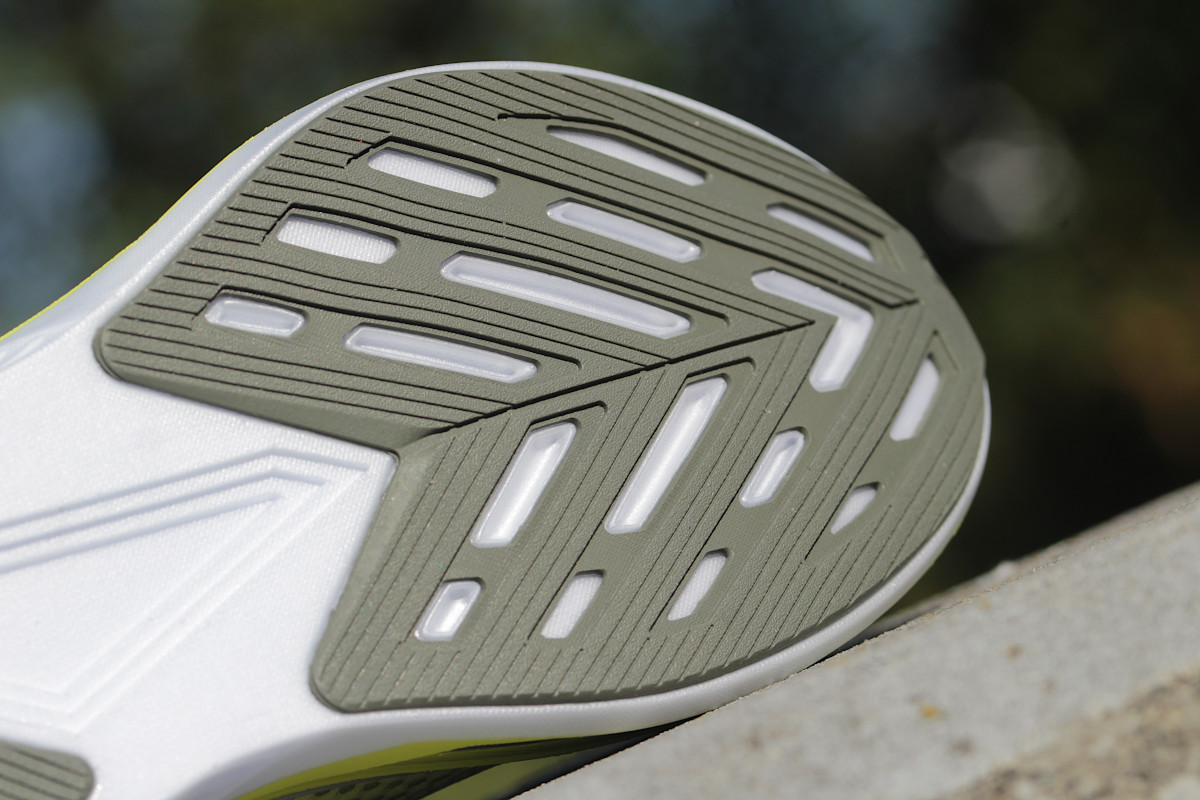
Running on hard surfaces does not require a deeply grooved outsole because smooth streets do not present much of a traction challenge. Shoes designed for hard surfaces typically have a shallow outsole, ranging from 0.5 to 1.5millimeters deep, which provides sufficient traction for urban and suburban routes. However, some shoes designed for hard surfaces have outsoles that exceed this range. Ultra-lightweight racing shoes often have an almost or completely flat outsole. Some street models have outsoles up to 2.5millimeters deep, which provides sufficient traction on hard surfaces and easier trails.
The outsoles of shoes designed for hard surfaces are usually made of the hardest, most abrasion-resistant rubber. This allows them to withstand hundreds or even thousands of kilometers of running on asphalt roads and concrete sidewalks while ensuring durability and reliability. If most of your training takes place in an urban setting, these shoes are the perfect choice.
This type of outsole is also suitable if you run on suburban gravel roads and forest trails. Many runners with access to both hard surfaces and forest trails wonder if it’s worth investing in two pairs of shoes: one for hard surfaces and one for forest terrain. However, if the forest trails you run on are wide, well-trodden gravel paths, shoes with an urban outsole will perform just as well.
Outsole Design for Easy and Mixed Terrain
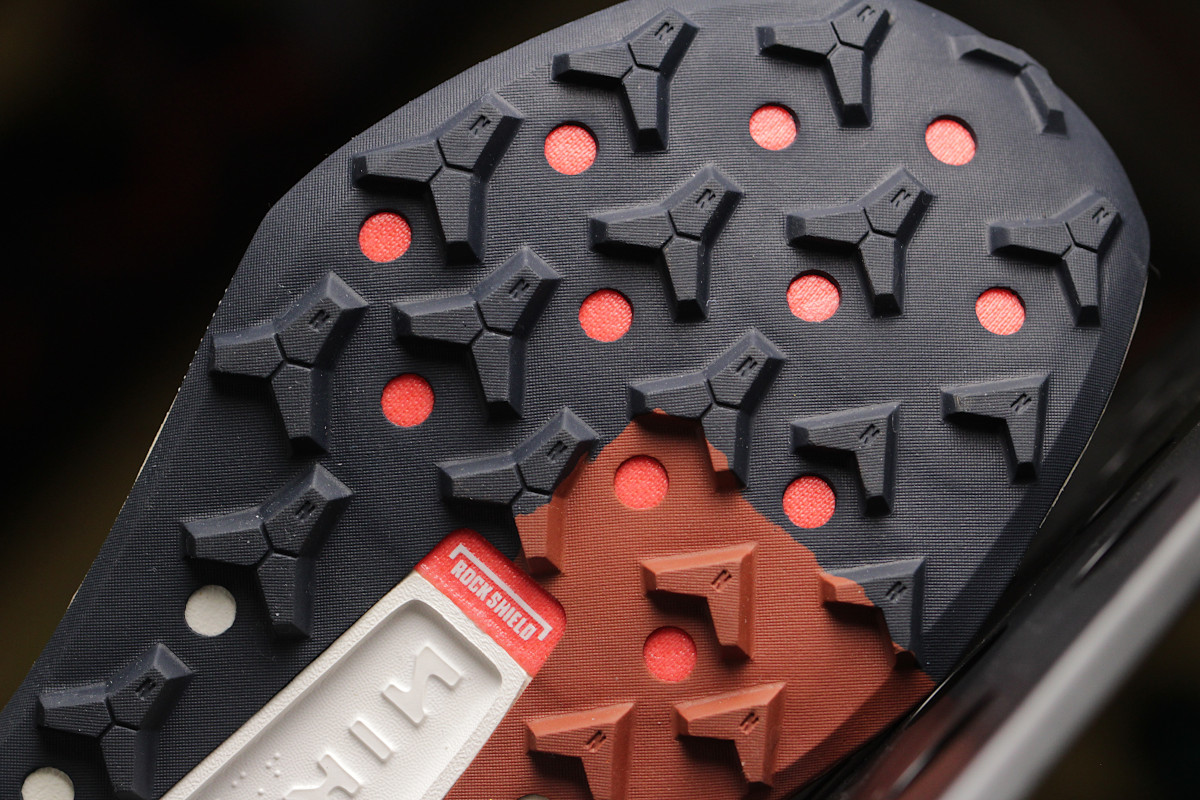
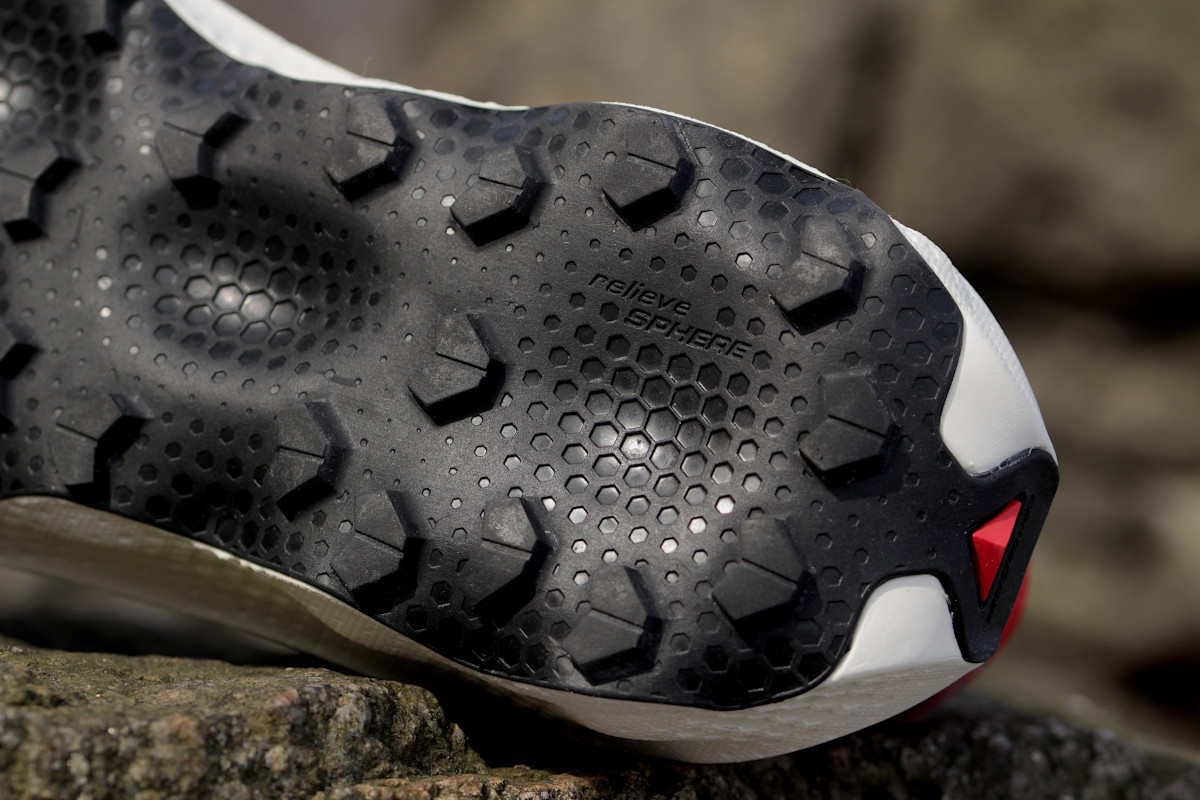
Off-road and trail running shoes differ from those designed for streets and paved roads. They have a more aggressive outsole with lugs instead of grooved flat rubber. These lugs are usually between 2 and 4millimeters high, which is adequate for dry trail surfaces, forests and trails. However, this may not provide enough traction for running in mud or on other slippery surfaces.
The outsole material in these shoes is typically softer than that in shoes designed for asphalt but harder than that in shoes designed for mud. This makes the outsole more durable and provides better abrasion resistance when in contact with stones and other sharp objects. This versatile design makes shoes with this type of outsole perfect for both mountain trails and gravel roads.
Aggressive Tread for Technical and Muddy Trails
Muddy terrain is one of the most demanding environments, and shoes with aggressive outsoles perform best in these conditions. In such conditions, the rule “the bigger the studs, the better the grip” applies fully. This type of footwear is referred to as “soft ground” in English, meaning it is designed for soft terrain. These shoes are distinguished by their high outsole studs, which are usually at least 4mm high. The higher and more spaced the studs are, the more effectively the shoe will dig into mud and loose surfaces, providing stability and traction.
The outsoles of shoes designed for muddy and soft terrain are usually made of soft rubber, which is crucial for traction. A soft rubber compound grips unstable and wet surfaces, such as mud, grass or loose gravel, better. However, this property comes at a price: soft rubber is much less resistant to abrasion than harder compounds used in shoes for hard surfaces or gravel roads.
While it may be tempting to use these shoes on hard surfaces, such as asphalt or concrete, it’s important to remember that soft trail rubber wears out quickly in urban conditions. As a result, the aggressive outsole, designed for difficult terrain, loses its effectiveness, and the shoes’ lifespan is significantly reduced. Therefore, shoes with this type of outsole are best kept for soft, uneven, muddy trails where their advantages will be most noticeable and wear and tear will be minimal.
Conclusion
The most important thing is to match the outsole to the surface on which you run most often. The depth and height of the lugs, as well as the type of rubber adapted to the specific terrain, determine these.
If you mainly run in and around the city, choose an outsole with a shallow texture designed for hard surfaces like asphalt. For gravel or rocky trails, choose an outsole with moderate lug height – it provides sufficient traction while remaining durable. If you run on soft, muddy terrain, however, choose an outsole with high, aggressive lugs for optimal traction.