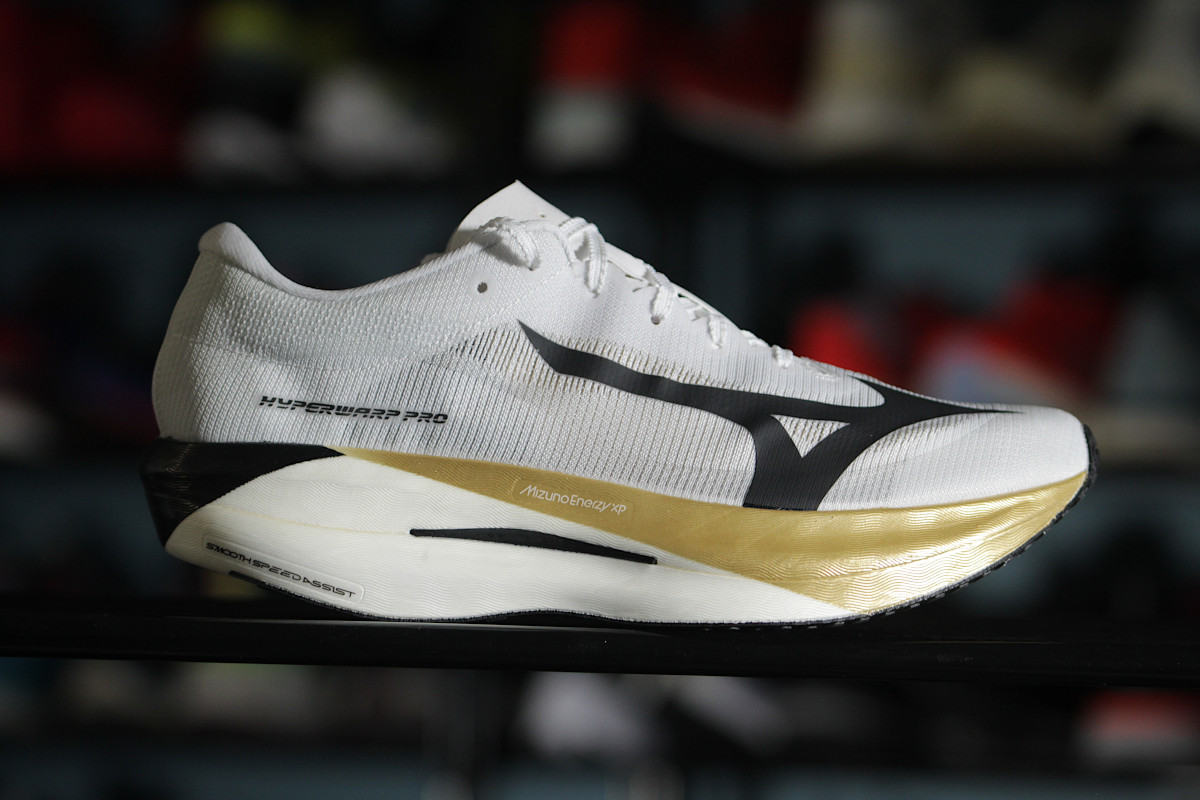
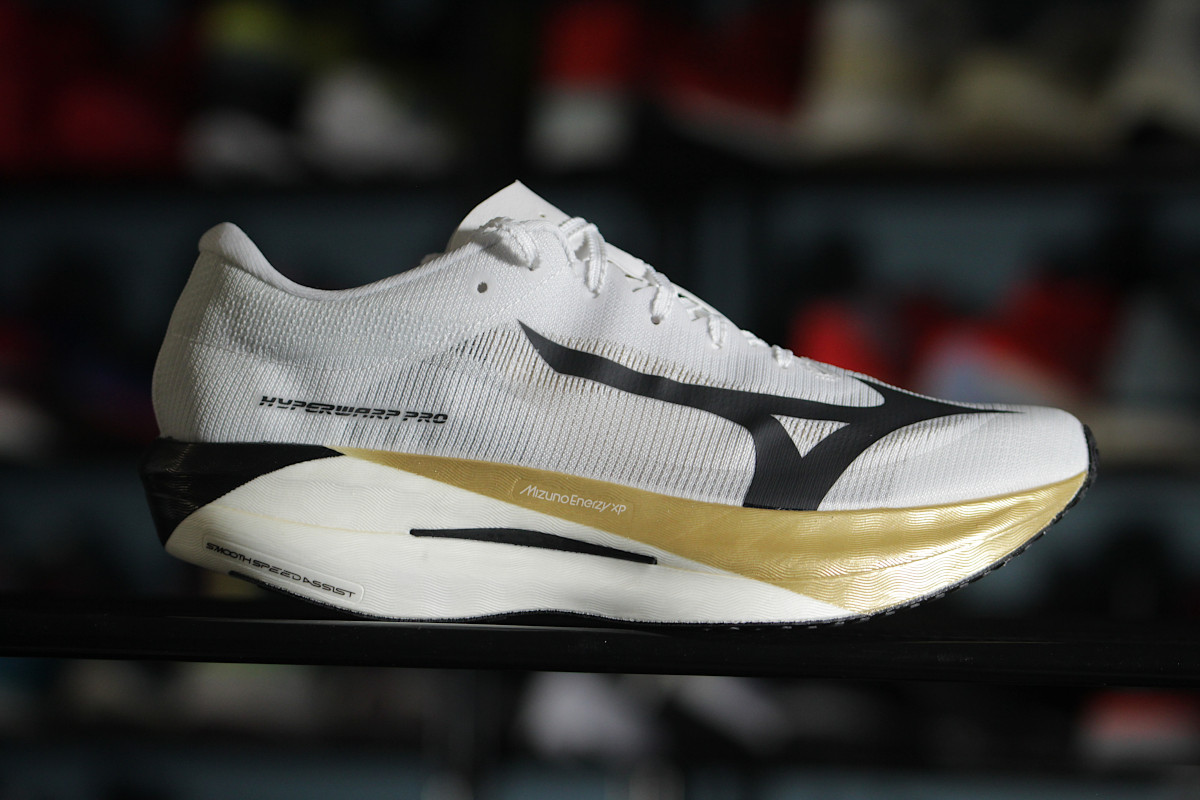
The Mizuno Hyperwarp Pro may be one of the biggest surprises in the world of performance running shoes. Instead of extremely aggressive geometry, we get something much more interesting here – an ultralight model focused on stability, smoothness, and control during long-distance runs. The Hyperwarp Pro doesn’t provide an exaggerated “trampoline” effect, but it does deliver a predictable roll, solid cushioning, and much greater confidence with each step than most high-performance racing shoes.
Basic Info
Tech Specs
Best For
The Mizuno Hyperwarp Pro is a stable racing shoe designed for longer distances. It combines high cushioning with controlled geometry and moderate responsiveness. It isn’t the most aggressive racing shoe on the market. However, it offers a predictable, smooth ride and good support during the final stages of a marathon. It’s a good fit for runners who want protection and stability rather than maximum bounce.
Pros
- above-average stability for an entry-level shoe
- smooth, predictable roll
- good fit
Cons
- no plate made 100% of carbon fiber
- high price
Mizuno Running Shoes – Lineup
The Mizuno Hyperwarp is a new line among Mizuno’s racing shoes. It partially replaces models from the Rebellion line. The family includes three completely new models. The fastest and lightest of these is the Hyperwarp Pure, designed for maximum performance, especially over shorter distances. It’s an excellent choice for 5-10 kilometer runs. The second is the Hyperwarp Elite – a speed machine for longer distances, including marathons. Finally, there’s the Hyperwarp Pro, which is the “slowest” in the family but offers an excellent balance between stability, cushioning, and control. The Pro is a “safe” model. Not the most dynamic. Not the softest. But the most predictable.
You can read more about Mizuno running shoes in this shoe guide.
| HYPERWARP | REBELLION | |
|---|---|---|
| maximum performance | 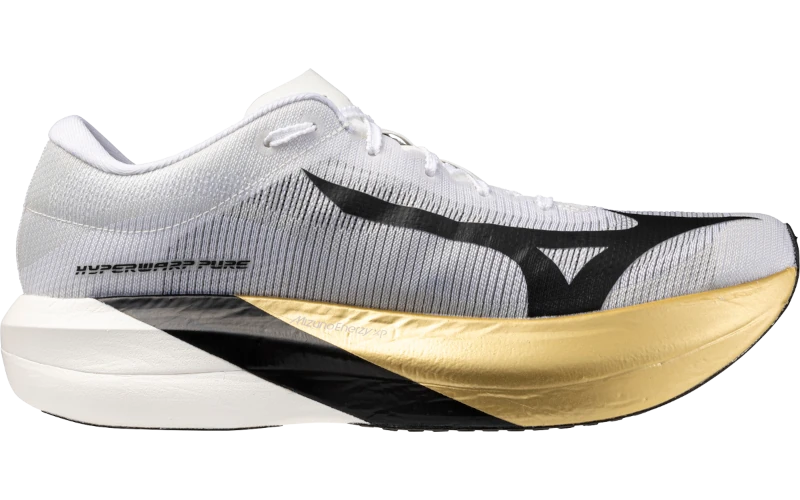 Hyperwarp Pure | |
| very high performance | 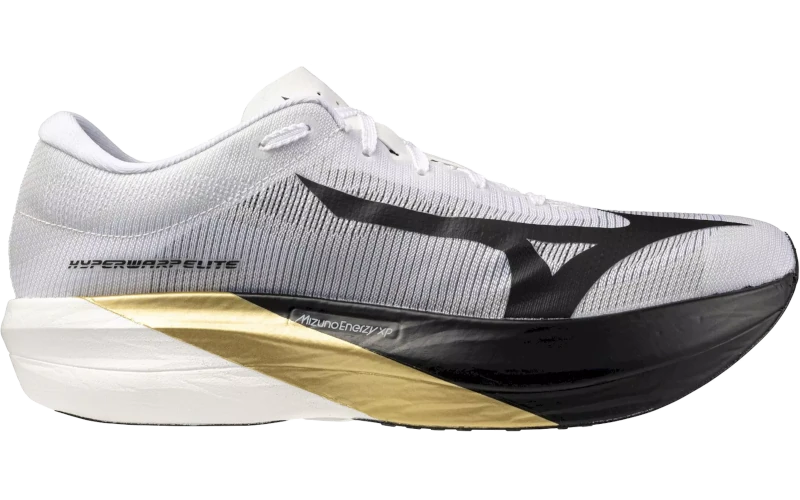 Hyperwarp Elite |  Wave Rebellion Pro 3 |
| high performance | 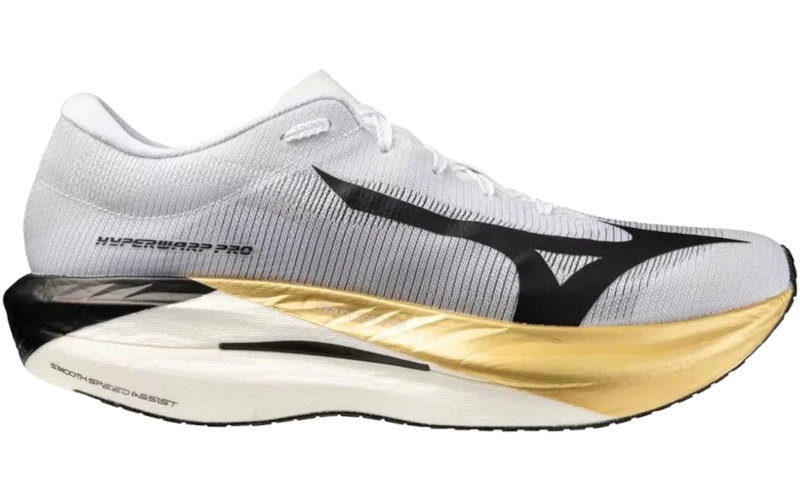 Hyperwarp Pro |  Wave Rebellion Flash 2 |
Role in the Running Shoe Rotation
The Mizuno Hyperwarp Pro, as the most versatile model in the Hyperwarp series, has everything it takes to serve as a racing shoe. It also performs well during tempo runs and races, so it can be a great complement to classic training shoes. One model that pairs perfectly with it is the Wave Rider – a stable, well-cushioned shoe for everyday running. For the longest, most easy runs during recovery, a good option is the softest and most laid-back model of all, the Wave Sky 9. It serves as a “shoe for long, tired legs” – offering maximum cushioning, joint protection, and a comfortable feel under heavy load. This isn’t a shoe for fast runs, but rather for racking up long kilometers with minimal impact.
| WAVE SKY 9 | WAVE RIDER 29 | HYPERWARP PRO |
|---|---|---|
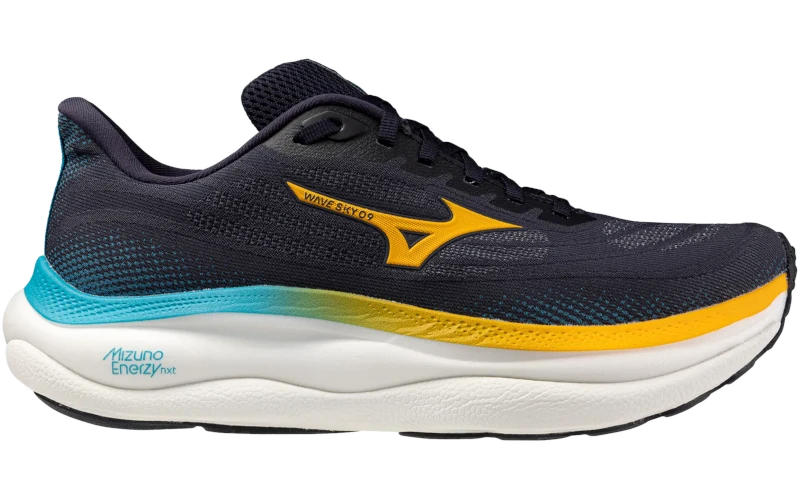 |  |  |
| easy, long runs | daily running | tempo runs, race day |
Similar to Mizuno Hyperwarp Pro
The Hyperwarp Pro can be viewed in two ways. As the “slowest” model in the Hyperwarp family, it can compete with speed training shoes and is a response to models such as the adidas Adizero Boston, Nike Zoom Fly, and Asics MagicSpeed. These shoes incorporate technologies found in racing “super shoes,” such as carbon fiber, nylon, or fiberglass plates.
On the other hand, it features an exceptionally lightweight construction that, despite using a plate made of a nylon-carbon composite rather than pure carbon fiber, can still confidently compete with many racing shoes. It’s particularly well-suited for runners looking for a fast yet more stable and predictable race shoe.
You can find more racing running shoes in this shoe guide.
| MODEL | STACK HEIGHT (mm) | DROP (mm) | WEIGHT MEN'S (grams) | WEIGHT WOMEN'S (grams) | REGULAR PRICE (€) |
|---|---|---|---|---|---|
| adidas Adizero Adios Pro 4 | 39/33 | 6 | 200 | 175 | 250 |
| Asics Metaspeed Sky Tokyo | 39.5/34.5 | 5 | 170 | 170 | 250 |
| Brooks Hyperion Elite 4 | 35/27 | 8 | 230 | 230 | 250 |
| Diadora Gara Carbon 3 | 40/35 | 5 | 205 | 205 | 300 |
| Hoka Cielo X1 2.0 | 39/32 | 7 | 228 | 228 | 275 |
| Hoka Rocket X 3 | 36/31 | 7 | 227 | 227 | 250 |
| Kiprun KD900X LD+ | 39/35 | 4 | 238 | 196 | 230 |
| Mizuno Hyperwarp Pro | 39.5/33.5 | 6 | 200 | 200 | 250 |
| New Balance Fuelcell Supercomp Elite v5 | 40/36 | 4 | 224 | 170 | 280 |
| Nike Alphafly 3 | 40/32 | 8 | 218 | 218 | 310 |
| Nike Vaporfly 4 | 35/27 | 8 | 190 | 150 | 260 |
| On Cloudboom Strike | 39.5/35.5 | 4 | 215 | 188 | 300 |
| Puma Fast-R Nitro Elite 3 | 40/32 | 8 | 170 | 147 | 270 |
| Saucony Endorphin Pro 4 | 39.5/31.5 | 8 | 212 | 185 | 250 |
| Saucony Endorphin Elite 2 | 39.5/31.5 | 8 | 199 | 199 | 300 |
Stability Over Flashiness
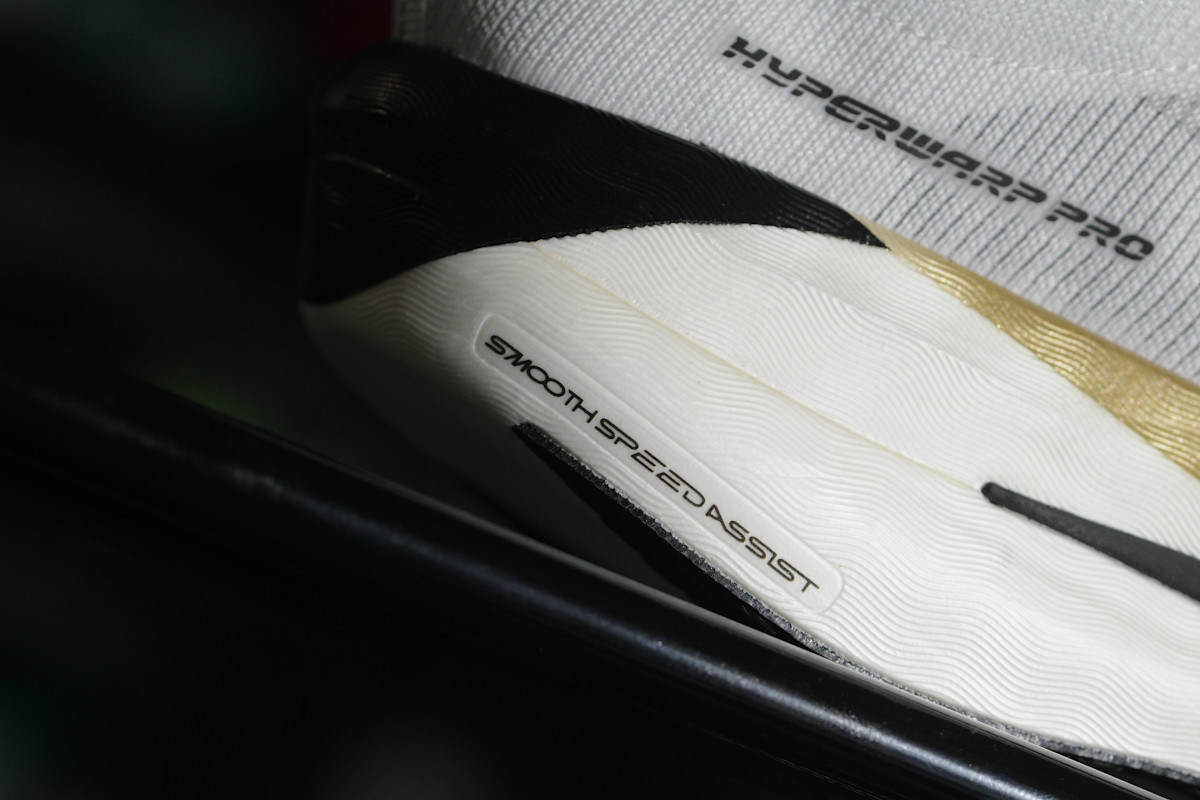
The Mizuno Hyperwarp Pro outsole was designed to combine high cushioning with controlled performance. At its core is Enerzy XP foam, a TPEE-based material responsible for cushioning and energy return. Inside, there’s a full-length plate made of a nylon and carbon fiber composite. This solution is less aggressive than the classic carbon plates used in the most high-performance models, but it makes the foot roll smoother and provides greater stability while running.
In terms of stack, the Hyperwarp Pro fits in with current trends. The stack measures 39.5 mm at the heel and 33.5 mm at the midfoot, placing it in a similar range to models such as the Adidas Boston 13, Saucony Endorphin Speed, and Hoka Mach X. Additionally, the sole has been contoured with a subtle “rocker” to facilitate foot roll.
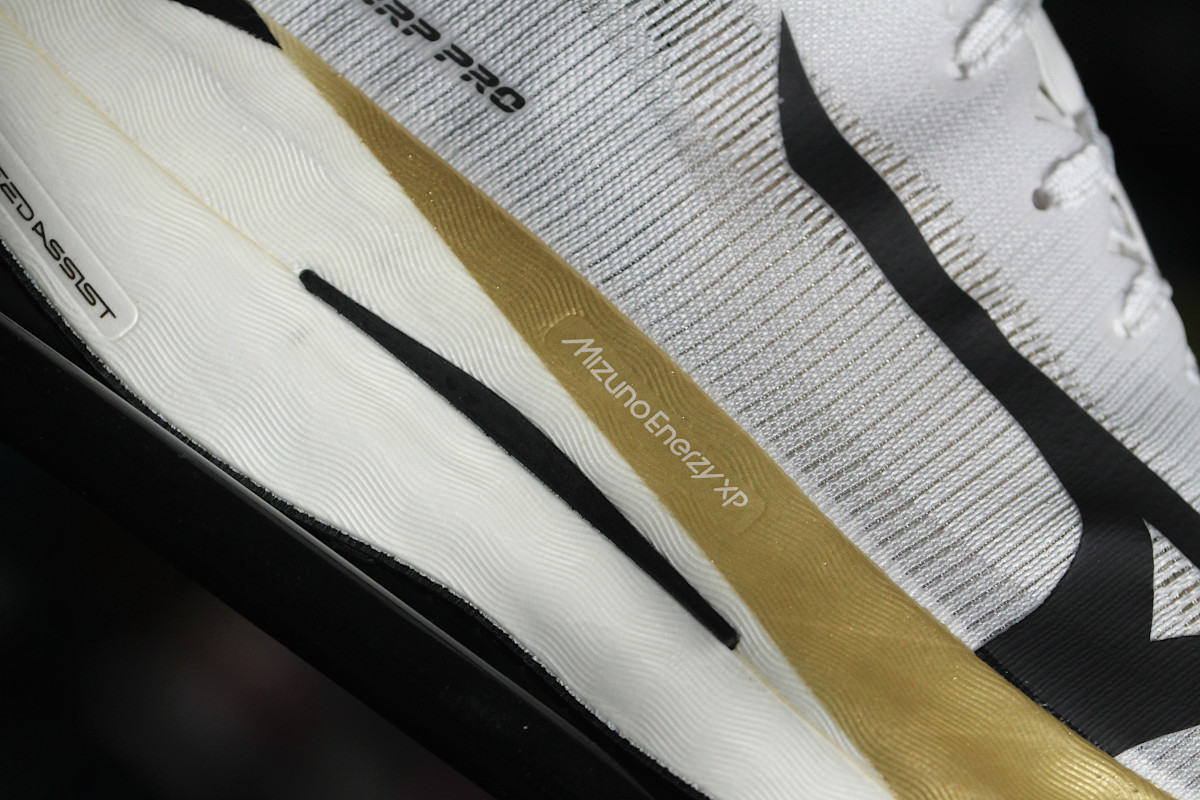
Finally, width is also important. The sole of the Hyperwarp Pro is relatively wide. This allows for greater lateral stability, reduces foot roll, and makes the shoe feel more predictable and stable.
In practice, this translates to a running experience that can be described as fast but very predictable. The Hyperwarp Pro doesn’t offer the same spectacular rebound as the most aggressive racing shoes, but it makes up for it with high stability and great comfort during longer, fast runs. This model is particularly appealing to runners competing in half-marathons and marathons who want to take advantage of the benefits of a stiff plate without sacrificing stability.
Safe Contact with the Road
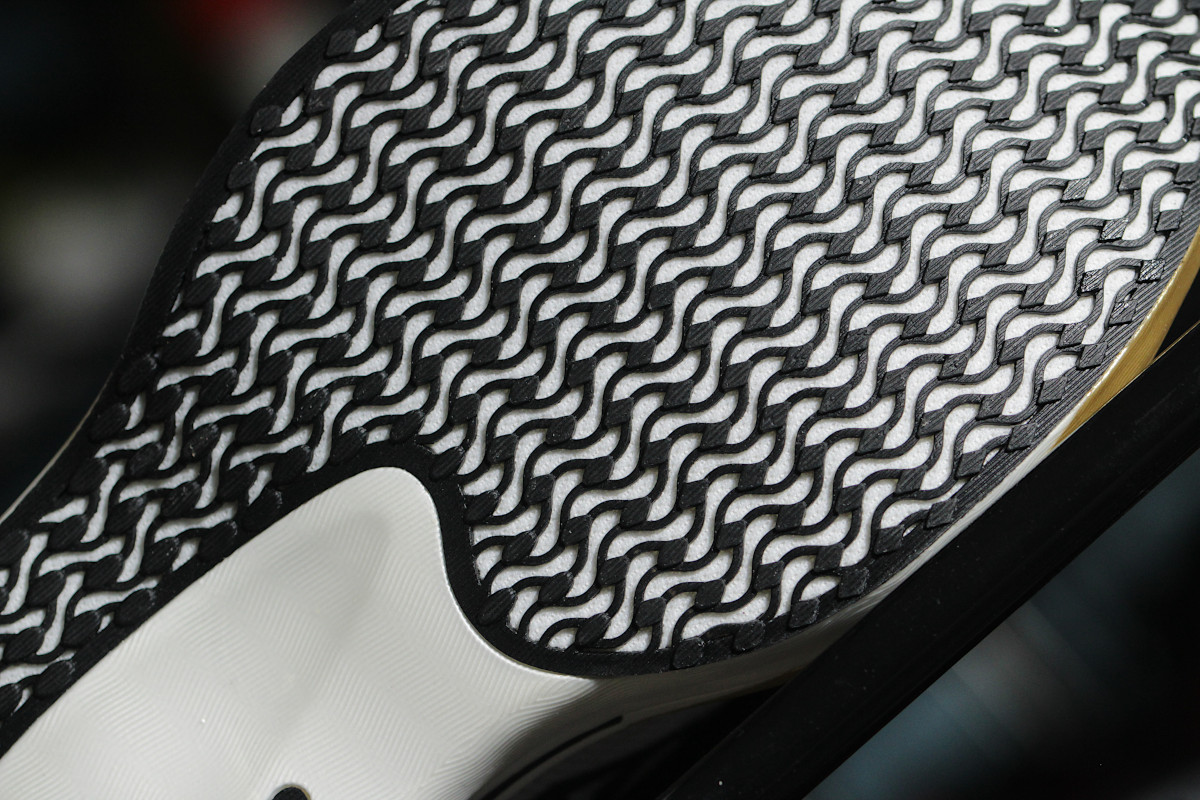
The Mizuno Hyperwarp Pro outsole features a G3 Sole construction, which is primarily optimized for efficiency on the road. The outer layer of the outsole is made of abrasion-resistant rubber that covers strategic areas of the heel and forefoot. As with many (especially fast) models, the midfoot section of the outsole is not covered with rubber. This design helps reduce the shoe’s weight and slightly improve flexibility without significantly compromising durability.
In terms of design, the outsole has an interesting texture. From a distance, it appears flat, but up close it features micro-perforations and is quite rough, with grooves 0.9 millimeters deep. For a speed shoe, this depth is close to average. Such a low, finely profiled pattern will perform best on hard, flat surfaces. I have a feeling it might offer better traction than most of the competition.
A Race-Ready Fit Without Feeling Tight
The upper of the Mizuno Hyperwarp Pro is made of an ultra-lightweight, single-layer technical mesh with an open structure. The material is thin, moderately stretchy, lightweight, and does not restrict airflow. As a result, the shoe performs well during speed training and races in high temperatures. The construction is free of unnecessary reinforcements, and most of the stabilizing elements are integrated directly into the upper material. The result is an extremely lightweight, race-ready construction that you can barely feel on your foot.
The forefoot area offers more room than is found in many modern fast running shoes. At its widest point, the forefoot measures as much as 105 millimeters, which, among fast running shoes, places it in the wider rather than narrower category. In the Hyperwarp Pro, your toes will have more freedom of movement while running than in most fast shoes.
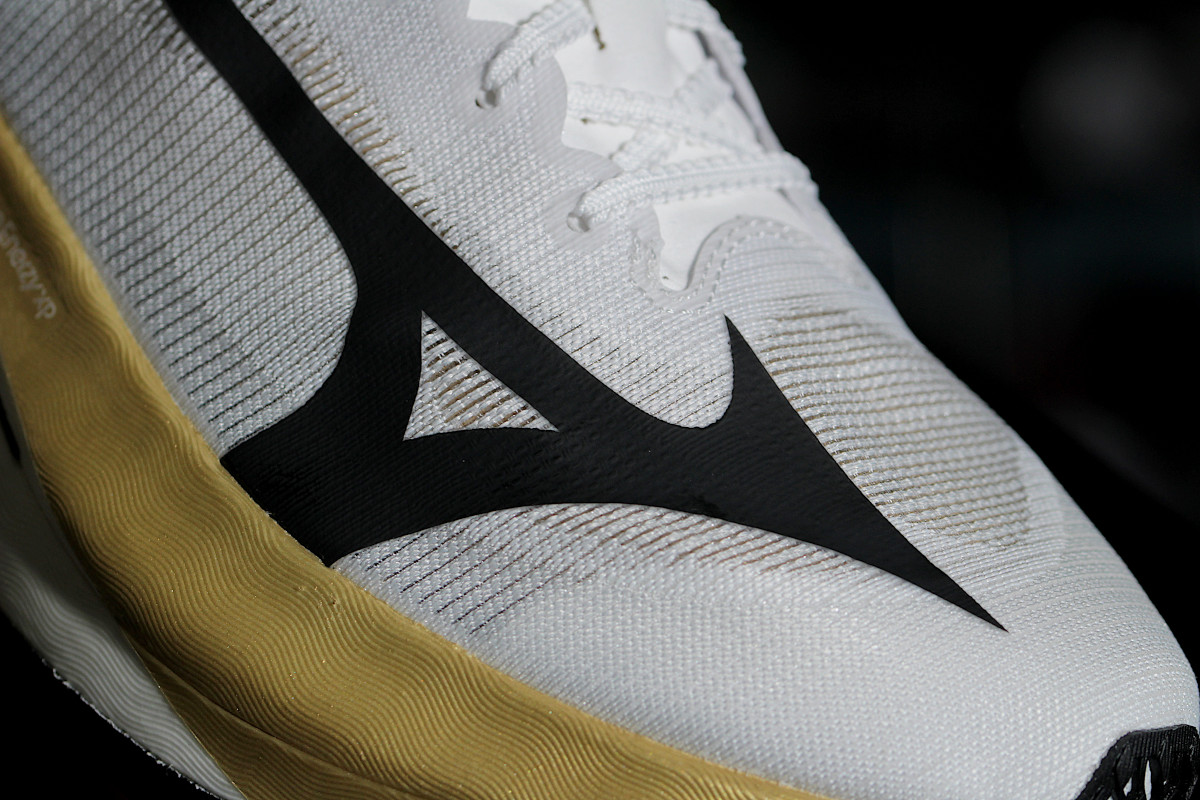
At the same time, the space in the midfoot area remains moderate, and the fit itself can be described as rather narrow. When laced up, the upper wraps quite tightly and securely around the midfoot. Thanks to this, the Hyperwarp Pro – despite having an above-average forefoot width for a plate-equipped model – retains the precise fit characteristic of fast racing shoes. This design translates to greater foot stability when running at higher speeds, improves control over every step, and… is truly comfortable.
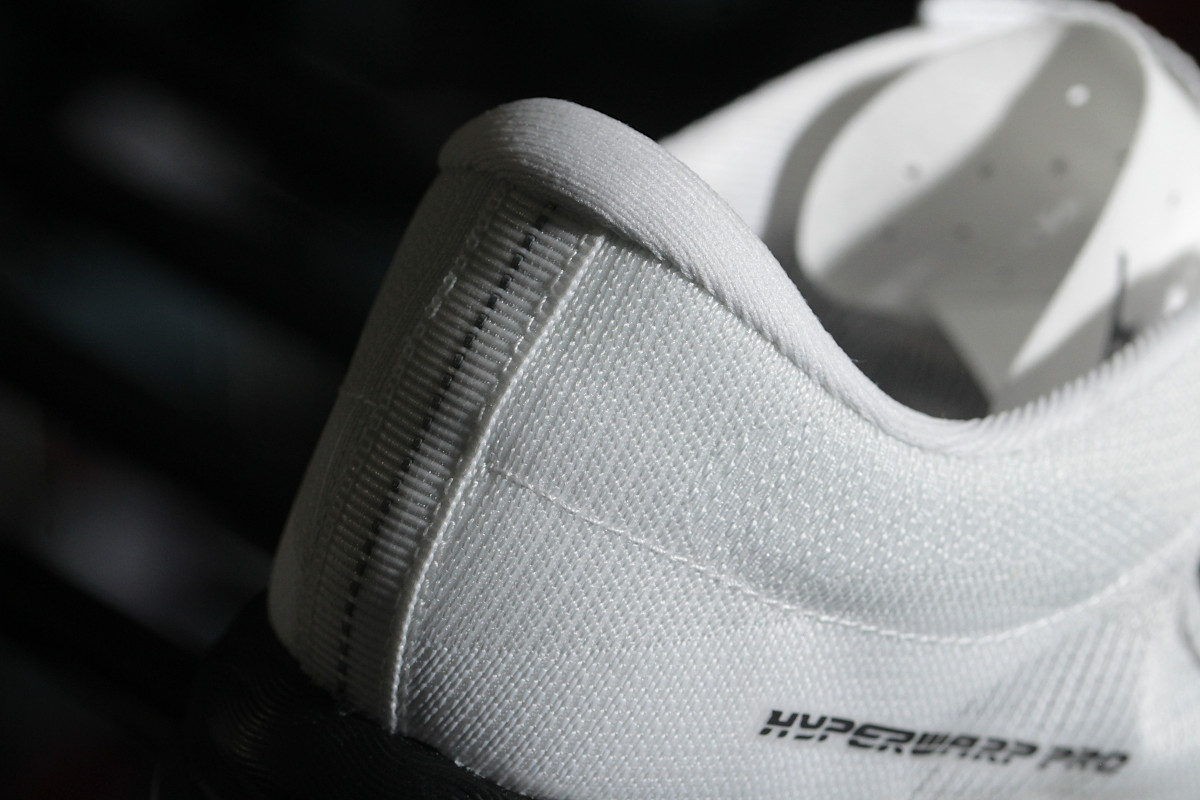
The heel counter isn’t as streamlined as the front and midfoot sections of the upper. It was designed with stability in mind, rather than maximum weight reduction. It isn’t the ultra-soft construction found in some high-performance racing shoes. The producer has incorporated a moderately stiff internal support structure, reinforced with additional stabilizing elements on the sides. The collar around the ankle is lightly padded, which improves comfort without increasing the overall construction of the shoe. In practice, the heel remains quite secure and stable – this is one of the features that sets the Hyperwarp Pro apart from more aggressive racing shoes.
The Lightness of a Race Shoe
Weighing in at 200 grams, the Hyperwarp Pro ranks among the very lightest plate shoes available on the market. This is comparable to top-tier models like the adidas Adizero Adios Pro 4 or the Asics Metaspeed Sky Tokyo, while also clearly outperforming many speed training shoes such as the adidas Boston or the Hoka Mach X.
It’s also particularly impressive that Mizuno achieved such a low weight despite using a wide and stable platform underfoot and a relatively substantial heel counter. Typically, such lightweight constructions have been less stable and predictable in this regard.
Summary
The Mizuno Hyperwarp Pro is a racing shoe for runners who prefer stability, predictability, and comfort just as much as pure performance. Its lightweight construction, high cushioning, and stable ride set this model apart from the competition. The question remains, however: how will runners react to a shoe in this price range that features a nylon-carbon composite plate rather than a full carbon plate? In theory, this means a less aggressive ride, but in return offers greater control and makes it easier for a wider range of runners to harness the shoe’s potential. In practice… only time will tell.