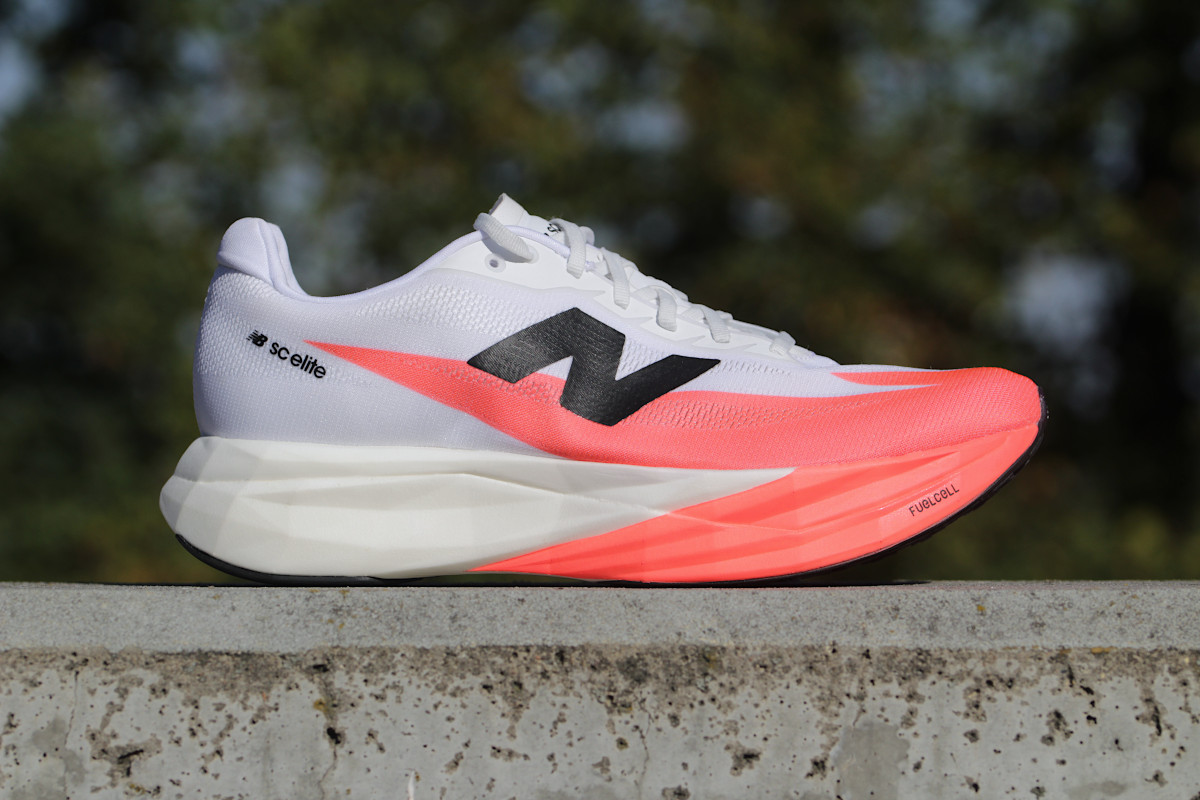
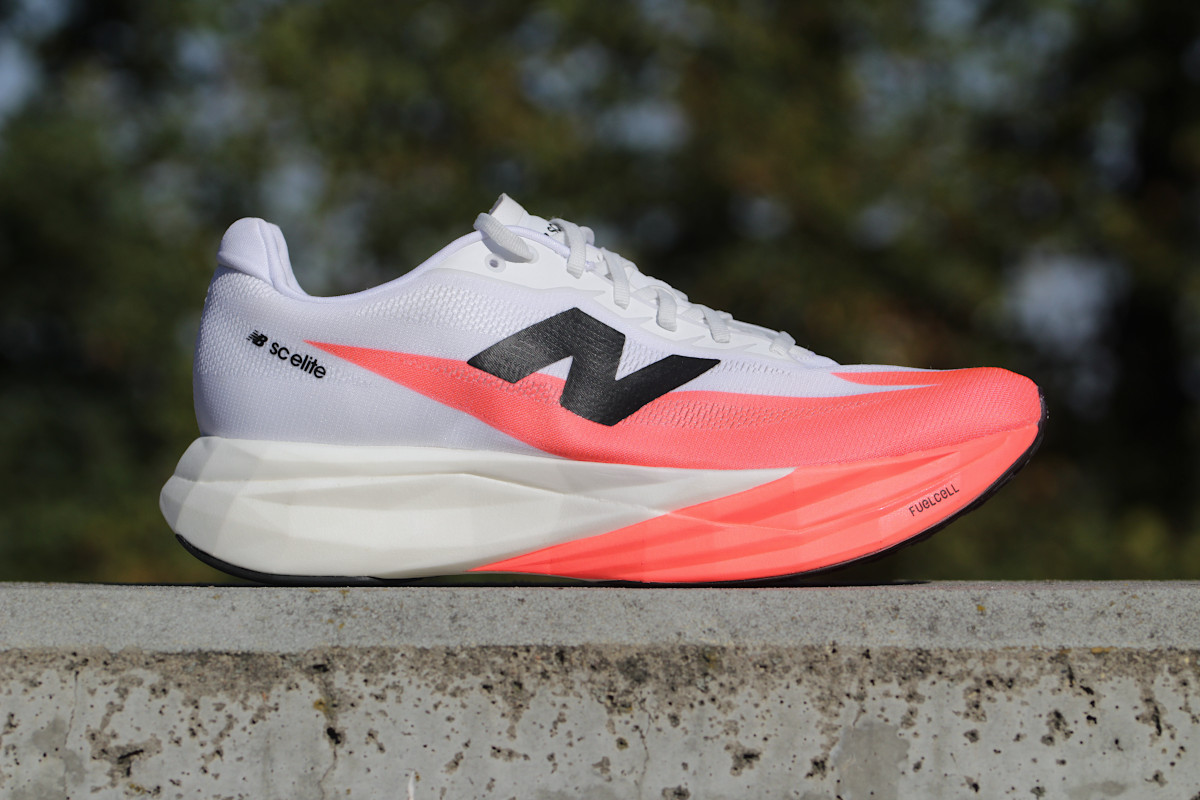
The New Balance FuelCell SuperComp Elite v5 is no longer a “easy” racing shoe and has clearly taken on a more aggressive character. The new version is less forgiving for the average runner but offers a noticeably more powerful push-off. It’s a model that rewards good technique rather than masking mistakes, which is why it’s closer today to top-tier carbon-fiber racing shoes than to earlier generations. This shift in direction not only changes its character but also elevates the SC Elite v5 to the level of the fastest racing shoes on the market.
Basic Info
Tech Specs
Best For
The New Balance FuelCell SuperComp Elite v5 is an advanced racing shoe with a distinctly competitive character. It offers high cushioning, exceptional performance, and is technically demanding. It performs best in fast-paced runs and road races, especially where the pace drops to around 4:00/km and faster. This model is designed not so much for “comfortable fast running” as for maximizing speed and running efficiency for runners who can take advantage of its aggressive characteristics.
Pros
- very high performance
- very high cushioning
- significantly more “performance-oriented” than the V4
- low weight
Cons
- poor stability (much lower than in Elite v4)
Key Features – What’s New in the Latest Edition
| NB SC ELITE v5 | NB SC ELITE v4 | |
|---|---|---|
| Stack height | 40/32mm | 40/36mm |
| Drop | 8mm | 4mm |
| Weight men’s | 224g | 237g |
| Weight women’s | 170g | 188g |
| Upper | FantomFit – a lightweight, seamless, layered synthetic mesh | FantomFit – a lightweight, seamless, layered synthetic mesh |
| Midsole | FuelCell PEBA + Energy Arc carbon plate | FuelCell PEBA + Energy Arc carbon plate |
| Outsole | durable rubber | durable rubber |
New Balance Running Shoes – Lineup
The New Balance FuelCell SuperComp Elite v5 is the fastest racing shoe in the New Balance lineup. It stands at the top in terms of performance. The SuperComp family also includes two models designed for different purposes: the more training-oriented and maximalist New Balance SuperComp Trainer, which exceeds World Athletics limits, and the lower-profile, more direct New Balance SuperComp Pacer, geared toward shorter distances and a more natural running feel.
Further down the hierarchy are more affordable speed training shoes, such as the New Balance FuelCell Rebel and the New Balance FuelCell Propel. Want to learn more about them? Check out the New Balance running shoe guide.
| RACING | FAST TRAINING | |
|---|---|---|
| maximum performance | 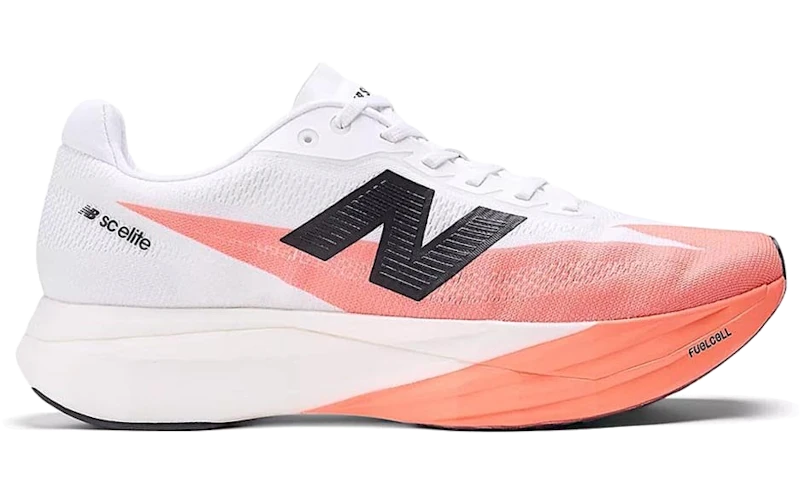 Supercomp Elite v5 | 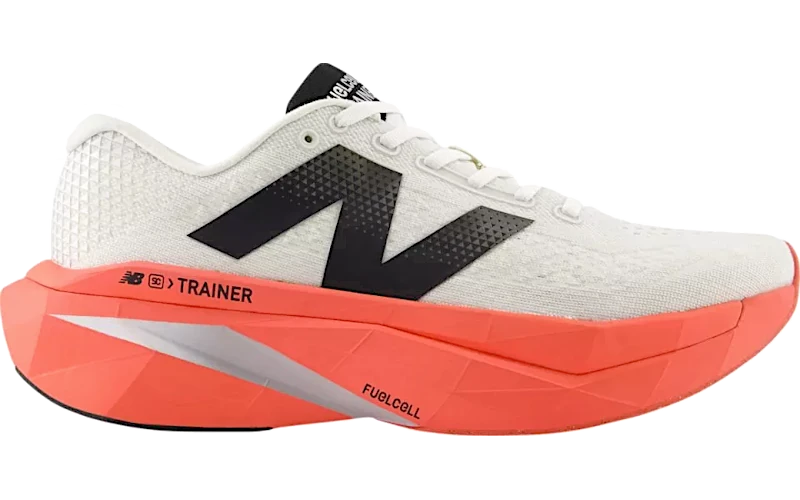 Supercomp Trainer v3 |
| very high performance | 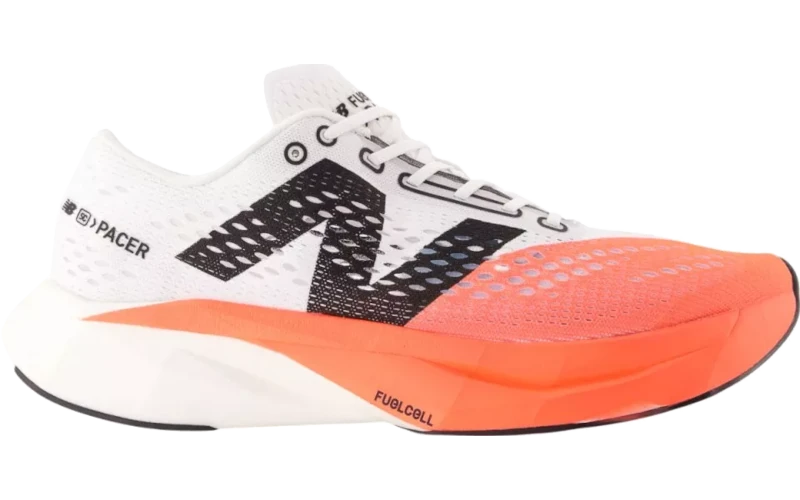 Supercomp Pacer v2 | 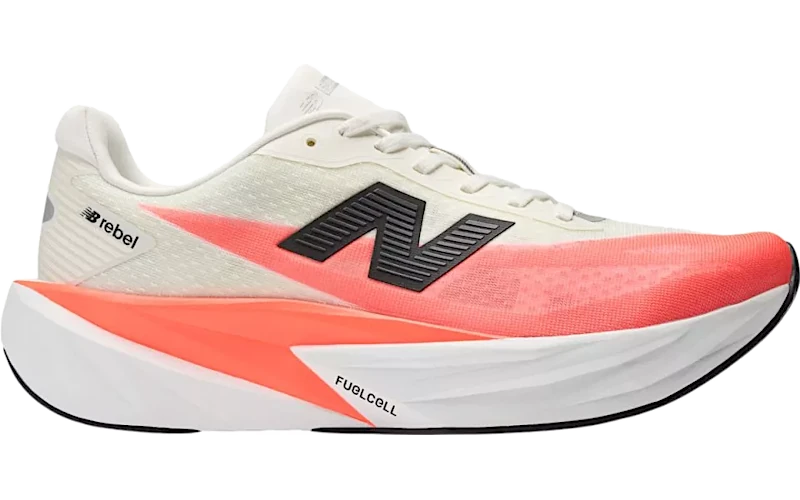 Rebel v5 |
| high performance | 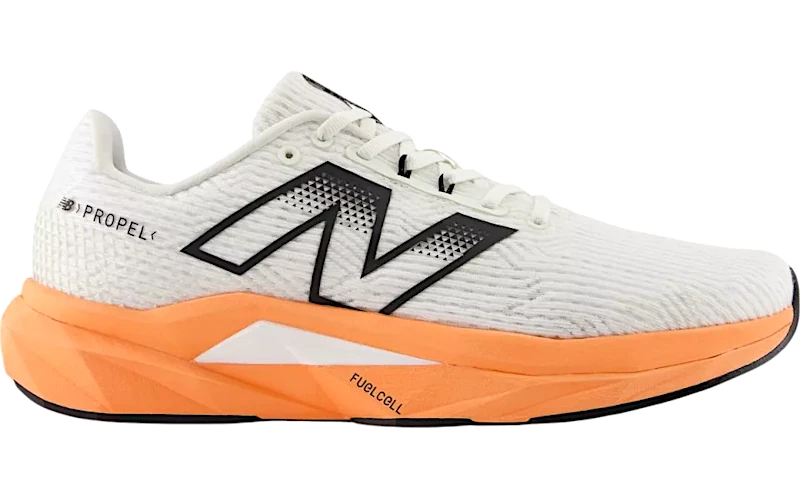 Propel v5 |
Role in the Running Shoe Rotation
The New Balance FuelCell SuperComp Elite v5 perfectly complements a rotation of three models designed for different purposes: fast daily training, long runs, and races. An ideal shoe guide would include the Fresh Foam X 1080 v15, the FuelCell Rebel v5, and the SC Elite v5.
This rotation makes sense because each model plays a unique role in the weekly plan: the Rebel v5 makes performance and speed possible during shorter, intense sessions. It’s also great for shorter, easy runs. The New Balance 1080 v15 protects your joints while building mileage over longer distances. Meanwhile, the SC Elite v5 makes the greatest possible amount of support available on race day. The different models also minimize the risk of injury through the rotation of foams, drops, and various sole geometries.
| 1080 v15 | REBEL v5 | SC ELITE v5 |
|---|---|---|
 | | |
| easy runs, long runs, recovery | intervals, tempo runs, short runs | raceday |
Similar to New Balance Fuelcell Supercomp Elite v4
Since the New Balance FuelCell SuperComp Elite v5 is the fastest model in New Balance’s lineup, it naturally competes with the absolute elite of the market. At the same time, the character of this model is different today than it was before. The Elite v4 was considered one of the more accessible and safe carbon-fiber shoes, while the v5 clearly shifts the focus toward performance and aggression. This is no longer a shoe that’s just there to help you run fast. It’s a shoe that requires you to already know how to run fast.
You can find more about the fastest shoes in the shoe guide.
| MODEL | STACK HEIGHT (mm) | DROP (mm) | WEIGHT MEN'S (grams) | WEIGHT WOMEN'S (grams) | REGULAR PRICE (€) |
|---|---|---|---|---|---|
| adidas Adizero Adios Pro 4 | 39/33 | 6 | 200 | 175 | 250 |
| Asics Metaspeed Sky Tokyo | 39.5/34.5 | 5 | 170 | 170 | 250 |
| Brooks Hyperion Elite 4 | 35/27 | 8 | 230 | 230 | 250 |
| Diadora Gara Carbon 3 | 40/35 | 5 | 205 | 205 | 300 |
| Hoka Cielo X1 2.0 | 39/32 | 7 | 228 | 228 | 275 |
| Hoka Rocket X 3 | 36/31 | 7 | 227 | 227 | 250 |
| Kiprun KD900X LD+ | 39/35 | 4 | 238 | 196 | 230 |
| New Balance Fuelcell Supercomp Elite v5 | 40/36 | 4 | 224 | 170 | 280 |
| Nike Alphafly 3 | 40/32 | 8 | 218 | 218 | 310 |
| Nike Vaporfly 4 | 35/27 | 8 | 190 | 150 | 260 |
| On Cloudboom Strike | 39.5/35.5 | 4 | 215 | 188 | 300 |
| Puma Faas-R Nitro Elite 2 | 40/32 | 8 | 250 | 250 | 270 |
| Saucony Endorphin Pro 4 | 39.5/31.5 | 8 | 212 | 185 | 250 |
| Saucony Endorphin Elite 2 | 39.5/31.5 | 8 | 199 | 199 | 300 |
Less Softness, More Energy Control
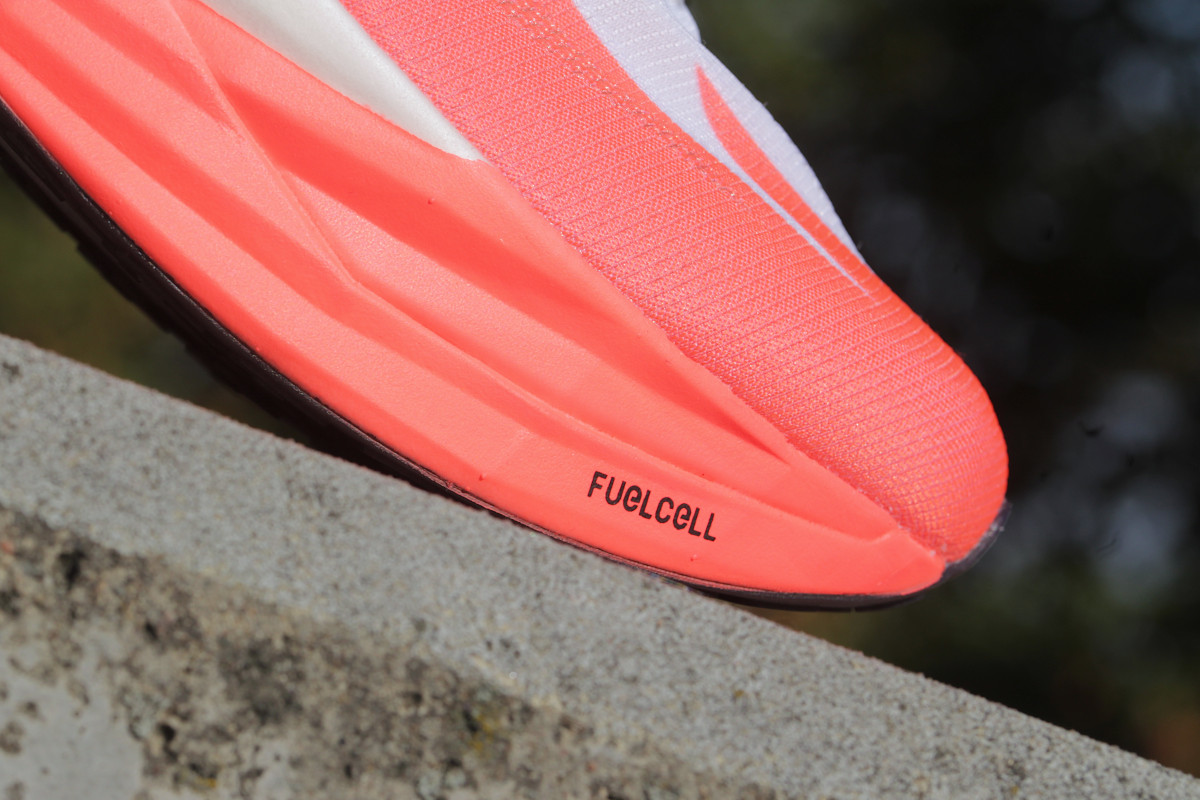
When it comes to carbon racing shoes, it all still comes down to two elements – the foam and the plate. In the New Balance FuelCell SuperComp Elite v5, both of these components have been improved for performance. It features PEBA FuelCell foam, but in a more responsive version than before. The stack remains at the maximum allowed by World Athletics, which is 40 mm at the heel and 36 mm at the forefoot, so the foundation for fast running is maintained.
From a running perspective, however, the character of this foam has changed. The foam is still soft, but not quite as “couch-like” as before – the springiness has been better directed, and the rebound is more pronounced. This is no longer a foam that masks mistakes, but one that requires active effort and nothing but fast running. Combined with carbon, this provides a more direct sense of pace and a more pronounced push-off.
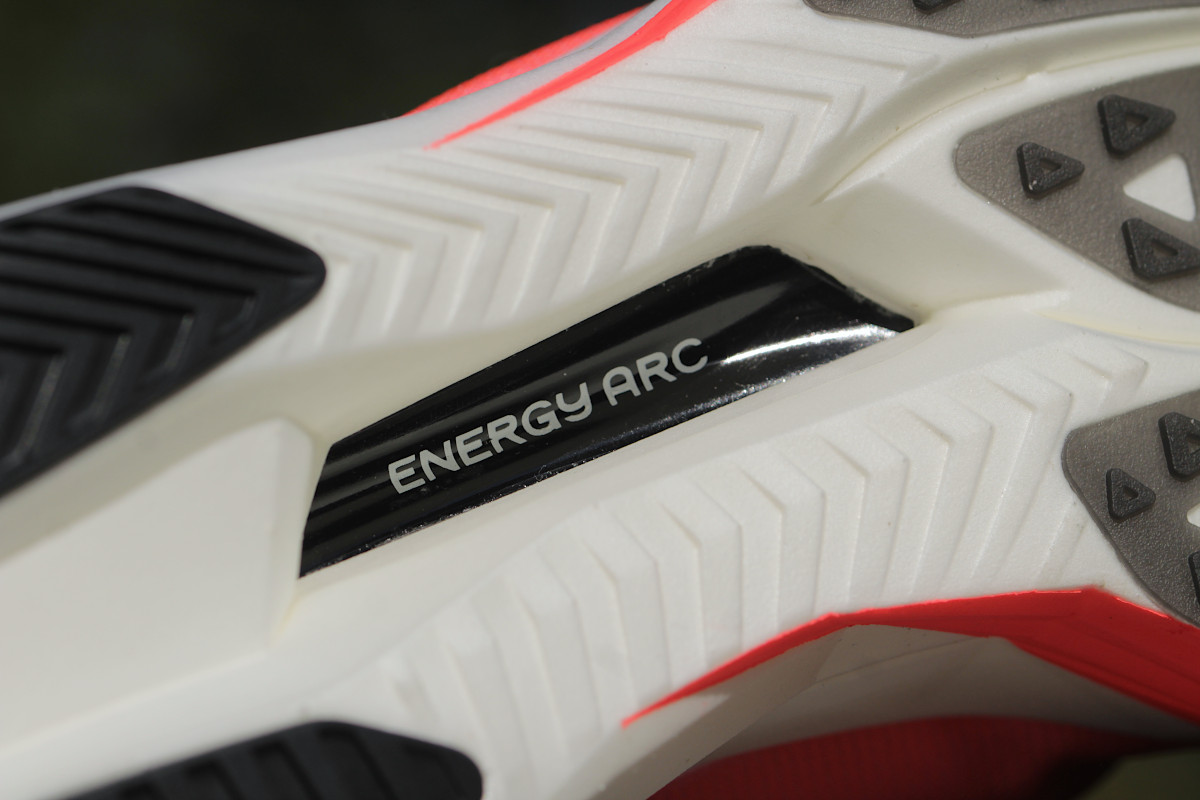
The second key element is the carbon fiber plate, known as Energy Arc. It remains a full-size plate, sandwiched between layers of foam. The carbon gives the construction a distinctly aggressive profile. Compared to the previous edition, the carbon plate is positioned closer to the ground and feels slightly stiffer. As a result, the foot roll is also faster, more decisive, and requires more active footwork than before.
Changes are also visible in the sole’s geometry itself. The Energy Arc channel has been modified – less “visually striking,” but more functional. The cutout is shorter and better integrated with the plate’s function. At the same time, the platform under the foot (especially under the heel) is noticeably narrower, so stability is no longer as high as in older versions. This is no longer a beginner-friendly shoe that lets you jog because it will be safe and stable during slow runs. The new Elite v5 is more demanding and less stable under the heel, which won’t be ideal for slow runs. However, at a fast pace, it will show you that you can go further and faster.
Good Traction at Speed and a Surprisingly Durable Outsole
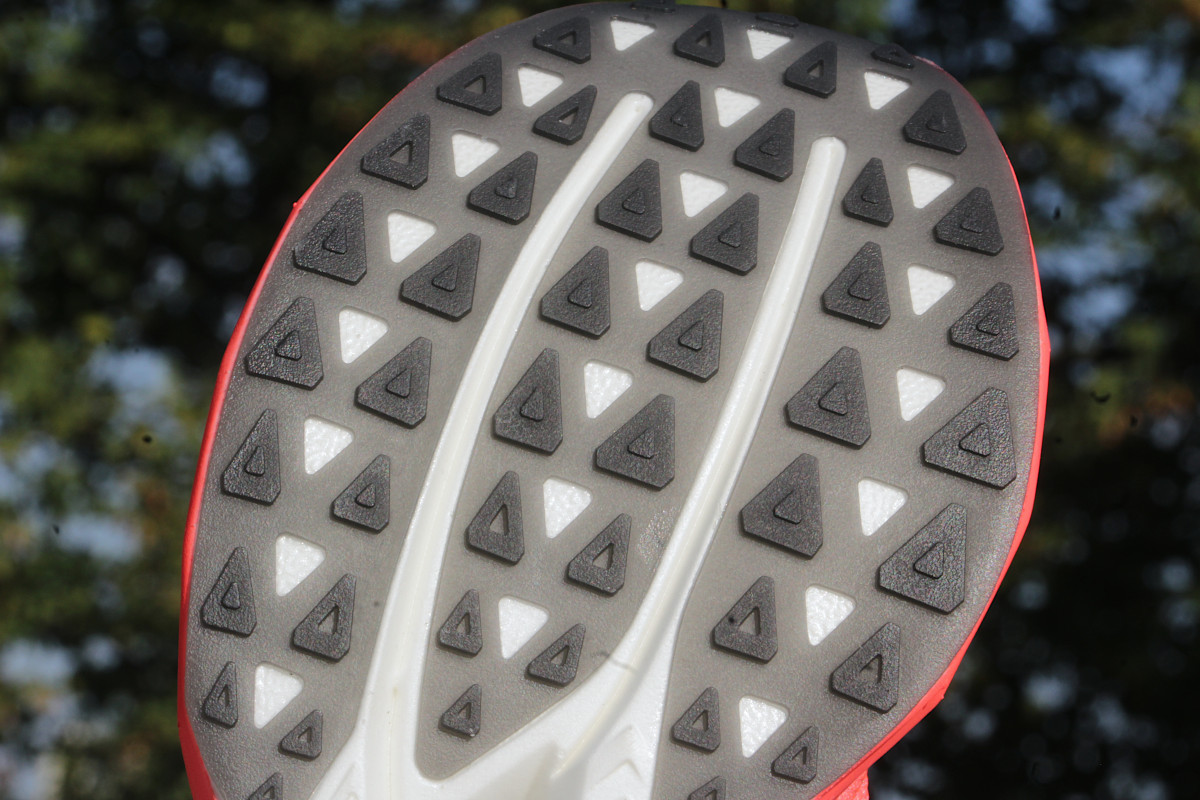
The outsole of the New Balance FuelCell SuperComp Elite v5 continues to meet the standards of the racing segment. Most of the rubber is concentrated in the forefoot – exactly where you really need traction at high speeds. There’s noticeably less rubber in the rear – just strategic inserts under the heel designed to stabilize your landing without adding unnecessary weight.
The rubber pattern is… quite deep for an asphalt carbon racing shoe. At the front, you’ll find rounded, triangular lugs, and at the back, cross-grooved rubber elements. The lugs are up to 1.6 millimeters deep. That’s significantly more than the standard for racing shoes, which is 0.9 millimeters. This tread pattern will provide traction not only on dry surfaces but may also help on wet ones. For a carbon racing shoe, it’s very solid.
However, its character remains purely racing-oriented. This is an outsole designed for road and fast running, with no pretensions of versatility. The Energy Arc channel still creates space in the sole, so contact with loose ground is not a good idea. Gravel or park trails will quickly reveal the limitations of this design.
Lighter, Tighter, More Race-Oriented
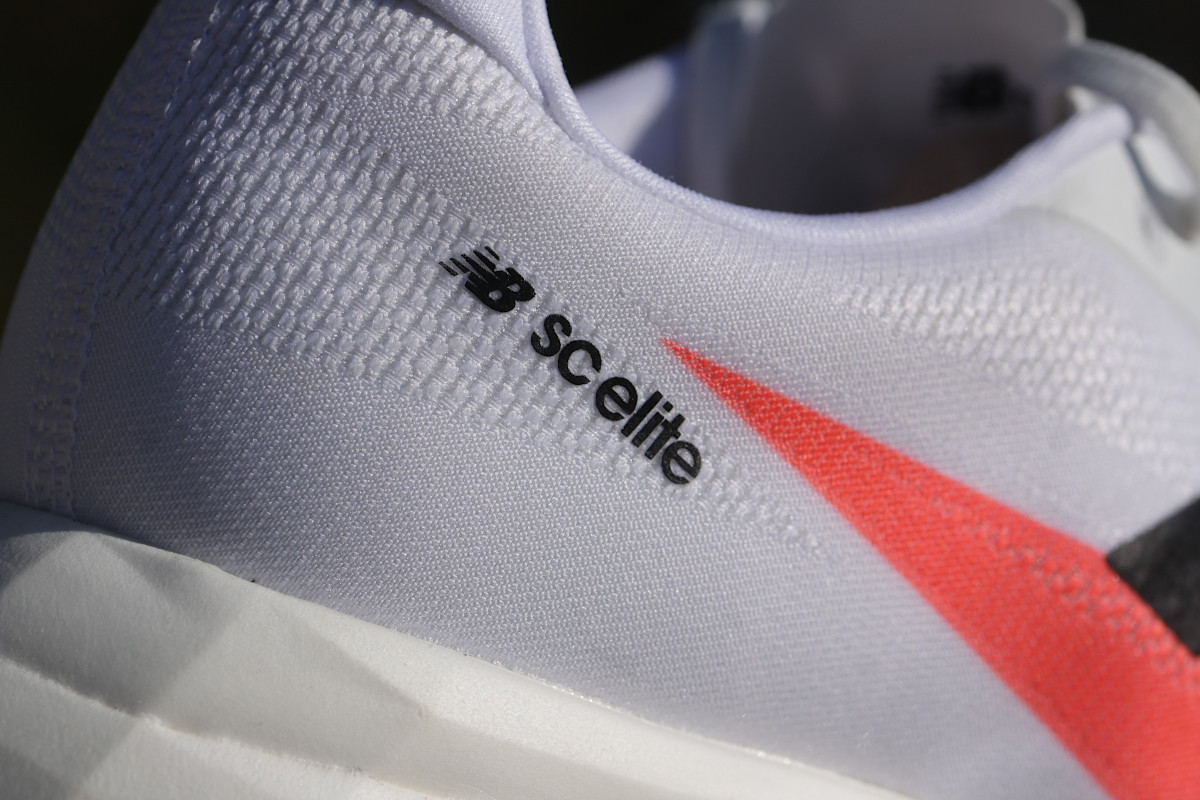
The upper on the New Balance FuelCell SuperComp Elite v5 takes minimalism and performance to the next level. It’s an ultra-thin, breathable construction that prioritizes weight and ventilation over durability. The material is more “race-ready” than ever before – it’s less forgiving, but offers a very direct fit.
The fit is relatively roomy for the carbon shoe segment, but it’s done with finesse. The forefoot is narrower than in the previous model. In my size, US 12, the upper measures 104 millimeters at its widest point, which is nearly 3 mm less. At the same time, it is still one millimeter wider than the average for carbon racing shoes. There is less room, but this allows the shoe to hold the foot more securely at higher speeds.
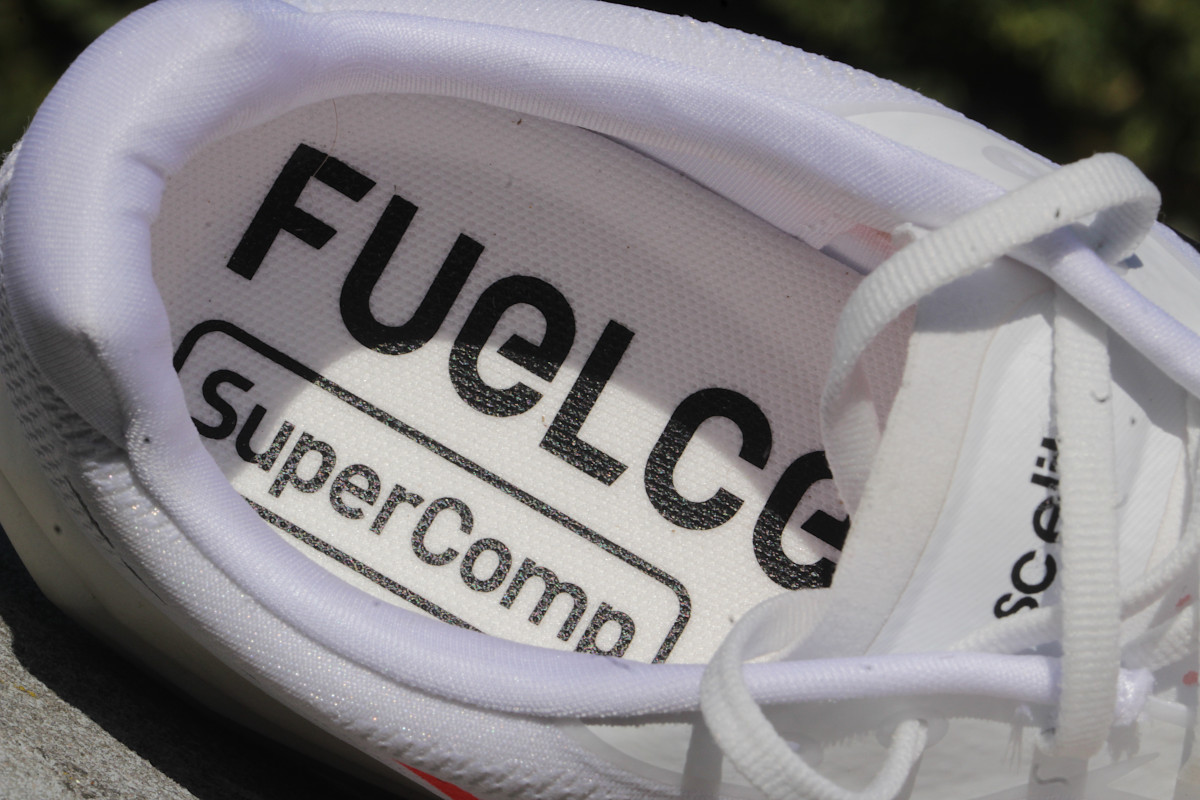
In the midfoot area, the fit is good – it hugs the foot rather than leaving space. The lightweight upper has been reinforced with stiffer elements where needed, which limits sideways movement of the foot. This is an important change, because the v5 is less stable on the sole side – so the upper has to do more of the work. The tongue is still not integrated, which could be considered a minor drawback, but the laces stabilize the whole shoe well.
The heel counter remains minimalist but functional. It’s stiff enough to keep the heel in check without unnecessary padding. The foot sits securely inside, though the overall design offers more freedom than classic, heavily structured constructions. Combined with a slightly narrower heel platform, this results in a mix: good support at high speeds and a feeling of lack of support and instability during slow runs.
Finally, in the World of Ultra-Light Carbon
According to the producer’s data, the New Balance FuelCell SuperComp Elite v5 weighs 224 grams in the men’s version and 170 grams in the women’s version. That’s less than the previous edition. It’s also comparable in weight to competing top-tier racing models. In my size, US 12, the shoe is obviously heavier – it weighs 247 grams. It’s slightly heavier than the average carbon racing shoe, but the overall direction of the new Elite v5 is clear: fewer grams, more speed.
Does weight make a difference? At this level – yes. A dozen or so grams less isn’t just a number in the specs, but also results in a more responsive feel across the entire construction. Unlike the v4, there’s no longer a sense that weight might limit the shoe’s potential – the v5 finally plays in the same league as the fastest racing shoes.
Final Thoughts
The New Balance FuelCell SuperComp Elite v5 marks a clear shift toward greater aggressiveness and a focus exclusively on speed, at the expense of its former “ease” and softness. It’s a model that performs better at high speeds and rewards good running form. As a result, we get one of New Balance’s most race-oriented offerings, which truly competes with the top carbon-fiber shoes on the market.