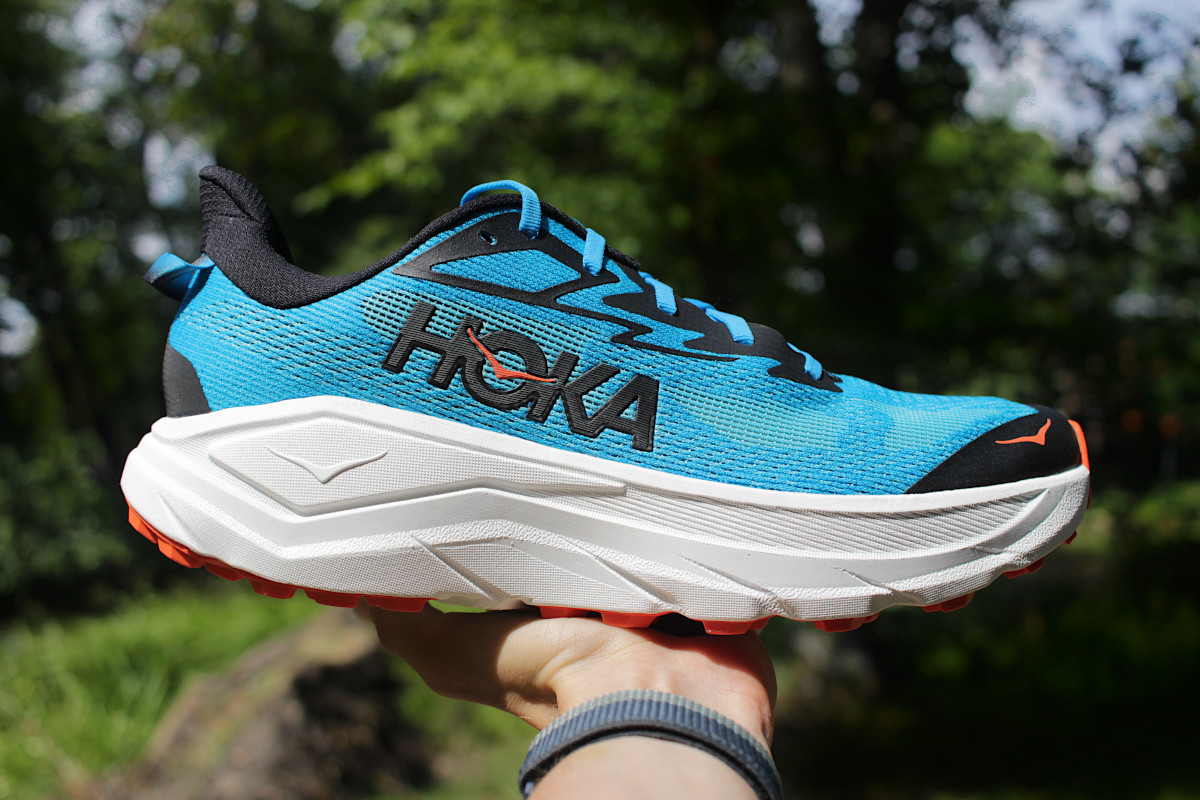
The Hoka Challenger 8 is a trail shoe that can handle hard surfaces. It has earned a reputation as one of the most versatile trail shoes on the market, a reputation that the eighth edition only reinforces. It’s lighter, softer, and even more refined. With solid cushioning and an outsole that isn’t overly aggressive, it’s a great choice for runners looking for one shoe to do it all. It’s ideal for forest trails, gravel paths, and city streets alike.
Basic Info
Tech Specs
Best For
The Hoka Challenger 8 is one of the most versatile trail running shoes on the market. Although it is designed for light terrain, it can also handle asphalt paths with ease. This makes it an excellent choice for runners who train in both forests and cities.
Pros
- very good cushioning,
- good stability,
- versatility (both in the forest and on asphalt roads),
- versatile outsole,
- breathable upper,
- reinforced toes.
Cons
- too delicate and not durable enough for mountain use.
What’s New in the Latest Edition
| CHALLENGER 7 | CHALLENGER 8 | |
|---|---|---|
| Stack height | 31/26mm men’s 29/24mm women’s | 42/34mm men’s 39/29mm women’s |
| Drop | 5mm | 8mm |
| Weight men’s | 252g | 275g |
| Weight women’s | 218g | 247g |
| Upper | Technical mesh, lighter, “hybrid” construction for hard surfaces and terrain, without rubber toe | Technical mesh, wider front, rubberized toe cap |
| Midsole | Compression molded EVA (CMEVA) | Compression molded EVA (CMEVA) |
| Outsole | Durabrasion rubber, 4 mm multi-directional lugs | Durabrasion rubber, 4 mm multi-directional lugs, better traction |
Hoka Running Shoes – Lineup
The Challenger is one of three pillars of the Hoka lineup, along with the Clifton and the Speedgoat. It is officially classified as a trail shoe, and that is where it really shines. However, it also performs well on hard surfaces. That’s why it is often referred to as the “Trail Clifton.” Both models have similar levels of cushioning and comfort, as well as great versatility. What are the differences? First, the upper of the Challenger is more reinforced and better adapted to changing conditions. The Challenger’s outsole also has deeper grooves for better handling of off-road conditions.
| TRAIL COMFORT | TRAIL FAST | MIXED TERRAIN | |
|---|---|---|---|
| maximum cushioning |  Mafate Speed 4 | 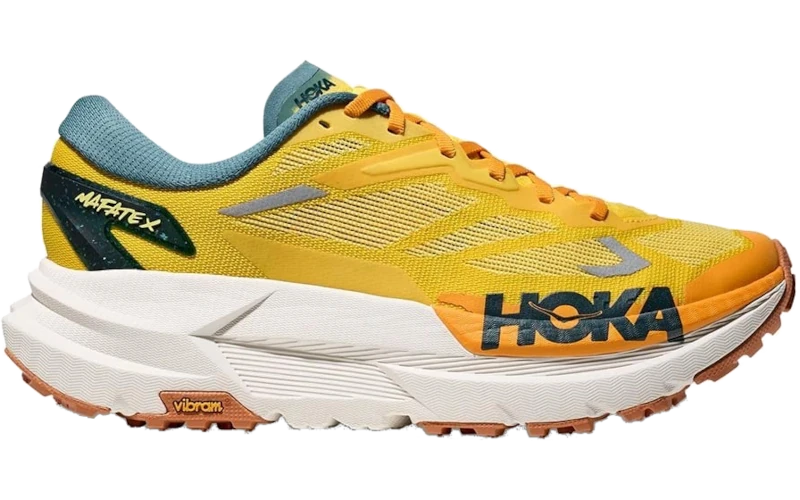 Mafate X |  Stinson 7 |
| very high cushioning |  Speedgoat 6 |  Tecton X 3 |  Challenger 8 |
| high cushioning |  Torrent 4 | ||
| mid cushioning |  Zinal 2 |
Similar to Hoka Challenger 8
Among the alternatives to the Challenger model are versatile trail shoes. These shoes are designed for running on paved paths, as well as for occasional use on hard surfaces. They perform best on gravel roads, forest trails, and gentle terrain. However, they are too delicate for technical mountain trails, as they do not provide sufficient protection or traction. However, when you run off a forest trail onto a hard surface, these shoes will not disappoint – they provide a light, confident, and safe run.
| MODEL | WYSOKOŚĆ PODESZWY (mm) | DROP (mm) | WAGA MĘSKI (gram) | WAGA DAMSKI (gram) | CENA (zł) |
|---|---|---|---|---|---|
| Hoka Challenger 8 | 42/34 | 8 | 275 | 245 | 150 |
| Nike Pegasus Trail 5 | 37/27,5 | 9,5 | 300 | 243 | 140 |
| On Cloudvista 2 | 44/39 | 7 | 280 | 235 | 160 |
| On Cloudsurfer Trail | n/a | 7 | n/a | n/a | 170 |
| Salomon Aero Glide 3 GRVL | 40/32 | 8 | 275 | 235 | 160 |
Soft Meets Stable: Road Comfort, Trail Control
The Hoka Challenger 8’s midsole is made of CMEVA foam, a type of compression-molded EVA foam. It’s the same foam used in the previous model. According to the technical data, the Challenger 8 has a much thicker midsole than its predecessor, ranging from 31 mm under the heel to 42 mm. However, that’s only part of the story. Hoka has changed the way it measures stack height. In the Challenger 7, only the midsole was measured. In the Challenger 8, however, the entire sole was measured, from the outsole to the insole.
In reality, the amount of foam has increased by a few millimeters, which is hardly noticeable given the softness it offers. On paper, however, the new Challenger 8 has a stack height of 42 mm at the heel and 34 mm at the toes. The drop has also changed from 5 mm to 8 mm, similar to the Clifton 10. Although this seems like a significant change, the difference in foot inclination is practically imperceptible due to the thick and soft midsole.
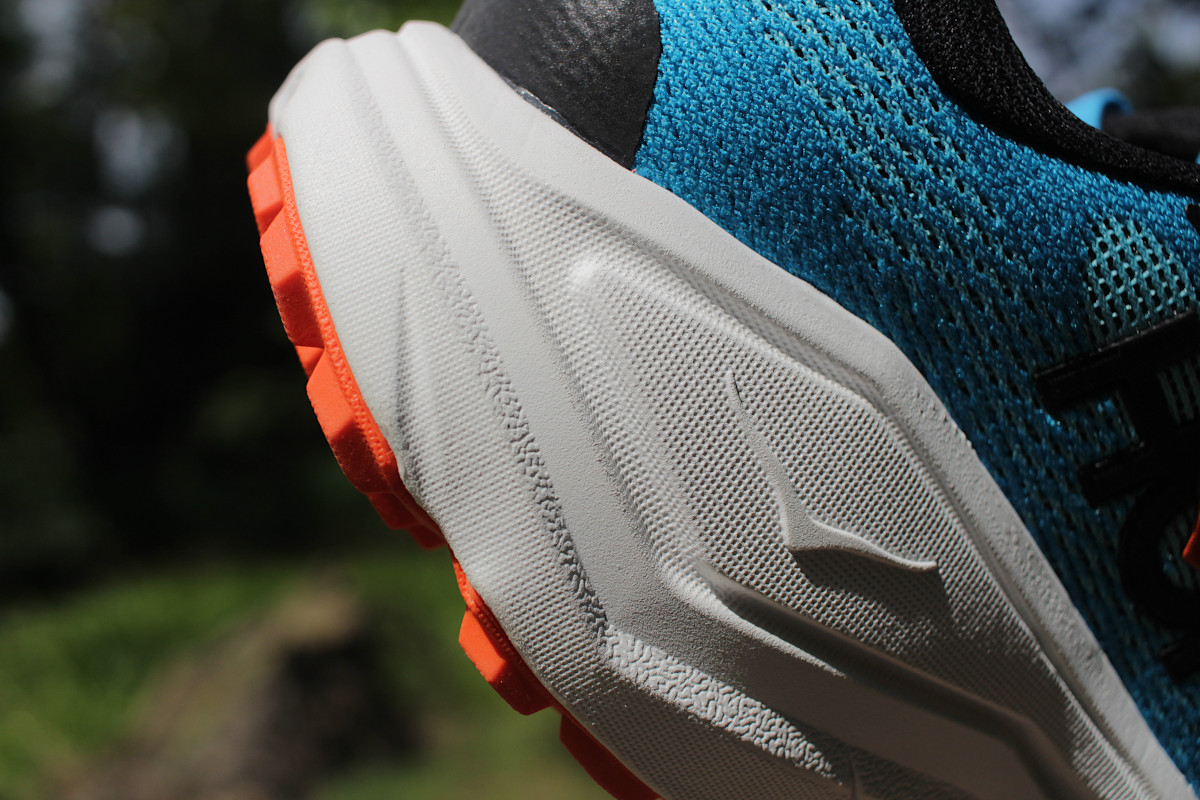
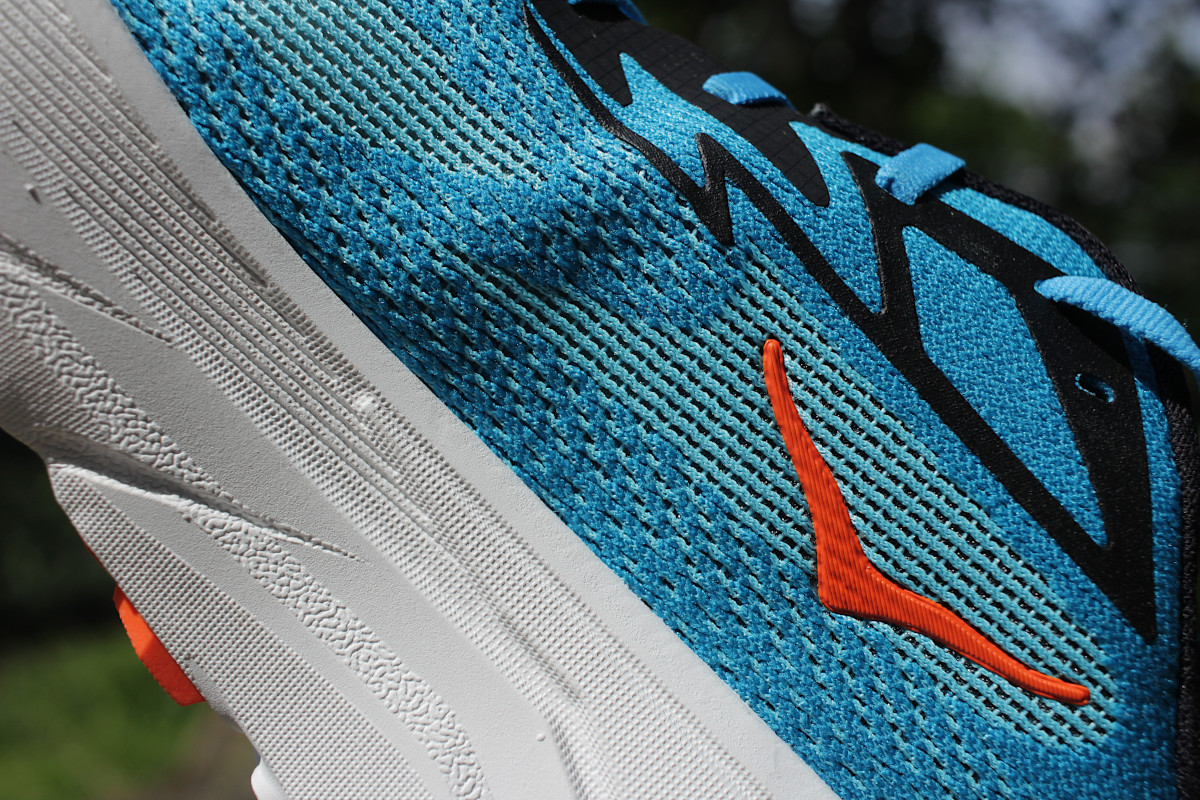
The Challenger 8 also makes a notable visual impression. At first glance, the shoe appears much taller than it actually is. This is the result of its distinctive construction, which features raised sides of the midsole known as the Active FootFrame. These “walls” surround the foot like a frame, making it feel as if the foot is sitting in the shoe rather than on it. Despite the large amount of foam and soft cushioning, this design keeps the Challenger surprisingly stable. This is a common feature of Hoka models – even though they look like cushions, they keep the foot secure and stable, even on uneven terrain.
As you would expect from Hoka, there is plenty of pure softness and cushioning. The midsole flexes nicely under the heel and toes. Combined with a slight rocker, this creates a gentle “floating” effect. This level of cushioning is ideal for heavier runners (up to 95 kg) and those who enjoy long, easy runs. The softness is so similar to asphalt that, with your eyes closed, you could mistake the Challenger for a classic road shoe.
Multi-Surface Traction with Added Aggression
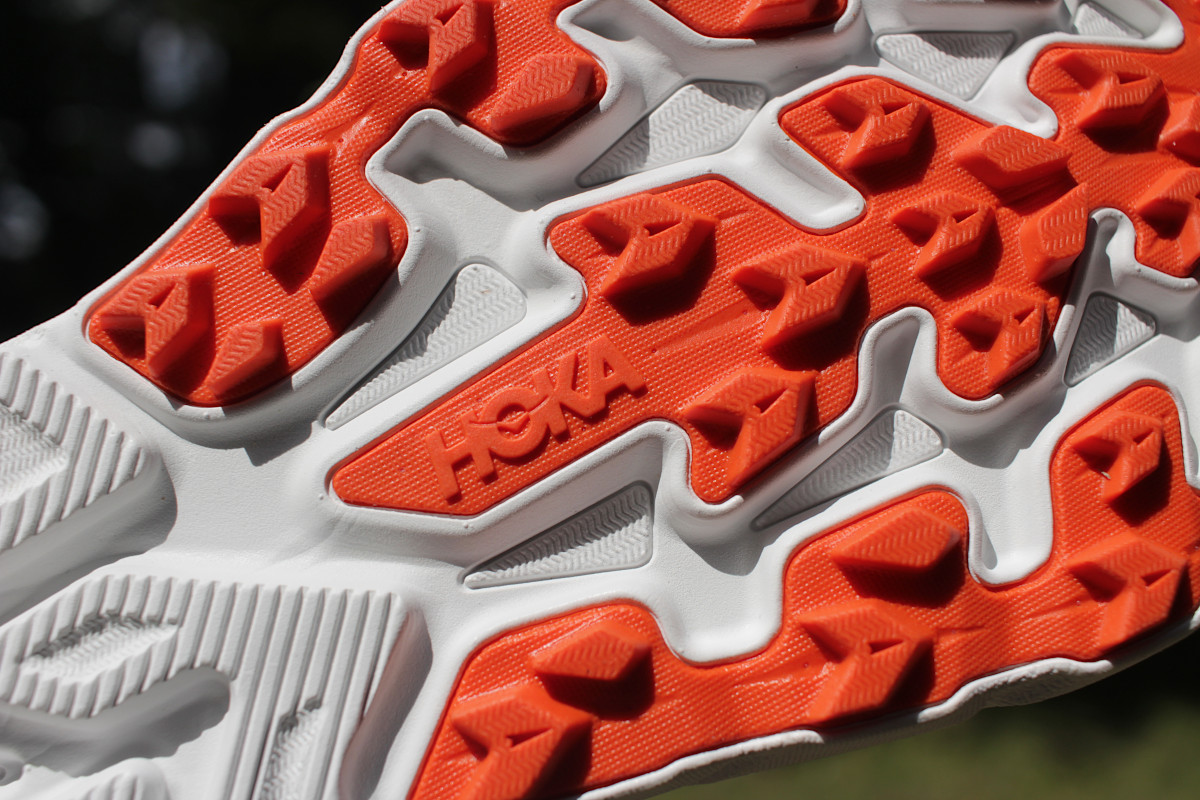
The outsole of the Challenger 8 has undergone a subtle yet noticeable change. It is still made of Durabrasion rubber, a durable compound that performs well off-road and on asphalt. This material is resistant to abrasion, so you can drive on hard surfaces without worrying about rapid wear.
However, the shape of the studs has changed. They are smaller and sharper than their predecessor and have a more aggressive texture. At 3.6 mm high, they strike the perfect balance between grip and versatility. They will perform without hesitation in dry forests, on gravel, or on hard paths.
However, they will not perform well in more difficult conditions. In deep mud or on rocky, technical trails, they may lack “teeth.” For those conditions, it is better to choose the Speedgoat or the Mafate. But if you are looking for a versatile model for park paths, suburban forests, and the occasional run on hard surfaces, the Challenger 8 is perfect.
Technical Upper: Recalibrated for Trail Conditions
The upper in Challengers has been balancing between the world of hard surfaces and off-road terrain for years. Depending on the edition, it sometimes resembles trail shoes, with additional reinforcements and more durable material, and other times it resembles a lightweight hard surface shoe, more breathable but also less resistant. After the very delicate, almost running-shoe-like upper in the 7th edition, the 8th edition returns to a more trail-oriented design. The biggest change? Solid reinforcement of the front of the shoe. The toes are now protected by a clearly marked, wide “bumper” that effectively protects against accidental kicks against stones or roots.
Of course, there is a trade-off – this protection affects the flexibility and breathability of the front. But hey, we’re talking about a shoe for light terrain, gravel and forest trails, not a shoe for racing in deep mud. For most users, this compromise will be just right – it gives you more peace of mind in more difficult terrain without sacrificing too much of the comfort of everyday running.
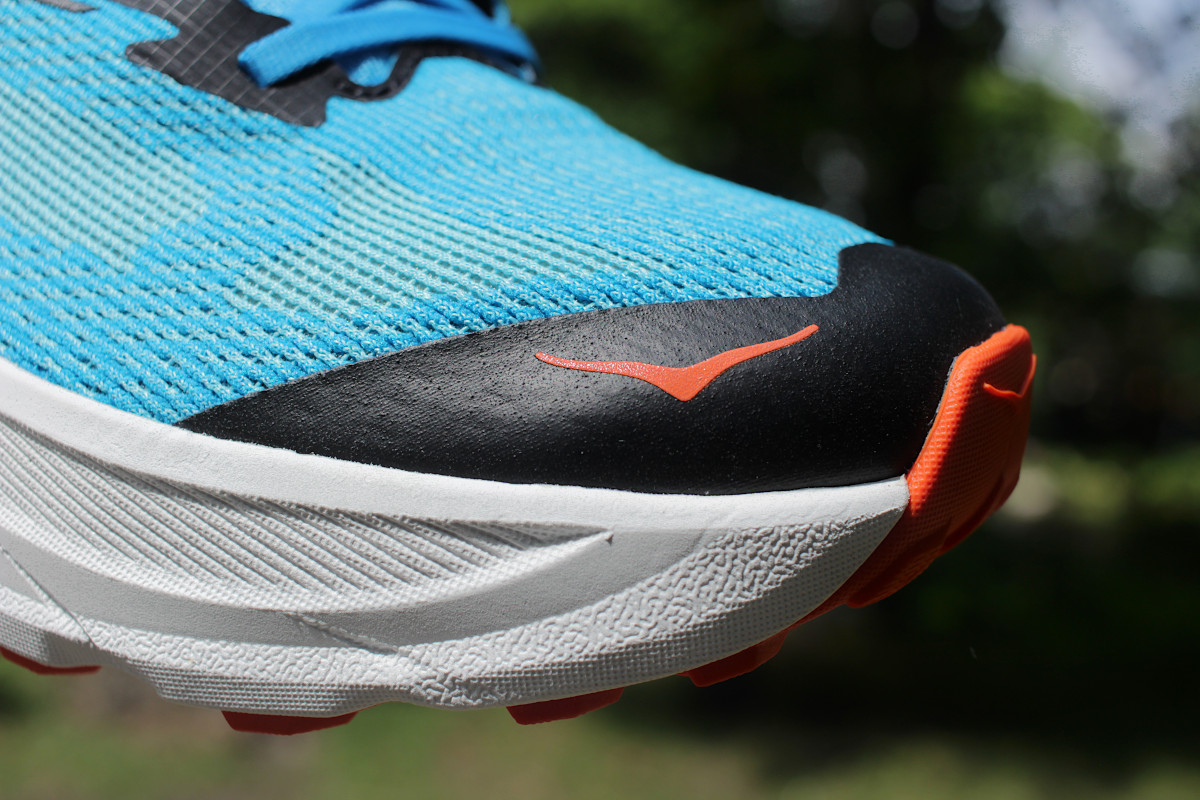
The new Challenger 8 is slightly wider than the previous version but maintains fairly standard dimensions. The upper is neither narrow nor wide; it strikes a happy medium. In terms of width and interior volume, it’s a classic, standard fit. This is good news for most runners – if you have an average-width foot, the Challenger 8 should fit like a glove. Those with very wide feet may feel slightly unsupported, but the fit will be problem-free for the vast majority.
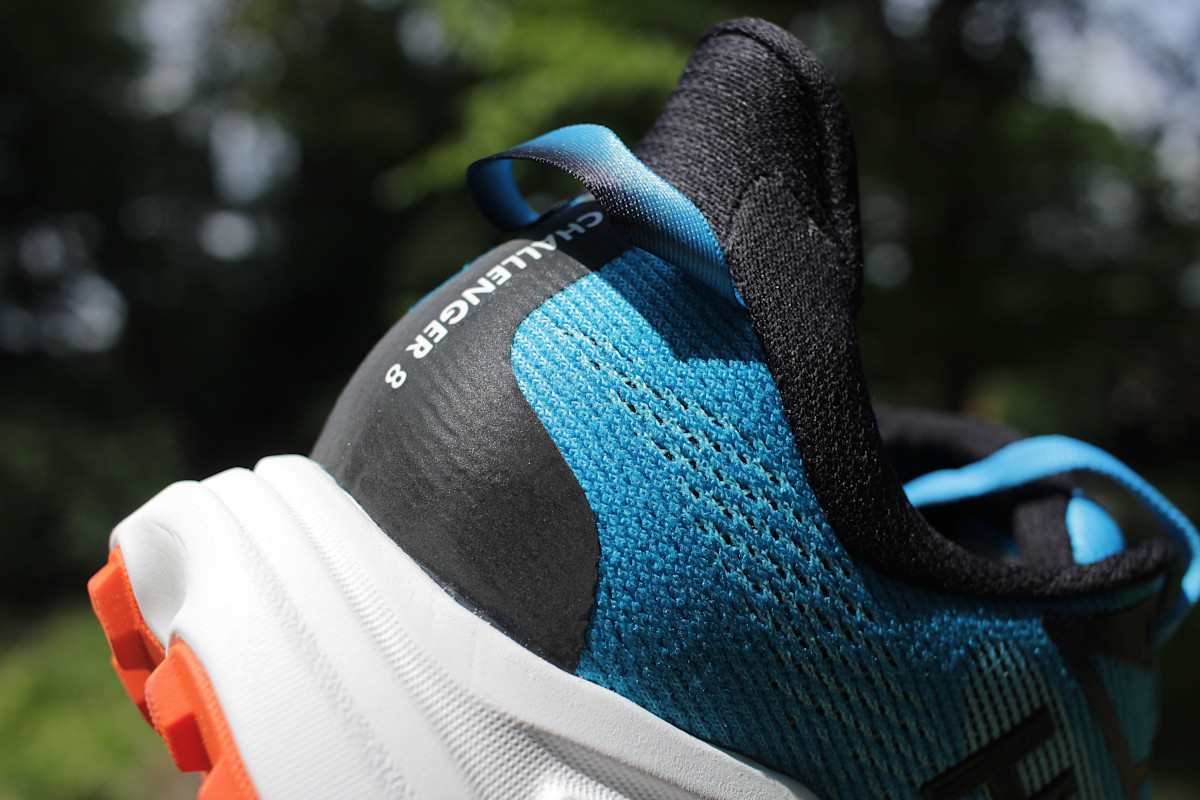
The rear features a classic Hoka construction in which the sides of the midsole form a “frame” around the heel. The midsole geometry alone helps keep the foot in place. Next is a stiff heel counter in the form of a traditional wedge, a feature common to most running shoes. It’s nothing special, but it gets the job done. The heel is stable and does not move, so there is no feeling of “floating.” For added comfort, the inside of the heel counter is filled with soft foam. The entire heel counter is pleasant to the touch. While the construction may not be original, it works flawlessly, providing high-level stability in the rear of the shoe.
Weight Deception: Heavy Looks, Light Reality
According to the manufacturer, the men’s version weighs 275 grams, while the women’s version weighs 247 grams. However, the size 12 US (46 2/3) Challenger 7 weighs 317 grams. This is heavier than its predecessor, but the new Challenger 8 has more foam, which naturally increases the weight.
Nevertheless, for a trail shoe, albeit a lightweight one, it is still very light. The Challenger ranks among the top 17% of lightest trail shoes that I have reviewed on my blog, a noteworthy achievement. Interestingly, the shoe looks quite heavy. The construction seems solid and sturdy. Put it on, though, and you’ll feel something completely different – its lightness is surprising from the very first steps.
Final Thoughts
The Challenger 8 is a versatile shoe for runners who transition between gravel, park, and hard surfaces. It provides excellent cushioning that is surprisingly soft without sacrificing stability. The new upper and outsole provide enhanced trail performance without sacrificing versatility. It’s a comfortable choice for those looking for one versatile shoe.