If the outer edge of your heel or forefoot wears down first, you’ve probably been told that you supinate. The next step is usually a Google search, and that’s where the confusion starts. Many guides mention “running shoes for supination,” but most brands don’t actually have a separate category for them like they do for stability shoes. This is because supination works differently from overpronation. It isn’t corrected with medial support or posting. In practice, most runners with supination should use neutral running shoes.
Running Shoes for Overpronation – When Do You Need Stability Shoes
First, let’s define the opposite of supination: overpronation. It occurs when there is excessive movement in the ankle joint and the ankle rolls inward. This movement is followed by a lowering of the arch of the foot, which often (though not always) results in longitudinal flat feet. You can usually see how the line between the knee joint and the heel “breaks” towards the center at the back. The more the foot tilts inward, the more it tends to roll on its inner edge. In such a situation, the position of the knees often changes as well, converging towards each other and causing the legs to assume a position resembling the letter “X.”
In this case, stabilizing footwear is recommended. This type of footwear is usually reinforced to counteract overpronation. Often, this solution involves an additional rigid element on the inside of the midsole. This element is typically harder and more rigid than the foam on the opposite side of the shoe. When the ankle tries to tilt excessively inward, or overpronate, the stiffer foam restricts this movement. As a result, overpronation is reduced.
Of course, the stabilizing element described above is not the only one. Manufacturers also use other solutions, such as a wider, stiffer midsole in the heel area; raised midsole edges; reinforcements on the inside of the shoe upper; and asymmetrical heel counters. These features are designed to limit excessive inward rolling of the ankles.
Neutral Running Shoes – What “Neutral” Actually Means
Neutral pronation occurs when the ankle joint moves, but without excessive inward or outward tilting. In this case, the foot moves through the center in an S-shaped path. The movement begins at the outside of the heel and continues through the midfoot bones (from the fifth to the first) until reaching the big toe.
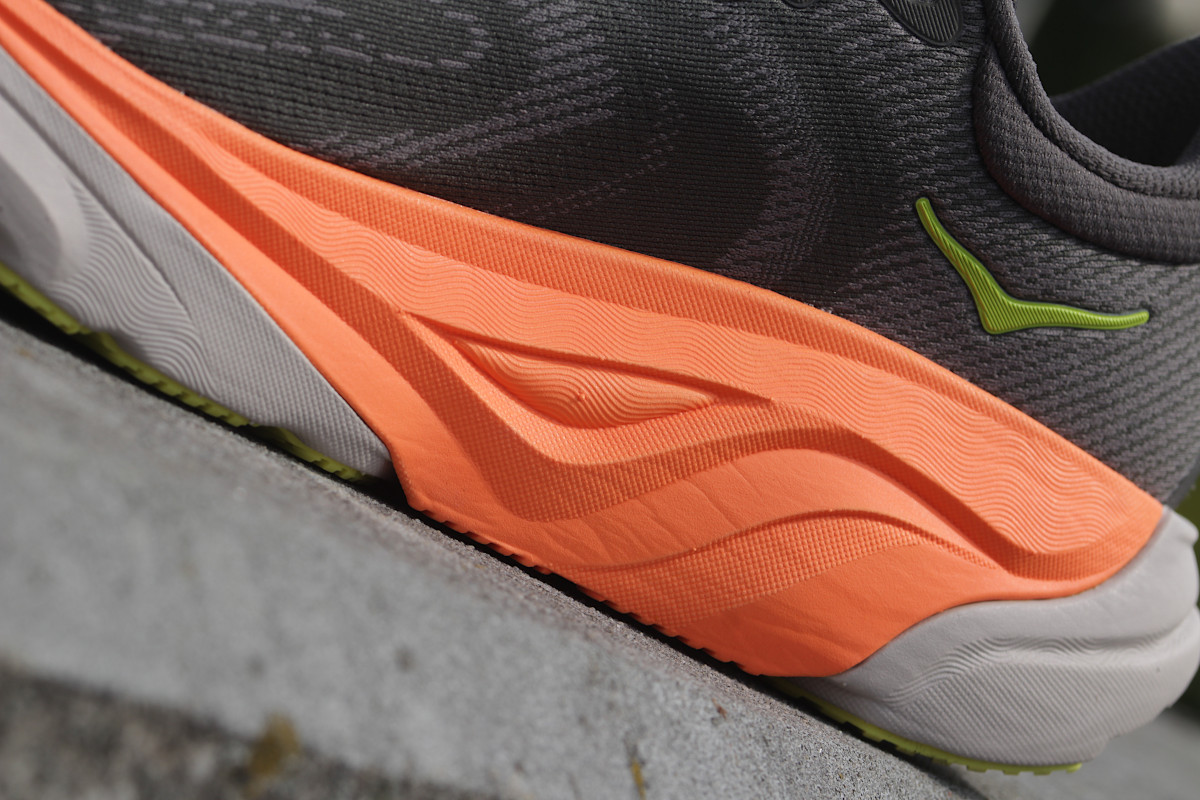
In this case, neutral shoes are definitely the simplest choice. They are the opposite of stabilizing shoes. The structure of the midsole on the inner (medial) and outer (lateral) sides of neutral shoes is the same. As a result, the shoe does not interfere with the foot’s natural rolling process. There is no need for it.
Running Shoes for Supination – Why Neutral Shoes Are Usually Recommended
Supination is the opposite of overpronation. In this case, the ankle joint does not move enough for the foot to roll in a neutral manner. For this reason, supination is considered insufficient pronation. Supination is usually associated with a high arch, though we don’t see the line between the knee and heel bone “break” at the outside of the ankle. In this case, the foot rolls mainly on its outer edge. This is often associated with a wide stance (bowlegs). Simply put, the legs form the shape of the letter “O.”
In this case, there is no need to adjust the ankle or foot position, so we choose neutral shoes. Some people will simply roll their feet in these shoes in a more straightforward (neutral) way, while others will roll them more on the outer edge (supination). Nevertheless, both groups need the same type of neutral footwear.
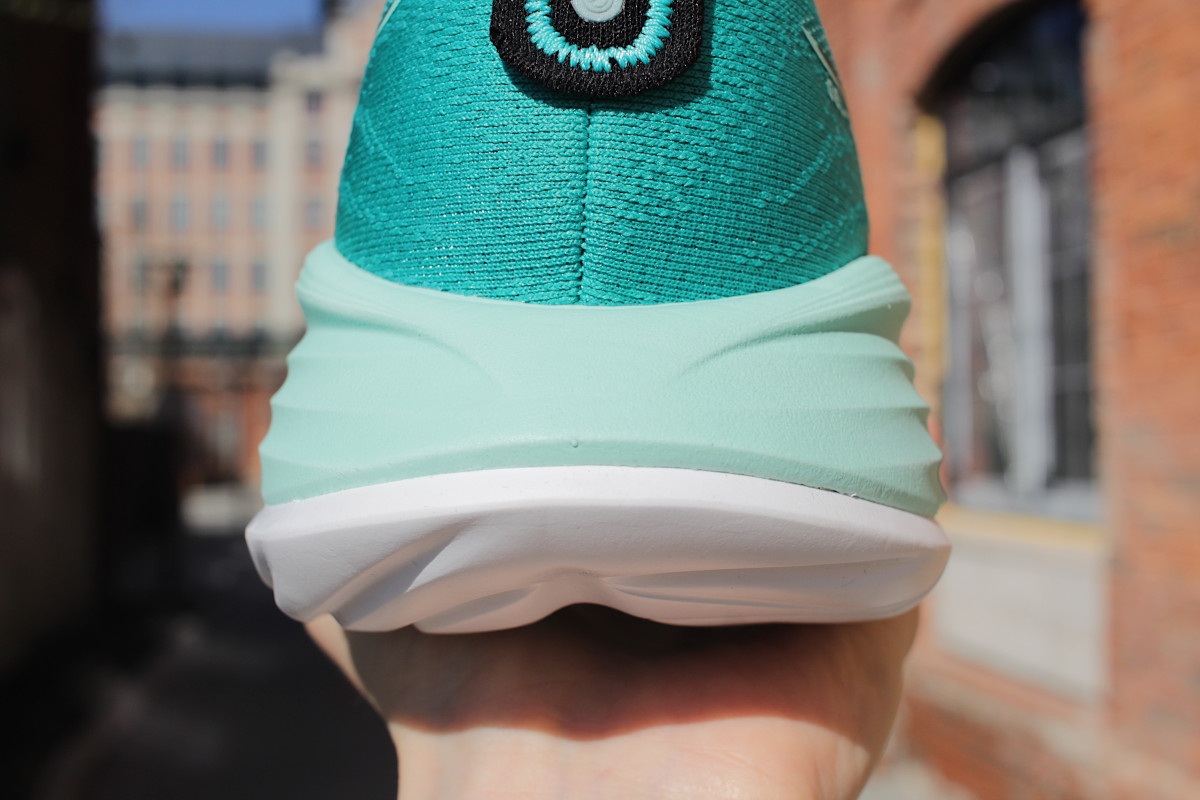
Are Neutral Shoes and “Supination Shoes” the Same Thing?
However, online retailers often conflate these two categories. When browsing store websites, you may encounter chaos and inconsistency. For example, a particular shoe model may be described as “neutral” on one website and “neutral/supination” on another. This can be confusing and make it seem like these are two different models. This is not true. In terms of construction, there are no shoes dedicated to supinators. They are exactly the same models. They are simply described differently.
Returning to the question posed in the headline, “Are neutral and neutral/supination shoes the same thing?” My answer is yes. Both names refer to the same type of shoe construction.