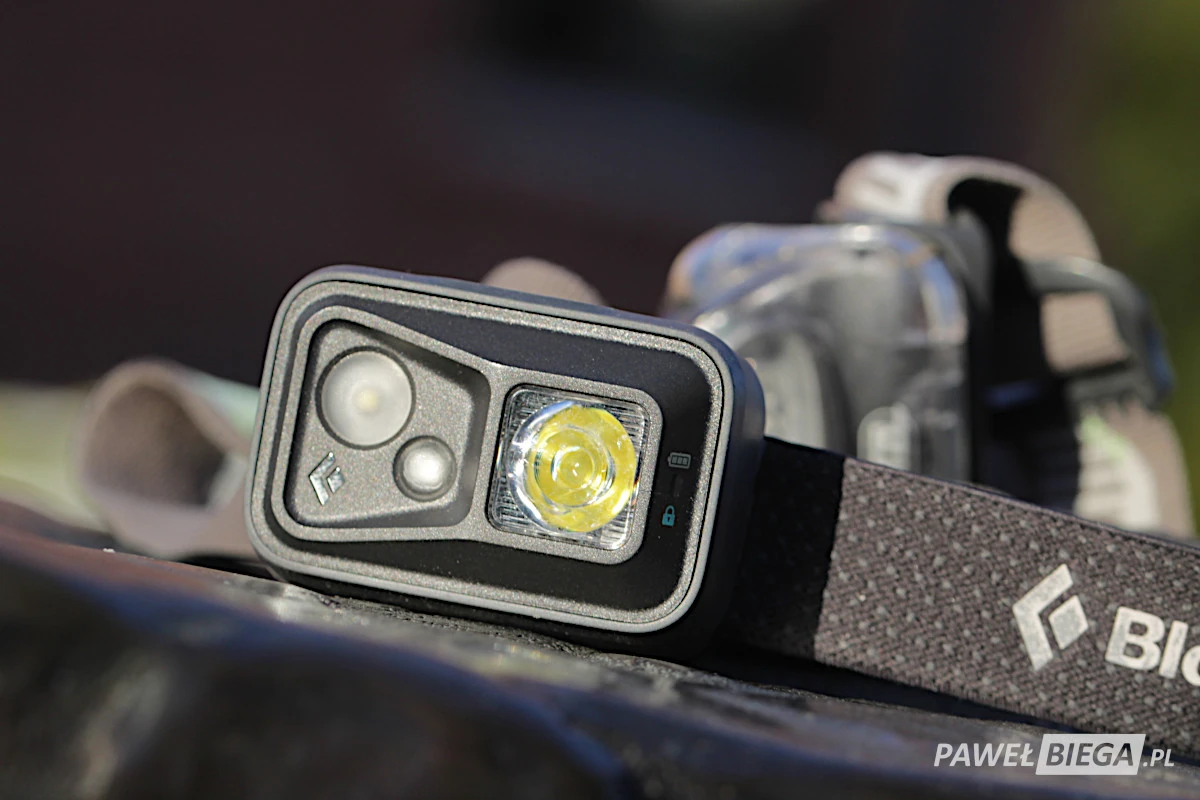
Running in difficult terrain or after dark requires perseverance and the right equipment to ensure visibility and safety. A well-chosen headlamp is essential. In this guide, we will examine the most important features of headlamps, including light output, lighting modes, charging methods, weight, and water resistance. This will help you learn what to look for when choosing a model that suits your needs perfectly.
1. Brightness and Beam Distance
When choosing a headlamp for running, there are several key aspects to consider to ensure comfort and safety. First, consider the brightness and range of the light. The amount of light emitted is usually measured in lumens. The higher the lumen value, the brighter the light emitted by the device.
The most powerful headlamps have a brightness of several thousand lumens, but models with 200-300 lumens are sufficient for running in the city. For more demanding terrain, such as forests or mountains, more light is necessary, so headlamps with a power of 400–800 lumens are better suited for those conditions. The light range should allow you to see obstacles at least 20-30 meters ahead.
2. Lighting Modes
Another issue is lighting modes. It’s best to choose a model that offers more than one type of light. In changing conditions, it is useful to be able adjust the lighting power according to the environment. When running in well-lit areas, economy mode is useful because it provides less light but saves battery power. In completely unlit areas, you will need maximum light mode, which provides much more light and visibility but drains the battery faster.
The pulsing light function, also known as flashing mode, is useful in situations where attracting attention is crucial, such as when running along a street or in areas where there may be other people or vehicles moving. A red light can perform a similar function and has an additional advantage: it is more energy efficient.
When choosing a headlamp, make sure the modes can easily be switched, even while wearing gloves, so you have full control over the lighting while on the move.
3. Comfortable Fit and Minimal Weight
Comfort is a key factor affecting the usability of a headlamp while running. The weight of the headlamp is an important factor. The lightest models, including batteries, weigh about 40 grams. However, virtually all models weighing between 50 and 80 grams are light enough. They should not cause discomfort, even over longer distances.
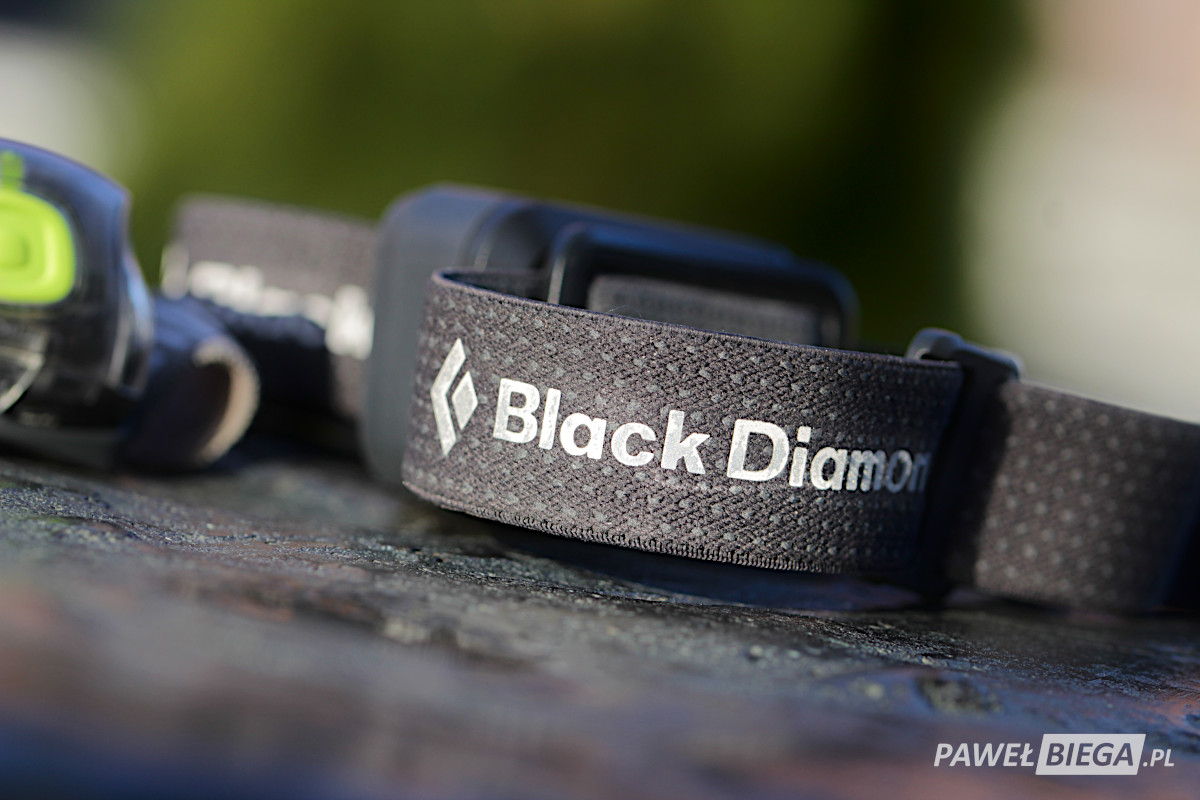
A good fit is also key to comfort. Adjustable straps allow the headlamp to fit different head sizes and prevent it from moving while running. Pay attention to the quality of the strap material – it should be flexible yet durable and resistant to stretching.
For longer routes, especially on difficult terrain where running can be intense, an additional stabilizing strap that runs across the top of the head can be invaluable. This stabilization system distributes the headlamp’s weight more evenly, increasing comfort and preventing the flashlight from slipping during sudden movements. This solution works especially well for heavier, more powerful models, which often have the battery located at the back of the headband.
4. Headlamp Power Options: Batteries vs. Rechargeable
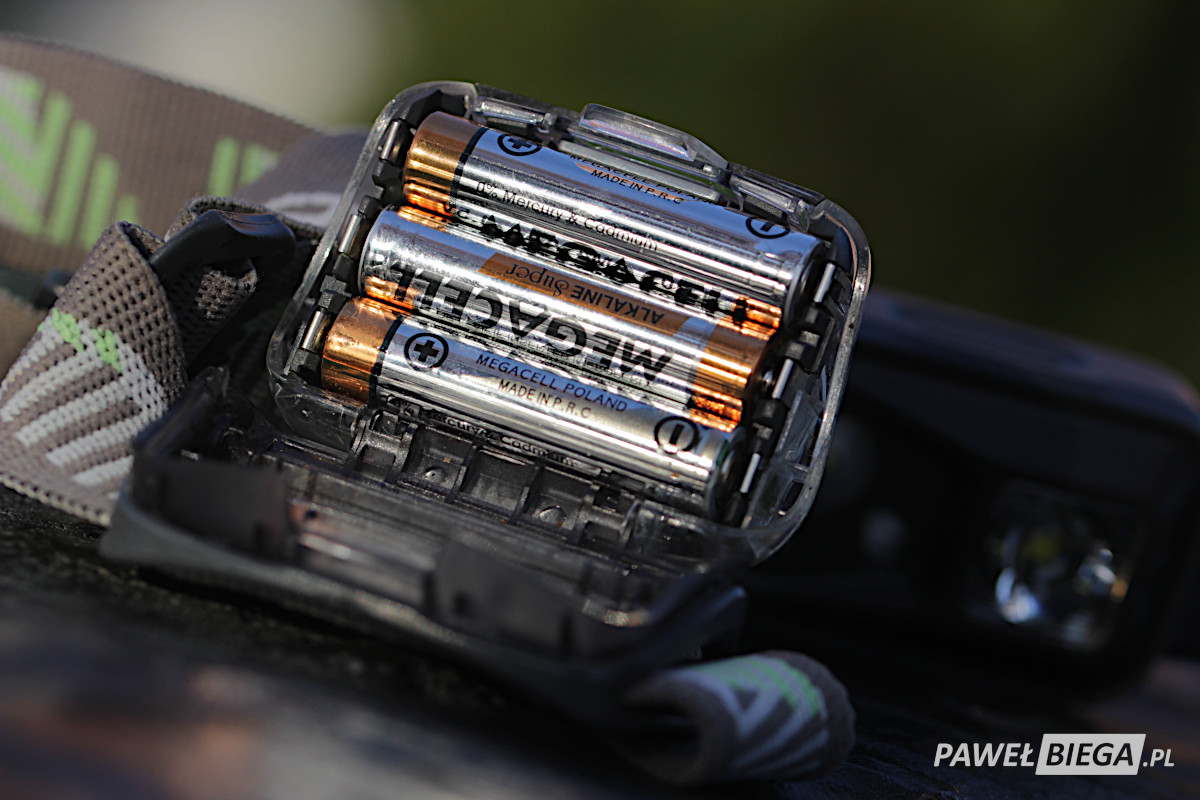
Don’t forget about the power supply! In this case, headlamps can be divided into two groups: The first group is powered by rechargeable batteries, and the second group is powered by AAA or AA batteries. While rechargeable batteries are economical and convenient, they may not be practical in areas without access to electricity. During the longest runs, especially, a rechargeable battery solution may not be practical. A more practical solution is a headlamp with replaceable batteries, which you can buy at any store. When the batteries lose power, you can replace them to ensure an uninterrupted source of light.
Regardless of the type of battery, it is important that the flashlight’s operating time in standard mode is at least four to six hours. Pay attention to the lighting modes. In maximum light mode, the batteries will run out faster!
5. Water Resistance and Weatherproofing
Water resistance is another important factor. Pay attention to the IP standard, which specifies the device’s degree of protection against contamination and water ingress. The IP standard usually consists of two digits. The first digit specifies the degree of protection against contamination and dust, and the second digit specifies the degree of protection against water. If no degree of protection against dust has been specified for a given device, the letter X is used. IPX values therefore refer only to protection against water and are described on a scale from 0 to 8.
- IPX0: No protection against water.
- IPX1: Protection against vertically falling water droplets (e.g., light drizzle).
- IPX2: Protection against water droplets falling at an angle of up to 15 degrees.
- IPX3: Resistance to water splashes at an angle of up to 60 degrees.
- IPX4: Protection against splashes from any direction (e.g., light rain).
- IPX5: Resistance to low-pressure water jets (e.g., rain with wind).
- IPX6: Protection against strong water jets (e.g., heavy downpour or spraying).
- IPX7: Resistance to immersion in water up to one meter deep for 30 minutes.
- IPX8: Complete water resistance when immersed at greater depths (value determined by the manufacturer).
For headlamps, IPX4 is sufficient, possibly with additional protection against contamination (e.g., IP54). For more advanced headlamps, the water resistance can be even higher (e.g., IP67 or IPX8), making the device more versatile in different weather conditions.
These are the most important features to consider when choosing a headlamp for running. However, your choice should be tailored to your needs and the conditions in which you run. Someone training in the city has different needs than an ultramarathon runner in the mountains. Some will prioritize light output and an additional battery to extend the lighting time. Others will prefer a lightweight design and the ability to charge the headlamp via USB.