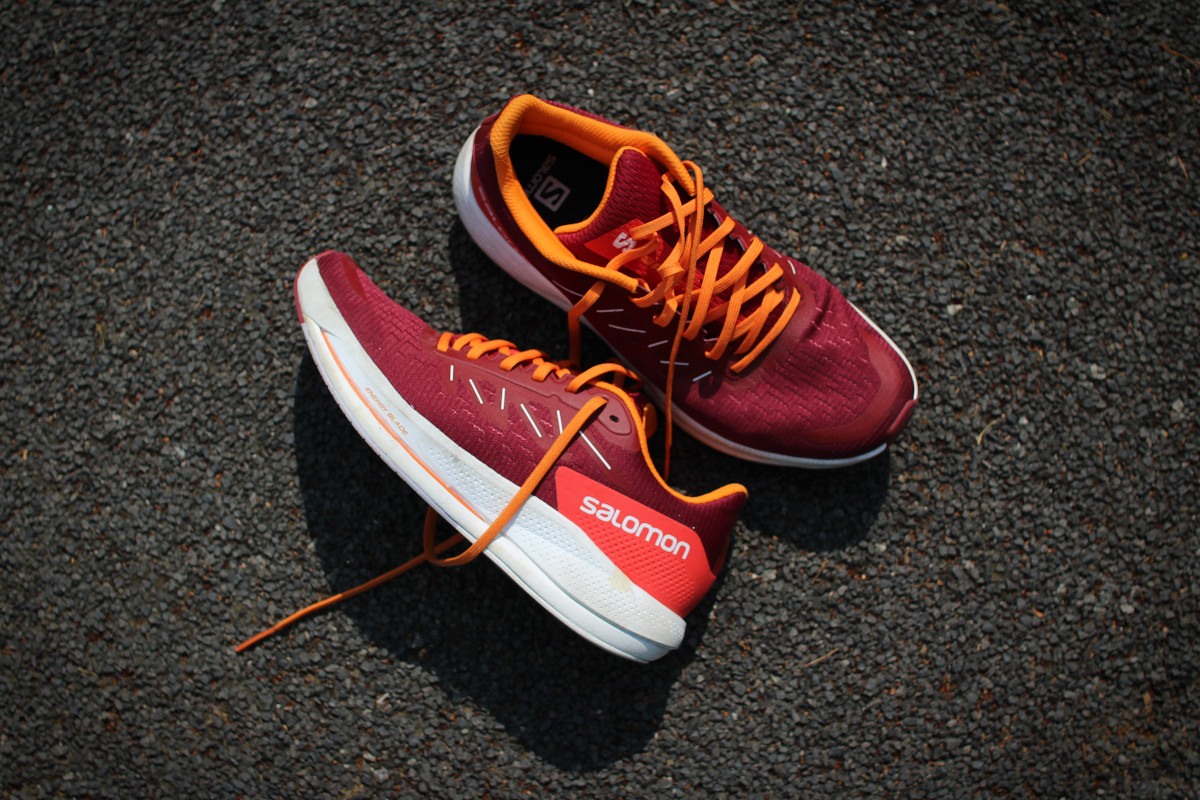
The Nike Structure 26 is back with a new look. It provides even greater stability, guiding the foot without restricting movement. The new model provides greater control and safety during easy and long runs. There are fewer and fewer shoes with this level of stability on the running market, and Nike’s lineup is arguably the best in terms of stabilization. Additionally, it is a reliable and safe choice for hard surfaces.
Basic info
Tech specs
Purpose
The Nike Structure 26 is a running shoe that offers solid cushioning and stability. It is designed for easy, everyday training at a comfortable pace. It performs best on hard surfaces. Sidewalks and paved paths are its natural environment. While it can handle gravel and light terrain, that is not its main purpose. It is a sensible choice for runners looking for additional foot control, especially those who overpronate.

Pros
- good but not excessive cushioning
- stabilization for overpronators and neutral feet,
- perfect for easy and safe running
Cons
- massive silhouette
- poor dynamic
What’s New in the Latest Edition
| STRUCTURE 26 | STRUCTURE 25 | |
|---|---|---|
| Stack height | 38/28mm | 37/27mm |
| Drop | 10mm | 10mm |
| Weight men’s | 321g | 322g |
| Weight women’s | 262g | 263g |
| Upper | mesh | mesh |
| Midsole | ReactX | Cushlon 3.0 + Air Zoom |
| Outsole | two types of rubber: harder and more abrasion-resistant at the rear, and lighter and more flexible at the front | uniform rubber across the entire surface |
Nike Running Shoes – lineup
This season, Nike is focusing on its Structure line of running shoes with stabilization. The Structure 26 model is the latest in a long-standing series. It features proven concepts in a refreshed form. New to the lineup is the Structure Plus, which has significantly increased cushioning.
If you’re looking for versatile, stable Nike running shoes, the Structure 26 is a safe choice. It’s like a solid mid-range car. However, if increased comfort and softness are your priorities, it’s worth looking at the Structure Plus.
Need something else? You can find a complete guide to Nike running shoes and their intended uses in our overview.
| NEUTRAL SHOES | STABILITY SHOES | |
|---|---|---|
| maximum cushioning |  Vomero Plus | |
| very high cushioning |  Vomero 18 | 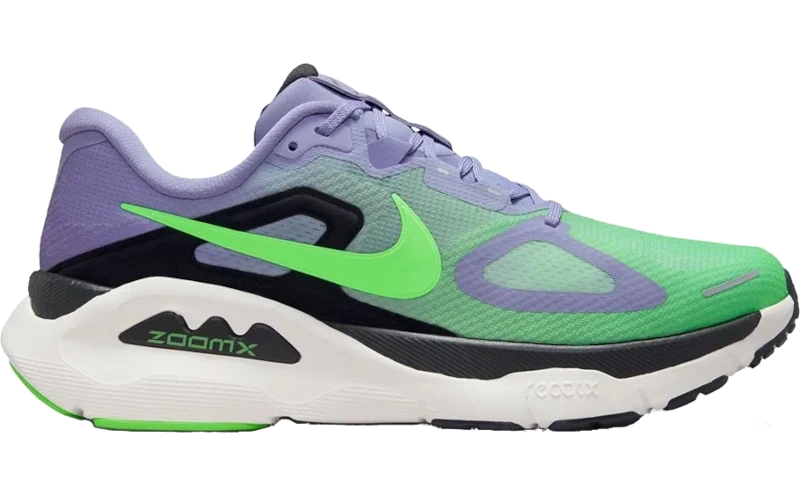 Structure Plus |
| high cushioning |  Pegasus 41 | 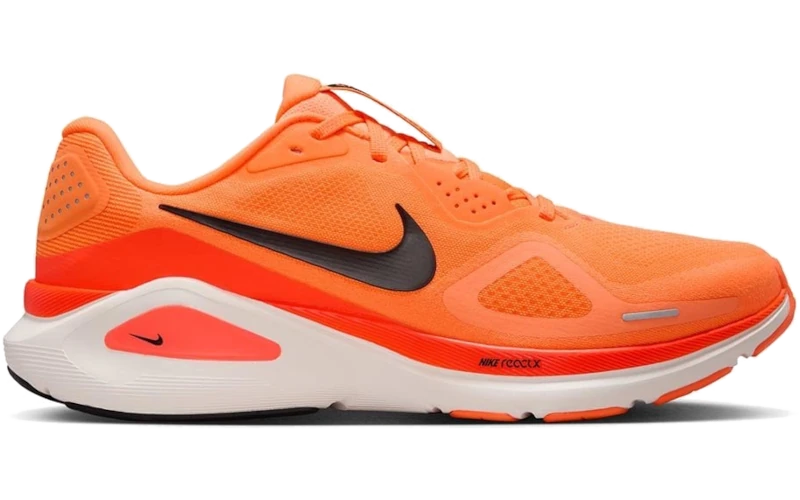 Structure 26 |
| mid cushioning |  Winflo 11 |
Similar to Nike Structure 25
Nike is not the only brand that makes stabilization shoes. Other brands have a much wider selection of specialized models in this category. These shoes differ in terms of support level, cushioning characteristics and training purpose. The table below shows shoes with parameters similar to those of the Structure 26, facilitating quick comparison. For a more in-depth look at the subject and a full market overview, check out the stability shoe guide.
| MODEL | STACK HEIGHT (mm) | DROP (mm) | WEIGHT MEN'S (grams) | WEIGHT WOMEN'S (grams) | REGULAR PRICE (€) |
|---|---|---|---|---|---|
| adidas Supernova Solution 2 | 36/26 | 10 | 292 | 242 | 150 |
| Asics GT-2000 14 | 36.5/28.5 | 8 | 273 | 239 | 160 |
| Brooks Adrenaline GTS 24 | 36/24 | 12 | 283 | 249 | 150 |
| Hoka Arahi 8 | 39/31 | 8 | 276 | 218 | 160 |
| Mizuno Wave Inspire 21 | 36/24 | 12 | 295 | 246 | 160 |
| New Balanace Vongo v6 | n/a | 6 | 303 | 243 | 180 |
| Nike Zoom Structure 26 | 38/28 | 10 | 321 | 262 | 140 |
| Saucony Guide 18 | 35/29 | 6 | 272 | 245 | 150 |
Cushioning and the Ride of ReactX Foam
Compared to the previous generation, the midsole has been significantly redesigned. It now features full-length ReactX foam, which provides cushioning and stability. It is soft and comfortable upon landing but becomes more stable during the roll phase. This is not a shoe that sinks under your foot like a sponge. And that’s a good thing. Less softness often means better stability, and that’s exactly how it works with the Structure 26. This model is best suited for runners weighing up to about 80–85kg. Heavier runners may feel that the foam is reaching its limit.
The stack height is 38mm under the heel and 28mm in the forefoot. The drop, or the difference between the two, is the standard 10mm. These values align with the market standard for stable training shoes.

The inner side of the midsole features the Midfoot Support System, which stabilizes the foot. This system consists of a stiffer, slightly raised section of foam on the medial side. It fills the space under the arch of the foot, providing additional support. In practice, it reduces overpronation. For runners with neutral, properly arched feet, the system is almost imperceptible and does not interfere with running.
The midsole’s geometry also contributes to stability. It is wide, fairly stiff and not overly soft. Thanks to this, the shoe does not collapse under load, maintaining control of the stride. However, this comes at the expense of dynamism. The Structure 26 is quite massive, both visually and physically. It is not a training rocket. Rather, it is a solid platform. While the cushioning is not overly comfortable, it provides high stability and predictability when running.

Grip Without Aggression
The Nike Structure 26 outsole has a classic design that is characteristic of the brand. Two types of rubber are used: a harder, more abrasion-resistant rubber in the rear of the shoe and a lighter, more flexible rubber in the front to support the push-off. The pattern itself is not aggressive. The cuts and grooves in the foam are approximately 1.8mm deep, as you would expect from shoes designed primarily for hard surfaces.
Compared to the previous version, the Structure 26 uses significantly less rubber in the midsole. More foam remains exposed, which could theoretically lead to faster wear over the long term. However, this design still provides good traction on dry hard surfaces and mixed surfaces. However, the grip is noticeably weaker on wet or loose ground, so keep that in mind.

A Technical Mesh That Keeps Things Simple
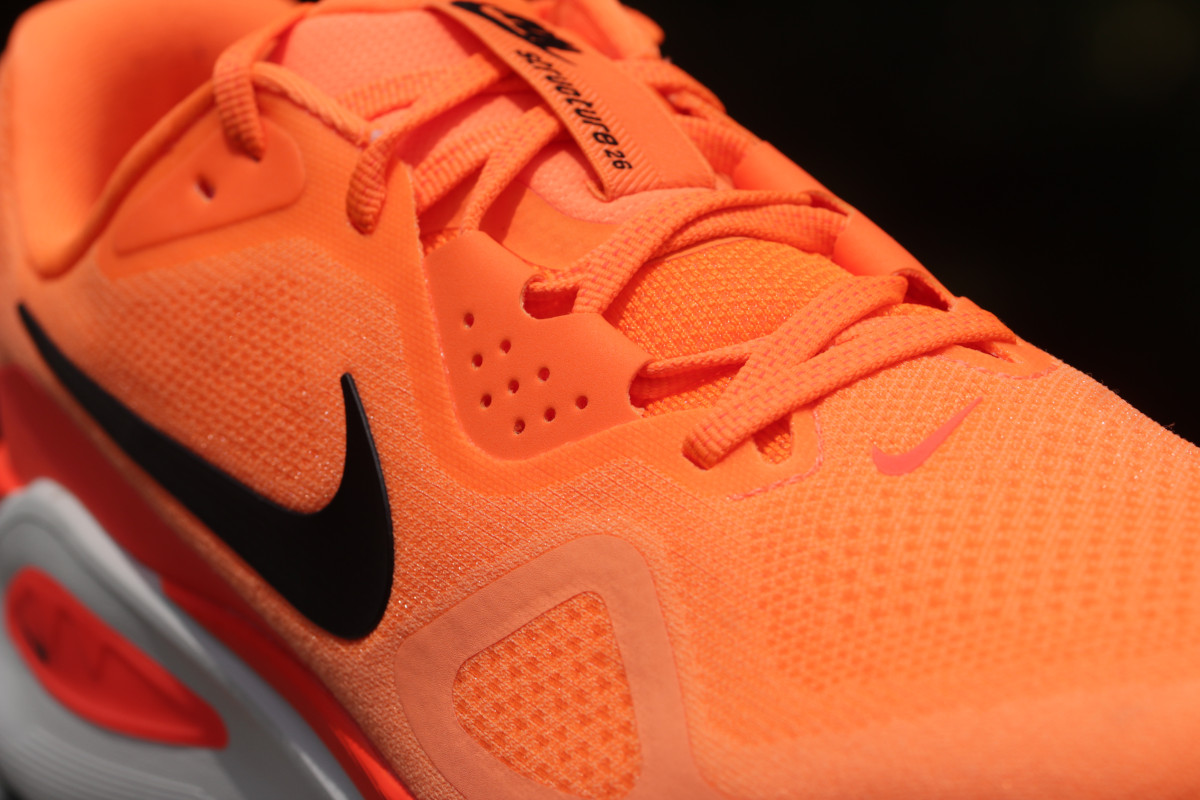
The material used for the upper isn’t anything special. It is a moderately thick technical mesh. It is breathable, but not so much that wind blows in the shoe. This is an advantage on cooler days. However, this may not be ideal for those who prefer maximum airflow in the summer. The seamless finish has a positive effect on comfort and aesthetics. The material is slightly perforated on the outside and smooth and comfortable on the inside.
The width is standard. At its widest point, the upper measures about 103.7mm, which is typical for this size. However, the shoe feels snugger on the foot than the numbers suggest. This can be a plus or a minus. It depends on your preferences. If you prefer your shoes to “hug” your feet and keep them in place, you will find the Structure 26 very comfortable.
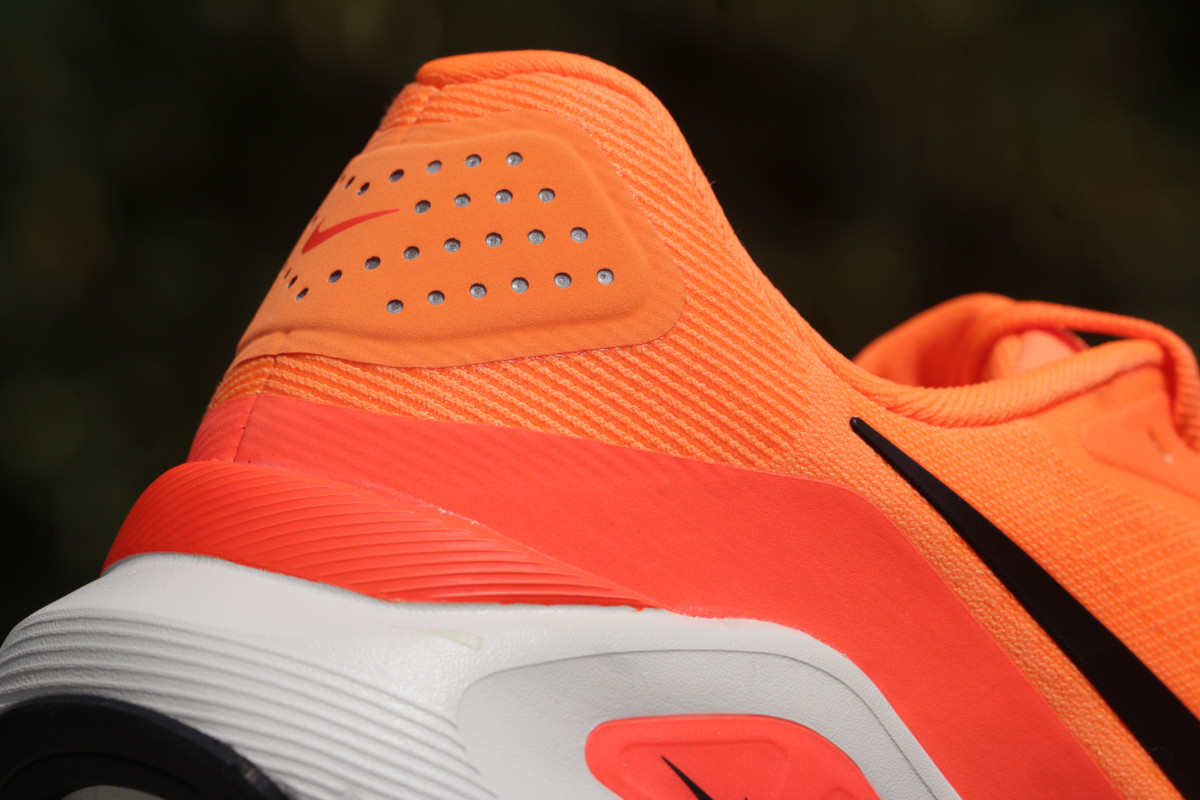
The rear part features classic designs. There is no need to experiment here. Inside there is a traditional stiffened wedge that works with the raised edge of the midsole on the inner side to provide transverse stability for the foot. The result is stable support for the heel and entire foot. At the same time, the heel is surrounded by a soft collar that covers the solid construction and improves comfort around the Achilles tendon. The heel remains secure and stable, while the collar is soft where it needs to be.
Stability Over Lightness
According to the manufacturer, the men’s Structure 25 weighs 321grams and the women’s weighs 262grams. These values are slightly higher than average for everyday running shoes.
In size US 12, the men’s model weighs 353grams. This weight is typical for training and stability running shoes. However, compared to running shoes as a whole, this weight is quite high, and the Structure can be considered heavy. Statistically, it ranks among the 35% heaviest running shoes.
Final Thoughts
The Nike Structure 26 is a classic, stable training shoe designed for easy running on hard surfaces. While not particularly light or dynamic, they offer predictability and good stride control. The stabilization is noticeable yet not intrusive, and the entire shoe feels solid and well-designed. This model is ideal for runners who value calmness, safety and consistency over a sporty edge.