A proper fit is not a minor detail when it comes to running shoes. It is the foundation of comfort and health. Even the best foam won’t help if the shoe doesn’t fit well. If they are too tight, they will cause pressure. If they are too loose, you will lose control. The result? Sore feet, black toenails, and injuries. Many runners focus on cushioning and neglect fit. This is a mistake. The foot works dynamically. Its volume changes. It moves around inside the shoe. That’s why a good fit is about more than just the size on the label.
How Much Toe Room Should Running Shoes Have?
Although everything has already been written about toe space, I cannot fail to mention it here. We often hear that shoes should have an extra centimeter of space. Where did this idea come from? It probably stems from the traditional method of choosing running shoes, which involves tracing your foot on a piece of paper and measuring its length. This method recommends adding about one centimeter. This gives us the correct insole length for our running shoes.
While fitting running shoes is an individual matter, there are a few universal rules worth considering. First, running shoes should be a bit larger, but by how much?
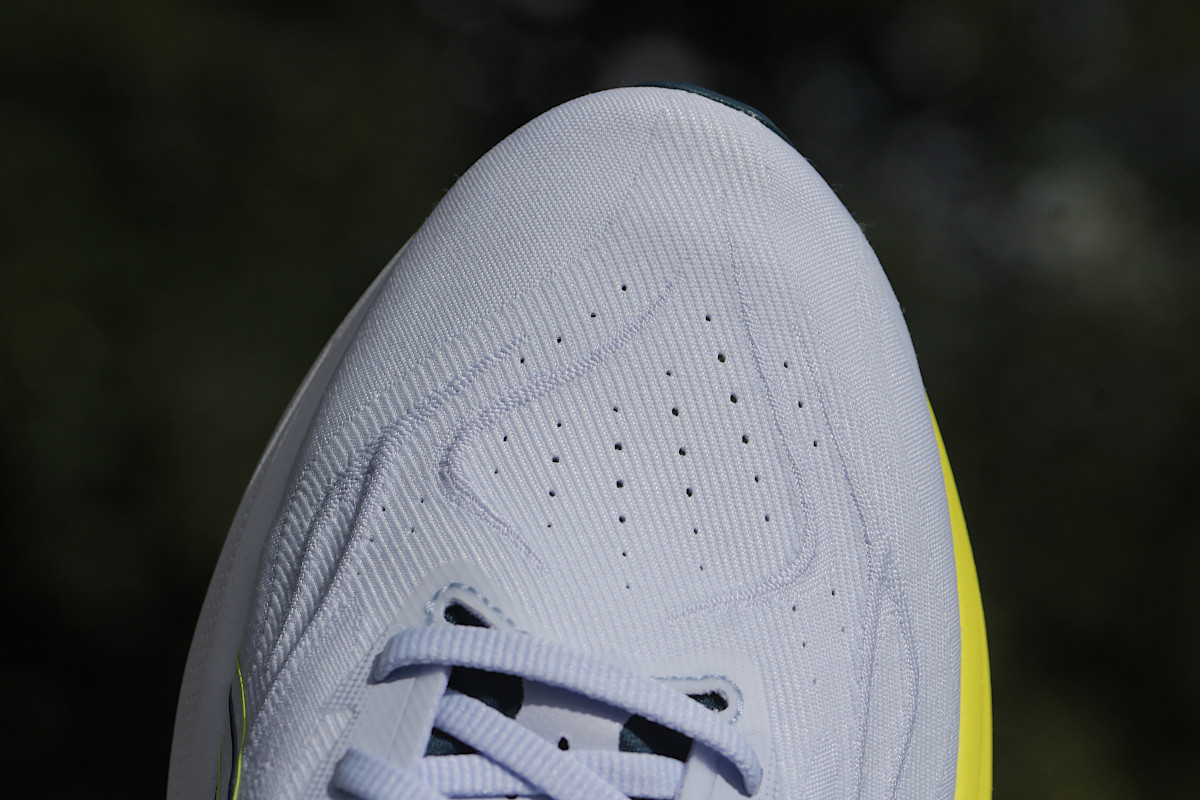
The optimal space between the tip of your longest toe and the tip of the shoe is usually between 0.5 and 1.0centimeters. This space should be measured while standing to account for the foot’s natural elongation under load. The space should never be less than 0.5cm because shoes that are too tight can cause discomfort, abrasions and black toenails. However, the space can be slightly larger, up to 1.5centimeters, as long as the entire shoe fits the foot well.
The key area is around the ankle. Running shoes should not be too loose in the heel area. If extra space in the toe area does not affect the fit of the shoe in the midfoot and heel areas adversely, then it is not a problem. However, if the extra space makes the shoe loose in the heel area, it is probably too big. In such cases, a red warning light should come on! It’s important to find the right balance between extra toe space and a proper heel and overall fit.
Important: Always check the size while standing! When standing, your foot flattens slightly under weight and settles into the shoe. This flattening will be even greater when running. Therefore, always check the size while standing.
Different Foot Lengths – How to Choose the Right Running Shoe Size
The first rule of choosing shoes is to always base the size on the longer foot, as this determines the correct size. Most people have feet that are slightly different lengths, with a difference of a few millimeters being common. Therefore, if we choose a size that fits the longer foot, it will not be exposed to pressure while running, which could lead to chafing or discomfort. A well-fitting shoe for the longer foot provides adequate space for the shorter foot as well.
We should never choose shoe sizes based on the shorter foot because there is a high risk that the longer foot will not have enough toe space. Insufficient space can lead to abrasions or injuries such as black toenails. These problems can arise faster than you might expect, especially with intense running.
Choosing the right size when there is a large difference in foot size is challenging. The greater the difference, the greater the challenge. With a significant size difference, one shoe will inevitably be too loose and the other too tight. To some extent, you can reduce the looseness of the shoe on the smaller foot by tightening the laces. You can also use the extra lace hole available in most shoes.
Midfoot Width in Running Shoes – Avoiding Shoes That Are Too Tight
Running shoes vary. They are manufactured on different lasts, meaning the fit can vary from shoe to shoe. Some models are wider, while others fit like a sock. When trying on ten pairs, each one will feel slightly different. Interestingly, each runner may perceive the same model differently. One person may perceive a given shoe model as wide, while another may perceive the same model as narrow. It’s such an individual matter that, without trying them on and checking the fit, you won’t know how they’ll feel. There is also no clear answer as to which is better. You should measure your foot and choose the pair that feels best.
The only certainty is that the shoe must not cause discomfort. If any part of the shoe pinches you or makes you feel uncomfortable, don’t buy it and look for another running shoe model. Don’t force yourself into running shoes and buy them on the basis that “they will stretch.” What if they don’t stretch, and after a few training sessions, the tight part rubs your foot raw? Would you still claim that they will stretch?
Why Proper Heel Fit in Running Shoes Is Crucial
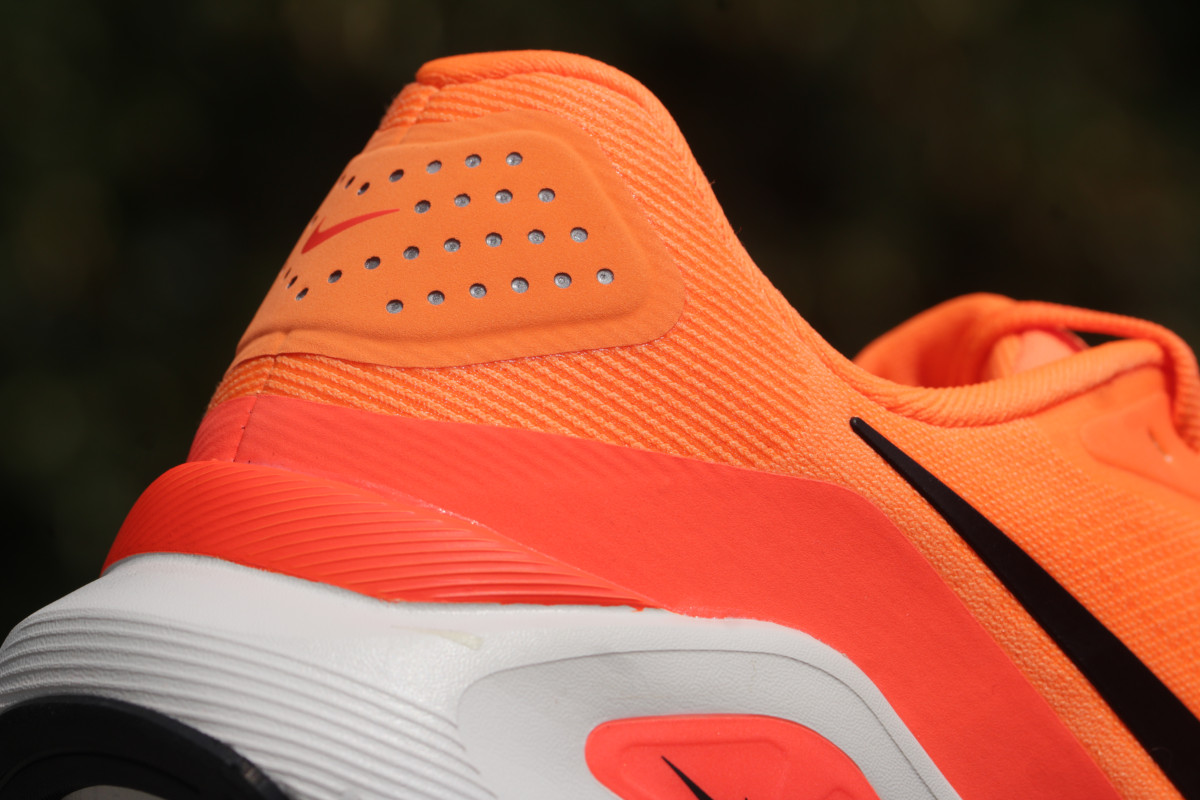
When it comes to the heel, it’s important that the shoe provides adequate support. Some movement between the heel and heel counter is acceptable, but the shoe should not slip off the heel while running. If this happens, either you have chosen a size that is too large, in which case you should try a smaller size, or the shoe is simply not properly fitted to your needs in terms of shape, heel counter height or stiffness. In either case, it is best to give up on this shoe model and look for another one. Look for shoes that will properly and solidly support and fit your heel. There should be no slack in the back of the running shoe – only a snug fit!
Final Thoughts
So, once again, as a reminder: Running shoes should have adequate space in the front, typically ranging from 0.5 to 1centimeter. Midfoot comfort is important but largely depends on personal preference. The most important thing is a secure heel fit without any slack. The perfect running shoes should be loose at the front and stable at the back.