Do you dream of breaking records? Do you think that buying “the fastest” shoes is all you need to do? Unfortunately, shoes alone won’t do the trick. Although modern midsole technologies can boost your energy and make running easier, they won’t run for you. In this article, we debunk the myth that spending more money will make you run faster. Find out what shoes can actually provide and where their effectiveness ends.
How Carbon Plates Revolutionized Running Shoes
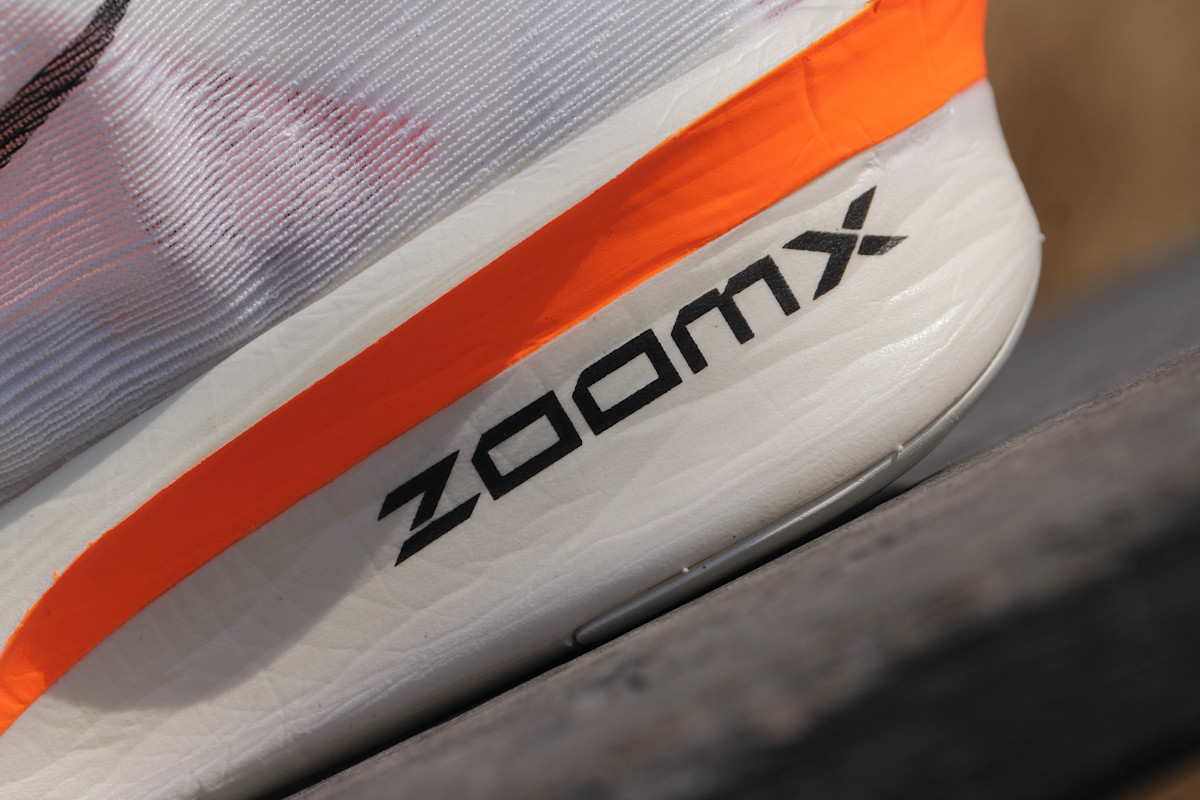
The introduction of carbon plate shoes has given rise to a phenomenon some call “technological doping.” These shoes, made of carbon and similar materials, have changed the game. They are stiffer than ever before yet extremely dynamic. This stiffness acts like a spring; the more energy you put into bending it, the more energy it returns when you push off. This is often accompanied by an aggressive midsole profile, which facilitates a quick rollover from heel to toe, although this is not always the case. The result? A faster, easier, and smoother stride.
It’s worth pausing for a moment on the word “easier.” That is the whole trick. A shoe can facilitate the rolling and lifting of the foot, but it won’t do it for us. If we have the strength to run dynamically, the shoe will “go with us” and help us. If we lack this strength, however, the shoe will help less and sometimes not at all. This is why carbon running shoes are often associated with a runner’s pace. You may come across descriptions saying they are suitable for speeds of 4:30/km or 4:00/km. The faster your pace, the more you benefit from the shoe’s design, which is intended to make faster running easier.
Fiber or springy foam alone won’t do anything unless we provide the energy that they can then return. Then there’s the technique. To make it all work, you have to run fast enough and land on your midfoot rather than your heel. It’s like a diving board at a swimming pool; if you push off hard from the springy end, you’ll shoot into the air. However, if you stand closer to the middle and push off lightly, you won’t fly very far. It’s exactly the same with carbon shoes, only on a smaller scale and on a hard surface.
The Race for Records
The results are the best confirmation of this phenomenon – and something that really captures the imagination. It all started with Eliud Kipchoge and his two attempts to break the two-hour marathon barrier. As we know, he succeeded on his second attempt in Vienna with an impressive time of 1:59:40. Although this result was not recognized as an official world record, records in carbon shoes have since been falling rapidly. Both the men’s record, also set by Kipchoge at 2:01:39 in Berlin in 2018, and the women’s record, set by Brigid Kosgei at 2:14:04 in Chicago in 2019, were achieved in these types of shoes.
These are the most spectacular examples, but just look at what marathon winners around the world are wearing. Carbon fiber plates are standard these days – you hardly see shoes without them on the podium.
On the one hand, these record numbers are impressive and make you think, “I want that, too!” On the other hand, these results are the product of years of hard work. These athletes have shed buckets of sweat in training and dedicated their entire lives to running. They have honed their speed, strength, technique, and everything else that could give them even a fraction of a second’s advantage. Without that, no shoes would make a difference. A “fast” shoe that actually helps you reach breakneck speeds is just the last piece of the puzzle. And it’s not even the most important piece. Who knows? Maybe these records would have been broken even without carbon.
Brands also take great care to ensure that the “fastest” shoes appear on the feet of the world’s fastest runners. Since the best run in carbon, records are broken in carbon. One might also ask whether these results would have been achieved if the athletes had worn other, less “fast” models. Probably, although perhaps not as impressively. But we will never know. Shoes are important, but they are still only one piece of the puzzle, the main component of which is the runner himself.

The Power’s in the Runner, Not the Gear
How does it look from the perspective of the average runner? First, there is a significant difference between average runners and top runners. In terms of strength and motor skills, they lack the background to run in a way that allows them to take advantage of “fast” running shoes’ potential. Returning to the earlier comparison, they lack the strength and technique to really bounce off the end of a trampoline. The result? Carbon wonders won’t work the same way for them as they do for professionals. Sometimes, they won’t work at all.
Moreover, the average amateur runner’s greatest reserves – or deficiencies – lie not in their shoes, but in their training. This is where the potential to improve and run faster lies. Improving your form comes from well-planned training, not just from buying new shoes that will “make” you faster.
Training requires effort, dedication, and consistency, but it brings results worth the effort. Once you improve your speed, you will run faster, whether you’re wearing carbon racing shoes or slower models. Yes, racing shoes can give you a slight boost, but it’s just that: a slight boost. They’re just the last piece of the puzzle and probably the only thing that connects amateurs with the world’s fastest runners.