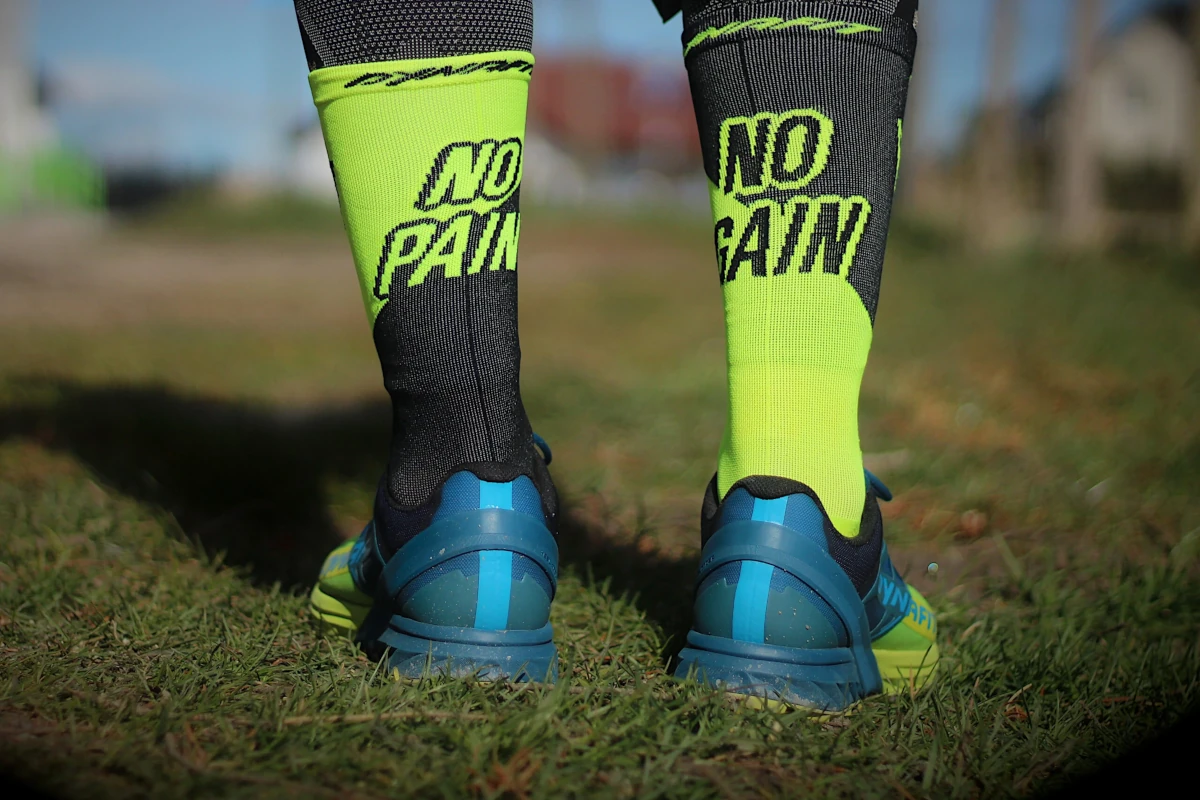
Autumn and winter are times when your motivation to run is put to the test. Temperatures drop, days get shorter and the dampness and rain can make you reluctant to leave the house. That’s when the familiar excuses start to appear. “It’s too cold.” It’s too dark. “I don’t have the right shoes for winter.” I’m afraid I’ll get sick.” Sound familiar? In this article, I examine the most common excuses that arise in the fall and winter, determining how much truth there is to them and how much they are just convenient excuses to skip training.
Too Cold to Run? How to Dress and Train in Winter
This is the simplest excuse that can practically be used at any time of year. After all, it can always be too cold. Likewise, it can always be too warm. There’s no such thing as the perfect temperature for running. Conditions are rarely perfect. What really makes a difference is clothing. Poorly chosen layers can ruin any workout. Well-chosen clothing makes the temperature irrelevant. There’s no such thing as bad weather for running. There are only poorly dressed runners.
The solution is to wear the right clothes. Your body warms up quickly while running, so choose your outfit for a few minutes after you start, not when you leave the house. The basic principle is to wear layers. Wear thin, breathable technical underwear next to your skin. On top of that, wear a light insulating layer, such as a sweatshirt. In windy or rainy conditions, wear a thin jacket as a third layer. Additionally, the lower the temperature, the longer your pants should be and the more protection you should have for your hands and head.
If you’re slightly cold at the start, it’s a sign that your clothing is appropriate. After a kilometer, the cold will disappear.
When It’s Dark Outside: How to Keep Running Safely
This is another very universal excuse that can be used almost year-round. It’s always too dark. In the fall, it gets dark earlier. In the winter, it’s the norm. It’s much easier to get up for a morning workout when it’s light outside. I know this all too well. Getting up in the dark and going out for an evening workout requires a lot more determination. Without motivation, it’s difficult to take the first step. That’s why a lack of light often becomes a convenient excuse to skip a run.
When running in the dark, visibility and safety are the most important things. Reflective elements are essential, whether you’re running on the sidewalk or outside the city. A good flashlight or headlamp allows you to see the road and be seen by others. This is especially important on poorly lit sections. Choose your routes wisely. Stick to the best-known, well-lit ones. Avoid unfamiliar shortcuts, uneven surfaces and areas with little traffic. After dark, caution is more important than speed.
Do You Really Need Winter Running Shoes?
Not having winter running shoes can be a convenient excuse. It’s especially tempting when you don’t feel like going out for a workout. In practice, though, most runners wear the same shoes year-round. I do the same. Special models are not necessary in moderate winter conditions. You can easily improve the thermal comfort of your feet with thicker socks. This is often enough. Of course, better traction makes sense for snow, ice or deep mud, but the lack of “winter shoes” is not a real problem for many people. It’s just another excuse to stay home.
For some, the solution is shoes with waterproof membranes, such as Gore-Tex. These shoes differ from all-season shoes primarily in their moisture protection. They keep moisture out when it rains, snows or when there is mud splashing around. At the same time, they allow air, but not moisture, to escape from inside the shoes. This is useful for wet winter days, but not for high temperatures.
Therefore, membrane shoes can be a way to get around the excuse, “I don’t have winter shoes,” but they are not the only way to stay comfortable on cold days.
Running in Winter Safely: How to Protect Your Health
Moderate running in the winter does not lower immunity; in fact, it may support it by improving circulation, oxygenating the body and increasing metabolic resistance. Decreased immunity only arises from overload, lack of regeneration or extremely intense training in very low temperatures without the proper clothing.
Therefore, the excuse “I don’t run in the winter because I care about my health” makes little sense. Provided you wear appropriate clothing, warm up and choose a reasonable intensity, well-prepared training in winter is safe. Layered, breathable clothing; warm gloves and a hat protect against hypothermia. A light warm-up helps avoid thermal shock. Easy runs or moderate intervals on a cold day are not dangerous; however, extreme exertion in extreme conditions can strain the respiratory system. In practice, resistance depends more on sleep, diet and recovery than on the cold itself. Regular winter training strengthens the body and mind, showing that cold weather is no reason to stop running.
Winter Running: Building Strength, Discipline, and Resilience
In summary, excuses such as “it’s too cold,” “it’s too dark,” “I don’t have the right shoes” or “I’m not healthy enough” are practically irrelevant to a runner who knows how to prepare. With appropriate clothing, well-chosen routes, visibility after dark and reasonable training intensity, running in the fall and winter is safe and enjoyable. Such training toughens the body and mind. It teaches discipline and resilience in difficult conditions.
For a prepared runner, there are no excuses. There are always solutions and opportunities for training.