Until now, CEP has mainly been associated with compression gear. Now, the brand is venturing into new territory by making its first foray into running shoes. It’s a big debut – the Pro Run Omnispeed Bowtech model stands out with its unusual design and bold colors. This shoe is not only made to look cool and use new technology, but also to provide the right traits – in this case, dynamism and speed. Has it worked?
Basic Info
Tech Specs
Best For
The CEP Pro Run Omnispeed Bowtech is a versatile speed training shoe designed for fast running on asphalt and other hard surfaces. It offers moderate cushioning that does not dampen rebound, allowing you to feel the dynamic with virtually every step. It is an excellent choice for fast training, intervals or tempo runs. For less demanding runners, it also works well as a lightweight racing shoe.
Pros
- responsive and dynamic forefoot thanks to N+Foam and BowTech plate
- stable midsole
- breathable, ultralight monomesh upper
- a solid option for fast training, intervals and tempo runs
Cons
- a very noticeable Bowtech element, which can irritate the bottom of the foot.
- heavy for a speed training shoe.
Similar to CEP Pro Run Omnispeed Bowtech
CEP’s new offering is a speed training shoe, which is a segment that has grown significantly in popularity in recent years. Drawing on solutions from the fastest racing shoes, these models feature plastic or carbon fiber plates while offering greater durability and stability. They are not “quite so radical” and are suitable for not only competitions but also demanding speed training, intervals and tempo runs. For many runners, they strike the perfect balance between comfort and performance.
Find more speed training shoes in our shoe guide.
| MODEL | STACK HEIGHT (mm) | DROP (mm) | WEIGHT MEN'S (grams) | WEIGHT WOMEN'S (grams) | REGULAR PRICE (€) |
|---|---|---|---|---|---|
| adidas Adizero Boston 13 | 36/30 | 6 | 260 | 219 | 160 |
| Asics Magic Speed 4 | 43,5/35,5 | 7 | 242 | 207 | 180 |
| Asics Noosa Tri 16 | 34,5/29,5 | 5 | 215 | 185 | 150 |
| Brooks Hyperion Max 2 | 36/30 | 6 | 255 | 193 | 150 |
| CEP Pro Run Omnispeed | 37/30 | 7 | 280 | 280 | 220 |
| Diadora Frequenza 2 | 36/28 | 8 | 220 | 175 | 175 |
| Hoka Mach X 2 | 44/39 | 5 | 266 | 227 | 190 |
| Nike Zoom Fly 6 | 42/34 | 8 | 265 | 214 | 180 |
| Nike Pegasus Plus | 35/25 | 10 | 245 | 205 | 180 |
| Saucony Kinvara 14 | 36/28 | 4 | 198 | 198 | 145 |
EVA vs N+Foam – Two Cushioning Worlds in One Midsole
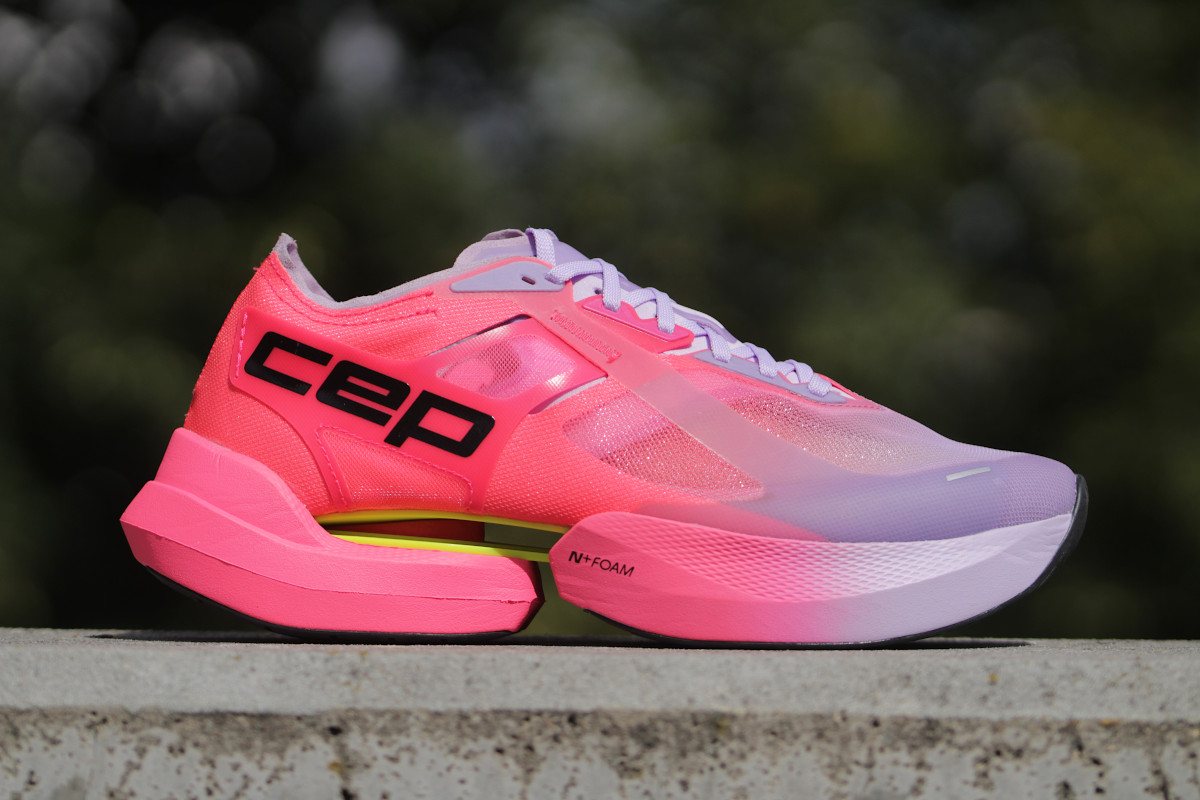
The midsole of the Cep Pro Run Omnispeed is made of two different materials – different foams are used in the front and rear, which greatly affects the shoe’s character.
The rear features classic EVA foam. It is quite stiff with moderate cushioning. This construction provides stability and reduces side-to-side foot movement, which many runners will appreciate, especially at faster speeds. However, fans of soft, plush heel cushioning may find this somewhat lacking.
The front of the shoe is a different story entirely. CEP has used nitrogen-saturated N+Foam here, which is noticeably softer, more resilient and more responsive. These qualities give the shoe a dynamic, resilient bounce and a light feel with every stride. The Omnispeed performs exceptionally well in terms of energy return during the push-off phase – its springiness in the front of the midsole is undeniable.
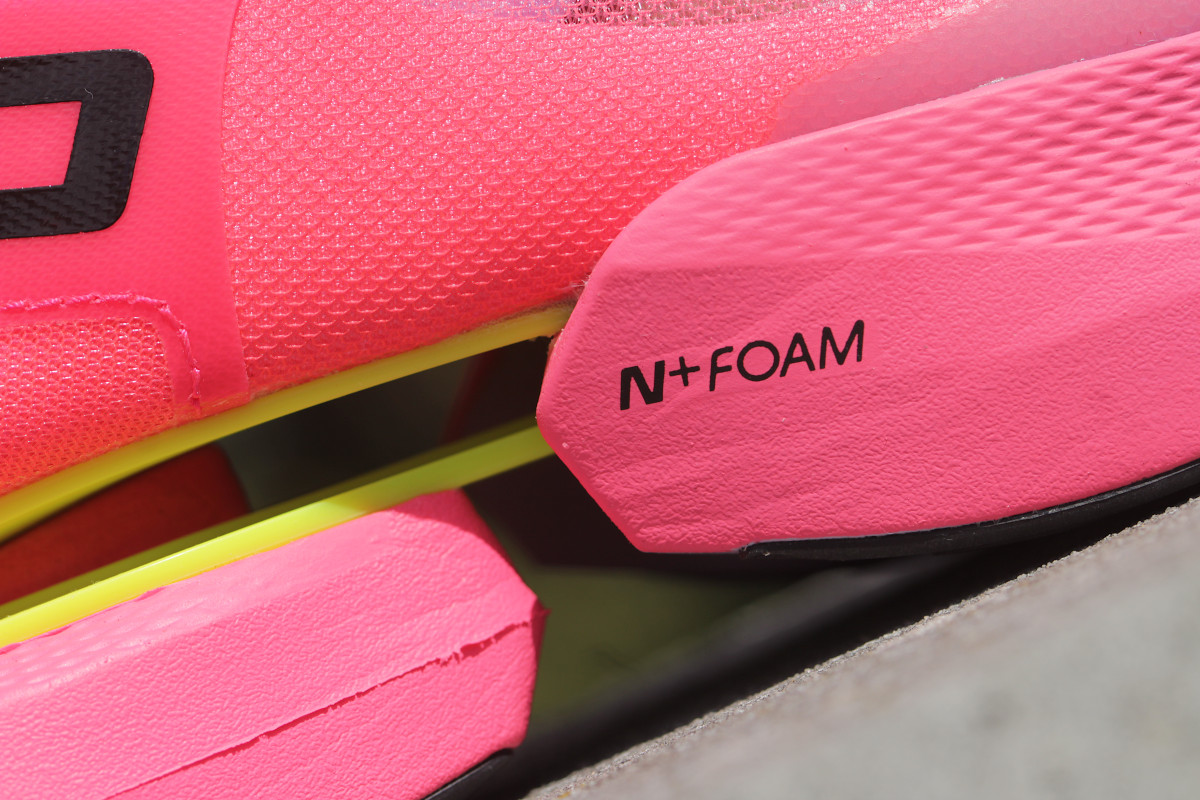
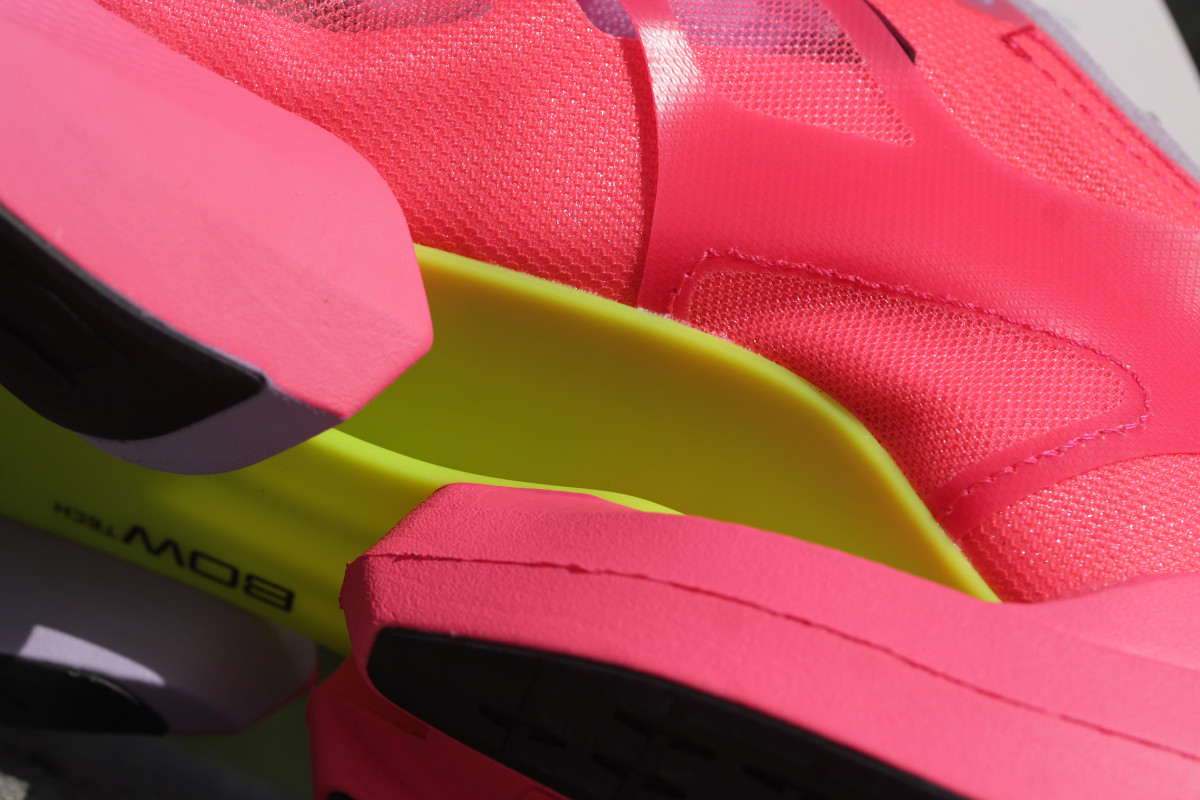
At the heart of the Cep Pro Run Omnispeed’s construction is the BowTech plate, which is made of Pebax material. Its purpose is to mimic the natural movement of the foot arch. Like these solutions, it accumulates energy during landing and releases it during the push-off phase. Its stiffness is moderate, which is significantly lower than that of the carbon plates used in racing shoes. The result? Your stride becomes smoother, more dynamic and easier on your body. Even during long, demanding workouts, runners experience less fatigue.
One disadvantage is the plate’s position – very close to the foot. This is intended to imitate an insole that fits the arch of the foot. However, its close position can irritate the foot, especially if you have a low arch or a wider foot. In such cases, the discomfort may outweigh the potential benefits. Therefore, it is worth trying on the shoe to see how it feels.
Segmented Outsole for Hard, Flat Surfaces
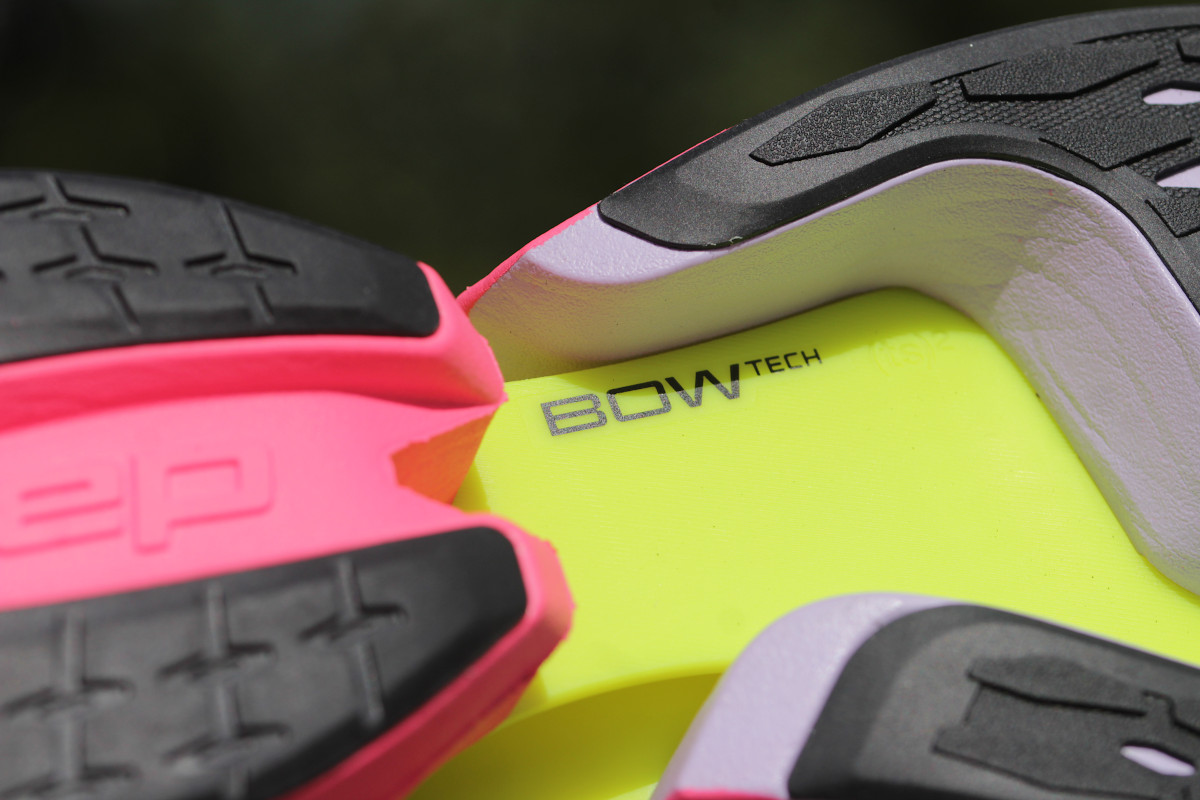
The outsole of the Cep Omnispeed is designed to complement the midsole. Most of the rubber is located in the front, where the greatest weight is concentrated during fast running and where the shoe works hardest. The midsole is exposed; there is no foam or rubber there. Under the heel are two narrow rubber panels on the edges – a feature commonly found in racing shoes.
The outsole pattern resembles that of a typical racing shoe: flat with a depth of only 0.7mm. This configuration is ideal for dry, hard surfaces or stadium tracks where fast rolling and minimal resistance are important. However, traction may be limited on wet surfaces, especially with a lot of water. Similarly, the large open spaces in the midsole mean that the Omnispeed is best suited for hard surfaces, such as gravel. It is a shoe designed for hard, even surfaces.
Lightweight Monomesh Upper with Support Straps
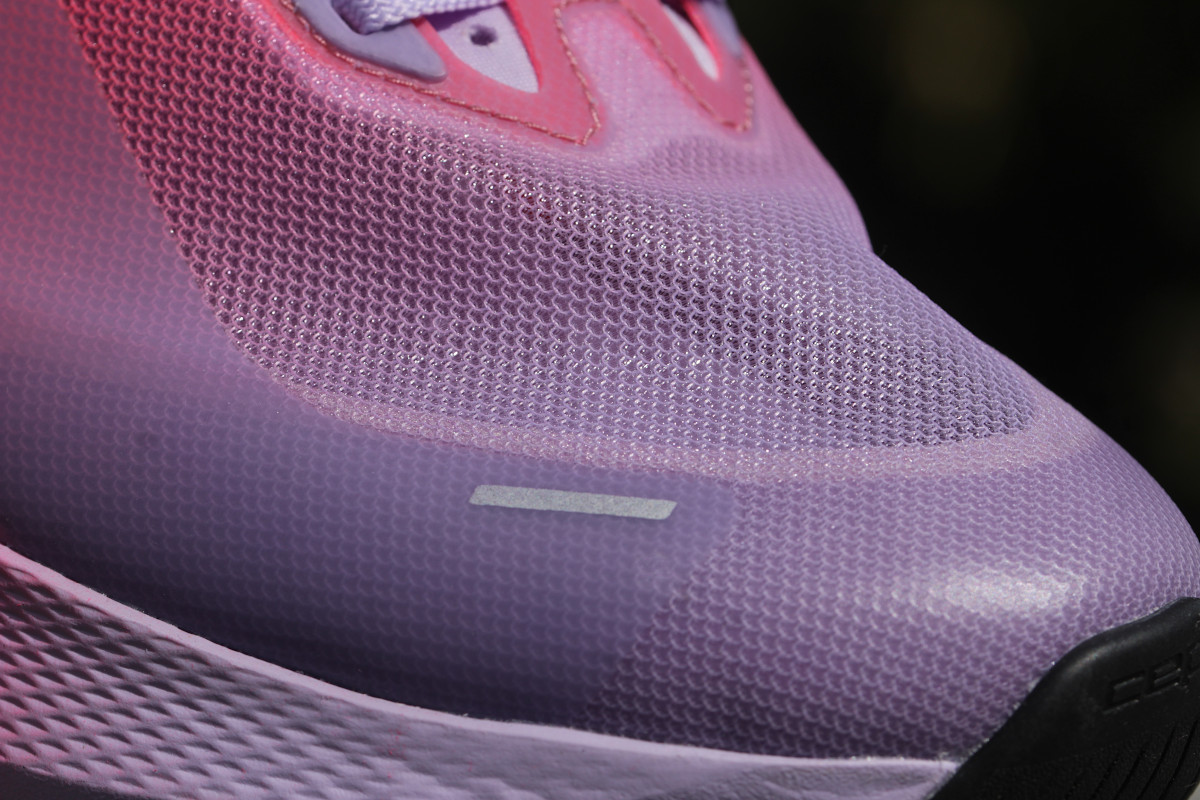
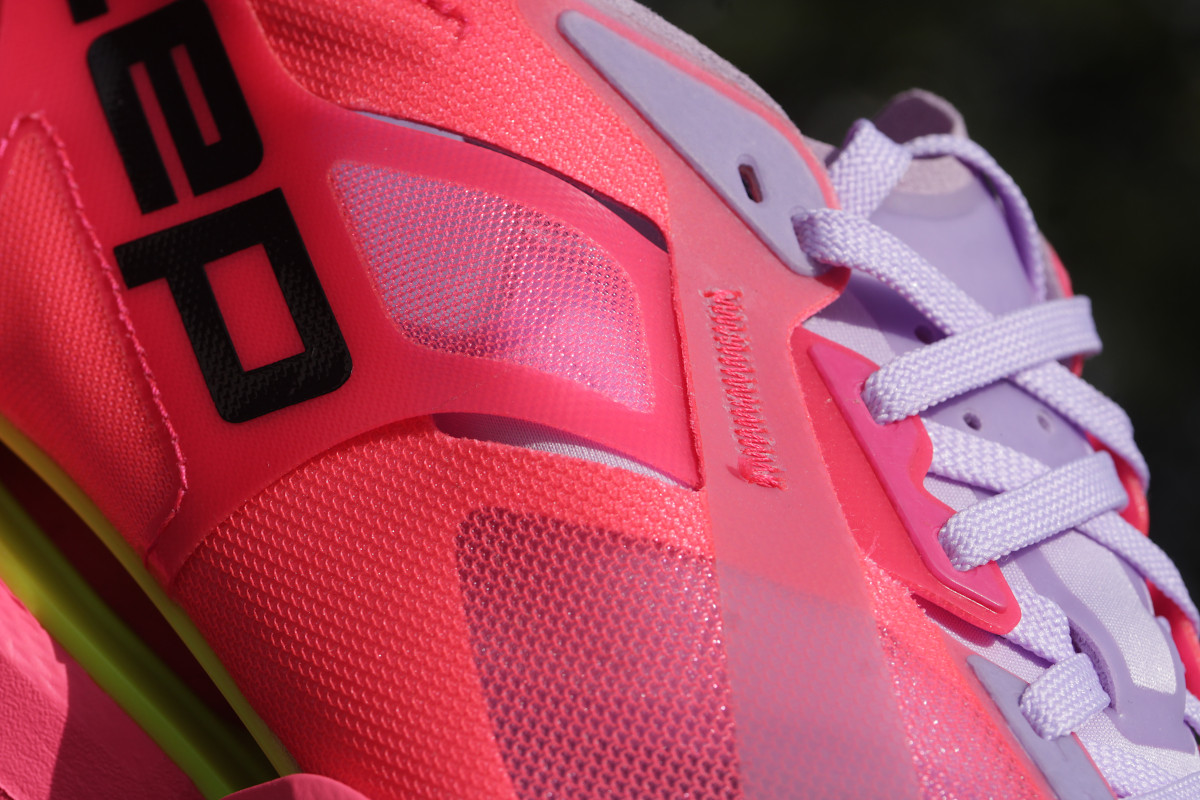
The upper of the Cep Omnispeed is made of ultra-thin, lightweight, highly breathable monomesh that tightly wraps around the foot. To increase stability, the layer is not uniform – it consists of alternating thinner and thicker “strips.” The stiffer strips act as a kind of skeleton over which breathable, thin mesh is stretched to improve ventilation and reduce the shoe’s weight.
However, this is not a shoe for those who want a lot of space. At its widest point, the upper measures only 101mm – well below the average for running shoes. In practice, people with wider feet may feel cramped. It is best to choose a size that is half a size larger, though there still won’t be much extra space inside.
What is the final assessment of the fit? As with the BowTech plate under the arch of the foot, this is highly subjective. For some, it will provide precise, stable support; for others, it will be uncomfortable. The best way to find out is to try on the shoe and see how it feels.
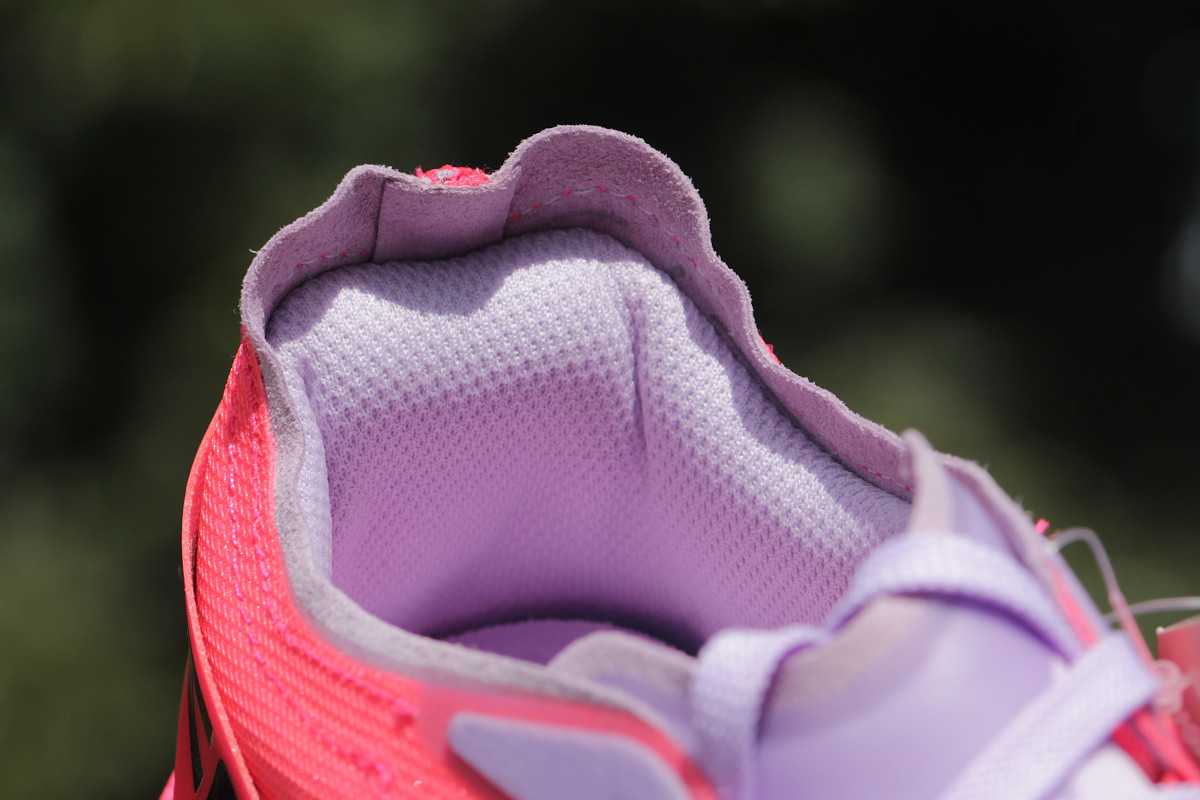
The minimalist heel counter of the Cep Omnispeed fits the foot well. There is no hard clip here; only slight stiffening reduces weight without restricting the foot’s natural movement. This can be particularly useful when running faster. Additionally, the inside of the heel counter is filled with soft foam that stabilizes the heel and prevents it from moving inside the shoe. In practice, this solution works well – the heel stays in place, and the foam padding provides comfort when it touches the foot.
Heavier Than Most Competitors in Its Class
The CEP Pro Run Omnispeed cannot be called “lightweight.” At least not in the category of fast shoes. The manufacturer claims the men’s version weighs 280g, but the actual weight of my size 12US is 318g. It’s hard to call this a lightweight running shoe.
With this weight, this model ranks roughly in the middle of the pack among all running shoes. The problem is that the Omnispeed belongs to the segment of models designed for training and competition – and in this group, the competition is much lighter. In this group, the Omnispeed is one of the heaviest models.
Final Thoughts
The Cep Pro Run Omnispeed marks the brand’s entry into the world of running shoes. It is a product designed for both training and competition. It combines a stable rear with a dynamic, springy front supported by a BowTech plate that adds fluidity and energy to the push-off. The thin monomesh upper provides a lightweight, precise fit, though it may be too narrow for those with wider feet. The position of the Pebax plate so close to the foot is also debatable. Finally, the weight is a downside; the Omnispeed is one of the heaviest shoes in the fast shoe category. There are a few areas for improvement.