Do you think a fast shoe has to scream ‘design’ with its stiff carbon construction? The Brooks Hyperion 3 proves that sometimes less is more. Its understated exterior conceals a springy interior that works with your foot to provide lightness, dynamism and comfort when you need it most – during fast training sessions and on race day. The Hyperion 3 is a surprisingly high-performing shoe that doesn’t scream for attention.
Basic info
Tech specs
Purpose
The Brooks Hyperion 3 is a shoe designed for speed training. The cushioning provides adequate support for regular running on hard surfaces without making you feel like there is excess material underfoot. It is best suited to lighter runners looking for one shoe for everyday runs and faster sessions. The flexible midsole and responsive foam promote smooth foot roll. These shoes are ideal for tempo training, intervals and competition starts.
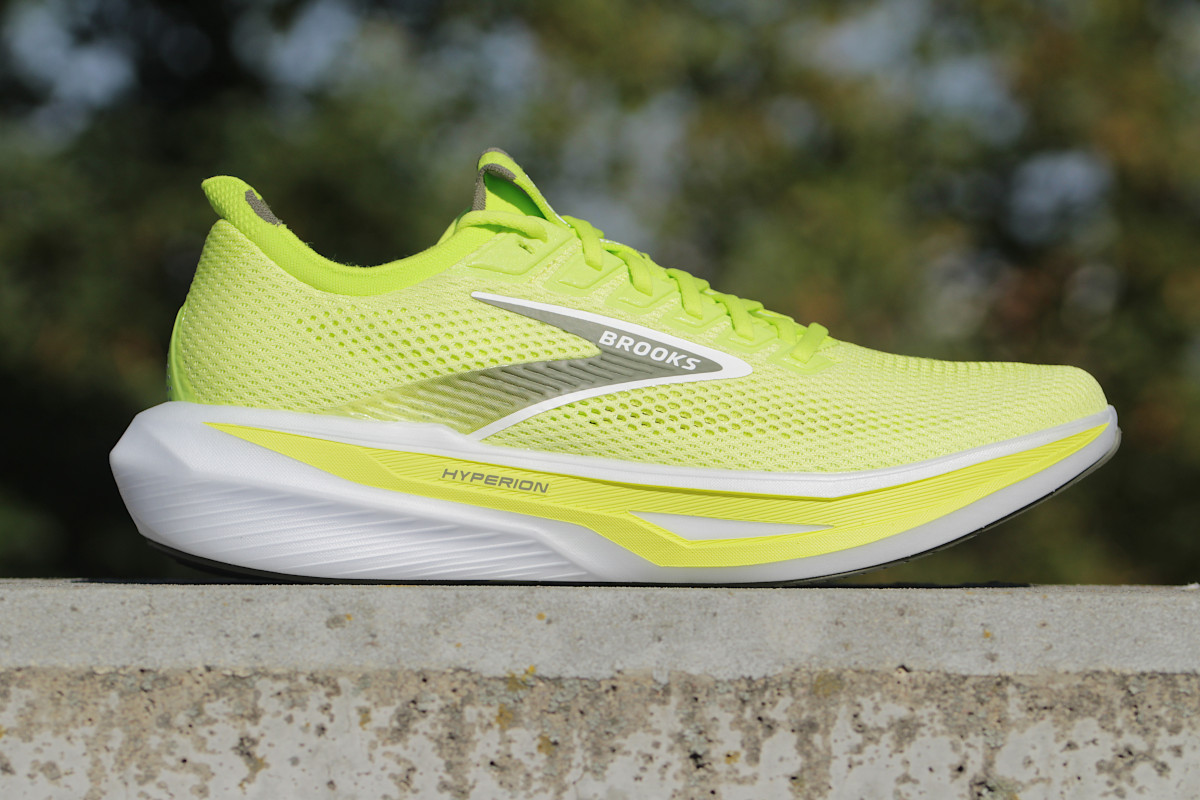
Pros
- soft yet responsive foot roll,
- pleasant flexibility of the midsole,
- technical mesh with soft lining,
- low weight.
Cons
- the absence of a carbon plate requires greater muscle involvement when rolling the foot.
What’s New in the Latest Edition
Brooks Running Shoes – lineup
Of all the fast models in the Brooks Hyperion range, it is the slowest. It is inferior to the Max and Elite versions. It also has the least cushioning in the series, though it still offers full protection on hard surfaces. This makes it a lightweight training shoe that can easily be used for racing. It is suitable for both beginners and more advanced runners. An additional advantage is the price. It is the most affordable shoe in the entire Hyperion line.
The Hyperion complements Brooks’ classic training shoes well. Such as the Ghost, Glycerin and Adrenaline models. These are best suited to an easy pace. The Hyperion, on the other hand, is lighter and more responsive. It is perfect for faster runs. You can find a full comparison of Brooks’ running shoes in our shoe guide.
| NEUTRAL FAST SHOES | STBILITY FAST SHOES | |
|---|---|---|
| maximum performance | 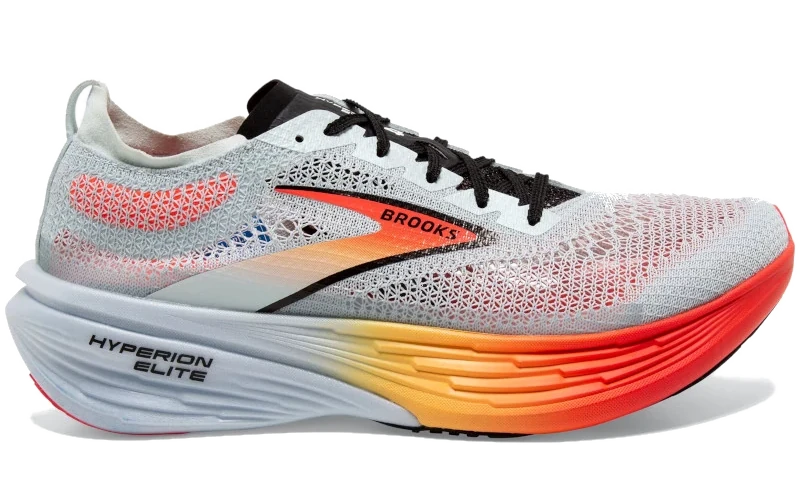 Hyperion Elite 4 | |
| very high performance | 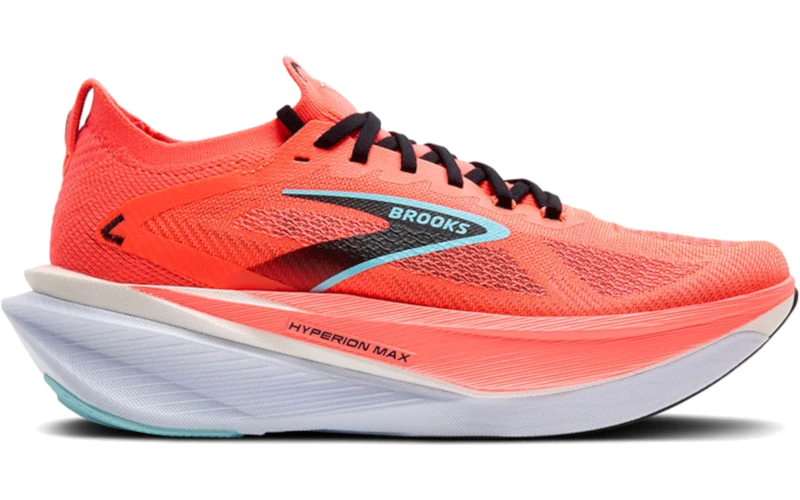 Hyperion Max 3 | |
| high performance | 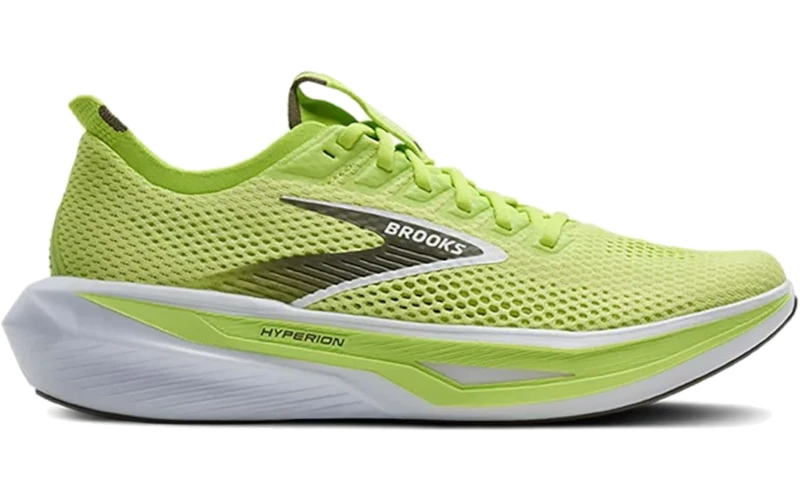 Hyperion 3 | 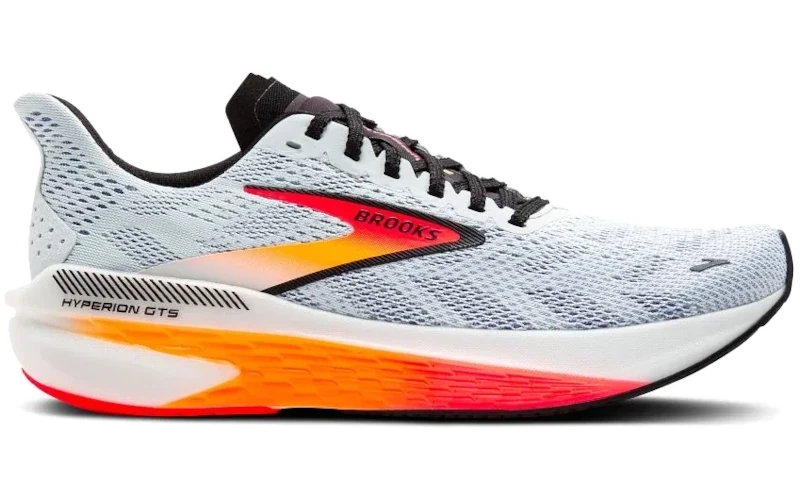 Hyperion GTS 2 |
Similar to Brooks Hyperion 3
Natural alternatives to the Hyperion include the Hoka Mach 6 and the Saucony Kinvara 16. These shoes are based on a similar design principle. They provide ample cushioning and responsiveness without the use of carbon fibre plates or other rigid components. This makes running feel more natural and predictable.
The Hyperion can also serve as an alternative to carbon-based models. Compared to shoes with plates, Hyperion usually offers less aggressive foot guidance, but more control and flexibility. It does not force technique. It does not penalise fatigue. For some runners, it will be a more versatile tool. It will work well for both fast training sessions and competitions.
| MODEL | STACK HEIGHT (mm) | DROP (mm) | WEIGHT MEN'S (grams) | WEIGHT WOMEN'S (grams) | REGULAR PRICE (€) |
|---|---|---|---|---|---|
| adidas Adizero Boston 13 | 36/30 | 6 | 260 | 219 | 160 |
| adidas Adizero Evo SL | 39/33 | 6 | 224 | 188 | 150 |
| Asics Magic Speed 4 | 43.5/35.5 | 7 | 242 | 207 | 180 |
| Asics Noosa Tri 16 | 34.5/29.5 | 5 | 215 | 185 | 150 |
| Brooks Hyperion 3 | 36/28 | 8 | 241 | 210 | 150 |
| Brooks Hyperion Max 2 | 36/30 | 6 | 255 | 193 | 150 |
| CEP Pro Run Omnispeed | 37/30 | 7 | 280 | 280 | 220 |
| Diadora Frequenza 2 | 36/28 | 8 | 220 | 175 | 175 |
| Hoka Mach X 2 | 44/39 | 5 | 266 | 227 | 190 |
| Nike Zoom Fly 6 | 42/34 | 8 | 265 | 214 | 180 |
| Nike Pegasus Plus | 35/25 | 10 | 245 | 205 | 180 |
| Saucony Kinvara 16 | 31/27 | 4 | 206 | 179 | 145 |
DNA Flash v2 Foam: Soft by Touch, Fast by Nature
As with the previous version, the core of the shoe is the nitrogen-enriched DNA Flash v2 foam midsole. The gas saturation process gives the foam a slightly porous and ‘dry’ texture. The result? The cushioning is springy and quick to rebound rather than spongy. Energy does not disappear underfoot, but is returned when you push off.
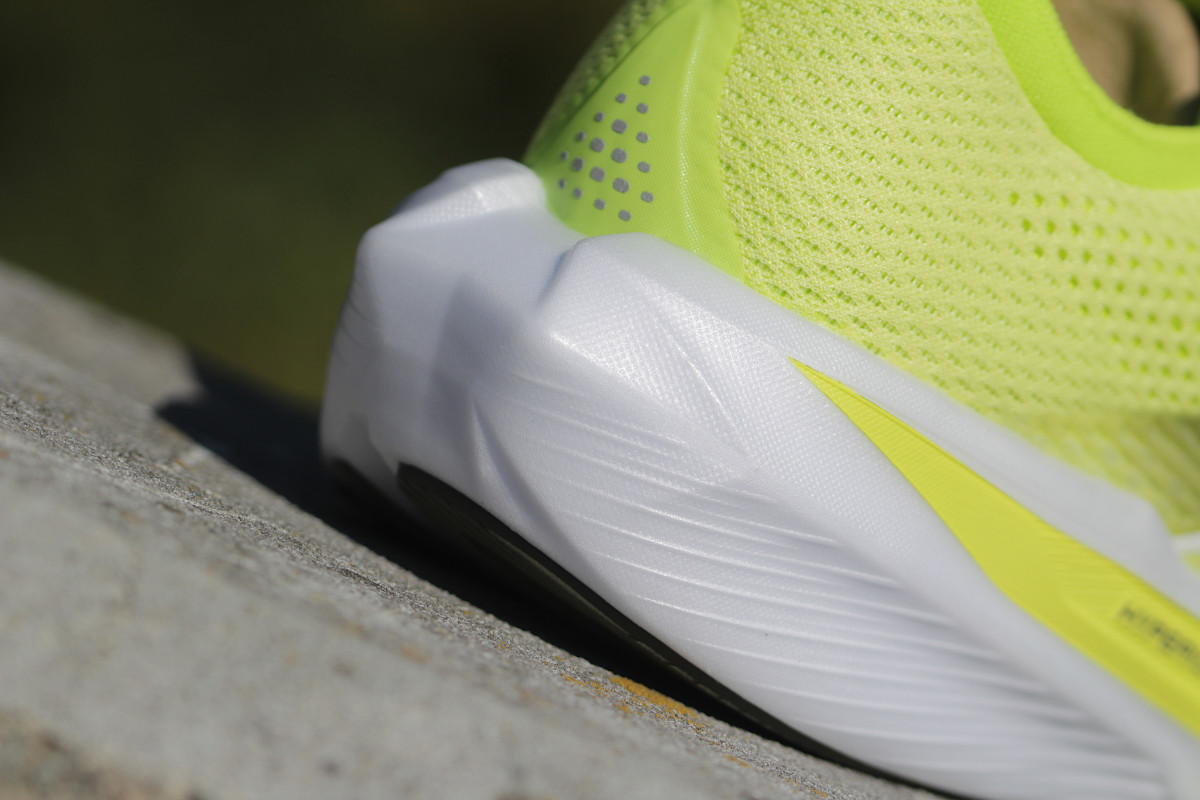
Compared to its predecessor, the foam content has been increased. The stack height is now 36mm under the heel and 28mm under the midfoot. This provides significantly greater comfort, particularly on hard surfaces and during longer runs. There is more cushioning than before, but it is still not excessive for a speed training model.

The Hyperion is ideal for lighter runners weighing up to around 80kg, as well as heavier runners looking for a faster shoe for rotation. It is best used alternately with a classic training shoe. The Brooks Ghost or Glycerin models are better suited to easy runs. The Hyperion is ideal for tempo runs, intervals and longer accelerations. When starting in competitions, the Hyperion can be a comfortable and predictable choice, even for marathon distances.
Compared to many contemporary ‘fast’ models, the Hyperion 3 stands out for its lack of a carbon fibre plate. This translates into significantly greater flexibility underfoot. The shoe works with the foot rather than imposing a rigid path of movement. Consequently, rolling may require slightly more effort from the runner than carbon constructions do.
However, in return, we get a more natural and smooth transition from landing to push-off. The midsole flexes where it should. The stride is soft, flexible and easy to control. This dynamic is created by muscle work, not by a rigid element in the midsole. For many runners, this will simply be a more enjoyable way to run.
No Surprises, Just Road
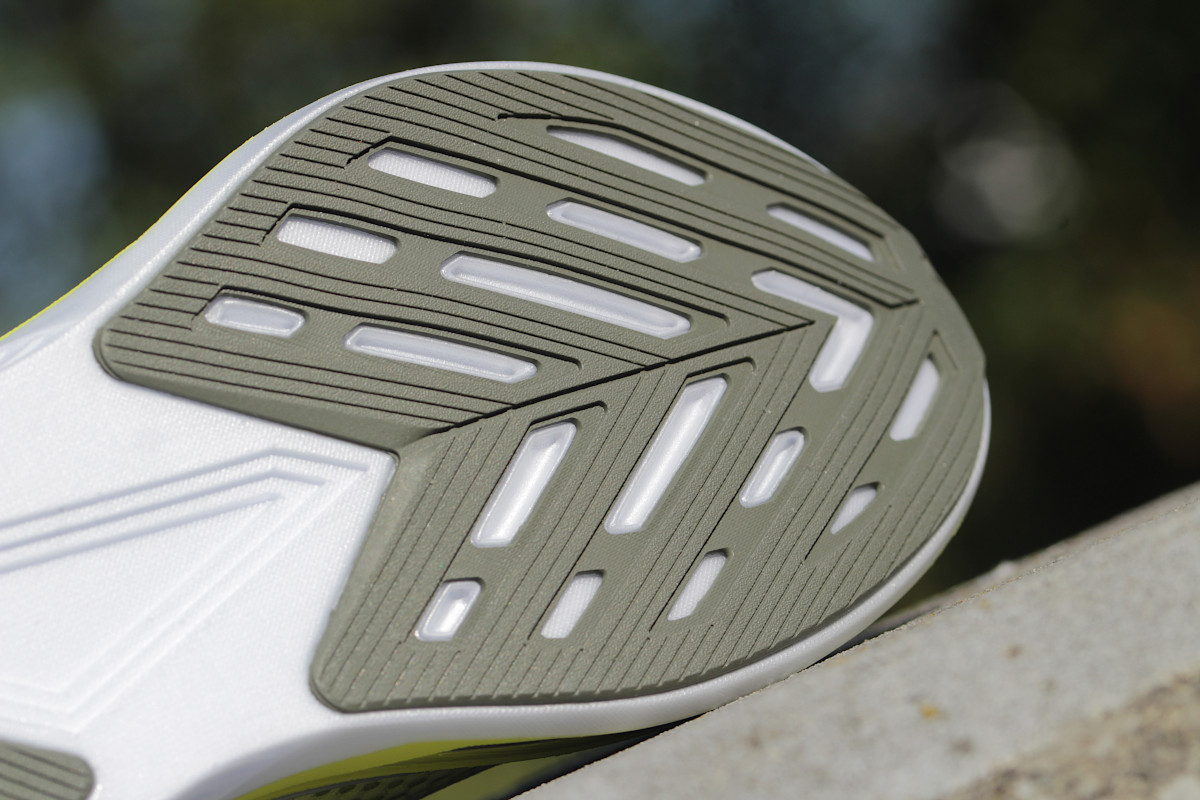
Compared to the previous version, the outsole of the Hyperion 3 has not undergone any revolutionary changes. It is still flat and not particularly aggressive. With a rubber structure of around 1 mm, don’t expect any significant off-road traction improvements. This is a classic road shoe. It is designed for even, hard surfaces and higher speeds.
The most notable change is the increased amount of rubber and its wider distribution across the midsole. The front and rear of the shoe are now well protected, with only the middle section remaining exposed. This should result in greater durability and slower wear, particularly when running frequently on hard surfaces. However, it is worth noting that the previous version had no durability issues.
Engineered Mesh, Soft Interior
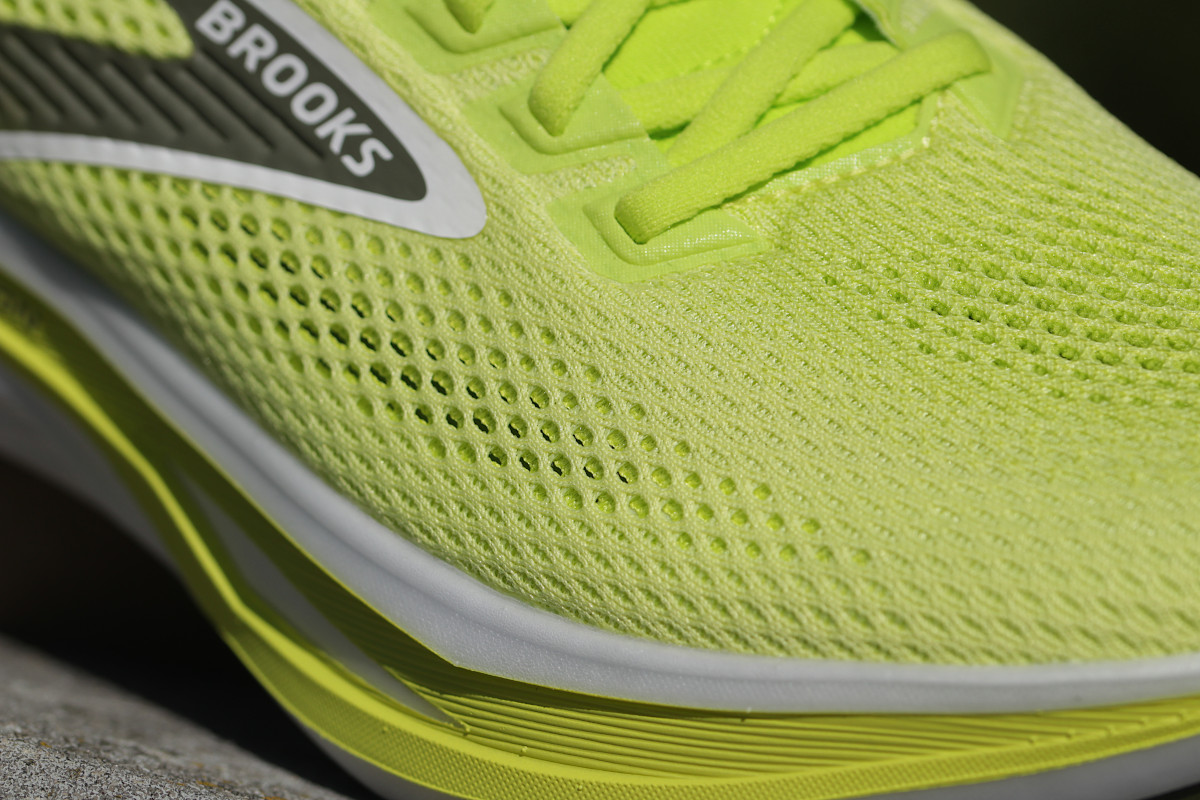
The upper is made of technical mesh with a clearly defined texture. It is moderately thick. It neither cools the foot down nor overheats it during normal training use. This makes it a safe compromise that should suit most runners. However, compared to the Hyperion 2, the material is significantly warmer. Those familiar with the previous version will find that the Hyperion 3 provides better insulation and performs well in colder conditions.
The upper finish remains visually light. The tongue is thin and flat, and the collar around the heel is slim and low-cut. However, a completely different character emerges when you look inside. Beneath the thin layer of material is a generous amount of soft, plush foam that cradles the foot and enhances comfort during longer runs. Overall, it is more suitable for training than for racing. The focus is on comfort and everyday use rather than just weight and minimalism.
With a width of approximately 103.8mm at its widest point, it meets the market standard. However, it is not a wide shoe. In practice, the Brooks Hyperion 3 offers the tighter fit that is typical of slightly faster shoes, hugging the foot closely. This fit is characteristic of faster shoes. Runners with slightly narrower or standard feet will also appreciate this fit. Those with wide feet or who prefer a lot of space in the forefoot may feel that there is not enough room.
Under a layer of soft foam in the rear, there is a moderately stiffened heel counter. This takes the form of a low clip that stabilises the heel. This feature is clearly marked but not overly aggressive. This keeps the foot well aligned while remaining flexible enough to avoid discomfort during longer runs.

Weight That Never Slows the Ride
According to the manufacturer’s data, the men’s Hyperion 3 weighs 241g, while the women’s weighs just 210g – an excellent result for this category. Even in larger sizes, such as US 12, the weight remains low at just 261g, which is significantly lighter than the average running shoe.
Among speed training shoes for hard surfaces, both with and without carbon plates, the Hyperion remains on the lighter side, albeit with a smaller advantage. The average weight of such shoes is around 275g, meaning the Hyperion is 14g lighter. This provides a feeling of lightness, particularly during longer runs or faster training sessions.

Final Thoughts
The Hyperion 3 is a lightweight and flexible speed training shoe that combines moderate cushioning with a natural ground feel. The lack of a carbon plate and the springy DNA Flash v2 foam provide a smooth, controlled foot roll, and the technical upper with soft padding guarantees comfort during long training sessions. This versatile model is ideal for runners looking for a fast but not overly aggressive shoe suitable for both faster sessions and races.