Just a few years ago, it was difficult to find a shoe that offered both maximum cushioning and optimal running dynamics. Today, there is increasing talk of the super-trainer category – shoes that combine the comfort of long-distance running shoes with the performance of speed training shoes. The Asics Superblast 3 is one of the most distinctive models in this category. Its very high midsole, new generation of resilient foam, and relatively low weight make it ideal for both leisurely runs and faster training sessions.
Basic info
Tech specs
Purpose
The Asics Superblast 3 is a training shoe with maximum cushioning. It is designed primarily for hard surfaces, such as asphalt, sidewalks, and paved trails. It is ideal for long, relaxed workouts and offers distinct bounce and dynamic qualities, making it well-suited for faster workouts and competitions. This model is intended for neutral runners looking for a combination of high comfort and the ability to run faster.
Pros
- very soft cushioning
- smooth transition from heel to toe
- fairly spacious upper in the front
- thin, breathable but supportive upper
- about 10 g lighter despite the higher midsole
Cons
- no carbon, and therefore less dynamic than carbon shoes
- high price
What’s New in the Latest Edition
| SUPERBLAST 3 | SUPERBLAST 2 | |
|---|---|---|
| Stack height | 46.5/38.5mm | 45/37mm |
| Drop | 8mm | 8mm |
| Weight | 239g | 249g |
| Upper | Engineered Woven Upper | Engineered Woven Upper |
| Midsole | FF Leap / FF Blast+ | FF Turbo+ / FF Blast+ |
| Outsole | ASICSGrip rubber | ASICSGRip rubber |
Asics Running Shoes – lineup
The Superblast is one of the most advanced models in the Blast line. Two models stand out in this collection: the Asics Superblast 3 and the Asics Megablast. These models offer the greatest cushioning and bounce in the collection. Both parameters are at a very high level, yet they can still be used as versatile super-trainers and not just racing shoes.
However, if you are looking for a more competitive design, consider the Metaspeed Sky+ or Metaspeed Edge+ series. These models are designed primarily for competition and maximum speed. If you want an affordable shoe for everyday running, the Novablast 4 is a very good option. It also uses the dynamic “Blast” platform.
Want to learn more? Be sure to check out Asics running shoe guide.
| RACING | SPEED TRAINING | |
|---|---|---|
| maximum performance |  Metaspeed Ray 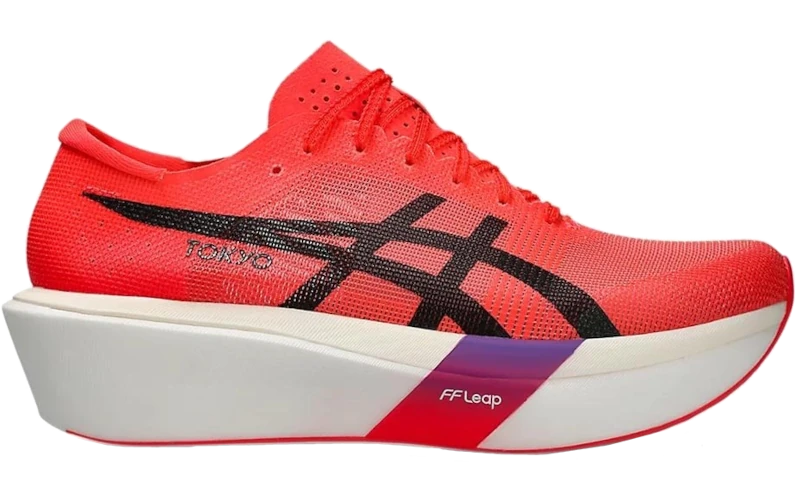 Metaspeed Sky/Edge Tokyo | |
| very high performance | 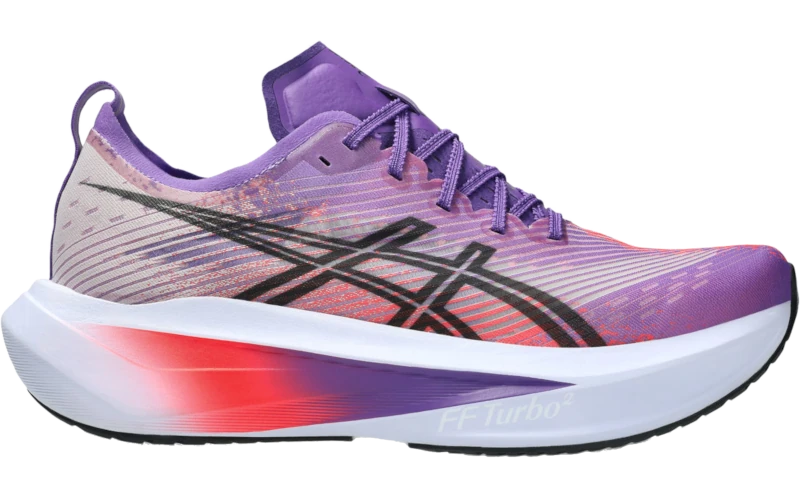 Megablast  Superblast 3 | |
| high performance | 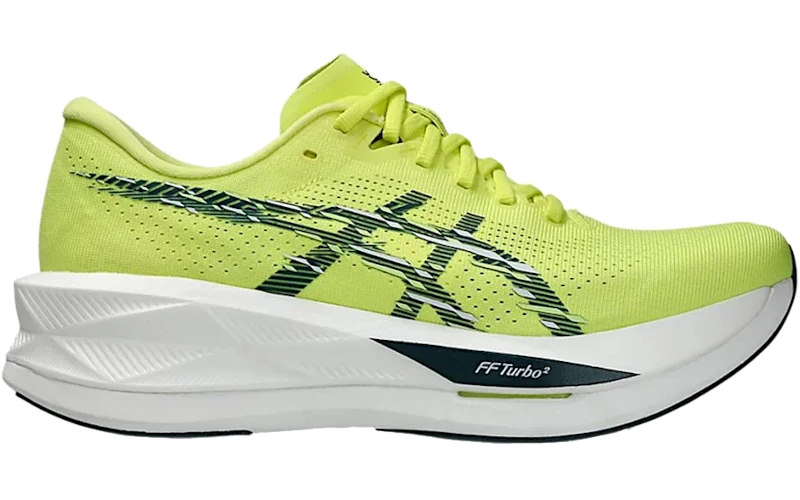 Sonicblast 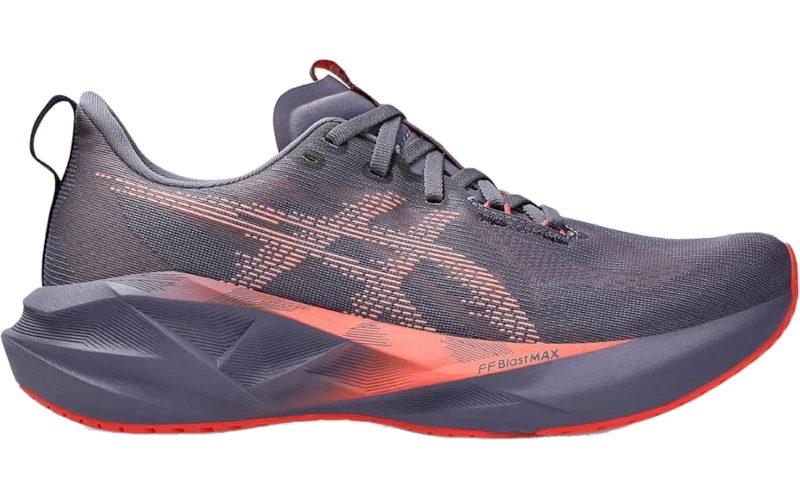 Novablast 5 | |
| mid performance | 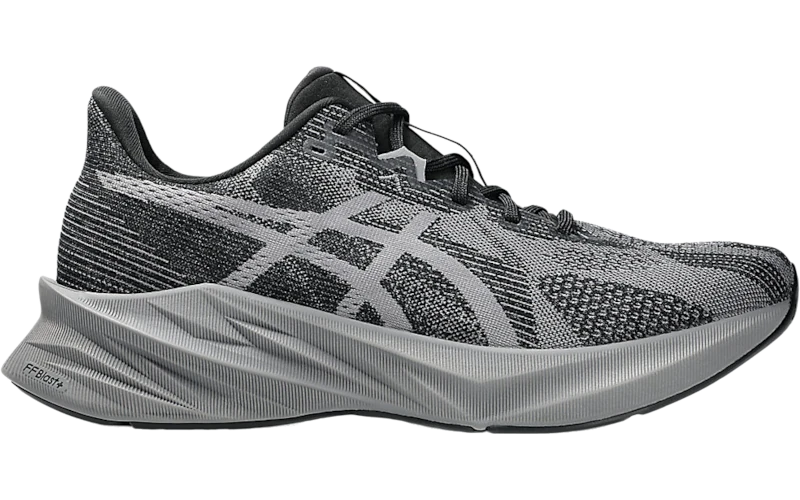 Dynablast 5 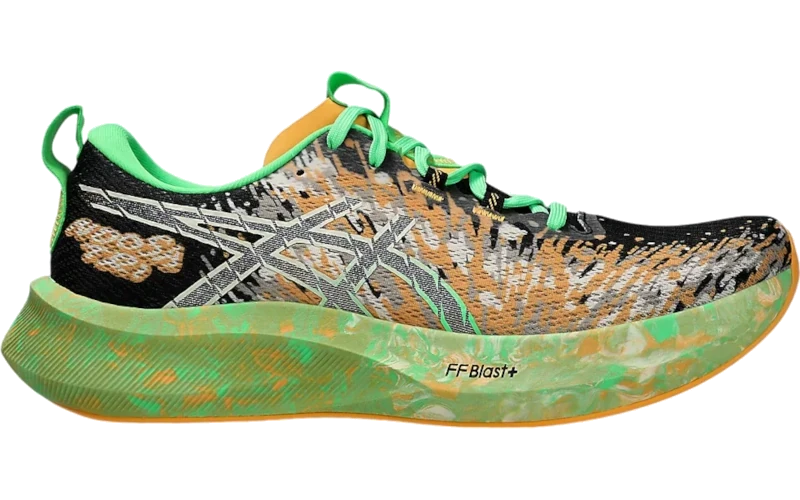 Noosa Tri 16 |
Similar to Asics Superblast 3
The Superblast has an unusual construction. Few models combine a high midsole with distinct rebound dynamics. This category of shoes is increasingly referred to as “super trainers”.
You can comfortably run relaxed workouts and very long distances in these models, taking advantage of the enormous amount of cushioning. At a faster pace, however, they reveal a different side. As speed increases, the springy midsole reflects more and more energy, making running more efficient.
This duality is what makes shoes like the Superblast 3 a popular choice for those looking for a combination of a training shoe and a speed training shoe. They offer the comfort needed for long training sessions and allow you to run fast intervals or compete without resorting to typical carbon racing shoes.
| MODEL | STACK HEIGHT (mm) | DROP (mm) | WEIGHT MEN'S (grams) | WEIGHT WOMEN'S (grams) | REGULAR PRICE (€) |
|---|---|---|---|---|---|
| Asics Superblast 3 | 46.5/38.5 | 8 | 239 | 239 | 220 |
| Hoka Skyward X | 48/43 | 5 | 320 | 261 | 225 |
| Mizuno Neo Vista 2 | 45/37 | 8 | 265 | 265 | 180 |
| New Balance FuelCell SuperComp Trainer v3 | 47/39 | 8 | 320 | 320 | 250 |
| Saucony Endorphin Trainer | 41/33 | 8 | 280 | 246 | 180 |
Maximum Cushion for Long and Fast Runs
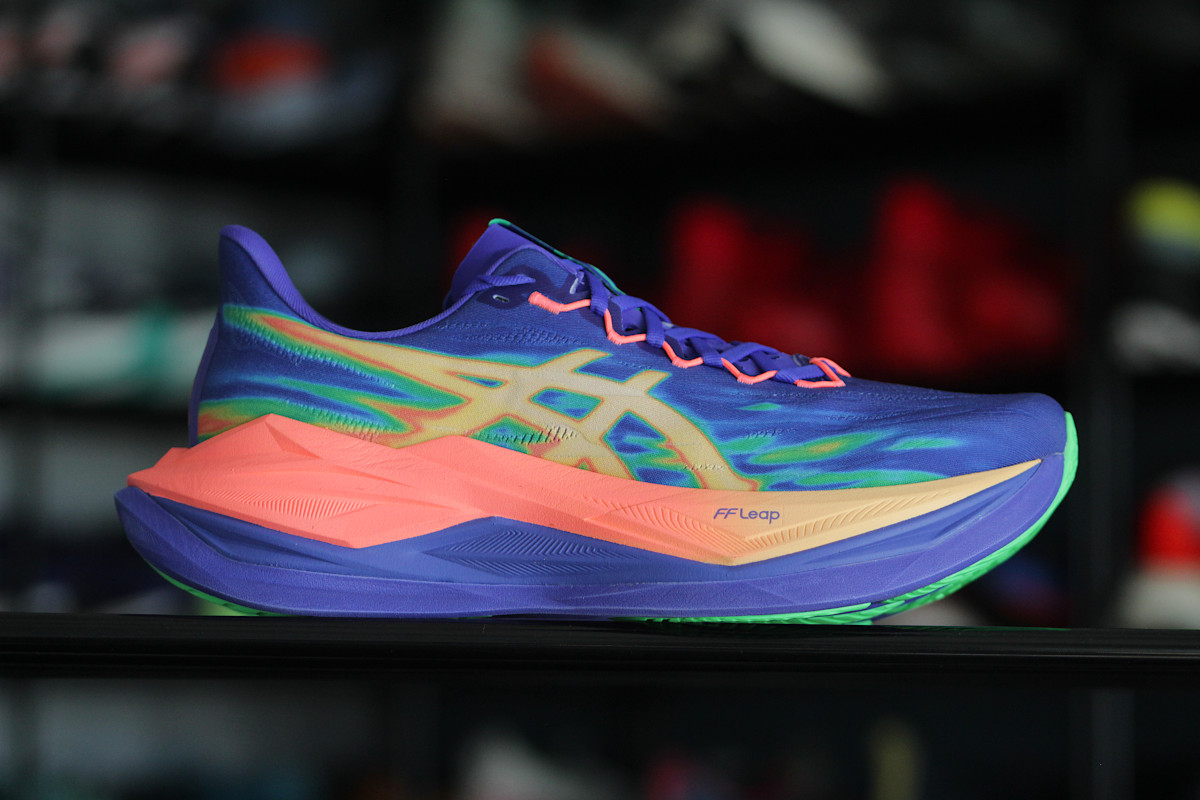
The midsole stack and volume of Superblasts are impressive. The latest version has 46.5 mm under the heel and 38.5 mm under the forefoot. These figures are even higher than in the previous edition, which had values of 45 and 37 mm, respectively. These figures remain significantly higher than those of most running shoes. In this respect, this model remains at the forefront of the highest-quality training shoes. The drop, or the difference in height between the heel and toes, remains at 8 mm. This is a safe and comfortable value for most runners.
While the midsole still has a two-layer construction, there has been an important technological change in the Superblast 3: the upper layer now uses FF Leap foam, and the lower layer still features FF Blast Plus foam. In the previous version, the upper part of the midsole was made of FF Turbo Plus foam. The new foam is lighter and more resilient, providing the shoe with slightly more energy on rebound and a softer landing.
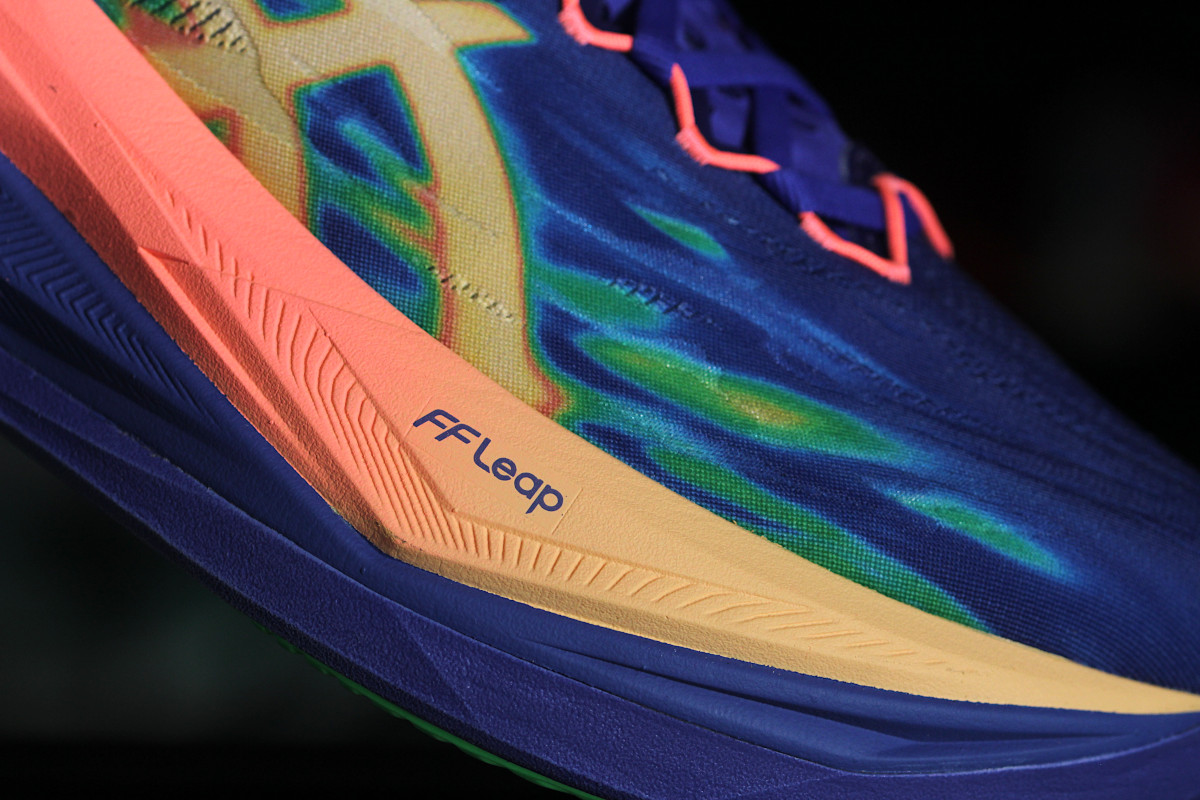
In practice, the Asics Superblast 3’s midsole still offers a high level of cushioning with a springy feel. Its softness rivals that of maximum cushioning models, though it is not as “lazy” as typical training shoes. Here, we have a combination of exceptional softness and pronounced rebound. You can feel this under the front of the foot. Two things are responsible for this. First, of course, is the springy foam itself, of which there is a lot in this model. The second is the midsole geometry. The front of the shoe is strongly contoured, creating a characteristic “trampoline” effect.
Thanks to the high level of cushioning, this shoe is a good option for heavier runners, even those weighing around 100 kilograms. If you are looking for a model that combines high cushioning with dynamic performance, this may be an interesting choice. However, if maximum comfort, softness, and stability are your primary concerns, more classic training models, such as the Gel-Nimbus 28 or Gel-Kayano 32, are better choices.

A Lightweight Outsole That Doesn’t Weigh You Down
The outsole of the Superblast 3 is very similar to that of the previous version. The rubber layout is also very similar. The ASICSGRIP applications are primarily on the edges of the midsole and at the front of the shoe. There is a lot of exposed foam between them. These areas tend to show signs of wear the fastest.
This construction is not accidental. Reducing the amount of rubber decreases the shoe’s weight and improves the dynamic aspect of foot roll. However, this also means that this model is primarily designed for road and other hard surfaces. Running on gravel roads is possible, but should only be done occasionally.
The outsole pattern is also typical of training shoes designed for hard surfaces. The grooves are not very deep. The deepest grooves are about 1.6 mm deep, which is standard for shoes designed for hard surfaces.

Race-Style Fit in a Training Shoe
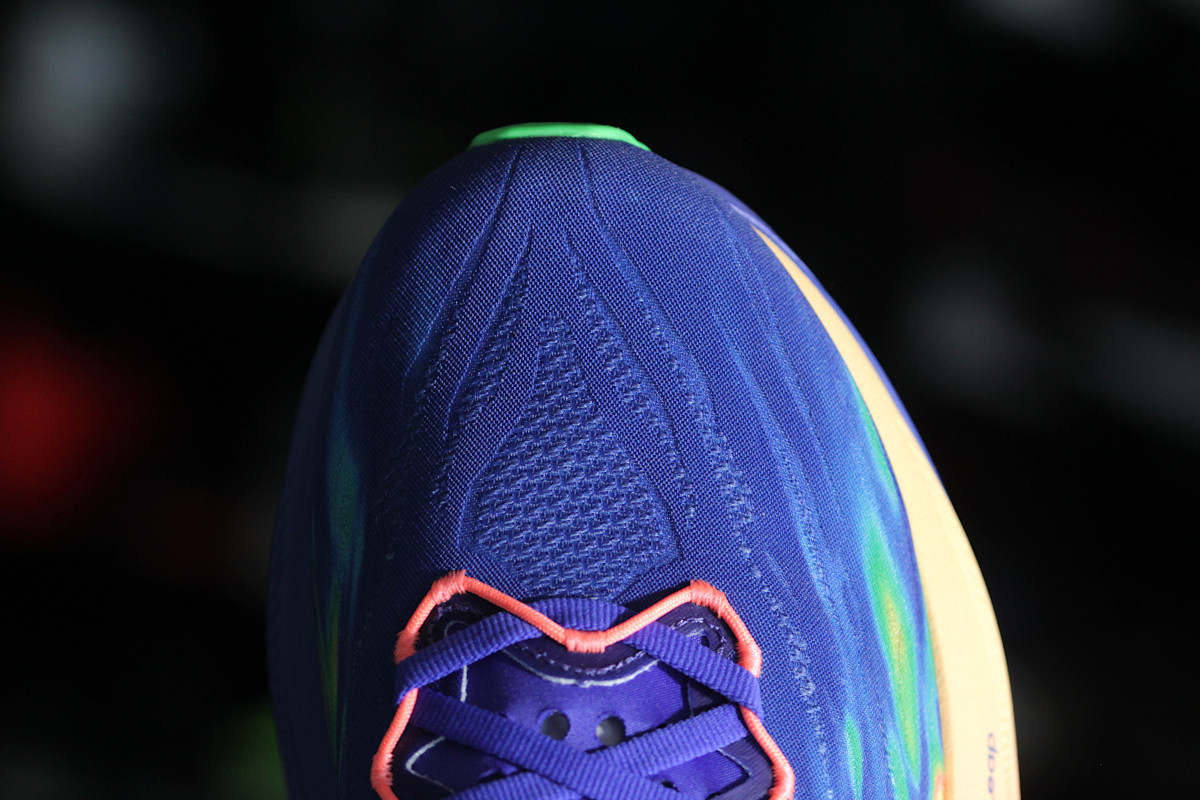
The upper of the Superblast 3 has not changed much from the previous generation, but has been slightly refined. It is still made of a thin, breathable woven fabric. In this respect, it resembles racing models, such as the Metaspeed Sky+, more than classic training shoes, such as the Gel-Nimbus 28. The thin, flexible fabric is comfortable against the foot, making the shoe feel light and well ventilated.
The front of the shoe is slightly more spacious than its predecessor’s. Its widest point is slightly above average at 106.0 mm. Additionally, the soft, flexible material provides the foot with a bit more freedom than the measurements suggest. The Superblast 3 also features an improved lacing system and side panel construction. This provides better midfoot support and a more stable fit than before.
The heel counter is firmly stiffened, and a large, rigid element under the thin sponge lining limits sideways movement of the heel. The midsole rises slightly upwards at the base of the upper, creating a kind of side “wall” that helps keep the foot in line. Overall, these features provide very good stability for a fast shoe. Even during long runs when fatigue naturally causes the foot to roll inward, the construction should control movement well and keep the foot stable.
High Cushion, Surprisingly Low Weight
According to the manufacturer’s specifications, the Superblast 3 weighs approximately 239 grams, which is 10 grams lighter than the previous version. Interestingly, this weight reduction was achieved despite the midsole being even higher and containing more foam. In size 12 US, the weight is 260 grams, 9 grams less than the previous edition. The previous model could already be described as a lightweight shoe, and the Superblast 3 further reinforces this.
Compared with other shoes designed for training, the Superblast 3 is exceptionally light. This model feels exceptionally light not only in terms of weight but also on the foot. If you are looking for a lightweight training shoe with maximum cushioning, this is definitely one of the more interesting options.
Compared to typical fast shoes – i.e., racing and speed training shoes, which are dominated by models with carbon plates – the Superblast still holds its own. In this group, it ranks roughly in the middle. Its weight is similar to that of typical speed training shoes. The difference is that it has much more cushioning and a construction geared more toward training.
Final Thoughts
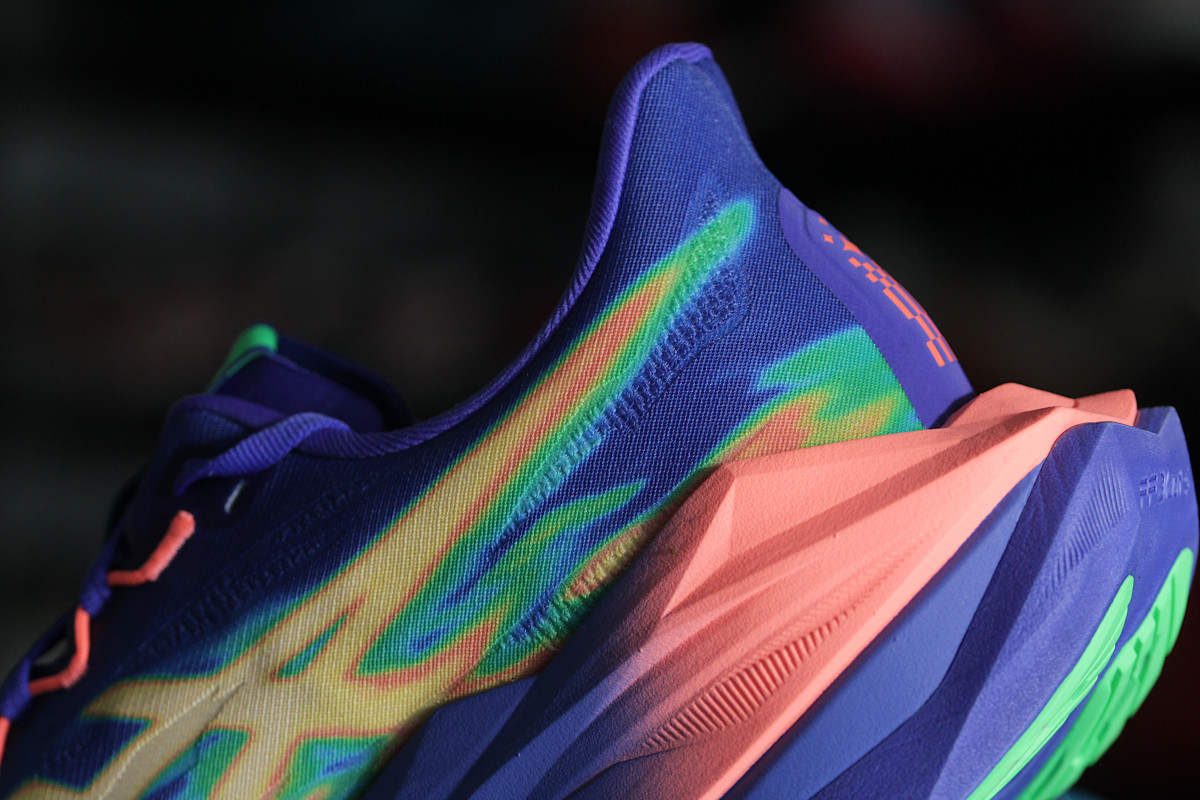
The Asics Superblast 3 is not revolutionary, but rather an improvement upon a highly successful design. The most notable changes include new foam, a slightly higher midsole, and reduced weight. The result is clear: the shoe is softer and more elastic, yet remains light for a model with such high cushioning. In practice, it’s an improvement on the super-trainer concept, which was already strong in previous versions.