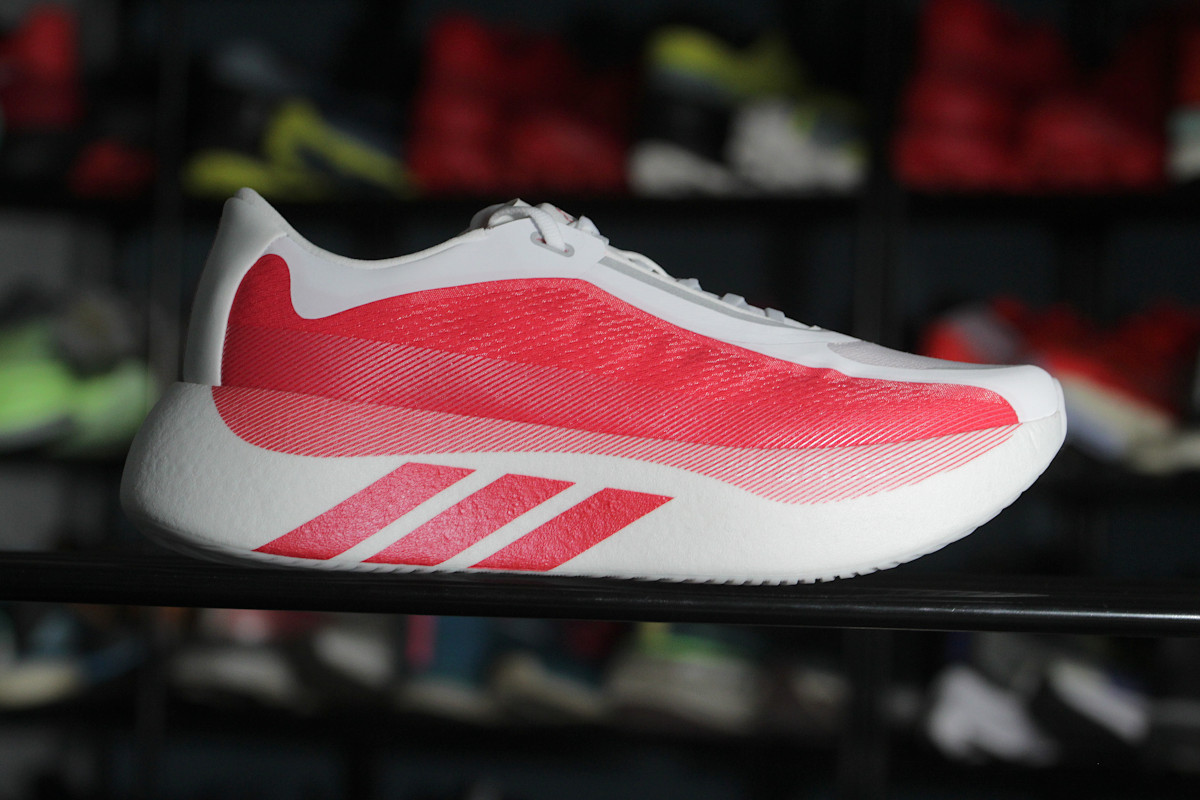
The Hyperboost Edge is one of adidas’ most exciting releases in recent years. It fills a gap in a segment that has been dominated by competitors until now. Its high midsole, new foam, maximum cushioning, softness, and lack of a carbon plate give it a character that is completely different from that of the classic Ultraboosts. The Hyperboost is a shoe designed for ultra-comfortable running. It’s meant to be lightweight, soft, and, above all, effective over long distances. Is this finally adidas’s real answer to the competition’s max-cushioned shoes?!
Basic info
Tech specs
Purpose
The adidas Hyperboost Edge is a maximum-cushioned running shoe designed for hard surfaces. It performs best on hard surfaces and for urban running. It was designed for daily workouts and long runs. They’re also ideal for marathon training. They’re the perfect choice for runners looking for soft yet dynamic cushioning. The Hyperboost works well for heavier runners weighing up to about 100 kg. Biomechanically, it’s a shoe for neutral feet, though it offers good stability despite its thick midsole.
Pros
- excellent cushioning and high energy return
- excellent traction and outsole durability
- decent stability for a shoe with such a thick midsole
- one of the lighter max-cushioned shoes
Cons
- poor ventilation in the upper
- stiff upper that may cause chafing
- high price
adidas Running Shoes – lineup
The Hyperboost Edge is the new leader in everyday cushioning. Among adidas models, it immediately rises to the top of the running pyramid, replacing the Ultraboost, which has long since ceased to be competitive in the maximum cushioning running shoe segment. The Hyperboost Edge is now number one in the training shoe category and is designed primarily for relaxed, everyday running. It’s the first model to combine high cushioning with a training-oriented design and an absence of a carbon plate.
If that’s too much for you, adidas offers many other options to choose from. You can learn more about individual models in the adidas running shoe guide.
| NEUTRAL SHOES | NEUTRAL SHOES | STABILITY SHOES | |
|---|---|---|---|
| maximum cushioning |  Hyperboost Edge | ||
| very high cushioning | 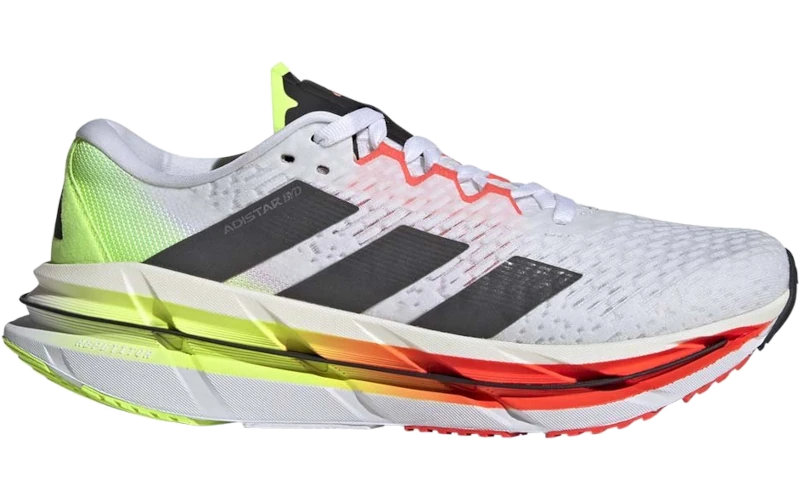 Adistar BYD  Adistar 4 | 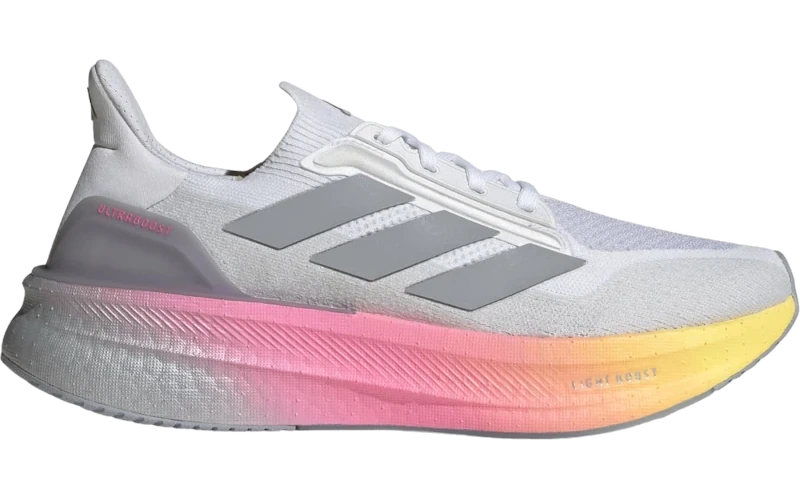 Ultraboost 5X  Supernova Rise 3 |  Supernova Solution 3 |
| high cushioning |  Supernova Prima 2 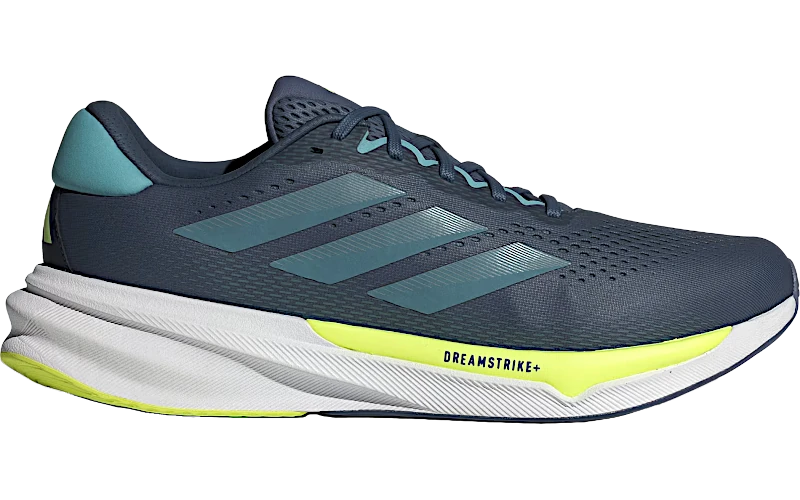 Supernova Stride 2 |
Role in the Running Shoe Rotation
The adidas Hyperboost Edge could become your go-to choice in your running shoe rotation. Have you been running long distances in Ultraboosts or AdiStar models and found them to be uncomfortable over long periods of time? The Hyperboost Edge can replace any of these models for your longest runs.
It can also complement the Supernova Rise 3 well. Although they are both intended for similar purposes, the Rise 3 is significantly lower-profile, more classic, and more stable. Both models are designed for training but offer different “running characteristics,” meaning the Hyperboost Edge performs better on long runs and the Supernova Rise 3 performs better on shorter ones.
| HYPERBOOST EDGE | SUPERNOVA RISE 3 | ADIZERO ADIOS PRO 4 |
|---|---|---|
| |  |
| daily runs + long runs | daily runs + easy runs | fast training sessions, raceday |
Similar to adidas Hyperboost Edge
The Hyperboost Edge is adidas’s latest offering in the category of highly cushioned training shoes. It joins models like the Asics Gel-Nimbus, Hoka Bondi, and New Balance 1080 – shoes that have surpassed the Ultraboost in terms of comfort and softness in recent years. The Hyperboost Edge brings a new level of quality to the category with its higher stack, modern Hyperboost Pro foam, and controlled, springy feel. The running experience is soft and smooth, allowing the Hyperboost Edge to compete with market leaders in terms of comfort. Will the Hyperboost Edge threaten the position of these models? Only time will tell.
| MODEL | STACK HEIGHT (mm) | DROP (mm) | WEIGHT MEN'S (grams) | WEIGHT WOMEN'S (grams) | REGULAR PRICE (€) |
|---|---|---|---|---|---|
| adidas Hyperboost Edge | 45/39 | 6 | 258 | n/a | 200 |
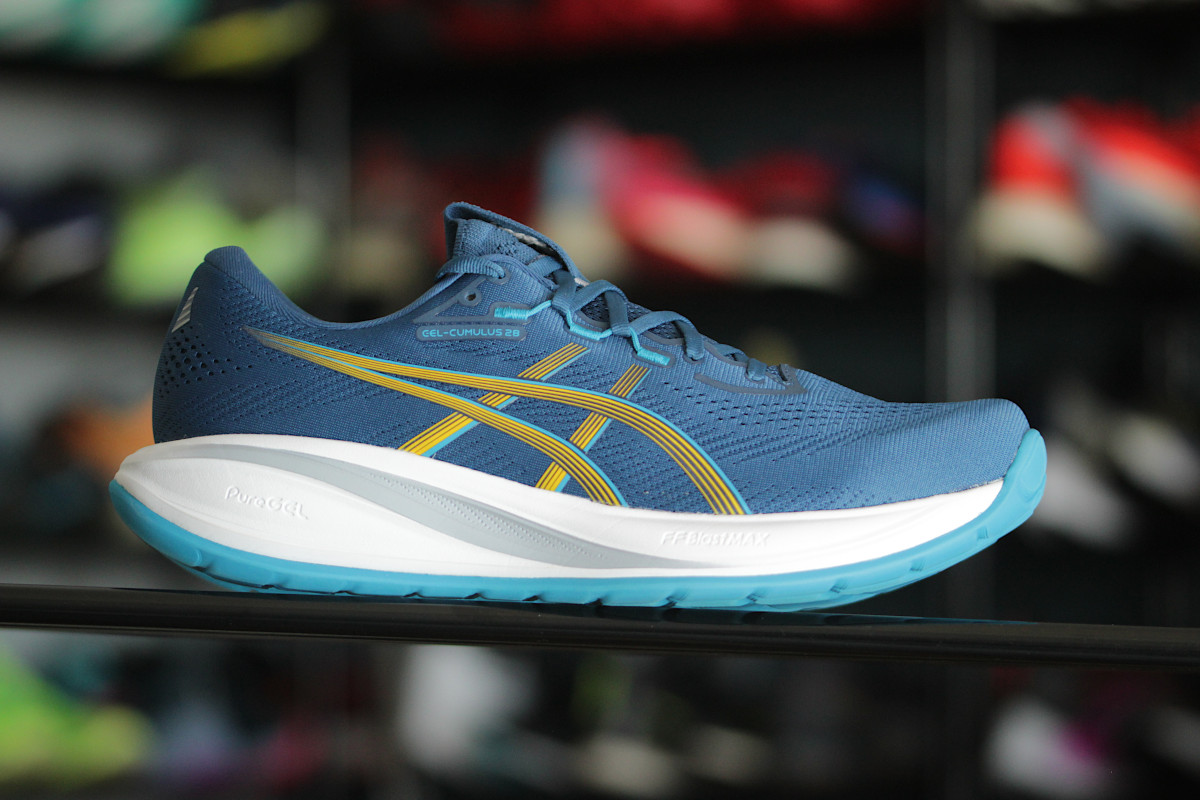
| Asics Gel-Nimbus 28 | 43.5/35.5 | 8 | 305 | 265 | 200 |
| Brooks Glycerin 23 | 38/30 | 8 | 300 | 269 | 180 |
| Brooks Glycerin Max 2 | 45/39 | 6 | 298 | 270 | 200 |
| Diadora Atomo Star | 41/35 | 6 | 275 | 215 | 190 |
| Hoka Bondi 8 | 43/38 | 4 | 306 | 252 | 180 |
| Mizuno Wave Sky 9 | 44/36 | 8 | 290 | 230 | 190 |
| New Balance 1080 v14 | 38/32 | 6 | 298 | 236 | 190 |
| New Balance More v6 | 44/40 | 4 | 306 | 241 | 170 |
| Nike Vomero Plus | 45/35 | 10 | 292 | 242 | 170 |
| Nike Vomero Premium | 55.5/45.5 | 10 | 351 | 278 | 230 |
| On Cloudmonster 2 | 35/29 | 6 | 295 | 230 | 190 |
| Puma Magmax Nitro | 46/38 | 8 | 290 | 250 | 190 |
| Saucony Triumph 23 | 37/27 | 10 | 263 | 239 | 190 |
| Salomon Aero Glide 3 | 40/32 | 8 | 245 | 205 | 160 |
Hyperboost Pro – a New Standard in Cushioning
The cushioning in the adidas Hyperboost Edge is based on the all-new Hyperboost Pro foam, which is made from high-energy-return PEBA material. This material is completely different from classic Boost: it’s lighter, more resilient, and feels more modern. As a result, the shoe provides a soft yet controlled landing, ensuring comfort over long distances.
The midsole is a single, thick block of foam. There are no additional inserts or unnecessary elements. There is a lot of foam, especially in the rear section. The midsole stack is notably high, significantly greater than that of the Ultraboost. It is approximately 45 mm under the heel and 39 mm under the forefoot. This is typical of highly cushioned training shoes and super trainers.
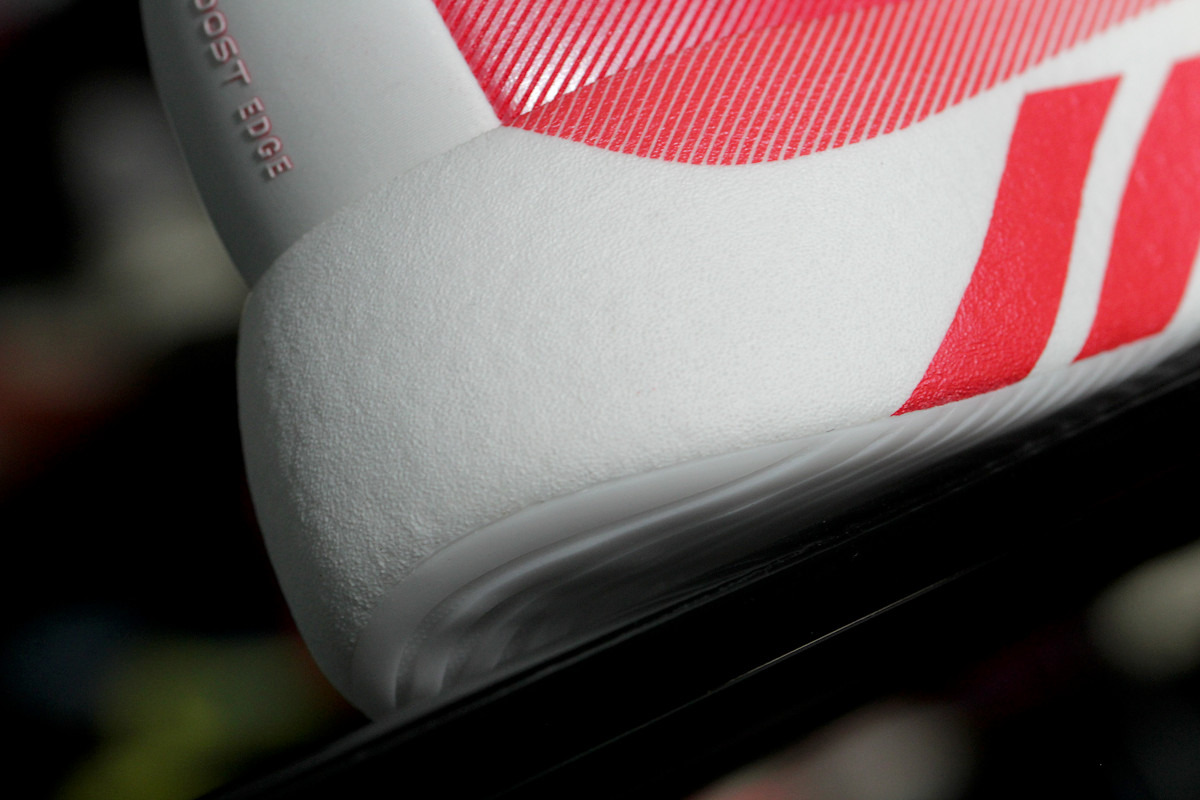
More foam means softer and better-protected feet. Although the level of cushioning is high, it doesn’t feel overly “jelly-like.” This slight firmness and stability may appeal to runners who don’t like their feet to sink too deeply into the foam. For this reason, the Hyperboost Edge should work well for a wide range of runners. Lighter runners will enjoy comfort and enhanced performance during daily workouts, and heavier runners will benefit from the stable base, especially when landing on the heel.
The midsole geometry provides stability in the Hyperboost Edge. The rear of the shoe is quite wide, creating a stable base. Given the midsole stack, this base provides a sufficient sense of control. At the same time, the midsole geometry is more aggressive than that of a typical training shoe. A gentle rocker makes the foot roll smoothly without forcing speed. The shoe’s dynamic performance is moderate – it rolls smoothly and efficiently, but it’s far from the aggressive launch and profile found in models with a carbon plate.
Lighttraxion – Lighter than Traditional Rubber
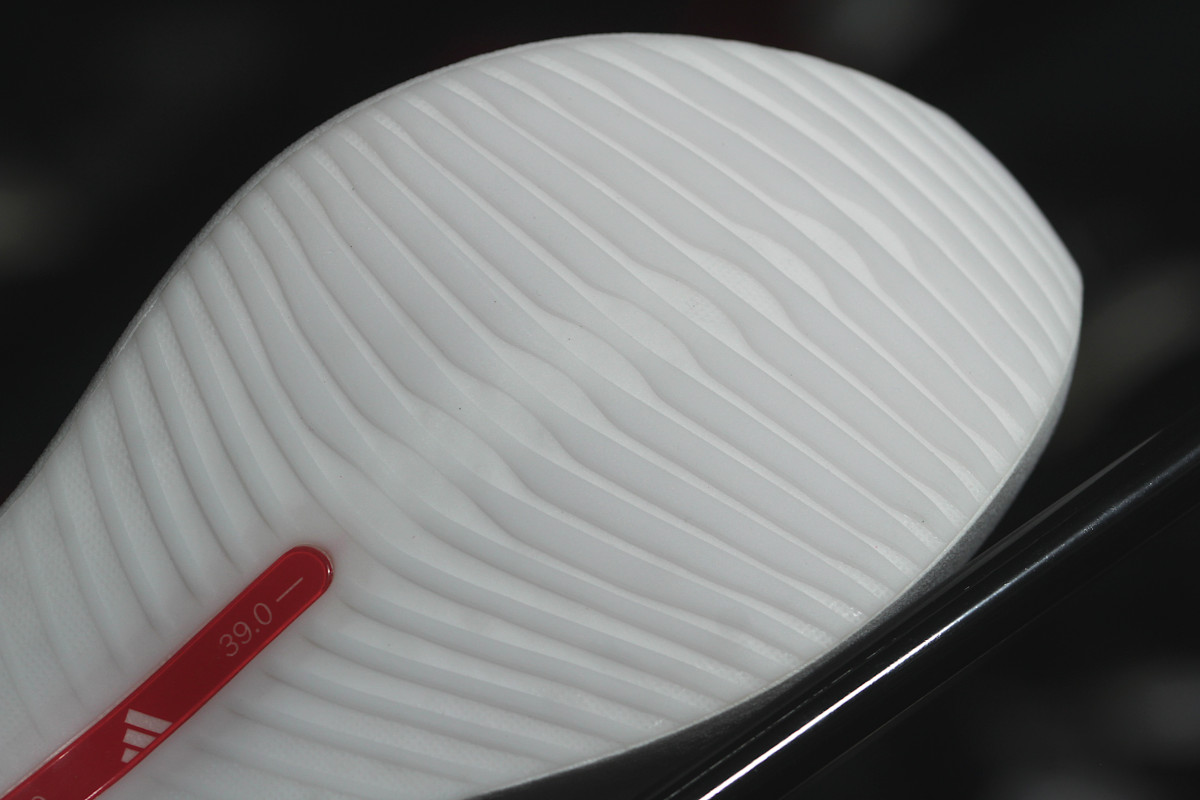
The midsole is made with the Lighttraxion system, which is a material that is lighter than Continental rubber. In the Hyperboost, this material covers nearly the entire outer surface of the midsole, which makes the shoe more resistant to wear on the outsole.
The outsole has a low, flat profile typical of hard surfaces. However, the midsole material provides outstanding traction on dry or wet hard surfaces. In both cases, it provides a secure, grippy feel. The shoe grips wet streets just as well as, if not better than, the Continental shoe. In flat urban environments, regardless of weather conditions, this shoe’s traction is above average.
Primeweave – Precision and Structure over Comfort
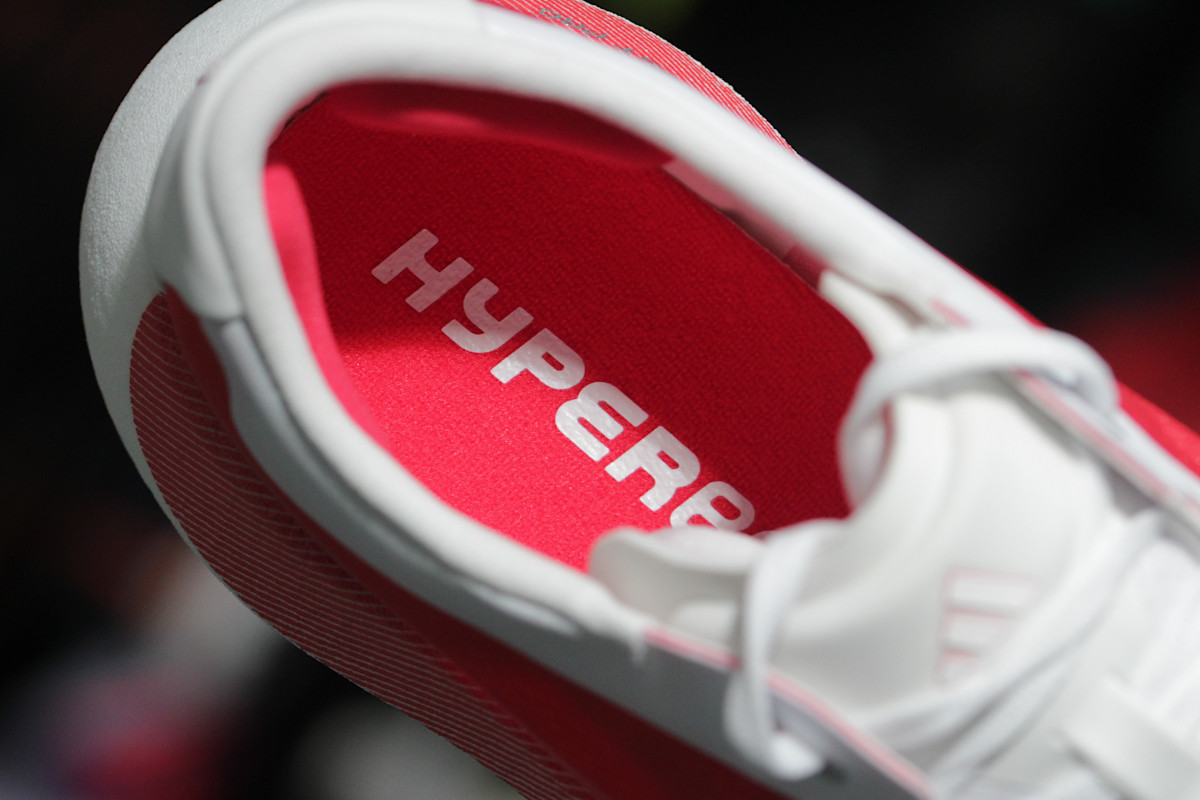
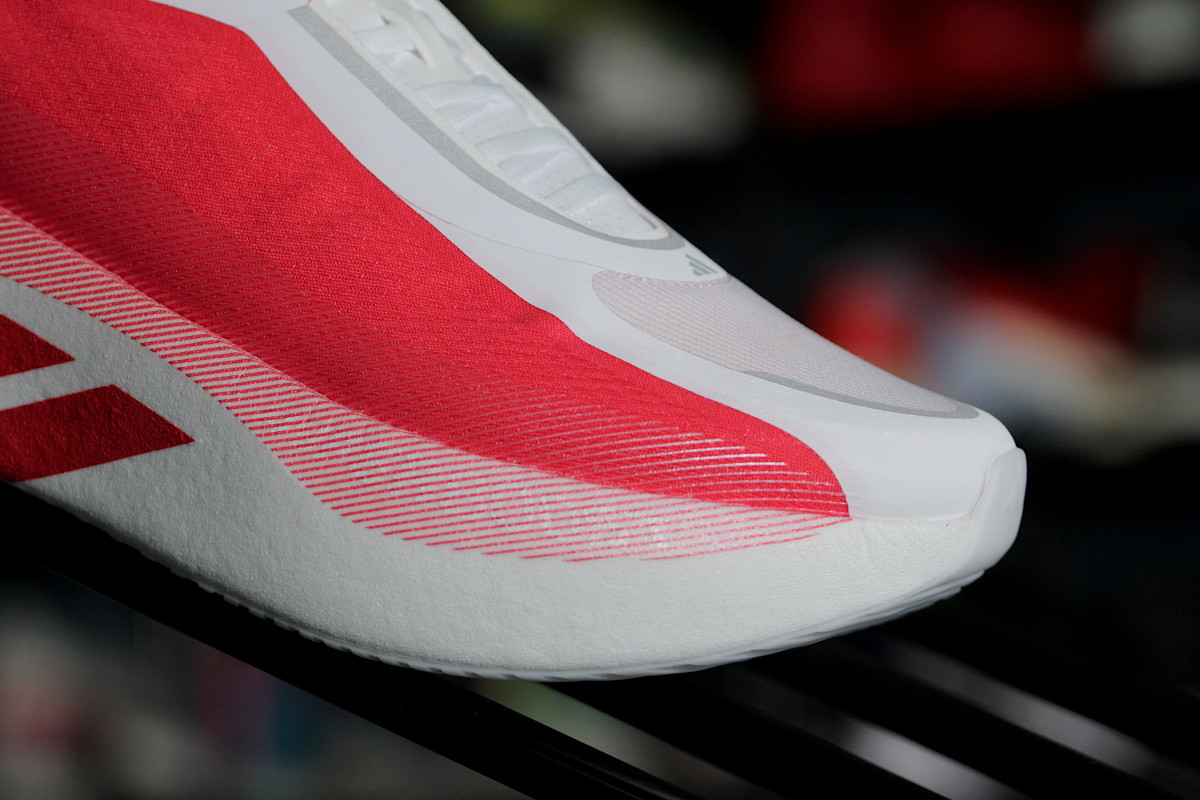
The upper of the adidas Hyperboost Edge is made of Primeweave, a lightweight, high-density woven fabric designed for maximum comfort and foot stability. Its smooth, fairly rigid construction features integrated elements around the heel for a seamless fit. This secure and stable frame locks the foot in place during dynamic running, though the shoe isn’t particularly breathable. This shoe is more “warm” than breathable.
The forefoot of the upper is narrow at 99.4 mm, which is significantly below average for a size 12 US shoe. Thanks to this, the shoe will mainly suit narrow and standard feet that prefer a tighter fit. Additionally, the lack of stretch panels makes the shoe relatively stiff and limits the foot’s natural movement. If you have wide feet, think twice before choosing Hyperboosts to avoid foot chafing during longer runs.
The midfoot area offers a standard fit with secure lacing. In this area, the stiffness of the Primeweave material provides support and keeps the foot firmly in place, which is an advantage.
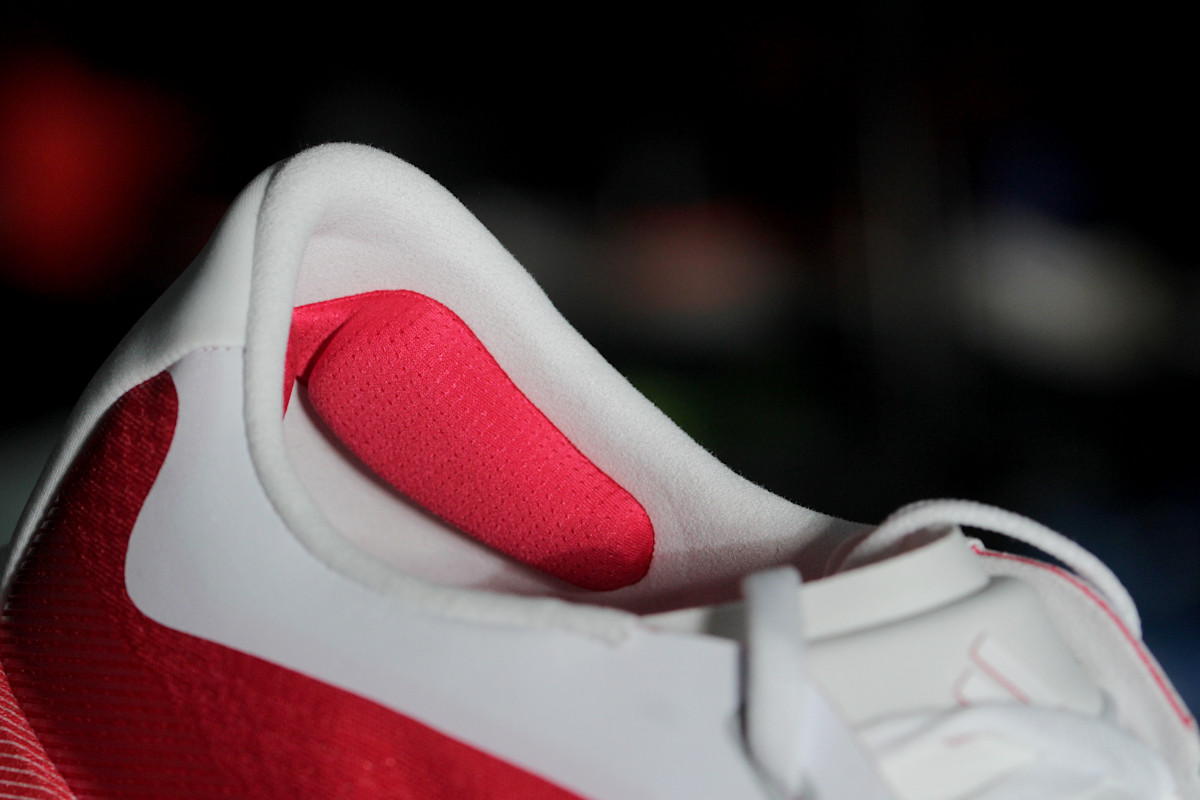
The rear part of the shoe, i.e., the heel counter, has integrated, high-stiffness stabilizing inserts that reinforce heel lockdown and improve stability. This is one reason the Hyperboost Edge provides a good level of stability despite its high stack height. The upper’s stiffness is most noticeable in the heel counter area. Like the rest of the upper, the area around the ankle is finished with the same level of stiffness. For people with wider heels or unusual ankle alignment, however, this finish can cause discomfort, chafing, or blisters, especially during longer runs. Thicker socks often do not solve this problem.
Lightweight Despite a 45 mm Stack
The adidas Hyperboost Edge weighs about 258 grams in a men’s size 9 US, which is an impressive result for a shoe with such a high stack height – about 45 mm. The weight naturally increases in larger sizes, reaching 307 grams in a size 12 US. This is still an impressively low weight for running shoes in this category. The Hyperboost Edge is noticeably lighter than classic Ultraboosts and most maximum-cushioning competitors. This is significant because, until recently, such a high midsole automatically meant much greater weight. Thanks to the new foam, adidas can now compete with the competition.
Final Thoughts
The adidas Hyperboost Edge marks the brand’s bold entry into the “max-cushioned” and super-training shoe segment. Finally, adidas offers a very soft, responsive, and comfortable shoe in this category. The new Hyperboost Pro foam makes a big difference, delivering comfort, dynamic performance, and controlled cushioning. The top-notch running experience puts the Hyperboost in direct competition with market leaders. However, the upper remains the weakest point – despite its stylish design, it’s quite narrow and stiff, which may limit comfort for those with wider feet.