The best running socks are these: you quickly forget you’re wearing them. They don’t slip down, they don’t pinch, they don’t cause chafing, and they manage moisture well. They simply let you focus on your run. Although we often treat socks as a minor part of our running gear, there are dozens of different models on the market that vary in material, thickness, height, fit, and the technologies used. So what should you look for?
Cotton Isn’t the Best Choice for Running
Cotton works well for everyday use, but it has a significant drawback when running—it easily absorbs sweat and stays damp for a long time. Wet fabric can increase friction between the foot and the sock, thereby contributing to chafing and blisters. The problem is particularly noticeable during long workouts, when the foot remains in a damp environment for hours.
That’s why running socks most often use synthetic fibers, which are better at wicking away moisture and dry faster. Polyester and nylon make for durability and effective sweat management, while spandex provides elasticity and a snug fit. Many models also feature special weaves that improve ventilation or increase durability in the most high-stress areas.
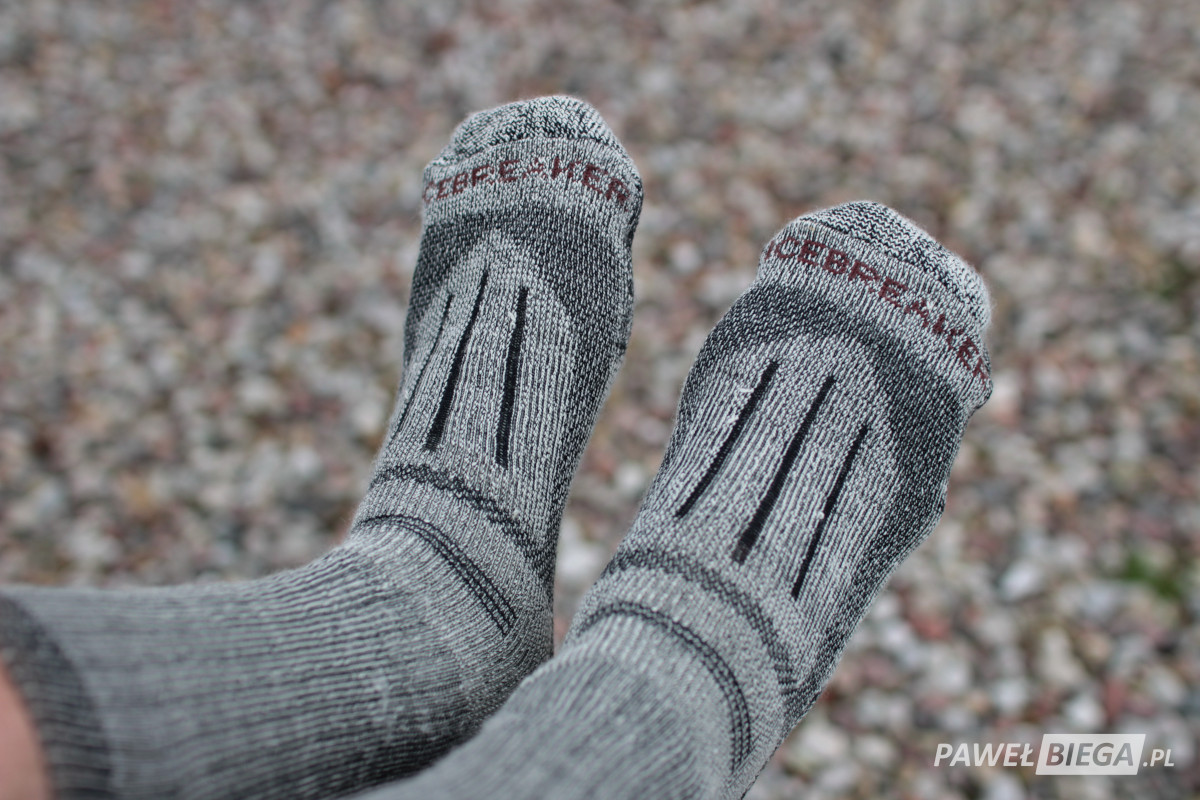
However, this does not mean that every running sock must be 100% synthetic. Merino wool is an example of a natural material that works very well in running apparel. It regulates temperature, reduces unpleasant odors, and retains its properties even when slightly damp. That’s why it’s primarily used in socks designed for cooler conditions.
The material itself, however, is just the beginning. Equally important are thickness, construction, and fit. These are the factors that determine how the sock performs during a run.
Running Socks Vary in Thickness
The second key feature of running socks is their thickness. There are no one-size-fits-all solutions here. Some runners prefer thin, lightweight models even on cooler days, while others choose thicker socks year-round. Much depends on individual preferences, temperature, and the type of running shoes.
The thickness of the sock primarily affects thermal comfort. Thin models generally work well when running in high temperatures. They also usually make better ventilation possible and allow for more direct contact between the foot and the inside of the shoe. Thicker socks retain more heat and can further enhance comfort during winter workouts. These styles often incorporate merino wool, which effectively regulates temperature and retains its properties even when the fabric is damp.
Thickness also matters for shoe fit. A thicker sock takes up more space inside the upper. In a snug-fitting shoe, this can cause pressure, especially in the forefoot.
Conversely, in a slightly looser-fitting shoe, the extra layer of fabric can improve the fit and reduce foot slippage. That’s why, when choosing socks, it’s best to view them as part of the entire foot–sock–shoe system, rather than as a standalone product.
Socks of medium thickness remain the most versatile option. They offer a good balance between ventilation, comfort, and foot protection. However, there are many options available on the market, making it easy to choose the right thickness for both weather conditions and a specific pair of shoes.

The Construction of a Sock Matters
A sock’s comfort isn’t determined solely by its material and thickness. Its construction is just as important. A good running sock should be designed to stay in place while you move and not cause unnecessary friction.
One of the most important elements is the seams. The seam at the front of the sock, near the toes, is particularly important. If it is thick, stiff, or in the wrong place, it can press against your toes while running and cause chafing. The problem becomes particularly noticeable during long runs, when even a minor source of friction can turn into painful irritation.
That’s why running socks use flat seams or constructions that minimize the number of seams. However, this doesn’t always mean a complete absence of seams. It’s much more important that the seams are imperceptible while running and aren’t located in areas prone to friction.
Modern socks also utilize different fabric zones. The section responsible for ventilation may have a looser, more breathable weave. In areas subject to greater stress, on the other hand, denser fabric or additional reinforcements are used. These are often found under the toes, on the heel, and on the forefoot.
Some models also feature a midfoot stabilization zone. A gently elastic band of fabric can improve the sock’s fit and reduce slippage. It’s a small detail, but during a long run, it can make a difference in comfort.
So, when it comes to running socks, the goal isn’t to have absolutely zero seams. The most important thing is that the construction doesn’t cause localized pressure or additional friction. A well-designed sock should simply disappear on your foot.
Running Socks Should Fit Snugly on the Foot
A good running sock should fit snugly but without constriction. It can’t be too loose, because it may shift and bunch up while running. These socks that are too tight aren’t a good solution either. They can cause constriction and reduce comfort.
That’s why running socks are made from elastic materials that conform to the shape of the foot. Many models also feature an additional stabilizing band around the midfoot. Its purpose is to keep the sock in the correct position while you’re moving. An elastic cuff around the ankle can serve a similar function.
It’s worth remembering that a sock should fit not only the foot but also the volume of the shoe. A thicker model can alter the amount of space inside the upper, just as a very elastic sock can feel completely different from a looser model. That’s why when choosing it’s worth considering the entire set: the foot, the sock, and the shoe.
Running Socks Vary in Length
Sock length may seem like a minor detail, but in practice, it matters a great deal. There aren’t these “right” choices here. Ankle socks, ankle-high socks, and knee-high socks all have their uses, and the choice depends primarily on your preferences, the weather, and the type of workout.
Short ankle socks work well when running on warm days. They offer great breathability and minimize the amount of fabric on the foot. Ankle-high socks are more versatile. Knee-high socks, on the other hand, make additional skin protection possible and perform better in specific conditions.
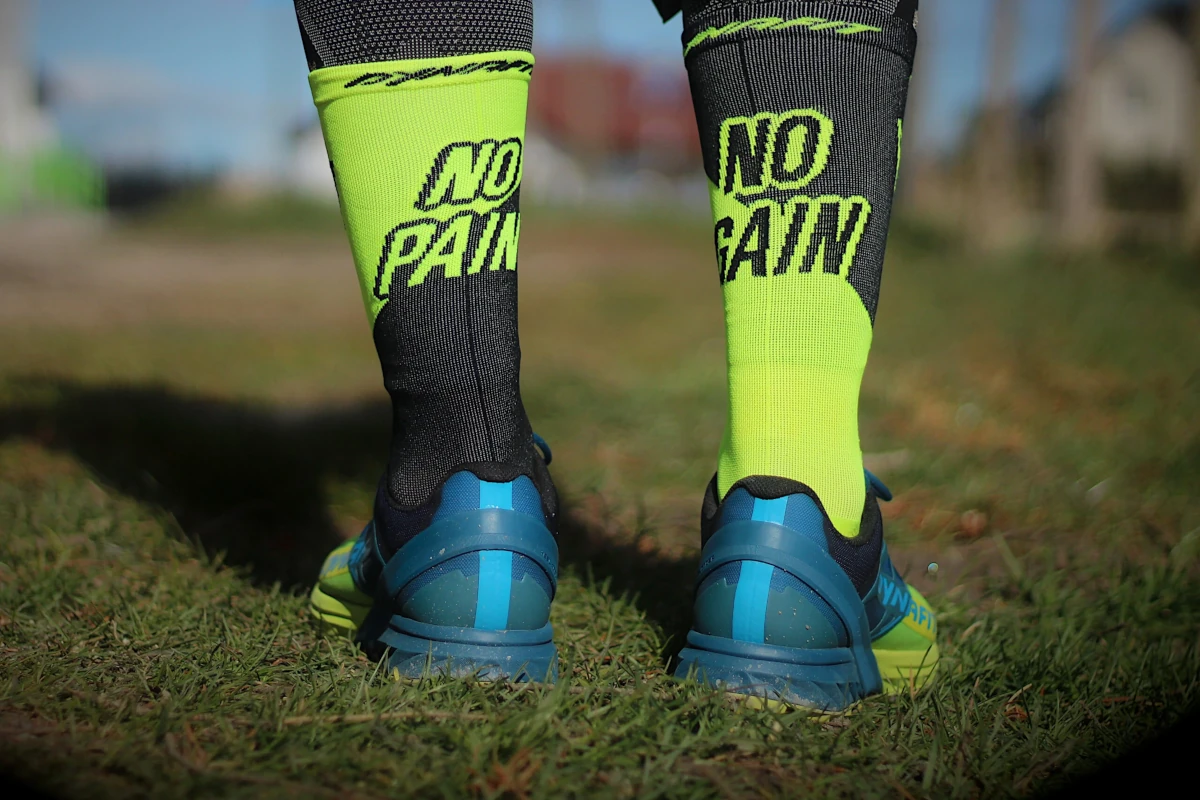
Generally, it’s better to choose longer socks for trail running than for running on the road. During trail training, your calves and ankles are more exposed to contact with grass, branches, rocks, and other obstacles. Longer socks can protect your skin from scrapes and prevent small debris from getting inside your shoes.
Longer socks are also a practical choice on cooler days. They can provide additional protection for the lower part of the calf against the cold. For this reason, they’re often found in socks designed for winter running and in trail running models.
If you’re just starting out with running, socks that reach at least to the ankle are a good, versatile choice. Over time, you’ll easily figure out which length works best for you during different workouts.
Summary
Good running socks should be comfortable, well-fitting, and made of materials suitable for the activity. Not only are the properties of the fabric itself important, but also the thickness, length, construction, and seam finish.
It’s a good idea to have a few pairs of different thicknesses and heights in your drawer. Thin socks work well during warm workouts, thicker ones in winter, and higher-cut models may be a better choice for trail running or on cooler days. The most important thing, however, is to choose socks that suit your personal preferences.