The best running socks are the ones that disappear – you put them on and immediately forget they’re there. Their comfort makes you forget about them during training. Though many runners don’t pay much attention to them, there are many models on the market that differ in material, construction, and technology. What distinguishes the perfect running sock? Which details determine their quality and comfort?
Running Socks Aren’t Made of Cotton – Here’s Why
Although cotton is pleasant to the touch, it has one major drawback: it absorbs moisture like a sponge. As a result, cotton socks quickly become wet, heavy, and uncomfortable. Heat builds up inside, increasing the risk of chafing and blisters. This can ruin any workout.
The perfect running socks should breathe and effectively wick away moisture to keep your feet dry and comfortable. That is why the best socks are made from a blend of modern synthetic materials. Polyester and nylon wick away sweat effectively, while elastane ensures flexibility and a perfect fit. This combination makes the socks lightweight, quick-drying, and comfortable, even during long runs. Therefore, choosing the right material is crucial for every runner’s comfort and protection.
Why Seamless Socks Are a Runner’s Best Friend
The most common sock production process involves weaving a roll of socks, cutting it, and producing another roll of socks. To give the sock its full shape, the cut piece must be sewn onto one side. This creates the most critical seam, located at the tip above the toes. This seam is the only acceptable one in running socks.
In my experience, seams can cause the most problems. The worst case I experienced was a seam in a new sock that started rubbing after a few kilometers, making it impossible to run comfortably. I finished my workout that day but came back with a painful abrasion on my foot. The socks were retired after one use.
Therefore, the rule should be to avoid unnecessary seams, especially poorly placed ones. The more seams there are, the more friction points there are on your feet, increasing the risk of friction. In short, the fewer seams your running socks have, the more comfortable they will be. Seamless socks can significantly improve comfort and safety while running.

Running Socks Should Fit Like a Glove
Running socks should fit the shape of your foot perfectly. To this end, running socks often have an elastic band around the midfoot or ankle. The material itself is elastic and clings to your foot. This fit translates to comfort and confidence, and ensures that the socks won’t shift in your shoes while you’re running. This is important if you want running socks that fit perfectly.
Short, Mid, Long – Sock Lengths Explained
Practical issues are also important. One trivial example is the length of the socks. There is no set rule. It also depends on individual preferences. Some people choose short socks, while others prefer longer ones that go above the ankle. For those who are just starting to run, I recommend slightly longer socks. They are more practical, especially when you are just beginning to run.
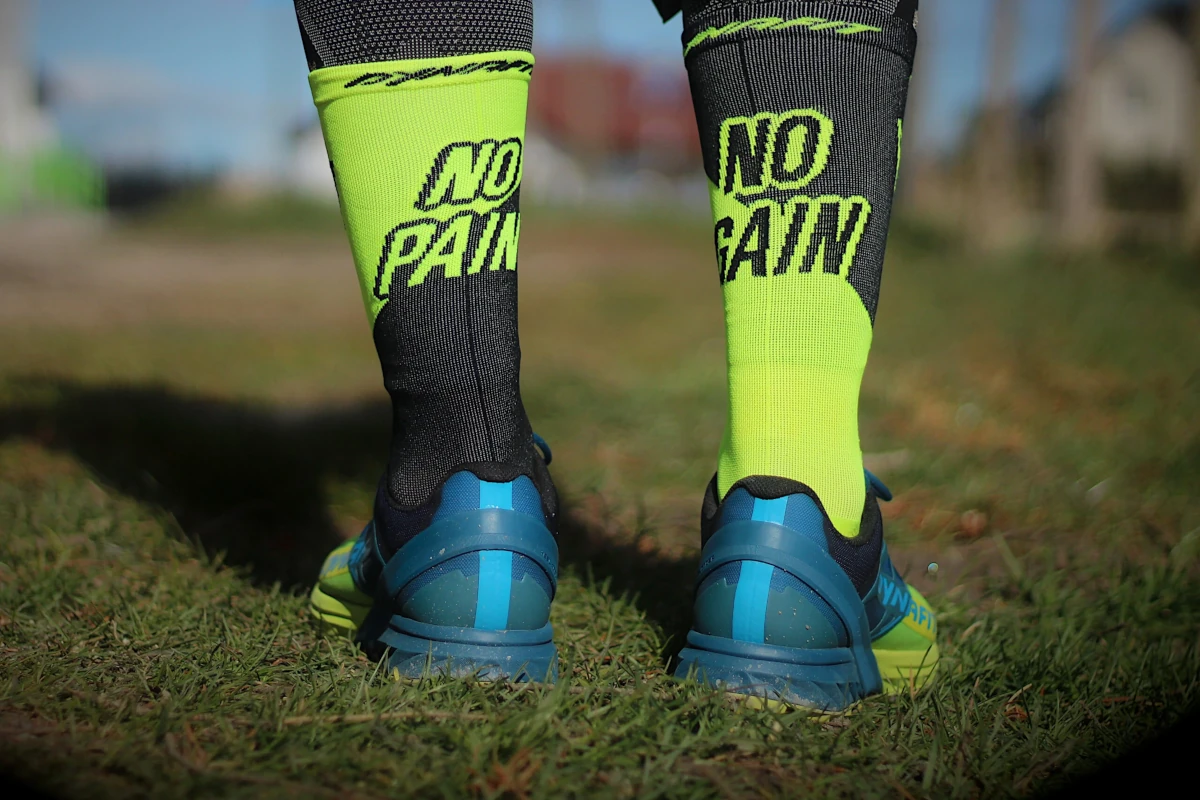
When trail running, it’s best to choose socks that are longer than those for running in the city. High socks better protect the ankles from impacts and scratches caused by small stones and sticks. To a certain extent, high socks can also reduce the risk of ankle sprains.
Thick or Thin? Choose What Fits the Run
Another important issue is the thickness of the socks. This is also a matter of personal preference. Some runners wear fairly thick socks, even in the summer. Others wear very thin socks in the winter.
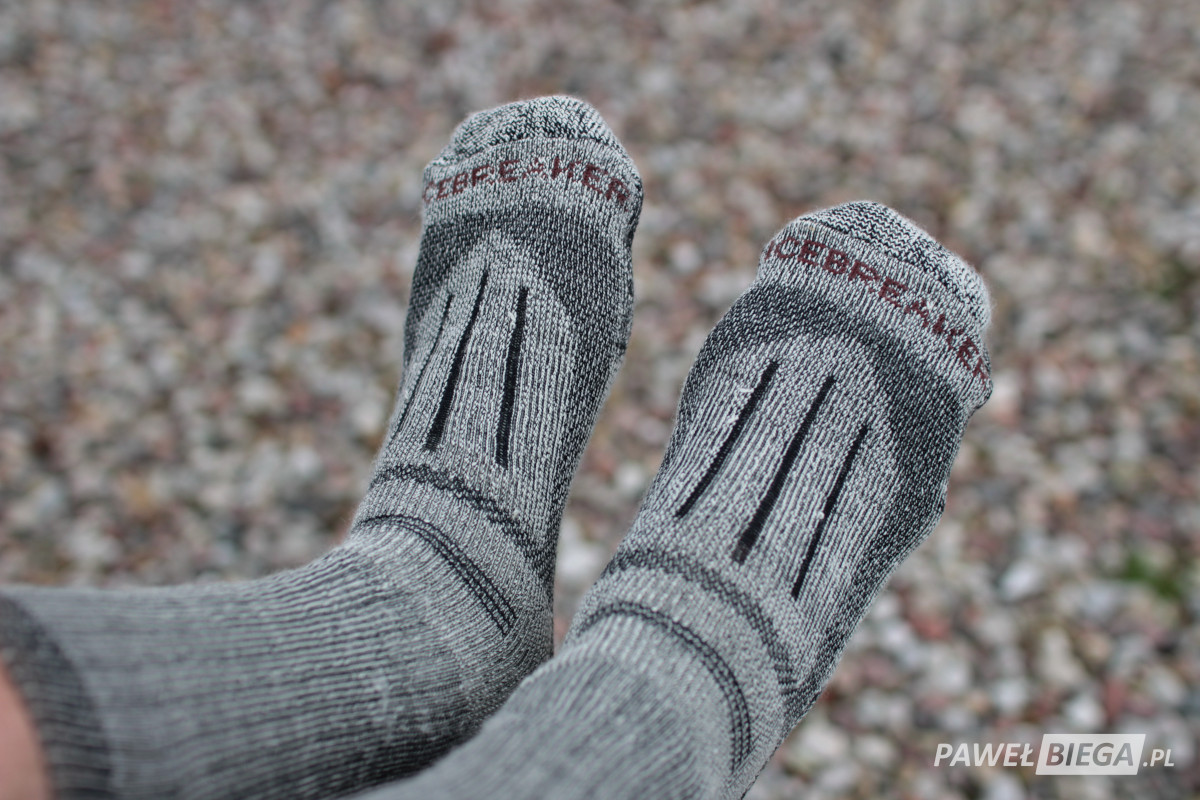
In general, though, thickness affects how warm the socks are. The thinnest and lightest models, typically footies, are ideal for warm days. The thickest socks, which sometimes contain merino fibers, provide the greatest thermal comfort. They are especially recommended when the temperature drops significantly below 0°C.
The most popular option, of course, is medium thickness. There is a huge selection of these socks. Such a wide selection allows you to perfectly match your running socks to the conditions.
Final Thoughts
Running socks should be made of technical materials and have minimal seams. Their length and thickness should be adjusted according to your preferences. Having several pairs that differ in thickness and height is often a good idea. This allows you to choose the right socks for the temperature and terrain on a given day.