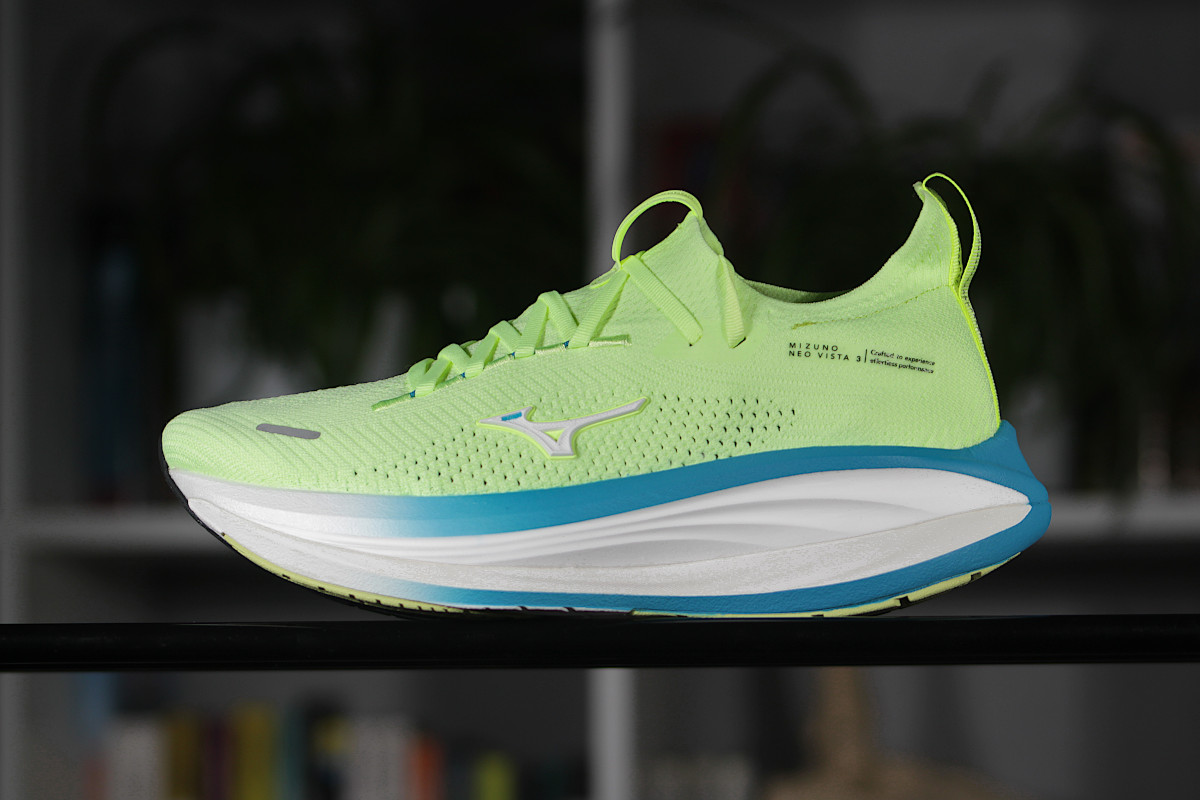
The Mizuno Neo Vista 3 is one of these shoes where you can immediately tell that the sole isn’t just a piece of soft foam. Its responsiveness, smooth roll, and distinct plate action make running in them a truly enjoyable experience. However, not everything is perfect. The heel feels a bit mushy at times, and the tall, soft construction won’t provide a sense of confidence for everyone. The Neo Vista 3 has a lot to offer, but it isn’t the perfect training shoe for every runner.
Basic Info
Tech Specs
Best For
The Mizuno Neo Vista 3 is an advanced training shoe in the supertrainer category. It combines high cushioning, Mizuno Enerzy NXT foam, and a nylon Wave plate that helps ensure a smooth foot roll. This construction is designed primarily for regular training on asphalt surfaces, longer runs, and running at a moderate pace.
The Neo Vista 3 will also perform well during faster training sessions. The Wave plate and sole geometry give it performance, so it’s not just a soft shoe for leisurely racking up kilometers. However, it’s important to keep its nature in mind. The soft, unstable heel construction may be an issue for runners who need more secure support, especially when running while fatigued. This is a good choice for those who feel comfortable in tall, springy shoes with a neutral construction.

Pros
- springy cushioning with noticeable midfoot response
- smooth foot roll and enjoyable performance while running
- suitable not only for easy workouts but also for running at a faster pace
- comfortable upper and surprisingly good heel hold
- plenty of cushioning while maintaining the shoe’s training-oriented character
Cons
- spongy, unstable heel, especially during slow runs
- high, soft construction may not work well for runners who need more secure support
- this isn’t the shoe for people looking for a stable, predictable platform
Key Features – What’s New in the Latest Edition
The Mizuno Neo Vista 3 does not alter the basic design principles of its predecessor. It still features a high outsole with an 8 mm drop, Enerzy NXT foam, and a full-length Wave plate. The changes primarily concern how the entire construction functions. Mizuno increased the volume of foam in the upper layer of the midsole by 12%, redesigned the Wave plate into a 3D structure, and altered the rubber configuration in the forefoot.
| MIZUNO NEO VISTA 3 | MIZUNO NEO VISTA 2 | |
|---|---|---|
| Stack height | 44,5/36,5 mm | 44,5/36,5 mm |
| Drop | 8 mm | 8 mm |
| Weight men’s | 265 g | 265 g |
| Weight women’s | n/a | 220 g |
| Upper | One-piece knit upper, improved heel support | Knitted |
| Midsole | Mizuno Enerzy NXT, 3D Wave construction | Mizuno Enerzy NXT, Wave Plate |
| Outsole | X10 rubber, modified tread pattern and grooves | X10 rubber |
Mizuno Running Shoes – Lineup
Mizuno has a lineup of several distinctly different families of running shoes. The Neo Vista ranks among the most advanced training models. It’s designed for runners who want to combine high cushioning with performance and responsiveness, but don’t necessarily need a typical carbon-fiber racing shoe.
In the more classic training segment, you’ll find models with a more comfortable profile, such as the Wave Sky or the popular and versatile Wave Rider. On the other hand, there are constructions geared toward faster running and competition, in which Mizuno utilizes more advanced foams and solutions that enhance performance.
Neo Vista 3, as well as the slightly simpler Neo Zen 2, thus serve as an interesting bridge between classic training shoes and more advanced constructions. They aren’t typical racing shoes, but they definitely go beyond the scope of an usual daily trainer.
Want to explore more models? Check out the Mizuno running shoe guide.
| BOUNCY TRAINING | NEUTRAL TRAINING | STABILITY TRAINING | |
|---|---|---|---|
| maximum cushioning | 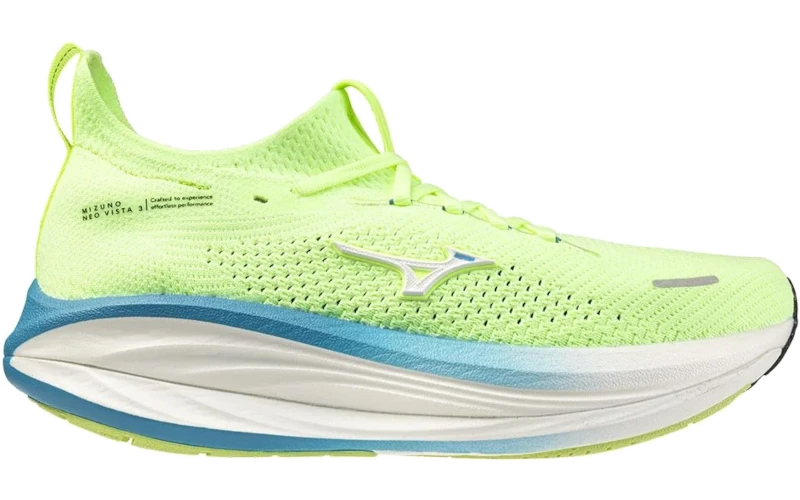 Neo Vista 3 | 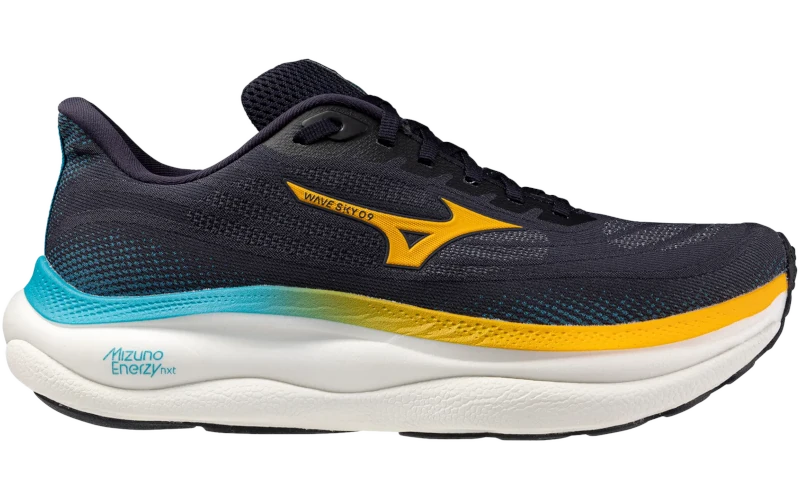 Wave Sky 9 | 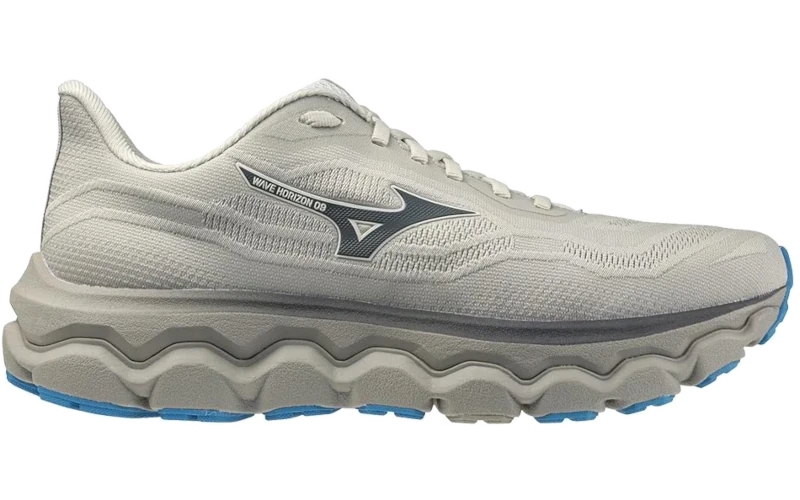 Wave Horizon 9 |
| very high cushioning | 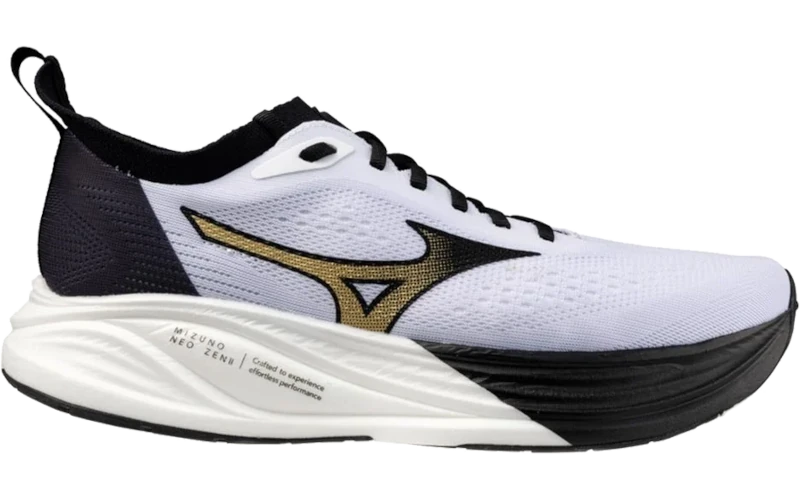 Neo Zen 2 | 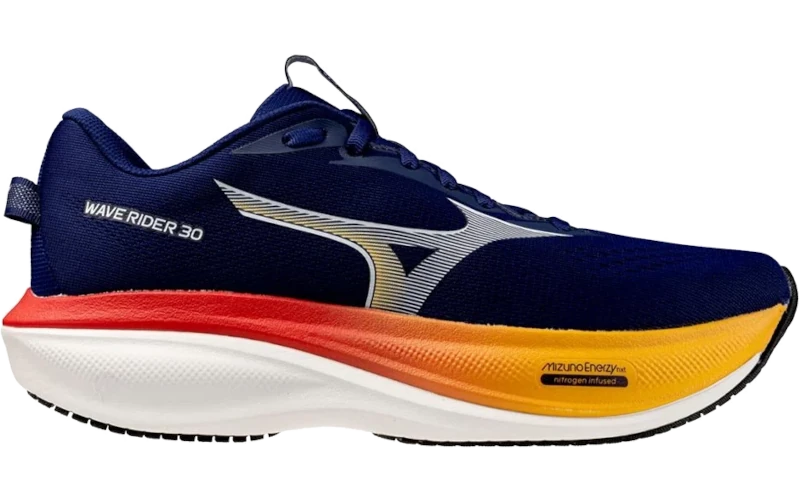 Wave Rider 30 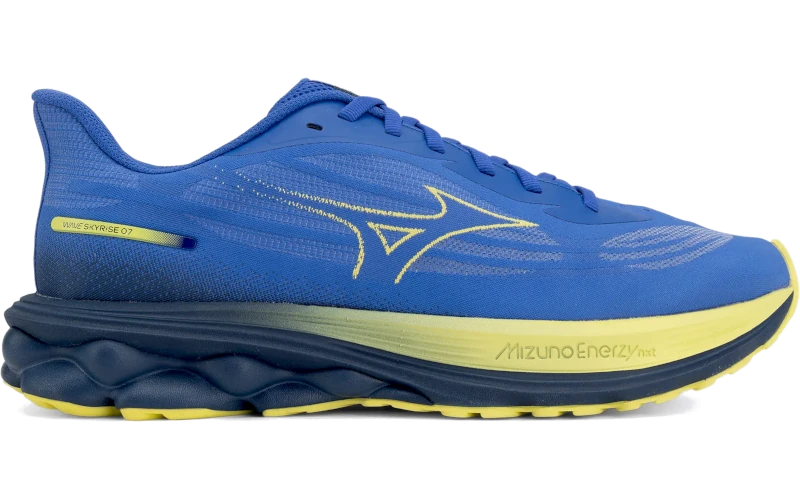 Wave Skyrise 7 | 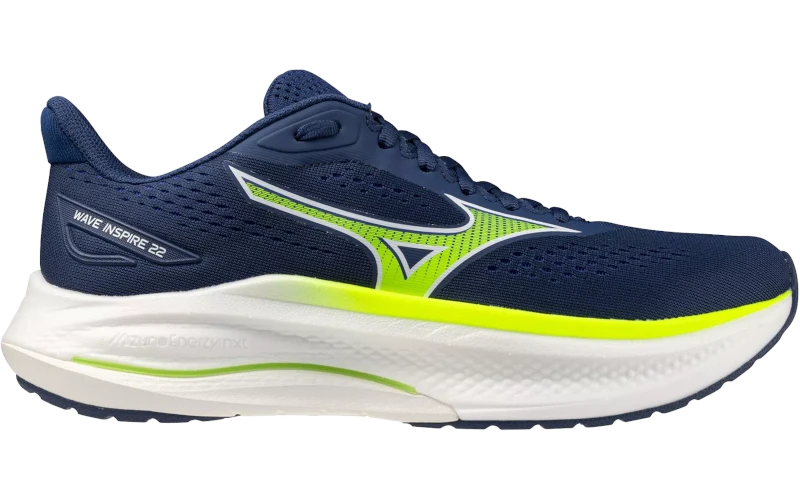 Wave Inspire 22 |
| high cushioning | 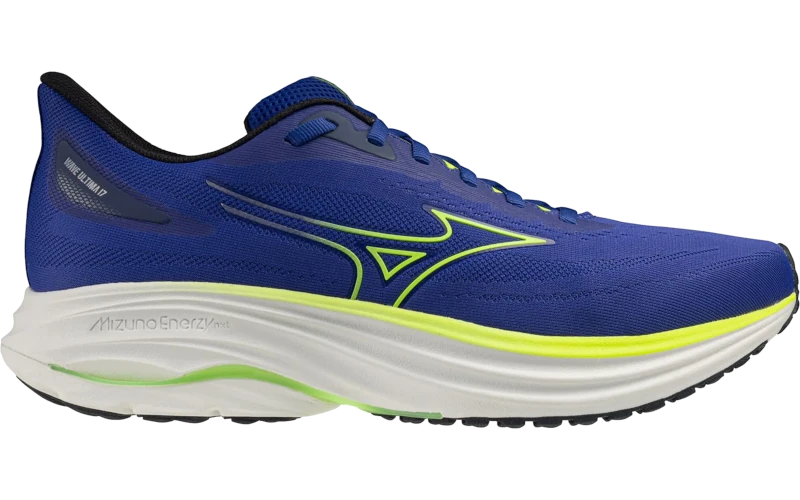 Wave Ultima 17 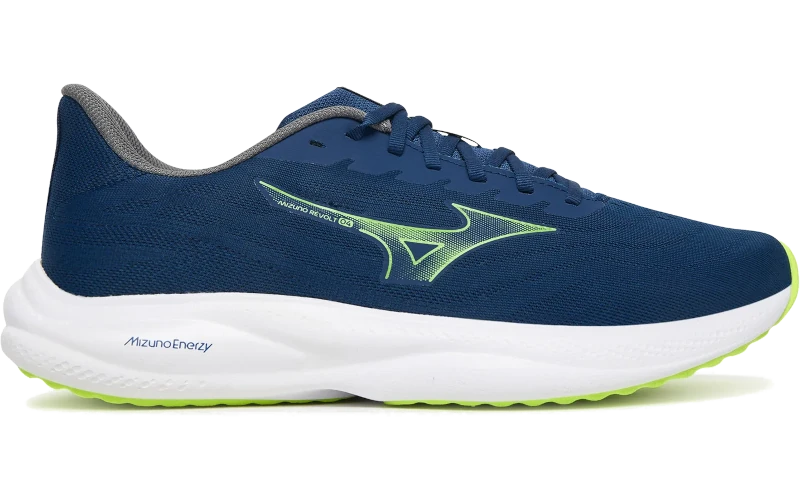 Wave Revolt 4 | 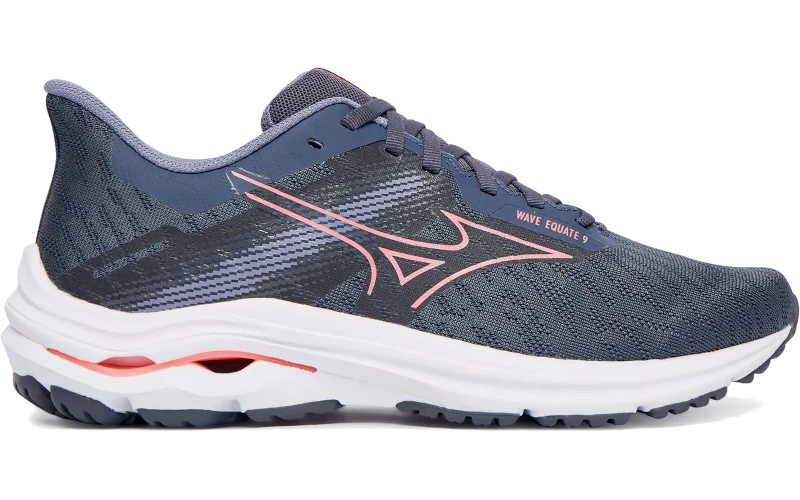 Wave Equate 9 |
Role in the Running Shoe Rotation
Neo Vista 3, Wave Rider 30, and Hyperwarp make up a rotation in which each shoe has its own purpose. We use the Neo Vista 3 for longer runs and workouts where we want to take advantage of its high cushioning and responsiveness. The Wave Rider 30 is a more classic training choice for daily mileage. The Hyperwarp, on the other hand, is reserved for faster runs and races, when we want a more athletic construction.
There’s no need for every shoe in the rotation to be equally soft, equally high, and equally dynamic. It makes much more sense to have a set where the models complement each other and allow you to choose the right shoe for a specific workout.
| NEO VISTA 3 | WAVE RIDER 30 | HYPERWARP PRO |
|---|---|---|
| |  |
| long runs, faster runs, and comfortable workouts | daily running | tempo runs, race |
Similar to Mizuno Neo Vista 3
The Neo Vista 3 falls into the fairly broad category of advanced training shoes with heavy cushioning. That doesn’t mean, however, that all models in this group will perform the same way. Some prioritize softness and responsiveness, others a more stable platform, and still others use a midfoot plate to provide a more pronounced push-off. If you’re looking for an alternative to Mizuno, you should definitely check out the Asics Superblast 3 and Megablast. Both offer plenty of cushioning, but in my opinion, they’re more stable than the Neo Vista 3 and don’t provide that distinct, plate-driven springy feel.
Other interesting alternatives include the Hoka Skyward X, Hoka Clifton Pro, and On Cloudmonster 3 Hyper. The Skyward X is probably the closest to Mizuno’s concept due to its high sole and the use of a plate, though it utilizes carbon and has a slightly different character. The Clifton Pro takes the opposite approach—it offers high cushioning but without a plate. Similarly, the Cloudmonster 3 Hyper focuses on advanced foam and comfortable cushioning, without additional sole stiffness. These are good options for runners looking for a comfortable shoe for longer workouts but who don’t necessarily need the springiness provided by a plate.
| MODEL | STACK HEIGHT (mm) | DROP (mm) | WEIGHT MEN'S (grams) | WEIGHT WOMEN'S (grams) | REGULAR PRICE (€) |
|---|---|---|---|---|---|
| Asics Megablast | 46/38 | 8 | 223 | 207 | 220 |
| Asics Superblast 3 | 46,5/38,5 | 8 | 239 | 239 | 220 |
| Hoka Clifton Pro | 42/34 | 8 | 294 | 244 | 170 |
| Hoka Skyward X | 48/43 | 5 | 320 | 261 | 225 |
| Mizuno Neo Vista 3 | 44,5/36,5 | 8 | 265 | 222 | 180 |
| New Balance FuelCell SuperComp Trainer v3 | 47/39 | 8 | 320 | 320 | 250 |
| On Cloudmonster 3 Hyper | 39,5/33,5 | 6 | 274 | 216 | 230 |
Cushioning – Mizuno Enerzy NXT
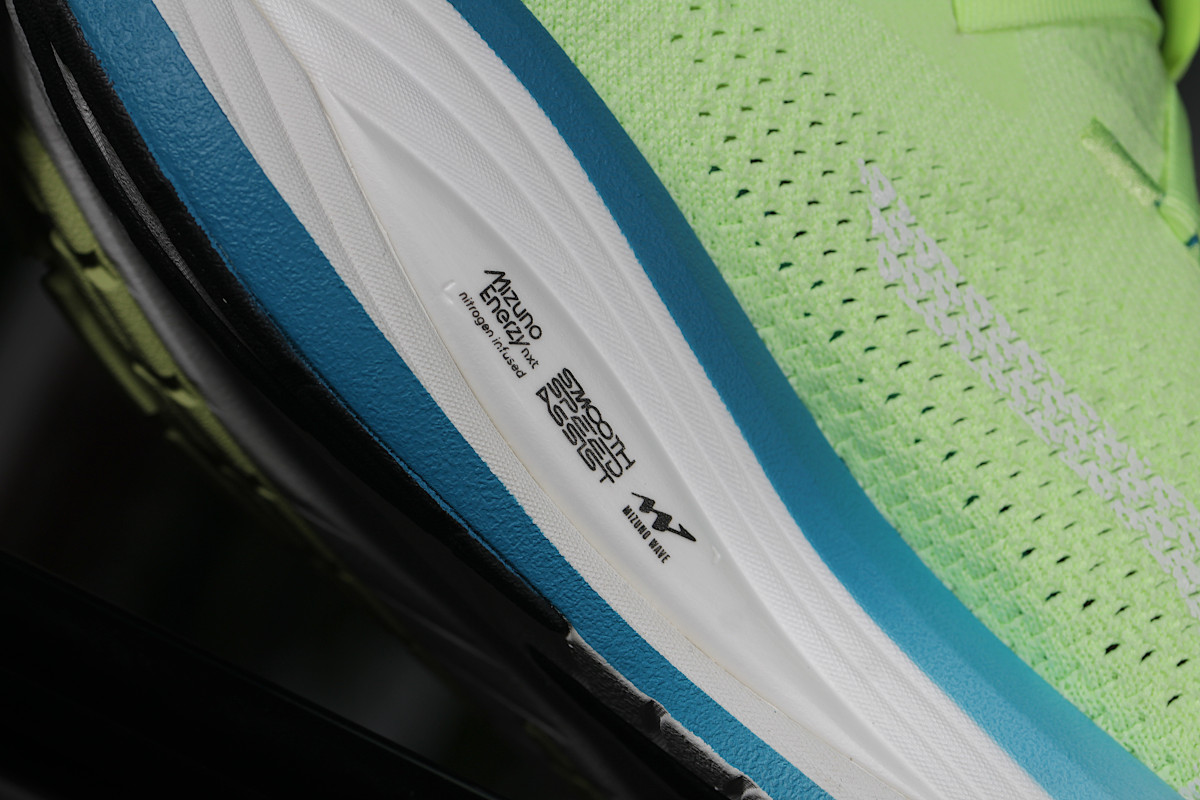
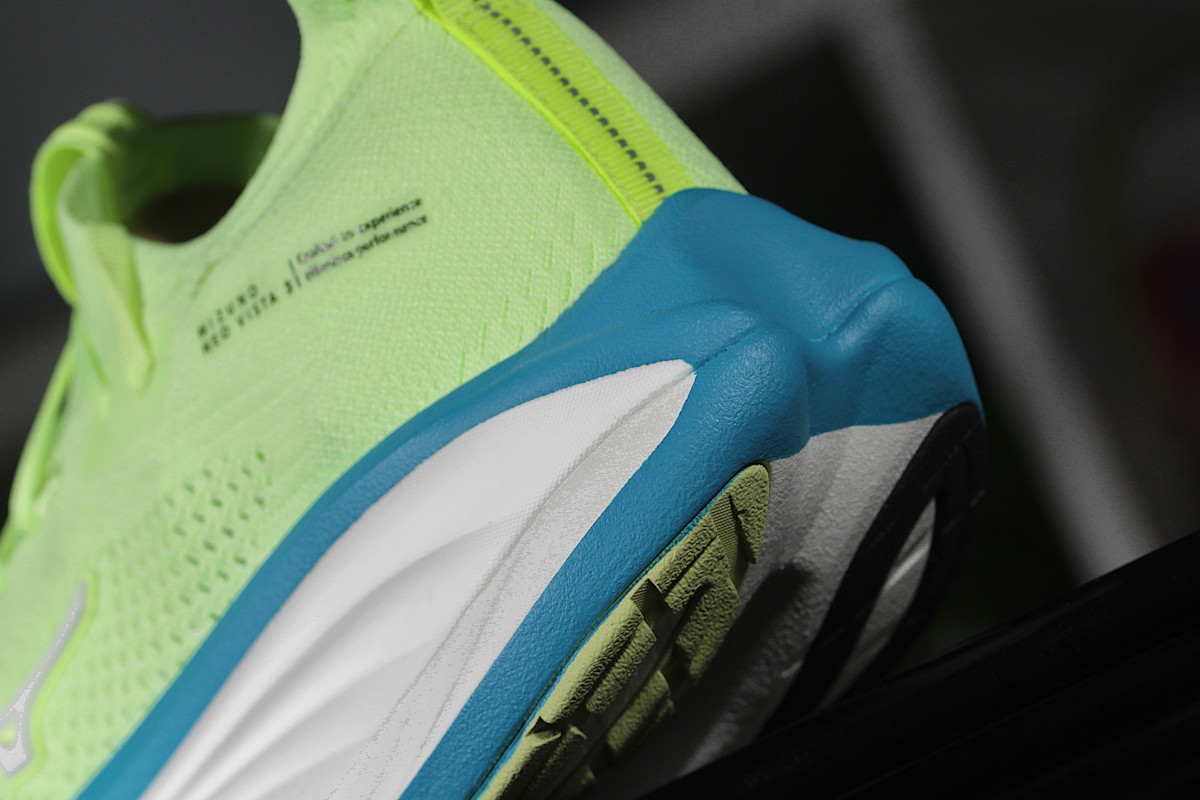
The midsole of the Mizuno Neo Vista 3 features Mizuno Enerzy NXT foam. This material is produced using supercritical molding technology, which involves foaming with high-pressure gas. The upper part of the sole features a nitrogen-enriched version, which provides softness and high energy return. The lower layer is made of a stiffer, EVA-based material. It is designed to make the sole more supportive and limit excessive flexing.
In practice, the Neo Vista 3 isn’t just a very soft shoe for an easy run. The cushioning has a distinctly springy feel. While running, you can feel that the foam not only absorbs the energy of landing but also helps return it with the next step. The Wave plate plays a major role here, working in tandem with the foam to give the entire construction a more dynamic character.
It is precisely this springiness that is one of the Neo Vista 3’s greatest strengths. However, this doesn’t mean the shoe is stable. Especially when running at a slower pace, the soft, thick sole can feel quite squishy, particularly under the heel. This sensation couldn’t be completely eliminated despite the use of a stiffer bottom layer.
Wave Plate – Springiness and Smooth Roll
One of the most important elements of the Neo Vista 3 construction is the full-length Mizuno Wave plate. It’s made of glass-fiber-reinforced nylon. So it’s not the carbon plate found in racing shoes. Its purpose is not only to stiffen the sole but also to provide the right amount of spring and channel energy for a smooth transition to the next step.
While running, its presence is clearly noticeable. The Neo Vista 3 has a springiness that I wouldn’t attribute solely to the foam itself. The plate helps the foot roll smoothly and gives the shoes their characteristic bounce. However, this isn’t the aggressive sensation typical of carbon racing shoes. It’s more about the added performance that ensures the shoe doesn’t simply become a soft, sluggish piece of foam, even during longer runs.
Outsole – Traction and Ground Contact
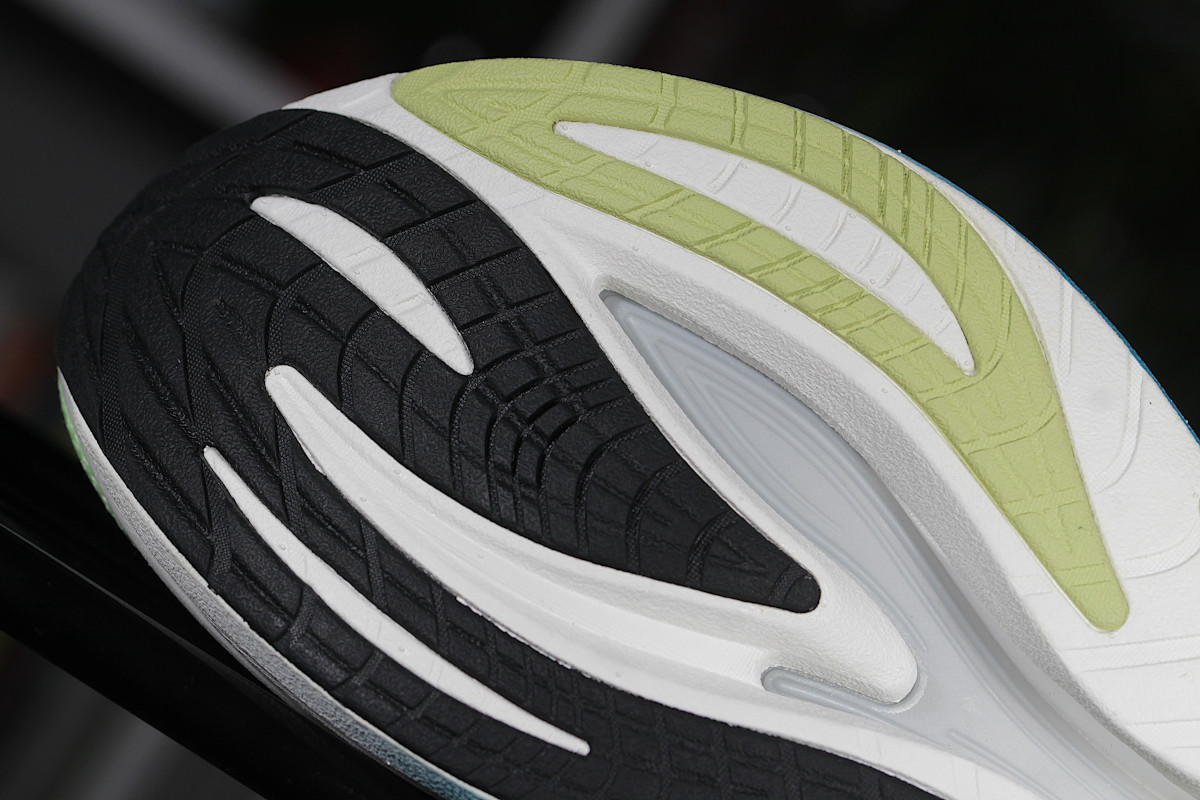
The sole of the Mizuno Neo Vista 3 uses X10 rubber, placed in the areas most exposed to contact with the ground. Its outsole pattern is about 1.5 mm deep. So this isn’t an aggressive outsole designed to make traction exceptional in more challenging conditions. It’s more of a standard solution for running on the road.
However, I would point out the sole’s construction if you plan to run on forest trails. A fairly deep groove runs down the center of the sole, dividing the lower part into two parallel sections. In shoes with similar grooves, I’ve had to pull pinecones and small stones that got wedged in the sole. It’s worth keeping this in mind. This is not a model I would choose for a trail full of forest obstacles.
Upper – Comfort and Foot Support
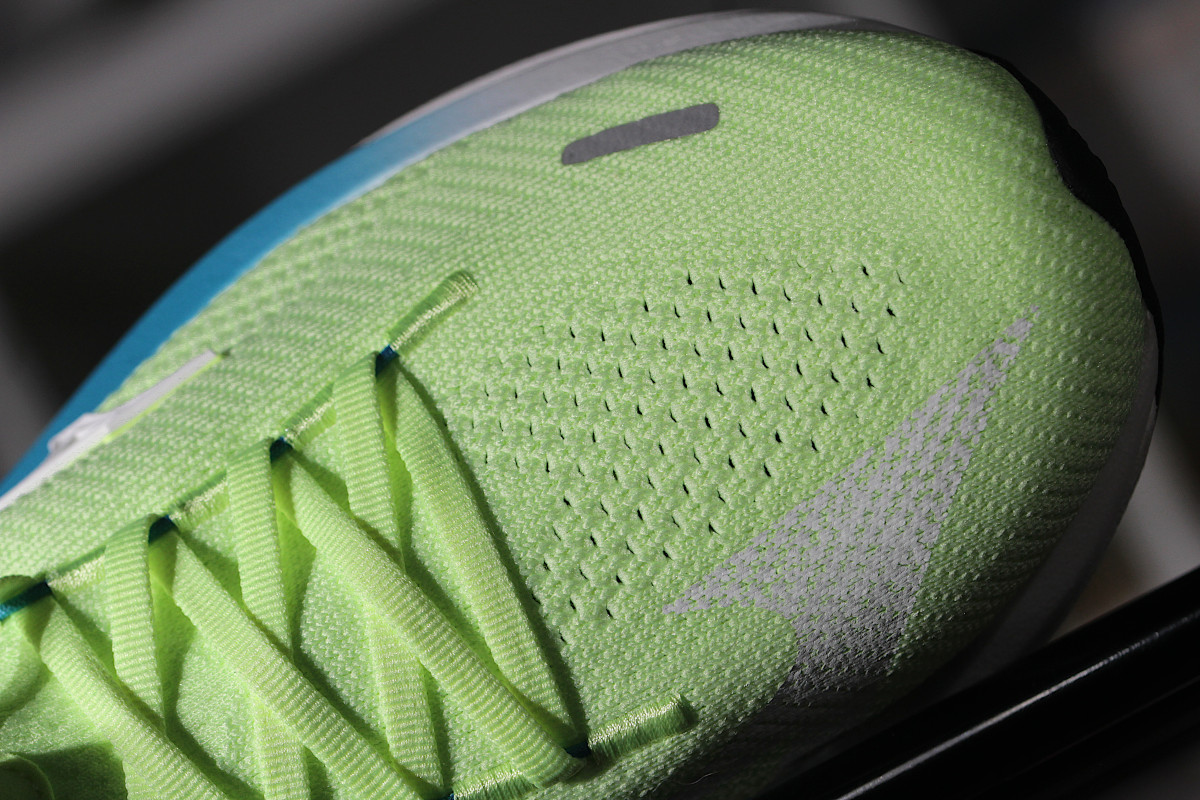
The upper is made of a one-piece knit fabric. It’s form-fitting and hugs the foot quite tightly. According to my measurements, its maximum width is 104 mm. This is close to average, but the measurement alone doesn’t convey the full impression. Due to its tight, snug fit, the upper feels narrower than the number would suggest.
The heel counter construction has also been improved with the addition of extra foam. Heel support is good—even better than one might expect based on the shoe’s appearance alone. The shoe provides good overall support, but those who prefer plenty of room in the forefoot should be aware of its fairly snug fit.
Weight – How Much Does the Extra Cushioning Cost Us?
The producer lists the weight as 265 g, but in my size (US 12), the shoe weighs 293 g. That’s a pretty good result for an advanced training shoe with such a thick sole and midsole. For comparison, the average weight of classic training shoes in my size is about 337 g. The Neo Vista 3 is therefore significantly lighter than these.
The picture changes, however, when we compare it to speed-oriented shoes. Compared to them, 293 g is quite a lot. But the Neo Vista 3 isn’t a racing shoe or a lightweight training shoe designed for fast running. True, it has a few features that make it pleasant to use during faster workouts, but it’s still a training shoe. In fact, it’s more of a super-training shoe, where ample cushioning and responsiveness matter more than minimal weight. In this category, its weight is perfectly acceptable.
Summary
The Mizuno Neo Vista 3 is a springy training shoe with a distinctly noticeable midfoot response and a very smooth roll. It’s lightweight for a training shoe and performs well on long and faster runs, but its weak point remains the unstable heel. If you prefer performance and don’t need a very stable platform, it’s worth giving it a try.