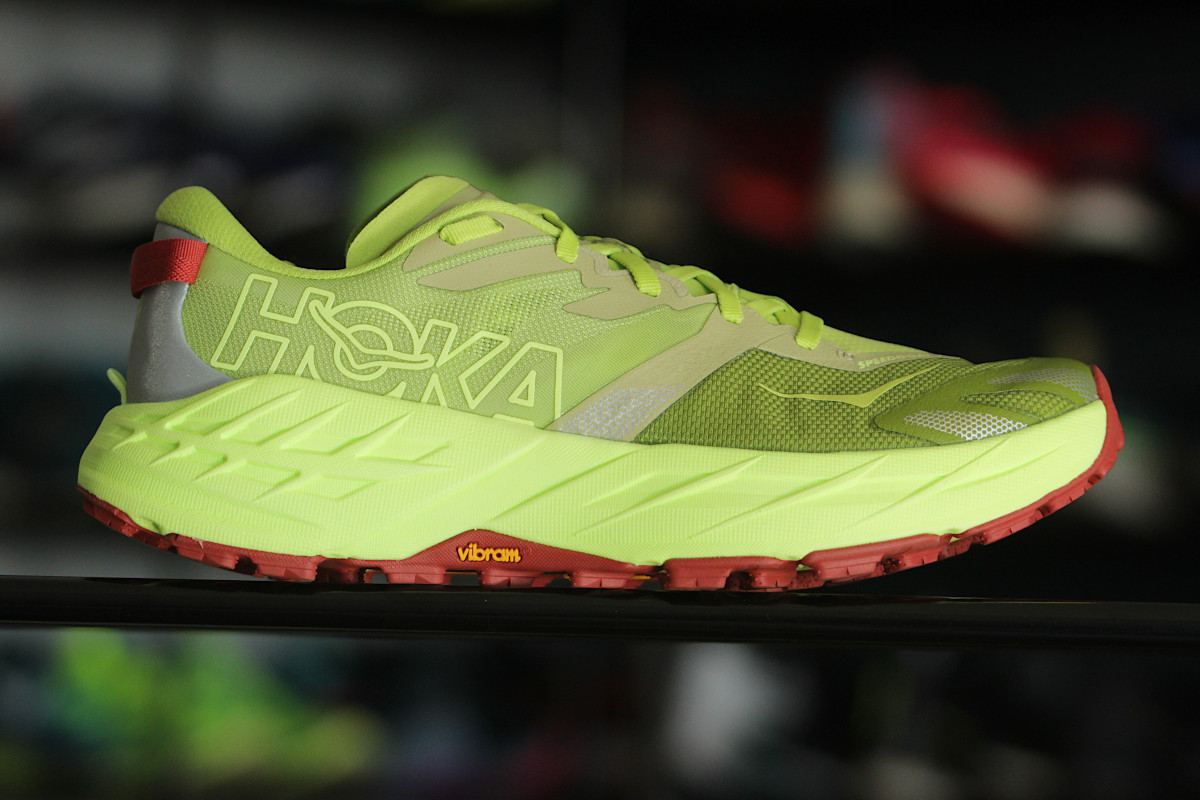
The Speedgoat series is one of the most recognizable trail shoes in recent years. Subsequent generations change slowly. The producer rarely makes revolutionary changes. Instead, they refine a proven design. At first glance, the seventh edition looks the same as previous ones: a high platform, aggressive studs, and a wide base underfoot. However, one significant change has been made inside: supercritical EVA foam.
Basic info
Tech specs
Purpose
The Hoka Speedgoat 7 is a highly cushioned running shoe designed for challenging trail terrain. Its high platform and ample foam cushioning have made it a popular choice for long mountain and ultra runs for years. The shoe performs well on technical trails, where stability, traction, and foot protection are essential. At the same time, the Speedgoat remains quite versatile. It also performs well on easier terrain, such as forest trails or gravel roads. If you’re looking for well-cushioned trail shoes with a lot of foam underfoot and relatively low weight, the Speedgoat 7 is one of the most obvious choices in its category.
Pros
- high cushioning and protection underfoot even over long distances
- soft but springy rebound
- good stability in the heel area,
- aggressive outsole that grips well on rocks and hard trails,
- lightweight, among the 25% lightest trail shoes
Cons
- not suitable for runners with wide feet.
- the outsole wears out very quickly on asphalt and hard surfaces.
What’s New in the Latest Edition
The Hoka Speedgoat 7 features new foam in the midsole for enhanced responsiveness. Both models have a 5 mm drop and a Vibram Megagrip outsole. The seventh generation’s upper is slightly more woven.
| SPEEDGOAT 7 | SPEEDGOAT 6 | |
|---|---|---|
| Stack height | 40/35mm | 40/35mm |
| Drop | 5mm | 5mm |
| Weight men’s | 275g | 278g |
| Weight women’s | 235g | 232g |
| Upper | Technical mesh, more woven | Technical mesh |
| Midsole | Supercritical EVA (SCF/EVA) | CMEVA |
| Outsole | Vibram Megagrip | Vibram Megagrip |
Hoka Running Shoes – lineup
The Speedgoat is one of Hoka’s most recognizable trail models. However, the brand’s lineup now includes a wider range of off-road models. Different models have been designed for various types of trails and runners’ needs. If you are looking for maximum comfort for very long mountain runs, the natural alternative to the Speedgoat is the Mafate. It is an even bulkier shoe and is also available in a faster, more dynamic version: the Mafate X.
On the other hand, the Challenger is a good choice for those who run more often on city outskirts, gravel roads, and forest paths than on mountain trails. It offers a similar level of cushioning, but its construction works better on mixed suburban terrain.
For a better overview of the brand’s entire lineup, check out the full shoe guide for Hoka.
| COMFORT TRAIL | SPEED TRAIL | MIXED TERRAIN | |
|---|---|---|---|
| maximum cushioning | 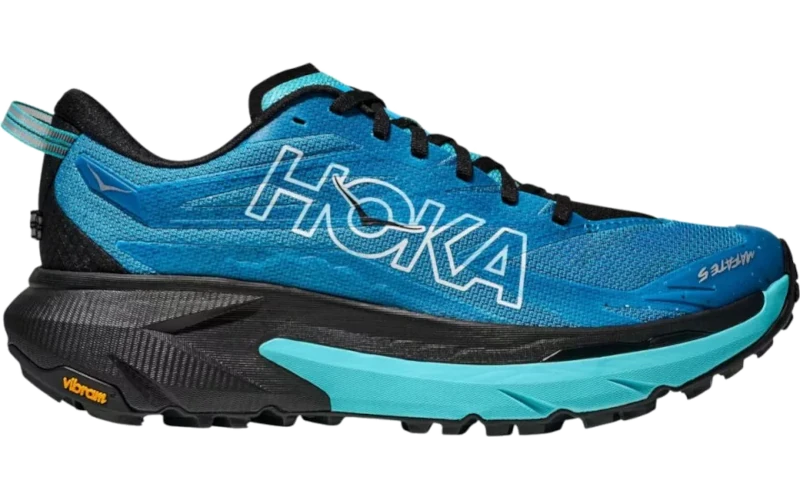 Mafate 5 |  Mafate X |  Stinson 7 |
| very high cushioning |  Speedgoat 7 |  Tecton X 3 |  Challenger 8 |
| high cushioning |  Torrent 4 | ||
| mid cushioning |  Zinal 2 |
Similiar to Hoka Speedgoat 7
For years, the Speedgoat line has held a strong position in the universal trail running shoe segment for mountain running. For many runners, this model has become the gold standard for well-cushioned off-road shoes for long distances. However, the trail running shoe market is growing quickly, and there is much greater competition today than a few years ago. More and more models offering comparable levels of cushioning, traction, and protection on the trail are appearing in this segment.
| MODEL | STACK HEIGHT (mm) | DROP (mm) | WEIGHT MEN'S (grams) | WEIGHT WOMEN'S (grams) | REGULAR PRICE (€) |
|---|---|---|---|---|---|
| Altra Olympus 6 | 33/33 | 0 | 345 | 310 | 180 |
| Asics Trabuco Max 5 | 40/35 | 5 | 312 | 265 | 180 |
| Brooks Caldera 8 | 39/33 | 6 | 300 | 263 | 150 |
| Diadora Sestriere XT 2 | 38/33 | 5 | 340 | 275 | 160 |
| Hoka Speedgoat 7 | 40/35 | 5 | 275 | 235 | 160 |
| Hoka Mafate 5 | 45/37 | 8 | 332 | 286 | 180 |
| inov-8 Trailfly Max | 24/18 | 6 | 260 | 260 | 160 |
| New Balance Hierro v7 | 42/38 | 4 | 301 | 235 | 170 |
| Nike ZoomX Zegama 2 | 37/33 | 5 | 328 | 280 | 180 |
| Salomon S/Lab Genesis | 30/22 | 8 | 269 | 243 | 200 |
| Salomon S/Lab Ultra Glide 1.5 | 37/35 | 6 | 280 | 280 | 250 |
Midsole – What Supercritical EVA Brings to the Trail
The midsole, the element most responsible for cushioning, underwent a significant change in the seventh generation. While it remains a single block of foam with consistent density, the material has changed. The Speedgoat 7 uses supercritical EVA foam, which is designed to make the shoe more resilient while maintaining a high level of cushioning.
Without hesitation, the model can still be described as maximalist. According to the manufacturer’s data, the midsole stack is 40 millimeters under the heel and 35 millimeters under the midfoot in the men’s version. The platform remains high, offering a large amount of foam underfoot.
The drop, or the difference in height between the heel and the front of the shoe, is 5 millimeters. This is slightly lower than many classic running shoes. This profile promotes a more natural foot roll and allows for easier acceleration, though it poses no problems at a leisurely pace.

One distinctive feature of the platform is the slightly raised edges of the midsole where it connects to the upper. These edges create a delicate “trough” in which the foot rests. This feature limits lateral movement and improves stability on uneven ground. While the construction is very similar to the previous generation, the new foam provides greater elasticity for a slightly livelier running experience.
The new foam also slightly alters the feel of the run. The Speedgoat 7 is noticeably more resilient and dynamic than previous models. This makes the model more fitting of its name, which includes the word “speed.” However, this does not mean that it has suddenly become a shoe for fast off-road racing. It is still one of the most comfortable and best-cushioned trail shoes on the market. If you’re looking for off-road speed, check out models such as the Tecton X or, to a lesser extent, the Mafate X.
In this respect, the Speedgoat remains an excellent choice for lighter and heavier runners, as well as those competing in long mountain races. Ultramarathon? Mountain 100? No problem. If you run shorter or slower distances, you will also benefit from the high level of cushioning and comfort this shoe provides.

Trail Grip – The Role of Vibram Megagrip
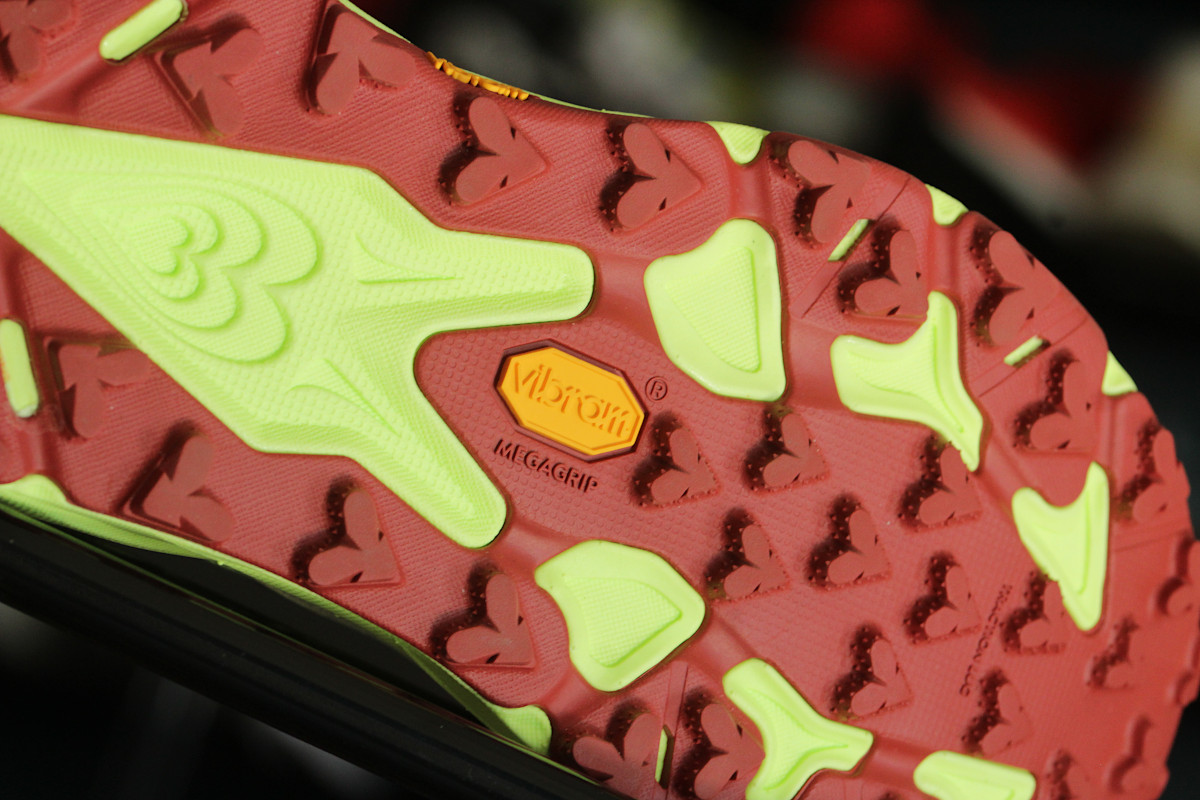
The Speedgoat 7’s outsole retains the familiar character of previous generations. It consists of many irregular, triangular blocks arranged in different directions. The outsole is made of Vibram Megagrip rubber, which has been one of the strongest features of this model for years. The seventh generation has a stud height of 5 millimeters (measured at 4.7 mm), providing solid traction on most mountain trails. The shape of the outsole and the rubber compound, which grips the trail very well, are both important here.
However, the Speedgoat’s grip has its limitations. This model works best on rocky trails, gravel, and hard mountain paths. In such conditions, it provides good grip and stability. In deep mud, however, the outsole’s capabilities are reduced. The blocks are not designed for very soft, sticky ground. If your routes frequently lead through mud, tires with larger, wider studs will be a better choice.
Upper – Stability and Secure Footing
Although the direction of the modification is similar to that of the previous generation, the upper of the Speedgoat 7 has also been changed. The new design is intended to provide better support for the foot in difficult terrain. The main part of the upper is made of technical, relatively dense mesh. This material is highly breathable yet slightly sturdier and less flexible than older Speedgoat generations.
There are additional mesh reinforcements. The largest of these are, of course, located at the toe of the shoe. This is a common feature in trail shoes that protects the toes from impacts with stones or roots. In the Speedgoat 7, this reinforcement is visually integrated into the entire upper construction. Thanks to this, the entire shoe looks much “lighter.”
The shoe also offers good midfoot support. Diagonally placed stabilizing straps connect the lacing system to the lower part of the upper. The tongue is partially connected to the upper with flexible panels, improving the fit and reducing slippage while running. The reinforced straps and elastic elements around the base of the tongue help keep the foot in place and ensure a comfortable fit.
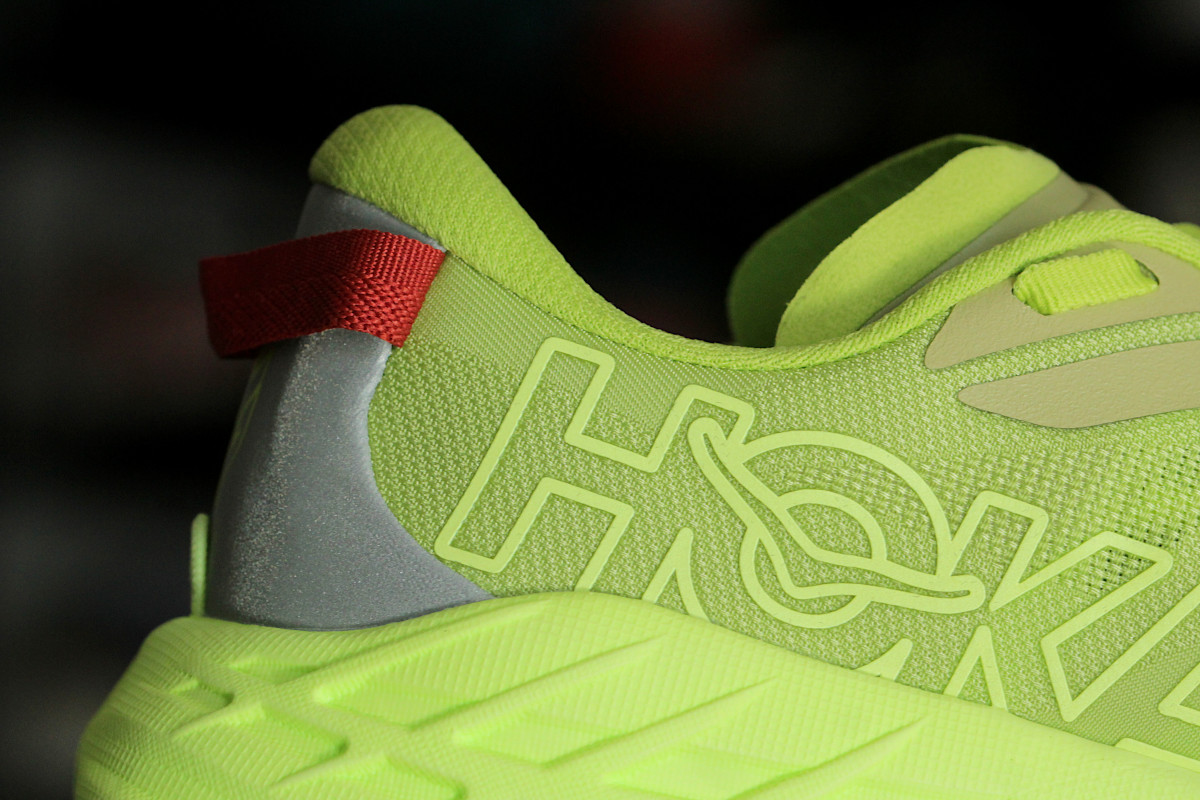
The heel counter is stable, though the internal stiffening element is less rigid than in previous editions. Fortunately, this does not affect the heel’s grip and stability. In fact, one could argue that it provides even better support. This is due to slightly different contouring of the inner side of the heel counter, which now has a more pronounced recess in which the heel “sits.” The foam collar around the ankle is thicker and softer, positively affecting both heel hold and comfort.

Lightweight Design with Maximum Cushioning
According to the producer, the men’s version of the Speedgoat 7 weighs 275 grams, while the women’s version weighs 235 grams. These values are similar to those of previous generations. In practice, however, the size 12 US shoe weighs 319 grams. This is also similar to its predecessor.
Despite its high level of cushioning, the shoe is still relatively lightweight. The Speedgoat 7 is among the top 25% lightest trail shoes. This is worth noting if you are looking for a lot of foam underfoot, good terrain protection, and lightness that won’t interfere with long trail runs in the mountains.
Final Thoughts
The Hoka Speedgoat 7 shares many similarities with previous editions of this shoe, but it also has some new features. Notably, the new midsole is more resilient and dynamic. Other elements of the construction have undergone minor changes. Thus, the Speedgoat has retained much of its “cult status” and remains an excellent choice for long-distance mountain running. It provides comfort and protection on difficult terrain but also works well on less demanding trails.