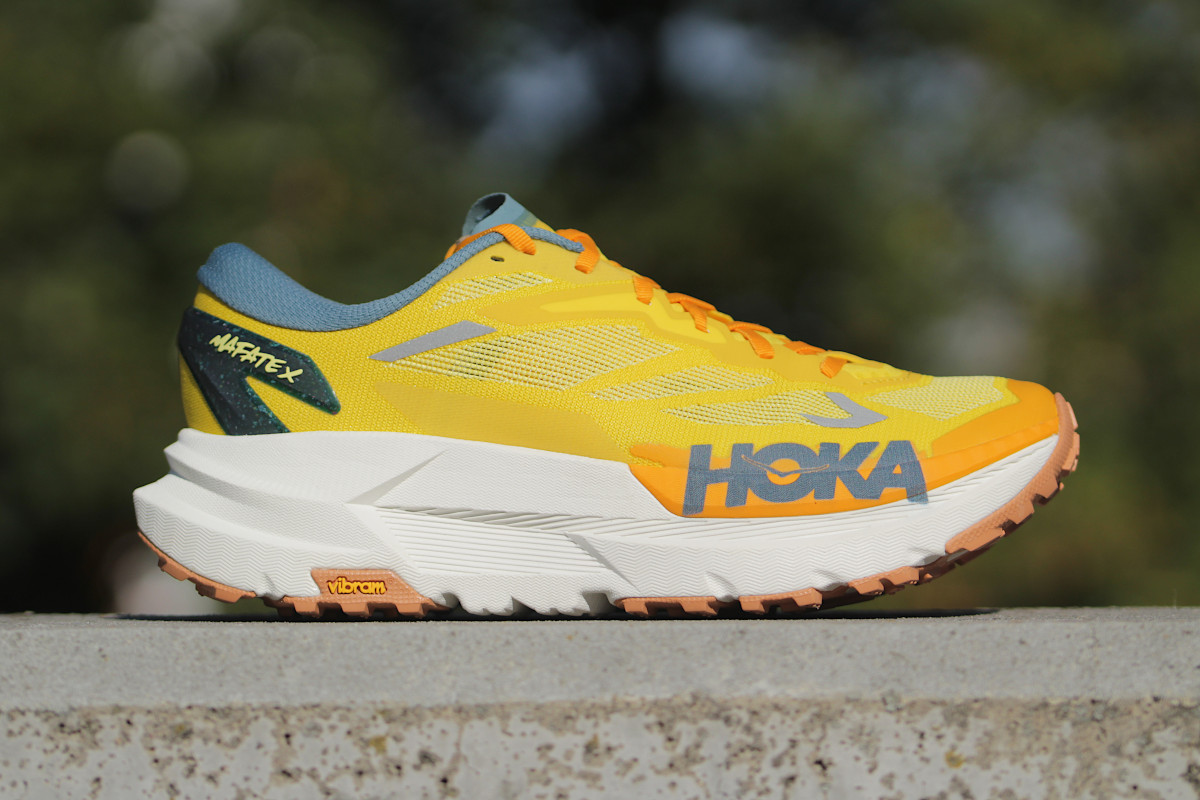
The Hoka Mafate X is a shoe that bridges two worlds: trail durability and the technology found in carbon road racing shoes. It’s designed not for aggressive racing, but for long, smooth runs that balance comfort and performance. Does this vision of trail running make sense in practice? Absolutely! The Mafate X surprises with its versatility—from mountains to occasional hard surfaces—minimizing foot fatigue, though the stiffness of the carbon fiber makes it less agile on steep descents.
Basic info
Tech specs
Purpose
The Hoka Mafate X is a trail running shoe that offers maximum cushioning. It’s designed for runners who seek maximum comfort on the trail and aren’t interested in aggressive racing, but rather in a long, smooth ride along the course. The cushioning here is extremely high, making it perfect for ultra runs and all distances from 30 km and up. Terrain? Primarily compacted trails, gravel, and forest roads. That’s where it performs best. On mud and technical rocks, traction and control start to falter. This is the ideal model for heavier runners, ultra runners, and those who prefer a shoe that’s soft, high, and stable, but not necessarily fast and precise.
Pros
- amazing cushioning and comfort on long distances
- dynamic thanks to the carbon plate
- good stability in the heel area,
- lightweight—among the 28% lightest trail running shoes
Cons
- limited maneuverability on technical terrain
- on roads and hard surfaces, the outsole wears out very quickly.
Hoka Running Shoes – lineup
The Mafate X is one of Hoka’s most iconic trail running models today, but the brand’s trail lineup offers many other interesting options. Each model is designed with specific conditions and uses in mind. If you’re looking for maximum comfort over very long distances, the Mafate line is definitely worth checking out.
You have two models to choose from: the Mafate 5 and the Mafate X. Both perform particularly well on less technical terrain. They differ in the presence of a carbon fiber plate. The Mafate X is a shoe that not only offers extreme cushioning but also features a carbon plate, which ensures a smooth roll and a pleasant “floating” sensation. The Mafate 5, on the other hand, is a shoe without a plate, which makes it slightly more flexible at the expense of a less smooth roll.
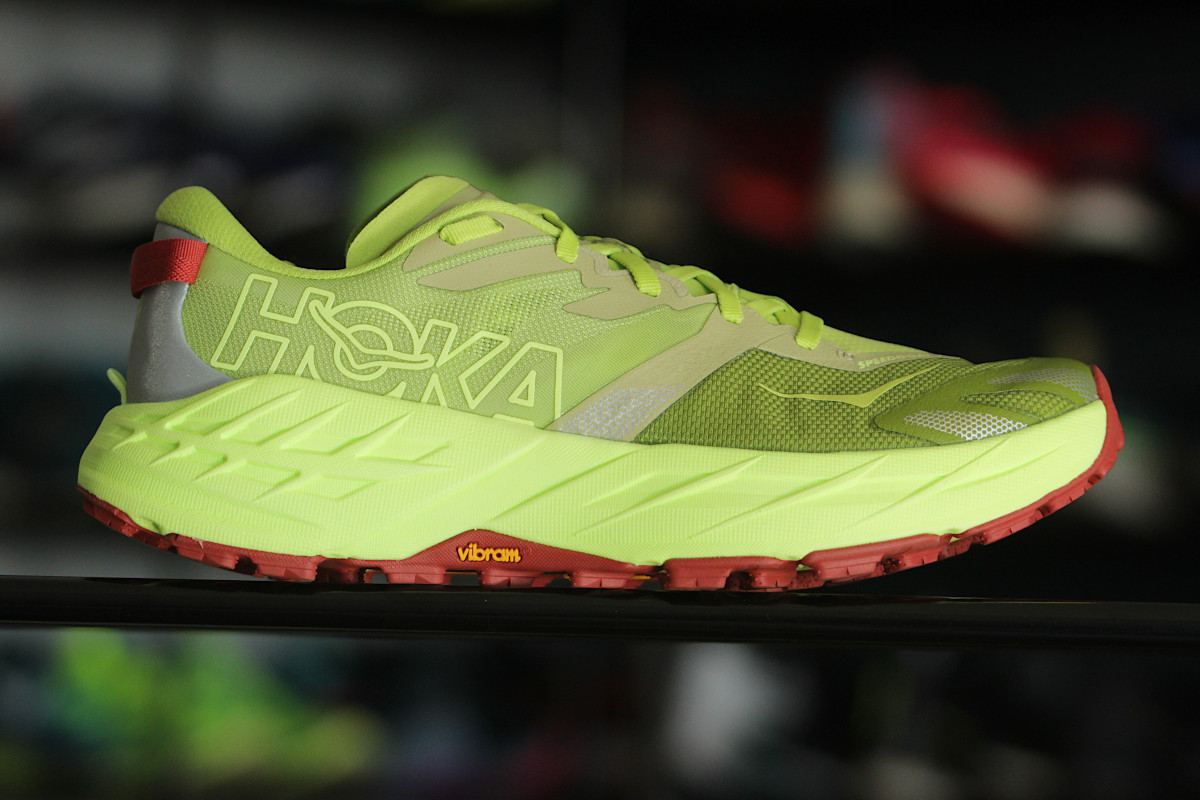
For those looking for something more versatile and suited to tougher terrain, the timeless and iconic Speedgoat is the best choice.
If you want to get a better overview of the brand’s entire lineup, check out the complete shoe guide for Hoka.
| COMFORT TRAIL | SPEED TRAIL | MIXED TERRAIN | |
|---|---|---|---|
| maximum cushioning | 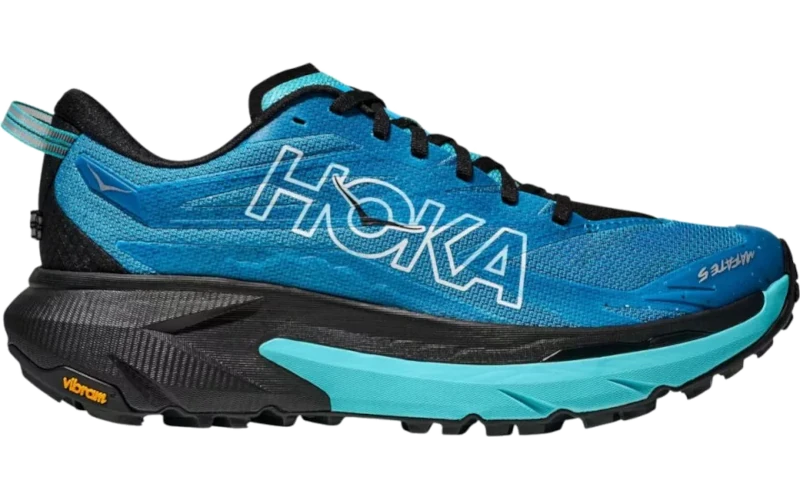 Mafate 5 |  Mafate X |  Stinson 7 |
| very high cushioning |  Speedgoat 7 |  Tecton X 3 |  Challenger 8 |
| high cushioning |  Torrent 4 | ||
| mid cushioning |  Zinal 2 |
Role in the Running Shoe Rotation
I mentioned that the Mafate X could be a perfect complement to the Speedgoat 7. It offers both more cushioning and more responsiveness than the Speedgoat 7. The Mafate X is also a shoe designed for less technical terrain. In my rotation, the Mafate X is my go-to shoe for long runs and ultra races—it’s very soft and stable. Speedgoat 7, on the other hand, is a shoe for more challenging terrain (rocks, mud, technical trails). It provides control and confidence that the Mafate lacks. For the simplest routes and short, easy recovery runs on the easiest terrain, it’s also worth having the Challenger 8. In this rotation, the Challenger will also take some of the strain off the two more specialized models, allowing the entire rotation to last longer.
| MAFATE X | SPEEDGOAT 7 | CHALLENGER 8 |
|---|---|---|
| | |
| long-distance runs + ultra runs | difficult, technical trails | easy trails, gravel and streets |
Similar to Hoka Mafate X
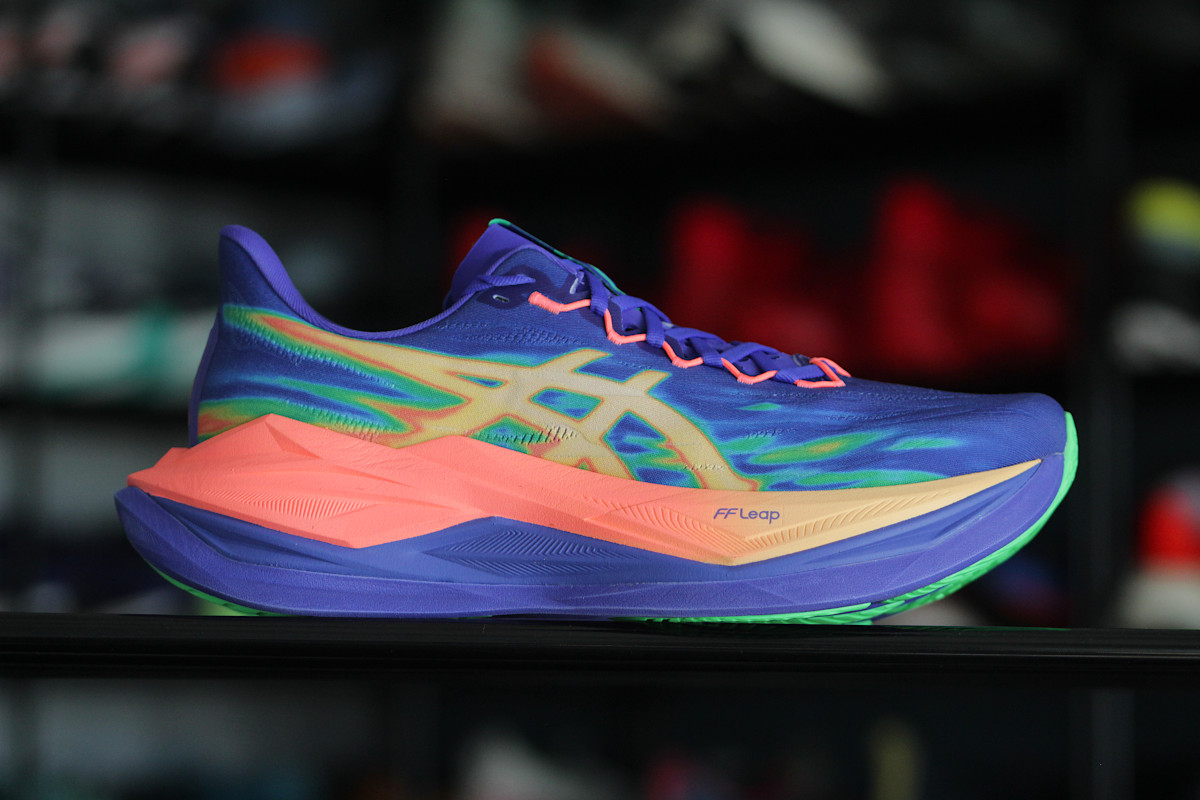
The Hoka Mafate X isn’t your typical trail running shoe, for which it’s easy to find alternatives. It’s more of a trail “super shoe,” a category where every producer interprets the concept a little differently. On one hand, there are more technical models like the Salomon S/Lab Ultra Glide, which offer high protection but feature a lower midsole and greater control on rough terrain. On the other hand, there are shoes similar to the Mafate X-high-cut and often reinforced with carbon fiber, like the Asics Metafuji Trail.
| MODEL | STACK HEIGHT (mm) | DROP (mm) | WEIGHT MEN'S (grams) | WEIGHT WOMEN'S (grams) | REGULAR PRICE (€) |
|---|---|---|---|---|---|
| Altra Mont Blanc Carbon | 29/29 | 0 | 309 | 249 | 260 |
| Asics MetaFuji Trail | 44/39 | 5 | 260 | n/a | 250 |
| Hoka Mafate x | 49/41 | 8 | 343 | 292 | 235 |
| Nike ACG Ultrafly Trail | n/a | 8,5 | 287 | 287 | 250 |
| Salomon S/Lab Ultra Glide 2 | 37/35 | 6 | 302 | n/a | 250 |
A Modern Approach to Trail Cushioning
There’s a lot going on in the Mafate X midsole, and nothing here is left to chance. The key lies in the combination of two foams. The base is made of supercritical EVA, which makes up most of the midsole—it’s responsible for the primary cushioning and stability of the entire construction. It’s springy, yet more controlled than typical soft compounds. Inside, there’s a PEBA foam core—the exact same material found in racing shoes. This layer is noticeably softer and more dynamic, providing energy return and “liveliness” to your stride. In practice, this creates an interesting effect: from the outside, the shoe feels stable and predictable, but underfoot you can feel a slightly springy characteristic that doesn’t slow you down even with a very high stack height.
The stack is equally impressive here—we’re talking about approximately 49 mm at the heel and 41 mm at the forefoot, values that clearly exceed the trail standard. This level is closer to maximalist road models than classic trail shoes, where the usual stack height is noticeably lower. In practice, this translates to a very high level of protection: muscles and joints receive real support over long distances. On the other hand, there’s a trade-off—with this much foam, ground feel is limited, and contact with the terrain is less direct than in more classic constructions.

The midsole also features a carbon plate, but in a rather unconventional form. It’s not the classic, solid plate found in racing shoes, but rather a split construction that allows for a certain degree of lateral movement. This is designed to improve performance on uneven terrain. Its purpose is to keep the large amount of foam in check and guide its movement, rather than generate an aggressive rebound. As a result, on trails and at lower speeds, you get greater confidence and a more controlled roll.
Finally, the rocker—with this stack height, it had to be pronounced, and that’s exactly what it is. The midsole is heavily contoured, with a fairly aggressive roll from heel to toe that effectively forces forward movement. The shoe itself is quite stiff and doesn’t flex much. Instead of pleasant flexibility, you get stiffness and a rolling sensation. On even, smooth trails, this works very well—the roll happens automatically, and you don’t have to actively work your foot. On more difficult, technical terrain, however, it can feel unnatural. The shoe doesn’t adapt to the terrain but guides you along its own trajectory, which on rocks or uneven surfaces may require more control.

Grip, Tuned to the Ride
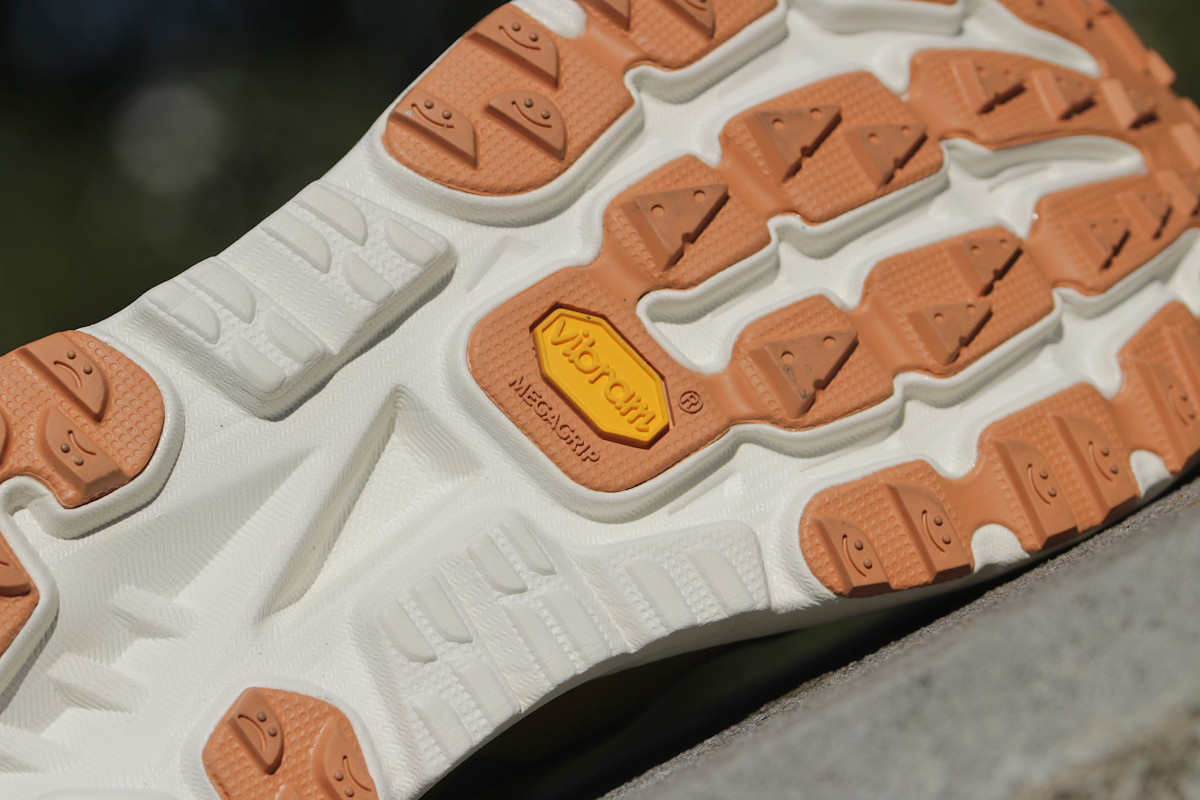
The Mafate X’s outsole features the proven Vibram Megagrip compound, one of the best trail rubber compounds available. It makes traction reliable on both dry and wet surfaces. The lugs are of moderate height—about 3.5 mm according to the producer and 3.2 mm according to my measurement. This isn’t a very aggressive, mountain-style outsole. It’s closer to a door-to-trail construction than to typical “mud-grinders.”
In practice, it performs best on compacted trails, gravel, forest roads, and mixed terrain, where you can fully utilize the rocker and the midsole’s characteristics. It’s still solid on wet rock—Megagrip does its job—but in mud or loose, technical terrain, limitations become apparent. The lugs are simply too shallow to effectively “anchor” the foot.
Lightweight Feel, Structured Support
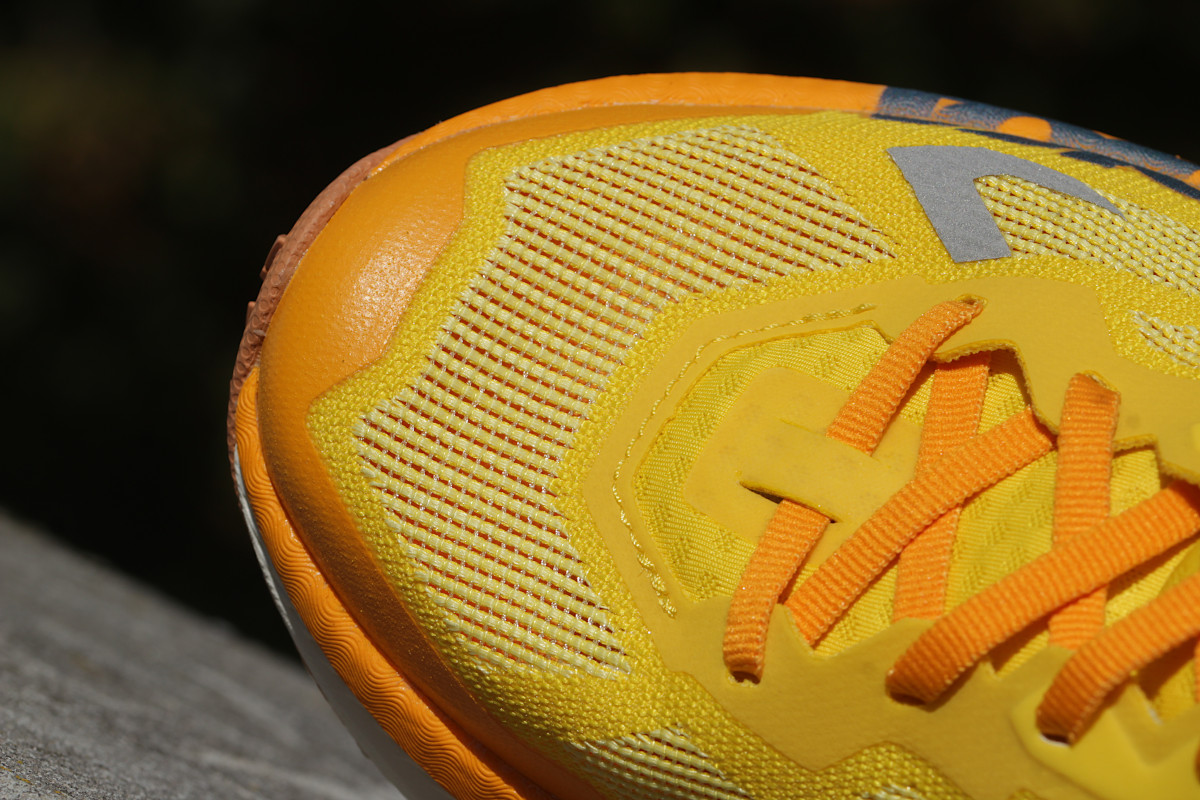
The upper on the Mafate X is made of technical mesh with a relatively open structure. It’s a lightweight material designed for breathability, which works well during long runs. At the same time, the construction isn’t overly “stiff.” In key areas, such as the toe box and the sides of the upper, there are thermal reinforcements and thin TPU overlays. These enhance durability and gently stabilize the foot within the shoe. The forefoot is the stiffest part, but not excessively so—it’s not the hard, armored construction typical of high-altitude boots, but rather a more flexible shield that protects the toes from impacts without restricting the material’s movement.
As for the fit, the forefoot is slightly wider than typical for Hoka, especially compared to the brand’s older models. It’s not quite at Altra’s level, but there’s plenty of room for the toes, which makes a huge difference over long distances. In most cases, you can safely stick with your standard size—no need to experiment. The midfoot is held in place by a classic lacing system supported by slightly stiffened side panels. The upper fits comfortably in this area and makes a stable hold, which suits the nature of a shoe designed for long, steady runs rather than dynamic racing.
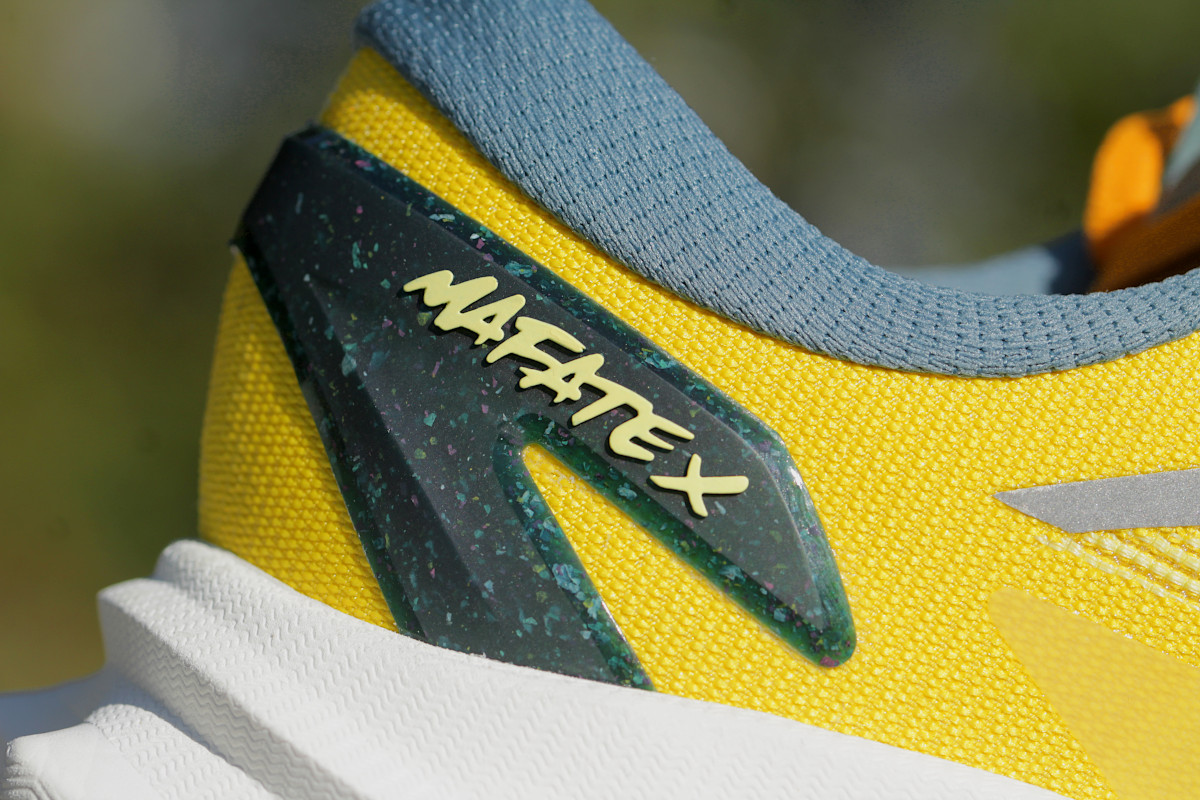
The rear is stiff—very stiff, in fact. This is thanks to the double heel counter. On one hand, the Mafate X features internal reinforcement that is quite tall and sturdy. On the other hand, this is complemented by an external “clip” that further “tightens” the hold on the foot and heel in the rear section. The heel sits very securely here, and the overall stability of the rear section is above average. A major role is played not only by the stiffening of the upper itself, but also by the interaction with the wide midsole platform and the carbon plate, which together ensure that the shoe remains stiff yet predictable despite its soft and high-profile construction.
The Price of Maximum Cushioning
According to the producer, the Mafate X weighs about 343 grams in men’s sizes and 292 grams in women’s sizes. That puts it in the heavier end of the spectrum right from the start. In practice, in my size 12US, this shoe weighs 357 grams. That’s quite a lot. Among all trail running shoes, the Mafate X ranks among the heaviest 28%.
The Mafate X is clearly heavier, but this is no accident—it’s the result of a massive amount of foam, a carbon plate, and a wide, stable platform. And that brings us to the point: this isn’t a classic trail shoe, but a representative of a new category of off-road super shoes, where the priority isn’t low weight, but maximum performance and protection over long distances.

Final Thoughts
The Mafate X is a shoe that clearly reflects the direction trail running is heading today—more cushioning, more comfort, and a more road-oriented approach to trail running. It’s not a versatile model, nor is it for everyone, but in its intended use, it does exactly what it was designed to do—it allows you to cover long distances as smoothly and efficiently as possible. It’s best suited for runners who prefer stability and protection over precision and ground feel. If that sounds like you, the Mafate X could be one of the most interesting ultra-running shoes currently available on the market.