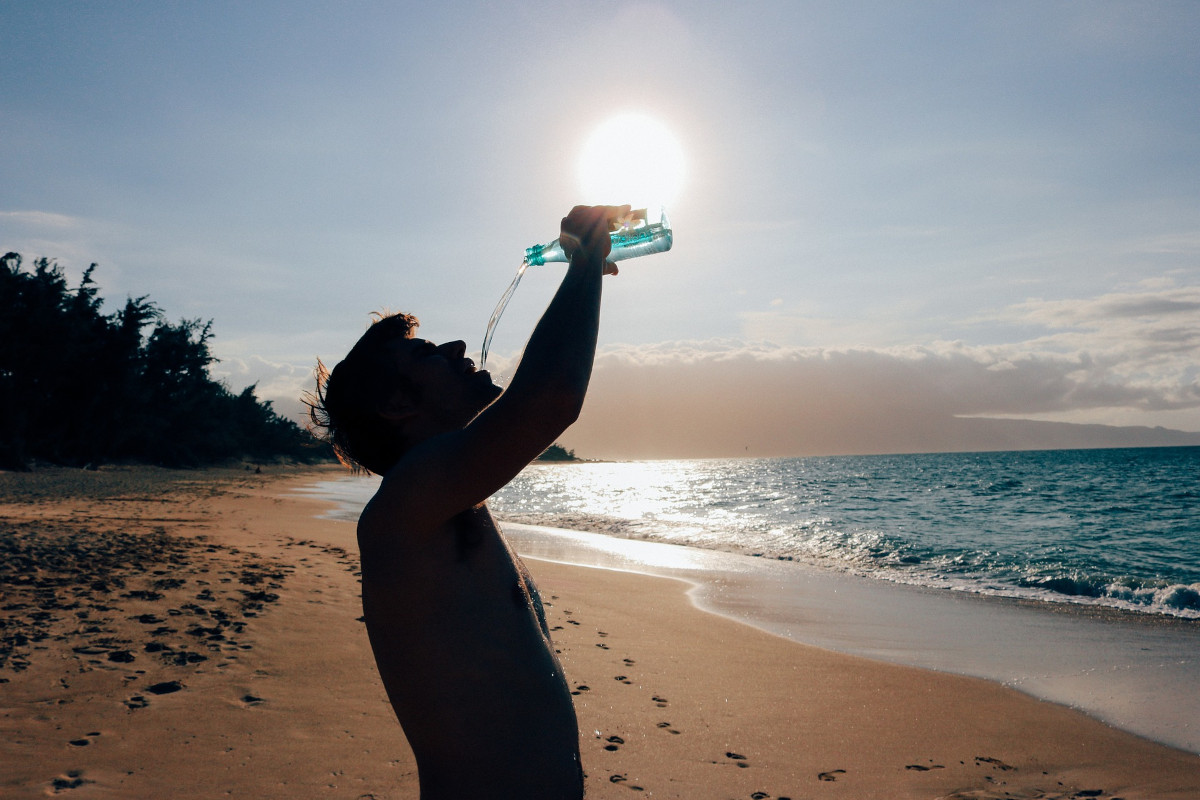
Running in the heat is challenging, but not impossible. High temperatures often prompt runners to ask themselves: “Should I run or not?” Sometimes it’s worth skipping a workout, but the next day may be just as hot, so don’t kid yourself. That doesn’t mean you have to stop training altogether. In fact, you can run even when the sun is beating down like a furnace. You just need to approach it with a clear head.
1. Train Early in the Morning or Late in the Evening
The simplest and most effective solution is to plan your workouts for the cooler times of day. Early morning or late evening are optimal times because temperatures are lower. While getting up early can be difficult, it’s sometimes worth the sacrifice. At 6:00 or 7:00 a.m., it’s much cooler than at noon, and the sun isn’t shining as intensely yet. Keep in mind that the temperature rises with each passing hour, which is especially important for long training sessions – it will get hotter with each kilometer.
Evening training can also be a good option, although it is usually warmer just after dark than in the morning. 9:00 p.m. is more convenient for many people than the early morning. I often ran at this time myself, starting at 10 p.m. and finishing before midnight. The advantage is that you don’t have to get up early, and the temperature drops with every kilometer, making the training more enjoyable. However, the downside is that very late training sessions can make it difficult to fall asleep and properly recover.
2. Chase the Shade, Not the Sun
On hot days, try to avoid running in open areas, especially during the hottest hours of the day. If you must run on asphalt, go back to the first point. Run during the earliest morning or latest evening hours when the sun is not so strong. High temperatures combined with intense sunlight will make your run feel like torture.
If possible, find places that are shaded. Forests, parks, and roads without direct sunlight are ideal places for this. Use what you have at hand! Sometimes it’s worth giving up your favorite route through beautiful meadows for a few laps in a city park. Yes, they may be boring, but they will allow you to run comfortably and minimize the risk of overheating.
3. Stay Hydrated!
This is an obvious and well-known recommendation that is not always followed. I don’t drink excessive amounts of water myself, but it’s essential to remember this when running on hot days.
When asked how much water the body needs, we often hear calculations based on body weight. The general rule is 30 milliliters of water for every kilogram of body weight. For example, an 80-kilogram runner needs 2.4 liters of water per day. However, it’s important to note that this is only a general guideline and applies to situations where the body is not exposed to high temperatures or exertion. Regardless of the temperature, when running, we sweat more and therefore need more water.
During intense exercise in the heat, our body tries to regulate its temperature through sweating. At the same time, we lose about one to two liters of water per hour. This is a general value that varies from person to person, but you can verify it to some extent. Just weigh yourself before and after training. The difference in weight is the amount of water lost. Of course, you should weigh yourself without clothing so moisture accumulated in the fabric does not distort the results. When I took these measurements, the scale always showed a loss of at least one kilogram (about 2.2 pounds) or one liter (about 0.26 gallons) of fluid. In winter, it was usually less. About 0.6–0.8 kilograms. What I sweated out was not only water, but also electrolytes such as potassium, sodium, magnesium, and calcium.
Therefore, for slightly longer workouts, you should bring water or an isotonic drink. You can hold it in your hand or place it in a special hip belt. Currently, soft water bottles, or soft flasks, are a very convenient solution. For the longest runs, it’s worth carrying a backpack with a water bladder that can hold up to two liters of liquid. Alternatively, plan your route so you can refill your water at a store or gas station.
It’s important to drink regularly during training and not wait until you’re extremely thirsty. After training, it’s a good idea to replenish lost fluids. An isotonic drink replenishes not only water, but also electrolytes, so it is a good idea after training.
4. Gear Up for the Weather
Another important aspect to keep in mind is dressing in a way that maintains thermal comfort and ensures optimal training conditions. Choose lightweight, breathable materials. Opt for technical fabrics that wick away moisture and provide ventilation. Wear shorts and T-shirts with short sleeves or straps. Looser clothing allows air to circulate around your body, helping you feel fresh.
Choose light colors and white whenever possible. Light colors, especially white, reflect the sun’s rays, reducing the body’s heat buildup. Avoid dark colors, which absorb heat.
Finally, wear a light, breathable cap (preferably white) to protect your face from direct sunlight. If necessary, wear sunglasses and apply sunscreen to exposed areas of your body.
5. Listen to Your Body (and Your Brain)
All of the above tips are valuable, but common sense is equally important. This is especially true when running on hot days. Sometimes it’s better to use rational thinking than to push yourself too hard. This means listening to our bodies and responding to their signals. If we feel exhausted, overheated, or dehydrated, we must react. This may mean stopping your workout or reducing its intensity. However, it will be worth it.