When running in wet and cold conditions, you have two options. The first option is to wear winter running shoes with a membrane that prevents water and cold from penetrating the shoe, keeping your feet dry and warm. The second option is to run in all-season shoes and accept that your feet will get wet and cold. There is a simple solution for this, though: thicker, warmer socks. Your choice between these two options depends on your personal preference.
Running Shoes with a Waterproof Membrane
A membrane is a special layer of material that prevents water from getting inside while allowing moisture to escape outside. It also provides some protection against the cold. Thanks to this feature, you can easily walk or run through water in these shoes and keep your feet dry — unless you submerge them up to your ankles, of course.
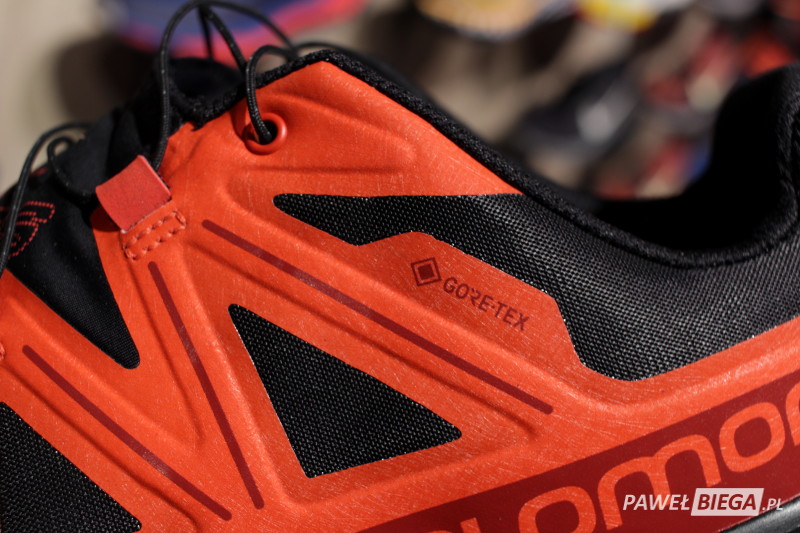
There are many different types of membranes. The most popular and recognizable are: Gore-Tex. It is a waterproof membrane with a porous structure. Its pores are 20,000times smaller than a water molecule. This makes it impossible for water to penetrate the membrane. At the same time, these pores are 700times larger than water vapor molecules, allowing water vapor to escape freely. There are approximately 1.5billion microscopic pores per square centimeter of Gore-Tex membrane.
Gore-Tex is the leading brand of waterproof membranes, but it is not the only one. Competitors such as Pertex and TNF Futurelight operate on a similar principle.
| PROS OF SHOES WITH MEMBRANES | CONS OF SHOES WITH MEMBRANES |
|---|---|
| Exceptional water resistance. The only place water can enter the shoe is through the ankle opening. | The membrane does not allow water to penetrate the shoe from either the inside or outside. Therefore, if water enters the shoe, even around the ankle, it will be difficult to remove. Any evaporation will be time-consuming. |
| More effective thermal isolation. | Reduced air permeability. This practically rules out wearing these shoes in the summer or in high temperatures. |
| Windproof properties. | The body produces sweat, which condenses on the inner surface of the membrane, especially during exercise. However, the membrane does not guarantee that the shoe will remain dry. |
All-season Running Rhoes
Most runners choose shoes without a waterproof membrane in winter or wet conditions. This shoe is practically the opposite of what I described above. Shoes without a membrane are standard running shoes that can be worn year-round. The upper is made of mesh or other materials that get wet over time. Even stepping into a small puddle can cause water to get inside these shoes.
However, due to the lack of a membrane, water can easily escape from the shoe. I know this for sure because I have experienced the “splash!” many times while running. What happens next? I kept running, and a kilometer later, my shoes were comfortable again unless the splash happened again. Damp, but comfortable.

| PROS OF ALL-SEASON SHOES | CONS OF ALL-SEASON SHOES |
|---|---|
| Shoes without a membrane are much more versatile. You can run in them in both summer and winter. | The lack of waterproofing means the shoes get wet easily when it rains or when walking through mud or snow. |
| They are characterized by their ability to quickly and easily circulate air and moisture. This means that any water that gets into the shoe will flow right back out. | Due to greater air permeability, it will be cold in shoes without a membrane at low temperatures. |
Which One Should I Buy?
Are you looking for winter running shoes?
It’s a slightly more sensible choice to buy shoes without a membrane. In urban areas, it rarely snows, rains or muddies so much that shoes with a membrane are necessary. Even if it snows, rains or is muddy, it will usually only happen a few times during the entire winter. However, if you have experience running in winter conditions and have felt uncomfortable in shoes without a membrane, then opt for shoes with a membrane. They will keep your feet more comfortable and dry.
Are you looking for running shoes not only for winter?
Invest in shoes without a membrane because your feet can “boil” in high temperatures.
Are you looking for winter running shoes for the mountains?
If you are looking for winter trail running shoes and expect to run frequently in water, mud or snow, then shoes with a membrane are worth considering. In extreme conditions like these, a membrane can be useful, providing comfort in wet and cold environments. Membranes were created for these types of conditions.
Are you looking for shoes for year-round running in the mountains?
If you plan on running in the mountains in both summer and winter, choose mountain running shoes without a membrane. The reason is the same as for asphalt shoes. In high temperatures, your feet could “boil.”
If you’ve read all this and still don’t know which shoes to choose, though, …
If you still have doubts after reading the above, choose shoes without a membrane. They will be much more versatile and suited to different running conditions.